While the global solar industry often focuses on large-scale power plants, some of the most stable and impactful business opportunities lie in addressing specific, unmet local needs.
For an entrepreneur considering solar module manufacturing, Guinea-Bissau is a compelling example. The country’s economic backbone—the cashew industry—and its vast unelectrified population create a foundational demand for solar energy that is perfectly aligned with the capabilities of a domestic production facility.
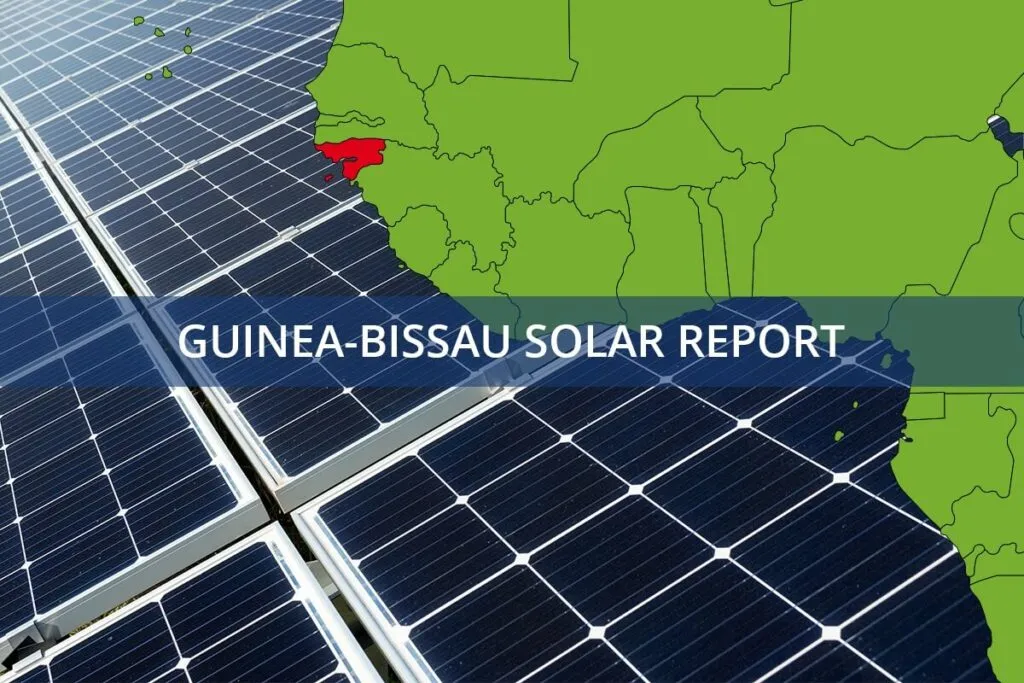
This analysis looks beyond utility-scale projects to explore the primary domestic markets for a new solar module factory in Guinea-Bissau, focusing on the high-demand sectors of rural electrification and agriculture.
The Energy Paradox: Economic Potential Limited by Power Access
The opportunity in Guinea-Bissau starts with its primary challenge: a lack of reliable electricity. According to the World Bank, the national electricity access rate is just 35.3%, a figure that drops to a stark 9.8% in rural areas.
This energy deficit forces a heavy reliance on expensive and inefficient diesel generators for homes, businesses, and critical infrastructure, creating a powerful incentive to adopt solar. The appeal is not just environmental but economic. With the high and volatile cost of diesel, solar power is the financially logical alternative for a wide range of customers. For a local manufacturer, this isn’t a speculative future market; it is a present and growing need.

Pinpointing Domestic Demand: Three Core Pillars for a Local Module Manufacturer
A successful manufacturing strategy in an emerging market isn’t about supplying every possible need but identifying the most pressing and financially viable customer segments. In Guinea-Bissau, this demand is built on three distinct pillars.
Pillar 1: Rural Electrification and Community Power
The largest untapped market is the direct electrification of homes and communities currently off-grid. The government’s “Energia para Todos” (Energy for All) program, supported by a $30 million World Bank grant, signals strong institutional support for decentralized energy solutions.
Local module production can directly serve this initiative by supplying panels for:
-
Solar Home Systems: Small, efficient modules (e.g., 50-150W) are ideal for powering lights, charging mobile phones, and running small appliances in individual households.
-
Community Microgrids: Powering schools, health clinics, and community centers requires slightly larger systems that provide stable, predictable power for essential services.
A local factory is well-positioned to produce the robust, correctly sized, and cost-effective modules these applications require, avoiding the high costs and logistical headaches of importing panels designed for other markets.
Pillar 2: The Agricultural Engine – Cashew Farming
Agriculture is the cornerstone of Guinea-Bissau’s economy, with cashew nuts accounting for over 90% of its export revenue. This single crop creates a significant, concentrated market for solar energy, particularly for water pumping.
Consistent water access is critical for improving cashew yields and quality. Solar-powered water pumps offer a direct replacement for unreliable and fuel-intensive diesel pumps. By supplying modules for these agricultural systems, a manufacturer helps its customers:
-
Reduce Operational Costs: Eliminating the daily expense of diesel fuel.
-
Increase Productivity: Ensuring a reliable water supply throughout the growing season.
-
Improve Resilience: Operating independently of a fragile national grid or volatile fuel supply chains.
Focusing on the agricultural sector provides a clear business-to-business (B2B) market where the end-user sees a compelling return on investment—a powerful driver for sustained demand.
Pillar 3: Commercial and Institutional Infrastructure
Beyond homes and farms, a reliable power supply is essential for commercial activity and public services. Small and medium-sized enterprises (SMEs)—from local shops to small processing facilities—depend on consistent electricity to operate.
Critical infrastructure like telecommunication towers also requires uninterrupted power. Often located in remote areas, these towers have traditionally relied on diesel generators. A local solar module manufacturer can become the preferred supplier for these clients, who prioritize reliability and long-term operational savings.
Experience from J.v.G. turnkey projects in similar markets shows that such commercial clients often become anchor customers, providing the stable baseline of demand needed to support a new factory’s growth.

The Strategic Case for Local Solar Module Production
Investors often ask: why build a factory when modules can be imported? The answer lies in market alignment and strategic advantage. Operating a solar factory locally allows an entrepreneur to tailor output directly to the specific needs of Guinea-Bissau.
-
Product Customization: The demand in Guinea-Bissau is not for the massive 550W+ panels used in utility farms but for smaller, durable, and more manageable modules suited for off-grid and agricultural use. A local facility can specialize in these high-demand products.
-
Supply Chain Resilience: Local production insulates the business from international shipping volatility, port congestion, and fluctuating import tariffs, ensuring a more predictable supply for customers.
-
Building Trust and a Local Brand: A domestic manufacturer is seen as a long-term partner invested in the local economy, creating jobs and contributing to national development goals. This builds a level of trust that international suppliers cannot easily replicate.
A thorough analysis of these demand pillars is the cornerstone of a comprehensive business plan. It demonstrates a clear path to profitability by showing precisely who the customers are and what problems the product solves. Furthermore, a small-scale solar manufacturing setup is often the most effective way to enter this type of market, allowing for a lower initial investment and the flexibility to adapt to local demand.
Frequently Asked Questions (FAQ)
Why focus on a specific country like Guinea-Bissau?
Success in solar manufacturing in emerging economies often comes from deep market specialization. Guinea-Bissau provides a clear, replicable model: a strong, commodity-based agricultural sector combined with significantly unelectrified regions creates a concentrated and predictable demand for off-grid solar solutions.
What size solar modules are most in demand for these applications?
The primary demand is not for the large-format modules common in utility-scale projects. Instead, modules in the 100W to 350W range are more suitable for solar home systems, water pumping, and small commercial rooftops. These modules are easier to transport, handle, and install in remote locations.
How does a local factory compete with large international suppliers?
A local factory competes on specificity, not scale. It wins by producing the exact type of module the local market needs, avoiding logistical hurdles, building direct relationships with customers, and aligning with national development goals. Its value proposition is based on being the most reliable and relevant supplier for the domestic market, not the cheapest global producer.
Is financing available for such projects?
The presence of organizations like the World Bank and regional development banks indicates a favorable environment for project financing. Their support for programs like “Energia para Todos” often extends to downstream activities, including the local manufacturing and supply chains that help these initiatives succeed.
From Market Insight to Manufacturing Strategy
The viability of a solar module factory in a market like Guinea-Bissau isn’t determined by global trends but by a granular understanding of local economic realities. The demand is not hypothetical—it is rooted in the daily needs of farmers seeking better crop yields, families aspiring to have electric light, and businesses requiring stable power to grow.
By focusing on these core sectors, an entrepreneur can build a resilient and impactful manufacturing business. The next step is to translate this market analysis into a detailed operational and financial plan, charting a clear course from initial investment to sustained production.