An investor identifies a prime location, secures funding, and finalizes the business plan for a new manufacturing facility. The machinery is selected, the building plans are drawn up. Yet before the first foundation can be laid, a critical and often underestimated hurdle must be cleared: the environmental license. In Honduras, that path runs directly through the Secretaría de Recursos Naturales y Ambiente, or SERNA.
Navigating this regulatory landscape isn’t just a bureaucratic step; it’s essential to a project’s long-term viability and legal standing. This guide offers a clear overview of the SERNA process, outlining the required studies, documentation, and realistic timelines for securing environmental approval for an industrial project, such as a solar module assembly plant.
Understanding SERNA and Its Role in Industrial Development
The Secretaría de Recursos Naturales y Ambiente (SERNA) is the Honduran government body responsible for the regulation, conservation, and sustainable use of the country’s natural resources. For any new industrial or commercial project, SERNA serves as the primary authority for environmental evaluation and licensing.
Its mandate is to ensure that economic development does not come at an unacceptable environmental cost. SERNA’s approval, in the form of an Environmental License (Licencia Ambiental), is a legal prerequisite for construction and operation. The process exists to ensure that a project has adequately identified its potential environmental impacts and established a credible plan to mitigate them.
The Core of the Process: Determining Your Project’s Environmental Category
The first and most decisive step in the SERNA process is classifying your project into one of four environmental categories. This classification is based on the project’s nature, scale, and location, which collectively determine its potential environmental risk. The resulting category dictates the depth and complexity of the required environmental studies.
The categories are generally defined as follows:
-
Category 1: Projects with low or negligible potential environmental impact. These typically involve small-scale activities or modifications to existing structures that do not significantly alter the environment.
-
Category 2: Projects with moderate potential environmental impact. Their effects are generally localized, reversible, and manageable with standard mitigation measures.
-
Category 3: Projects with high potential environmental impact. These are often new industrial facilities, such as a manufacturing plant, that could have significant effects on local air quality, water resources, or ecosystems.
-
Category 4: Projects with very high or critical potential environmental impact. This includes large-scale industrial complexes, major infrastructure projects, or activities in ecologically sensitive areas.
A new manufacturing facility, depending on its size and production processes, will almost certainly be classified as Category 3 or 4, mandating a comprehensive Environmental Impact Assessment. Understanding this from the outset is crucial for proper project planning and budgeting.
Key Documents and Studies for a SERNA Application
Once the category is determined, the work of compiling the application dossier begins—a meticulous task where attention to detail is paramount. While requirements can vary slightly, a standard application for a Category 3 project requires a comprehensive set of technical and legal documents.
The Environmental Impact Assessment (EIA)
The cornerstone of any significant industrial project application is the Environmental Impact Assessment (Estudio de Evaluación de Impacto Ambiental, or EsIA). This is not a simple form but a detailed, multidisciplinary scientific study. An EIA must:
-
Establish a Baseline: Describe the existing environmental conditions of the project site before any activity begins, including air and water quality, flora, fauna, soil composition, and local community demographics.
-
Analyze Potential Impacts: Identify and evaluate all potential positive and negative impacts the project could have during its construction, operation, and eventual decommissioning.
-
Propose a Mitigation Plan: Outline specific, actionable measures to prevent, minimize, or compensate for identified negative impacts. This includes plans for waste management, emissions control, and water treatment.
Technical and Legal Documentation
Alongside the EIA, the application must include a series of legal and administrative documents to verify the project and its proponent. Key items include:
-
Official Application (Form F-02): The formal request for an environmental license.
-
Project Profile: A detailed description of the project, its objectives, components, and phases.
-
Legal Standing: Documents proving the company’s legal incorporation and the legal representation of the individual signing the application.
-
Proof of Land Tenure: Title deeds or lease agreements confirming the legal right to use the proposed site.
-
Municipal Solvency and Land Use Permit: Certificates from the local municipality confirming the project aligns with local zoning regulations and that all municipal taxes are paid.
Crucially, Honduran law requires the entire environmental evaluation process to be managed by a registered Environmental Service Provider (PREA), a certified consultant authorized by SERNA. Attempting this process without such a partner is not an option.
The SERNA Approval Timeline: A Realistic Overview
Investors must factor a realistic timeline for environmental approval into their overall project schedule. While official guidelines exist, the practical timeline can be influenced by the project’s complexity and the thoroughness of the application.
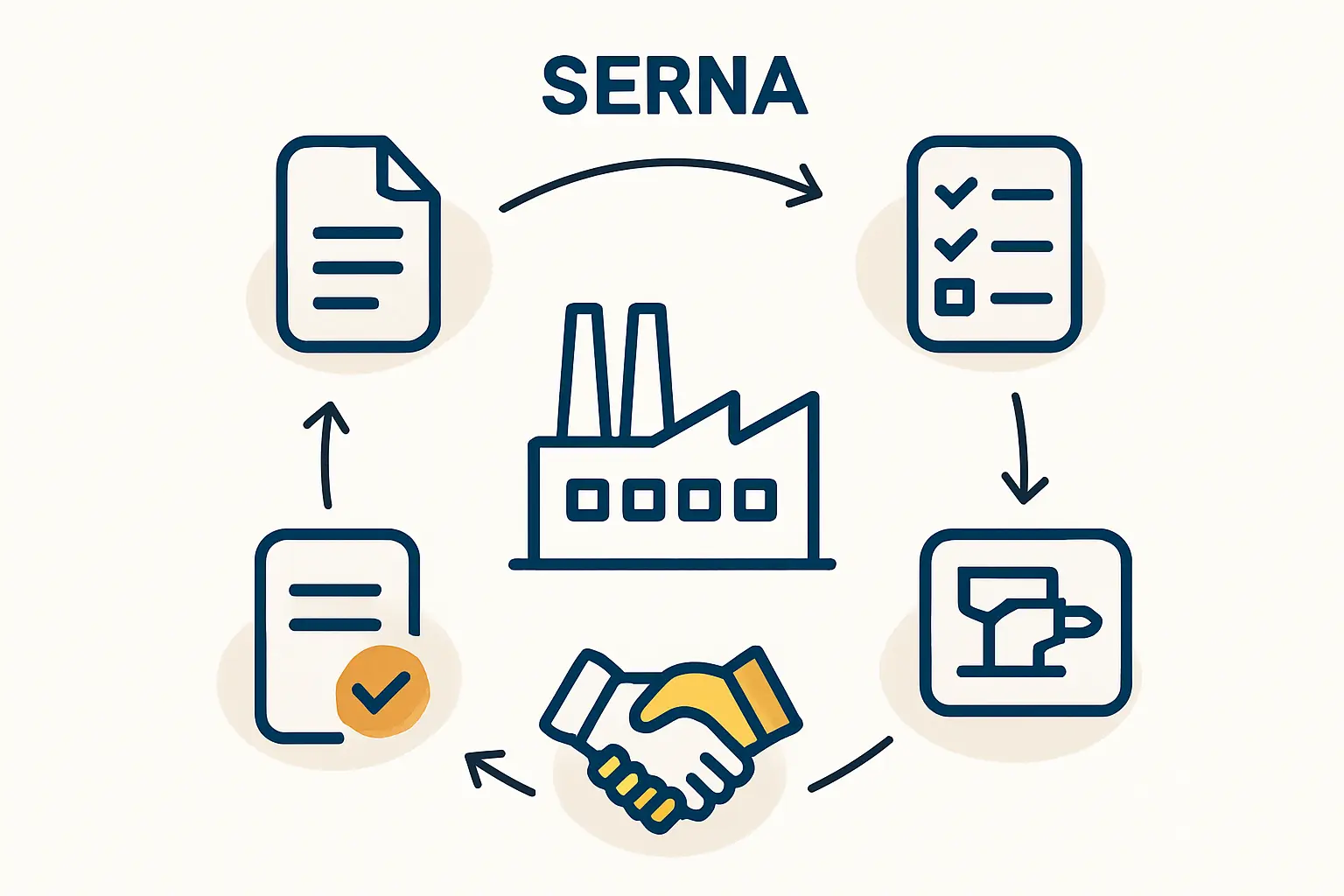
A typical timeline for a Category 3 project unfolds in several stages:
-
Application Submission and Initial Review (Approx. 10 business days): SERNA formally accepts the application and performs a preliminary check for completeness.
-
Public Notice: The project details are published in national and local media to allow for public comment or objection.
-
Technical Evaluation (60-90 business days): This is the core review period. SERNA’s technical department (DECA) scrutinizes the EIA and all supporting documents. It may issue requests for additional information (known as observaciones), which can pause the timeline until they are adequately addressed.
-
Final Resolution: If the evaluation is positive, SERNA issues a resolution approving the Environmental License, often with specific conditions that must be met throughout the project’s lifecycle.
From submission to final approval, an investor should prudently budget for 6 to 12 months. Experience from J.v.G. turnkey projects shows that the most significant factor in keeping to the shorter end of this range is the quality and completeness of the initial submission.
Common Challenges and How to Prepare for Them
The SERNA process is rigorous, and several common pitfalls can lead to significant delays or even rejection. Proactive preparation is the best strategy.
-
Incomplete Documentation: The single most common cause of delays is an application missing key documents or containing inconsistent information. A checklist approach managed by a competent PREA consultant is essential.
-
Underestimating Local Context: An EIA that fails to adequately address specific local concerns—whether social, ecological, or related to water resources—is likely to face scrutiny. Site-specific data is far more valuable than generic assessments.
-
Poor Communication: A lack of clear, timely communication with the PREA consultant and, through them, with SERNA’s technical team can turn minor issues into major roadblocks.
For entrepreneurs new to the country, success starts long before the machinery is ordered; it begins with mastering the local regulatory environment, a key topic in our complete guide to solar panel manufacturing.
Frequently Asked Questions (FAQ) about the SERNA Process
What is the difference between an Environmental License and a permit?
The Environmental License is the overarching approval for the entire project. Specific permits (for water use or waste disposal, for example) may also be required from SERNA or other agencies and are often conditional upon the approval of the main license.
How much does the SERNA application process cost?
Costs vary significantly with project complexity. The primary expenses are the fees for the PREA consultant and the cost of conducting specialized studies for the EIA, such as hydrological or biological surveys. For a medium-sized factory, these costs can range from $20,000 to over $50,000 USD, exclusive of any government fees.
Can the process be expedited?
There is no formal process to expedite a SERNA application. The most effective way to accelerate the timeline is to submit an exceptionally thorough, high-quality application that anticipates technical questions and leaves no room for ambiguity.
What happens if an application is rejected?
If a license is denied, SERNA provides a technical and legal justification. The applicant typically has the option to appeal the decision or to modify the project to address SERNA’s concerns and re-apply.
Conclusion: Integrating Environmental Permitting into Your Business Plan
Securing a SERNA Environmental License in Honduras is a complex but manageable process. It should be viewed not as a final administrative hurdle, but as an integral part of the initial project development strategy.
Success hinges on three key elements: understanding the legal requirements, engaging a qualified local expert (PREA), and allocating sufficient time and financial resources from the outset. By treating the environmental approval process with the same seriousness as financing or site selection, investors can build a solid legal foundation for their operations. This is a crucial step when planning the investment requirements for your solar factory and is foundational to understanding how to start a solar factory successfully in a new market.