When establishing a new manufacturing facility, an entrepreneur’s choice of location is paramount. Factors like logistical infrastructure, labor costs, and market access typically drive the decision. A less obvious but equally powerful consideration is the availability of government investment incentives.
For those looking to enter the solar module manufacturing industry in Europe, Hungary presents a compelling case, largely due to its proactive Hungarian Investment Promotion Agency (HIPA). This guide offers a practical overview of the HIPA incentive system, detailing the eligibility criteria and application process for investors planning to set up a solar production facility. Understanding these mechanisms can significantly impact the financial projections and strategic viability of a venture.
Understanding HIPA and Its Role in Hungary’s Industrial Strategy
The Hungarian Investment Promotion Agency (HIPA) is the national body responsible for attracting foreign direct investment into Hungary. Operating as a one-stop-shop, HIPA aims to simplify the complex process of establishing a business for international investors. It serves as a single point of contact, guiding companies through administrative procedures, site selection, and, critically, the application for state subsidies.
For investors new to the region, HIPA serves as an essential partner. Its mandate is to support value-adding projects in key sectors like manufacturing and research and development (R&D)—categories that clearly include a modern solar module factory.
Key Investment Incentives for Solar Module Manufacturers
Hungary offers a robust incentive program, primarily consisting of non-refundable cash grants and substantial tax allowances. These are not small-scale benefits; they are designed to de-risk and accelerate major industrial projects. For a capital-intensive undertaking like a solar factory, these incentives can be transformative.
The two principal forms of aid available are the VIP Cash Grant and the Development Tax Incentive.
The VIP Cash Grant: A Direct Capital Injection
This non-refundable grant is disbursed based on the project’s eligible costs—typically the acquisition of tangible assets like land, buildings, and new machinery, as well as intangible assets such as patents and licenses. This directly covers the core investments required for a new solar panel factory [link-placeholder].
To qualify, a project must meet specific minimum requirements for both investment volume and the creation of new jobs. These thresholds vary depending on the region within Hungary:
-
Investment Volume: A minimum investment of between EUR 5 million and EUR 10 million is generally required.
-
Job Creation: The project must create between 25 and 50 new full-time positions.
The amount of the grant is determined by the ‘aid intensity’, which is the maximum percentage of eligible costs that the government can subsidize. This percentage is higher in less developed regions to encourage a wider geographic distribution of investment.
- Maximum Aid Intensity: Ranges from 30% to 60% of eligible costs, depending on the project’s location.
For example, a EUR 10 million investment in a new solar module factory located in a region with a 50% aid intensity could potentially receive a non-refundable cash grant of up to EUR 5 million.
The Development Tax Incentive: A Long-Term Financial Advantage
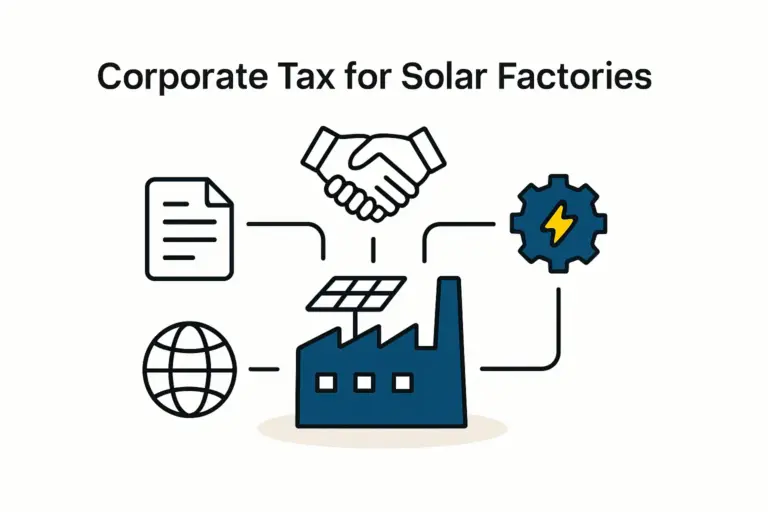
The Development Tax Incentive offers a significant reduction in a company’s corporate income tax liability for up to 13 years following the investment. This incentive can offset up to 80% of the annual tax payable, dramatically improving cash flow and profitability during the critical initial years of operation.
The eligibility thresholds for the tax incentive are generally higher than for the cash grant, with investment volumes ranging from EUR 3 million to EUR 100 million, depending on the specific conditions and location. Notably, the Development Tax Incentive can often be combined with the VIP Cash Grant, creating a highly favorable financial package for the investor.
The Application Process: A Step-by-Step Walk-through
Experience from J.v.G. turnkey projects shows that navigating the application process is a common challenge for new investors. The procedure is formal and demands strict adherence to timelines.
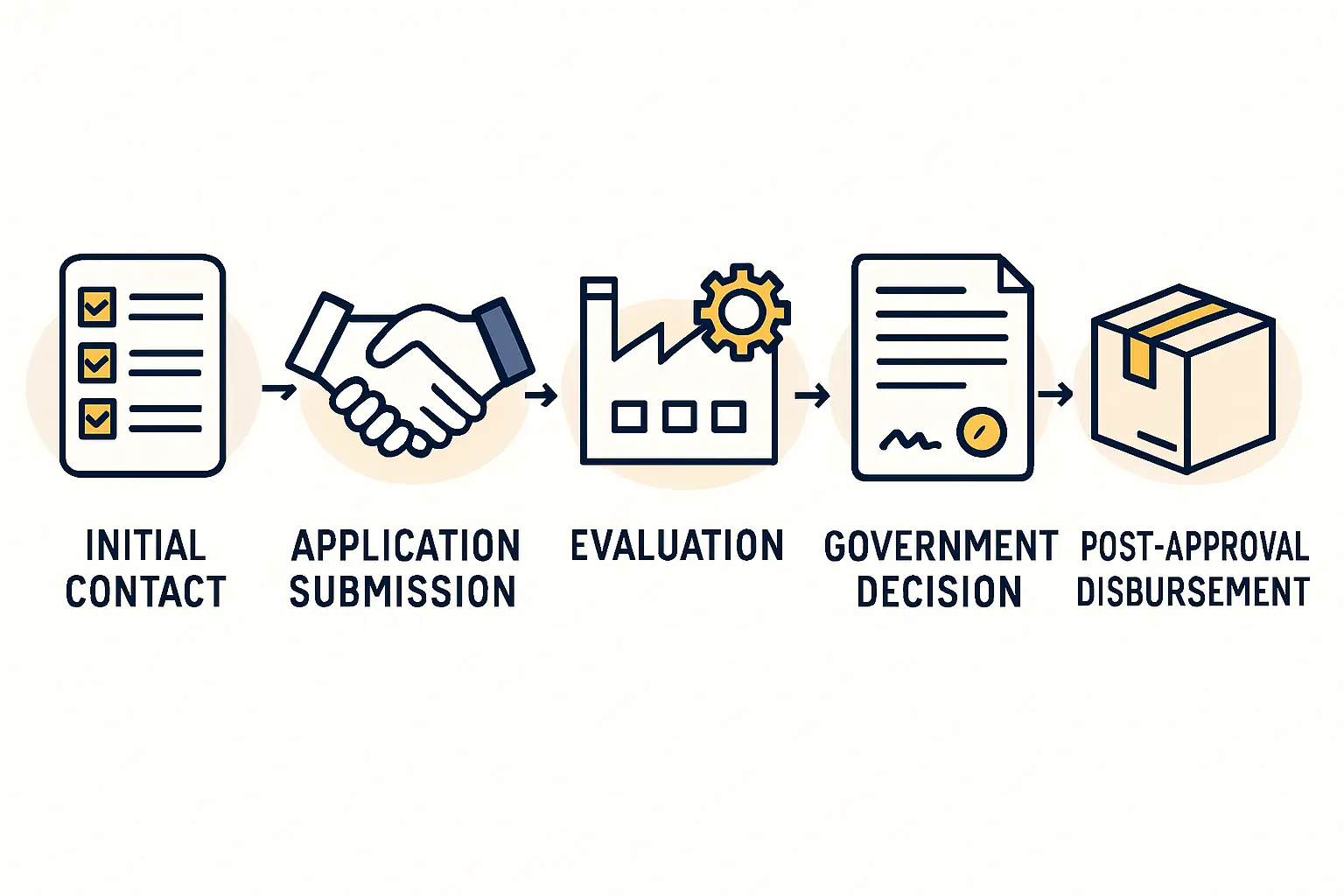
Step 1: Letter of Intent (The Critical First Move)
The single most important rule is that the investor must submit a formal letter of intent to HIPA before the project officially begins. ‘Beginning the project’ is defined as the start of construction work or the first legally binding commitment to order equipment. Submitting this letter after the project has started will render the investment ineligible for incentives.
Step 2: Receiving the Tailor-Made Offer
Upon receipt of the letter of intent, HIPA will prepare a tailor-made, non-binding incentive offer that outlines the potential aid amount and the associated conditions.
Step 3: Formal Application Submission
The investor then prepares and submits the full, formal application package to HIPA. This includes a detailed business plan, financial projections, and documentation related to the planned investment.
Step 4: Evaluation and Decision
HIPA evaluates the application for compliance and then forwards it with a recommendation to the Ministry of Foreign Affairs and Trade. The final decision is made by the Minister. From formal submission to decision, the entire process typically takes 60 to 90 days. For context on where this fits into a larger project schedule, you can read our comprehensive guide on how to start a solar module production business for a complete project timeline.
Essential Conditions and Investor Obligations
Receiving an incentive package comes with long-term commitments that the investor must fulfill.
-
The 25% Equity Contribution: The investor must contribute at least 25% of the total eligible project costs from its own resources, free of any state aid. This requirement demonstrates the investor’s commitment and financial stability.
-
Maintaining the Investment and Jobs: The investor must maintain the investment and the newly created jobs for a mandatory period, typically five years for large enterprises and three years for small and medium-sized enterprises. Failure to meet these obligations can result in the partial or full repayment of the grant.
Why Hungary? The Strategic Advantage for Solar Manufacturing
Beyond the attractive financial incentives, Hungary offers a strategic location in the heart of the European Union. Its well-developed industrial infrastructure, skilled workforce, and logistical advantages make it an ideal base for supplying the rapidly growing European solar market.
The HIPA incentives amplify these inherent advantages, making Hungary a top-tier destination for new solar manufacturing investments. Of course, a successful investment also depends on understanding the technical requirements, including the essential equipment needed for production [link-placeholder].
Frequently Asked Questions (FAQ)
What qualifies as an ‘eligible cost’?
Eligible costs primarily include the purchase of new tangible assets (land, buildings, machinery) and intangible assets (patents, licenses, know-how). Operational costs like salaries or raw materials are generally not eligible for the initial grant calculation.
Can an existing company apply for incentives for an expansion project?
Yes, incentives are available for expansions, provided the project leads to a fundamental change in the production process or a significant increase in capacity and job creation.
Is the incentive guaranteed if all criteria are met?
No. Granting incentives is a discretionary decision made by the Hungarian government. While meeting all criteria is necessary, the final approval depends on the strategic value and economic impact of the project.
What happens if the required job numbers are not maintained?
The grant agreement includes specific terms regarding job maintenance. If the company fails to meet these targets during the mandatory 3-5 year period, it may be required to repay a portion or the entire grant.
Is it necessary to hire a local consultant to manage the application?
While not mandatory, hiring one is highly recommended. The application process is complex, requires documentation in Hungarian, and benefits from the expertise of professionals familiar with HIPA and the relevant ministries.
Conclusion and Next Steps
The investment incentives offered through HIPA are a powerful financial tool for entrepreneurs and companies looking to establish a solar module manufacturing presence in Europe. By substantially reducing the initial capital outlay and improving long-term profitability, these programs can make a well-planned project exceptionally competitive.
However, success depends on meticulous planning, a thorough understanding of the obligations, and strict adherence to the application timeline. Understanding this financial landscape is a critical first step. The next logical phase in planning is a detailed analysis of the technical and operational requirements for building and running a successful solar factory.