Choosing where to establish a new solar module manufacturing facility is one of the most critical decisions an investor will make. In recent years, Central Europe has emerged as a compelling region, offering a strategic gateway to the European Union market.
Surprisingly, in 2023, Hungary surpassed Germany to become the EU’s leading exporter of solar panels—a development driven largely by substantial investments from Asian manufacturers.
This shift highlights a critical question for entrepreneurs and business leaders: which Central European nation offers the most advantageous environment for a new manufacturing plant? While Hungary’s headline success is compelling, a deeper analysis of the investment climate in neighboring Poland and Czechia reveals a more complex picture.
This article provides a comparative framework, examining key factors like energy costs, labor markets, government incentives, and strategic positioning to guide a well-informed decision.
The Shifting European Solar Landscape
The European Union is working to reshore its manufacturing capabilities through initiatives like the Net Zero Industry Act (NZIA), which sets a target for 40% of clean technology to be manufactured within the EU by 2030. This policy is a direct response to the continent’s heavy reliance on imported solar modules, with approximately 97% currently sourced from China.
Against this backdrop, Hungary has positioned itself as a major production hub. With exports reaching EUR 3.7 billion in 2023, the country has successfully attracted large-scale foreign investment. However, this success is built on a specific model: serving primarily as an export base for non-EU companies. This strategy contrasts with potential opportunities in Poland and Czechia, which present their own unique advantages and challenges.
For a new investor, understanding these nuances is essential for long-term viability. The core challenge for any new European facility remains the same: structuring operations to compete effectively with established, low-cost global producers.
Direct Cost Comparison: Key Financial Metrics for Investors
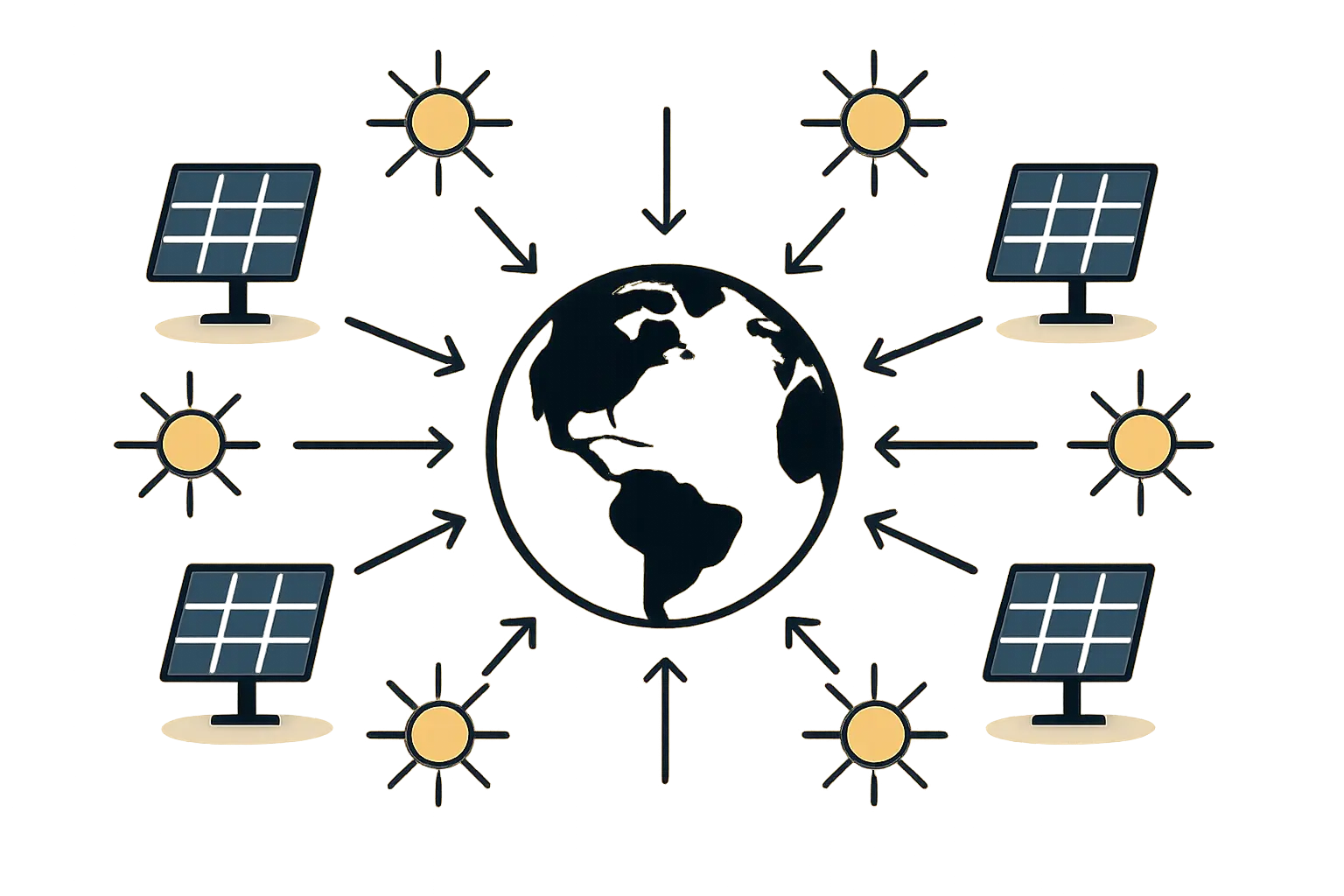
A sound analysis begins with the core operational and capital expenditures that shape a business’s financial performance. While government incentives can be attractive, they must be weighed against fundamental, recurring costs.
Energy Costs
As an energy-intensive process, solar module manufacturing is highly sensitive to the price of industrial electricity, a critical variable in operational expenditure calculations.
Ready to make big Profits?
The solar Industry is Booming
WE HELP NEWCOMERS to the solar industry start their own solar module production line. Customers can make BIG PROFITS by selling modules and finding investors, without wasting money and time on things they don't need!
-
Hungary: Recent data shows Hungary has some of the highest industrial electricity prices in the region. This presents a significant and persistent challenge to maintaining competitive production costs, especially when compared to non-EU manufacturers.
-
Poland & Czechia: Both countries generally offer more competitive electricity prices for industrial consumers. Poland, with its significant domestic energy production, has historically provided a more stable and lower-cost energy environment—a crucial advantage for a manufacturing operation.
Labor Market and Costs
Access to a skilled and semi-skilled workforce is another cornerstone of a successful manufacturing plant. The entire Central European region is experiencing a tight labor market, a point that requires careful consideration.
-
Hungary: The country faces a notable skilled labor shortage, which has led to a growing reliance on guest workers to staff its new large-scale factories. While this addresses immediate staffing needs, it introduces complexities in management and long-term workforce stability.
-
Poland: With a larger population, Poland offers a bigger labor pool. However, competition for skilled technical and engineering talent is also high, driven by a robust and diverse industrial sector.
-
Czechia: The Czech Republic has a long and distinguished heritage in engineering and advanced manufacturing. This provides the foundation for a highly skilled workforce, though availability can be limited and wage expectations may be higher compared to its neighbors.
Taxation and Incentives
Government support can significantly influence the initial financial viability of a project. Each country offers a distinct package of incentives to attract foreign investment.
-
Hungary: The government provides a “VIP cash subsidy” and a development tax allowance for significant investments. These direct financial supports are a primary driver behind its recent success in attracting large factories.
-
Poland: The “Polish Investment Zone” program offers substantial corporate income tax exemptions, which can be effective for up to 15 years depending on the region. Additional grants are available for strategic investments.
-
Czechia: The Investment Incentives Act provides a framework for corporate income tax relief, cash grants for capital expenditure, and support for job creation. Projects deemed “strategic investments” can receive enhanced benefits.
To determine how these incentives impact the overall business case, a comprehensive evaluation of the total investment requirements for a solar manufacturing plant is essential.
Strategic Considerations Beyond the Balance Sheet
Beyond direct costs, long-term success depends on strategic factors like market access, supply chain robustness, and ease of implementation.
Domestic Market vs. Export Hub
The intended market for the finished solar modules should heavily influence location choice.
-
Hungary: The current ecosystem is heavily oriented towards export, serving as a European production base for Asian corporations. For an independent investor, this means competing within an export-driven environment.
-
Poland: Its significant domestic population and growing renewable energy targets create a substantial internal market. A factory located in Poland can serve this local demand, providing a buffer against the volatility of international markets.
-
Czechia: Its central location and excellent transport infrastructure make it an ideal base for serving customers across Germany, Austria, Poland, and beyond. It offers a balanced model for both domestic and broader EU distribution.
Industrial Ecosystem and Supply Chain
The proximity of suppliers for raw materials like solar glass, aluminum frames, and junction boxes can reduce transportation costs and supply chain risks.
-
Czechia and Poland have more deeply rooted and diversified industrial ecosystems, including strong glass and metals industries. This can offer advantages in sourcing components locally and finding qualified engineering partners for maintenance and facility support.
-
Hungary’s industrial base is growing rapidly, but it is currently more concentrated around the specific needs of the large automotive and electronics plants that have recently been established.
Project Timelines and Bureaucracy
The time it takes to go from initial investment to the first module rolling off the line is a critical period. A streamlined setup process can save significant capital and accelerate the path to revenue. Based on experience from J.v.G. turnkey projects, navigating local regulations and construction permits is a phase where expert guidance proves invaluable. The goal is often to have a turnkey solar module production line operational in under 12 months, a timeline that requires efficient project management and cooperation with local authorities.
Risk Factors and Long-Term Outlook
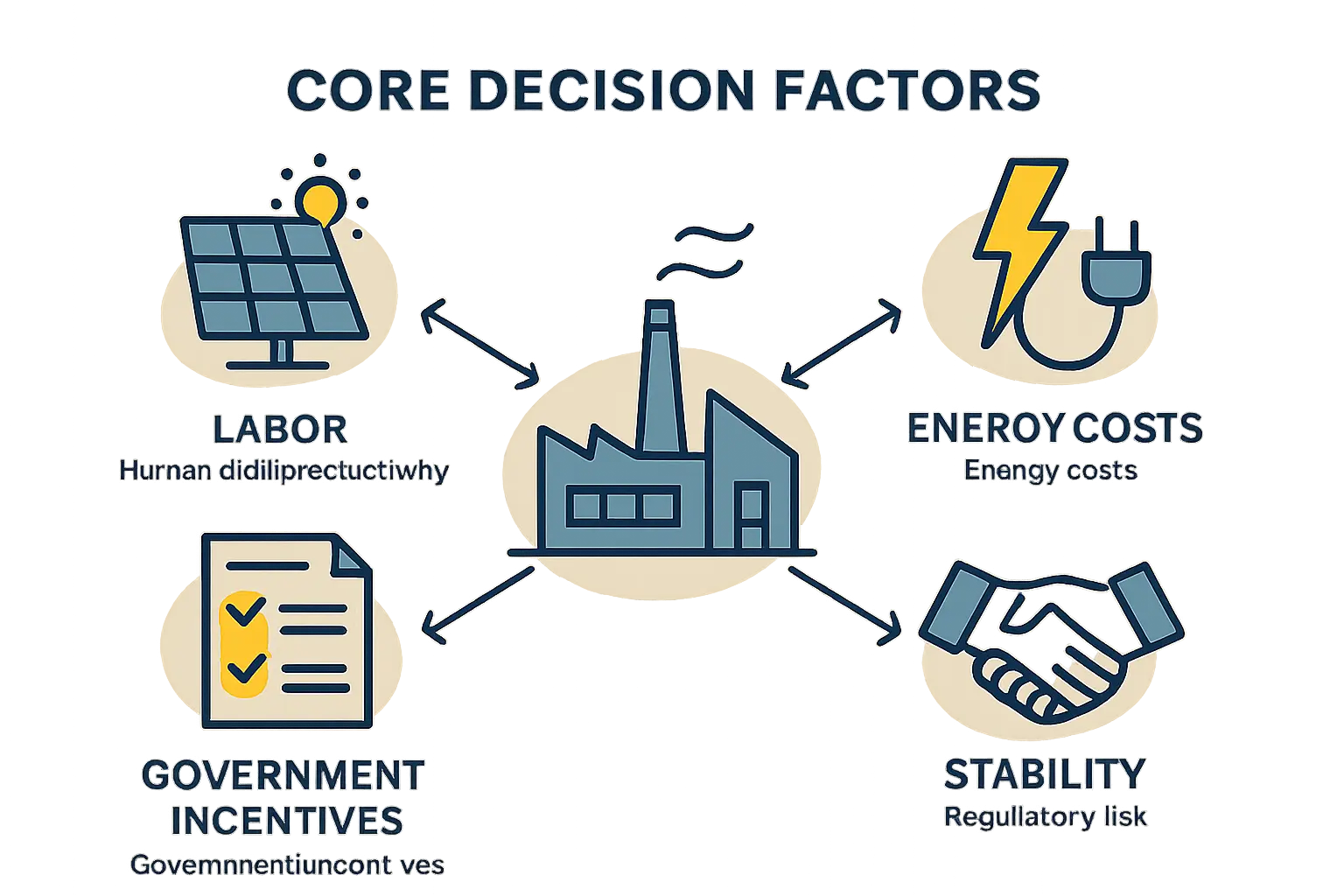
No investment decision is without risk. A prudent analysis requires acknowledging the potential long-term challenges for each location.
-
Hungary: The primary risks include the country’s high industrial energy costs and a potential market overcapacity if multiple large-scale, export-focused plants come online simultaneously. Its heavy dependence on foreign investment strategies could also create volatility.
-
Poland & Czechia: The main challenge in these countries is securing and retaining a skilled workforce in a competitive industrial landscape. While offering strong fundamentals, a new plant must be prepared to offer competitive wages and working conditions.
For all three locations, the overarching challenge remains competing with the scale and cost structure of non-EU producers. Success will depend not only on location but on operational excellence, high efficiency, and securing the right production equipment to produce high-quality, reliable modules.
Frequently Asked Questions (FAQ) for Investors
What is a typical starting factory size in this region?
For a new entrant, a facility with an annual production capacity of 50 MW to 100 MW is a common and viable starting point. This size allows for economies of scale while keeping the initial capital investment manageable.
How significant are government incentives in the final decision?
Incentives are a major factor in enhancing the initial return on investment. However, they should not be the sole basis for a decision. Fundamental operational factors, such as long-term energy and labor costs, are ultimately more critical for the sustained profitability of the factory.
How long does it typically take to become operational?
With effective planning and experienced project management, a new solar module production line can be operational in 9 to 12 months from the start of the project. This includes site preparation, building construction or retrofitting, equipment installation, and commissioning.
Is a technical background necessary to start a solar factory?
No, a technical or photovoltaic background is not a prerequisite. Successful entrepreneurs entering this industry often come from other business sectors. The key is to partner with experienced engineering consultants and turnkey providers who can manage the technical aspects of factory planning, construction, and operation.
Conclusion: Making an Informed Location Decision
The choice between Hungary, Poland, and Czechia is not a matter of one being definitively “better” than the others, but rather which location best aligns with an investor’s specific business model and strategic goals.
-
Hungary presents a compelling option for investors seeking strong, direct government subsidies and integration into a rapidly growing export ecosystem, provided they can mitigate the high long-term energy costs.
-
Poland offers the strategic advantage of a large domestic market and more favorable energy prices, providing a resilient foundation for a business focused on both local and regional sales.
-
Czechia stands out for its prime geographical location, strong industrial heritage, and skilled workforce, making it an excellent choice for a manufacturer targeting premium, high-quality production for the broader Central and Western European markets.
Ultimately, entering the European solar manufacturing market requires thorough due diligence that extends far beyond a surface-level analysis. A successful investment hinges on a detailed business plan, a clear understanding of the competitive landscape, and guidance from partners with deep experience in the photovoltaic industry.