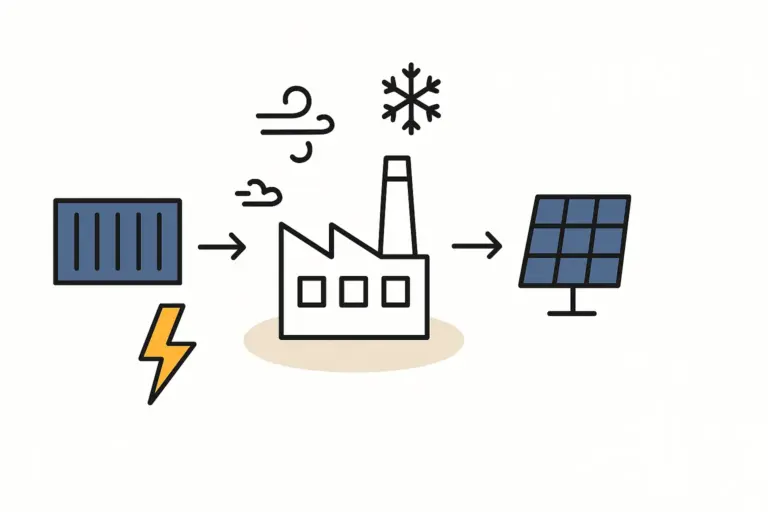
When business leaders consider establishing a solar module factory, their analysis typically centers on traditional manufacturing hubs in Asia or locations with low labor costs. The focus is often on access to supply chains and affordable manpower. Yet, a critical operational cost is frequently underestimated in these initial plans: electricity.
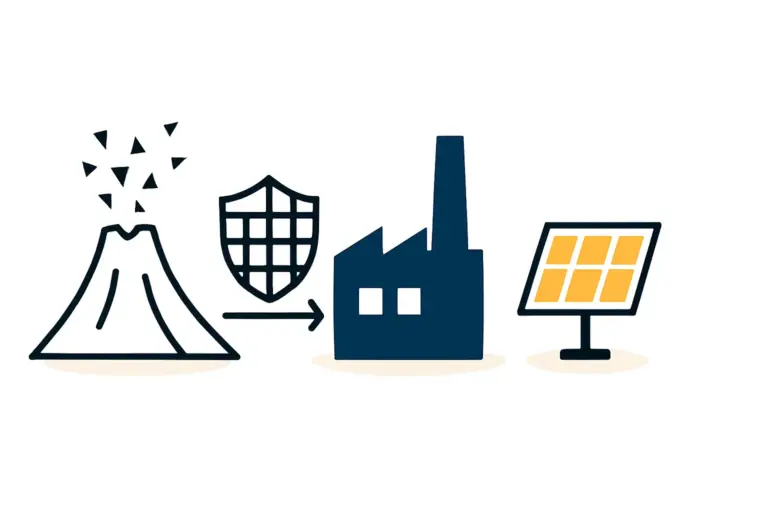
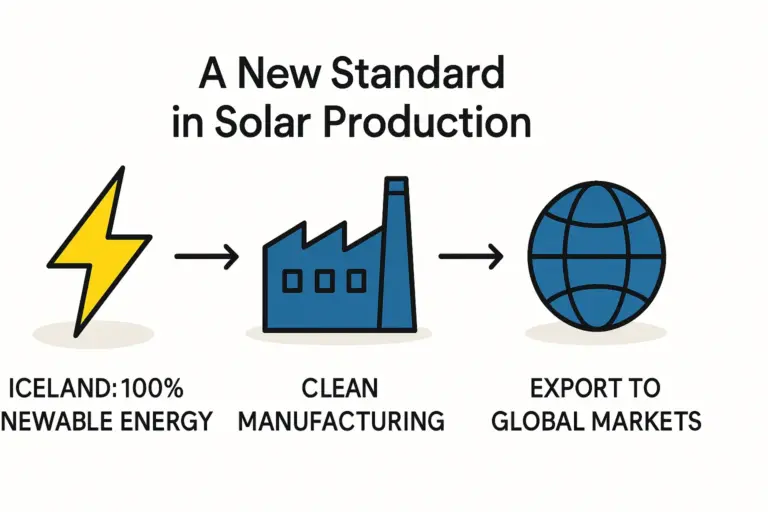
This analysis explores an unconventional yet strategically powerful location for solar module manufacturing: Iceland. A look at the country’s unique energy landscape reveals how its abundant, low-cost geothermal power creates a significant competitive advantage that can fundamentally alter the financial model of a modern solar factory.
The Hidden Cost in Solar Module Production: Energy Consumption
While raw materials like solar cells, glass, and aluminum frames represent the largest portion of a module’s cost, the energy needed to assemble these components is a major part of a factory’s day-to-day operating expenses. These ongoing costs, known as [INTERNAL LINK: “operational expenditures (OPEX)” to /guides/understanding-solar-factory-opex], directly impact profitability.
Two processes in particular are responsible for a large share of a factory’s electricity consumption:
-
Soldering: Automated stringer machines connect solar cells into strings, and the final junction box must also be soldered. Both steps require precise, consistent heat, which places a stable and significant load on the electrical system.
-
Lamination: This is the single most energy-intensive step. The laminator uses heat and pressure to encapsulate the solar cells between layers of glass and protective backing—a process that requires maintaining temperatures around 150°C (302°F) for extended periods.
In regions with high industrial electricity prices, these processes can leave a factory’s profitability highly vulnerable to energy market fluctuations.
Iceland’s Unique Energy Proposition
Iceland’s geography gives it a resource that is both rare and immensely valuable for industrial applications: virtually limitless geothermal and hydroelectric power.
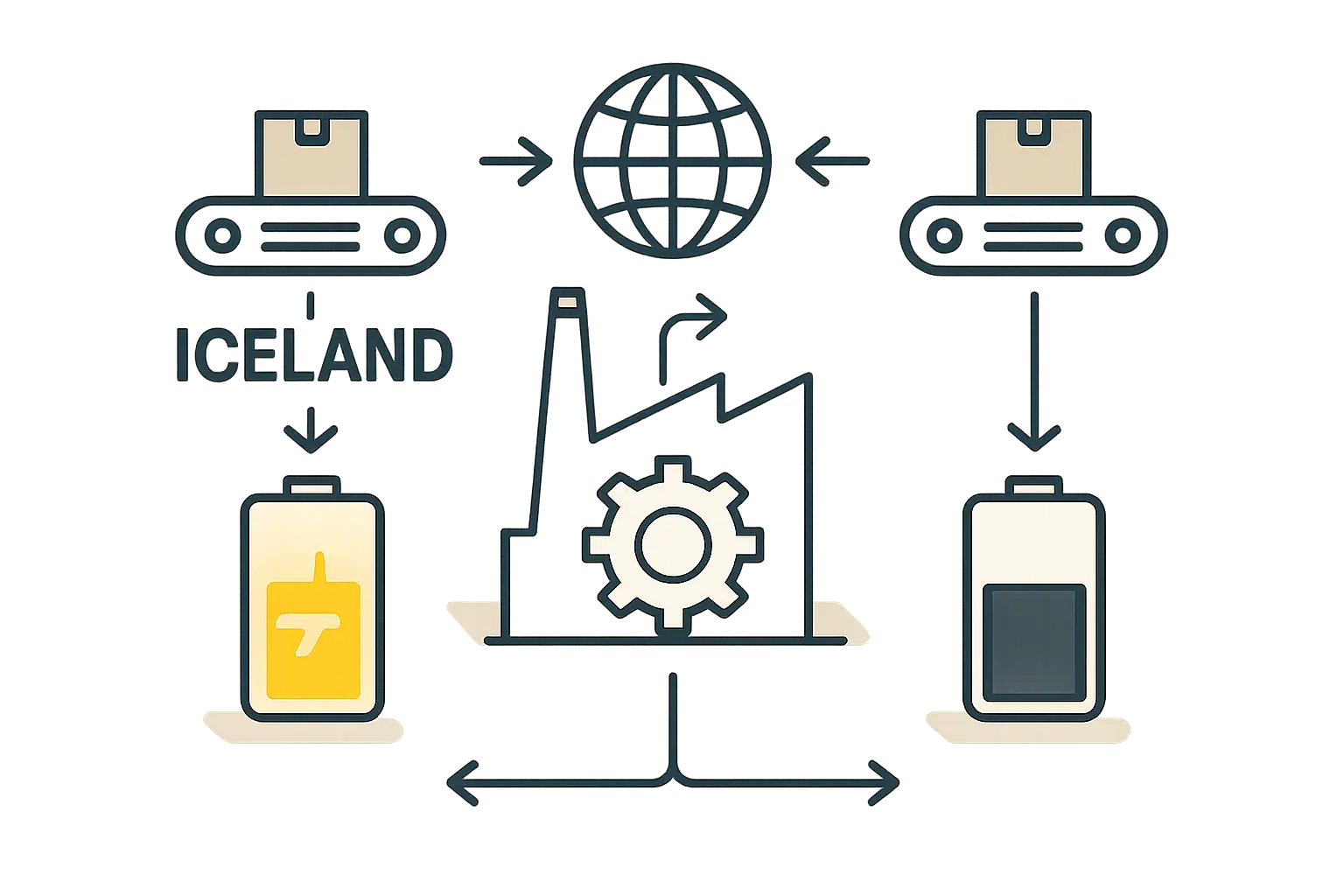
The country’s electrical grid is powered almost entirely by these renewable sources, with roughly 73% from hydropower and 27% from geothermal energy. This natural advantage offers two key benefits for an energy-intensive business like solar module manufacturing:
-
Extremely Low Cost: Industrial electricity prices in Iceland are among the lowest in the world, often secured through long-term contracts at rates around US$0.04–$0.05 per kilowatt-hour (kWh).
-
Price Stability: Unlike markets dependent on fossil fuels, Iceland can offer long-term, fixed-price power purchase agreements (PPAs). This de-risks the investment by ensuring unparalleled cost predictability for years to come—a crucial factor for any robust [INTERNAL LINK: “business plan for a solar factory” to /resources/sample-business-plan].
Quantifying the Financial Impact on a Solar Factory
The difference in electricity cost is not a minor detail; it is a fundamental shift in a factory’s operational cost structure. Consider, for example, the average industrial electricity prices in other regions compared to Iceland.
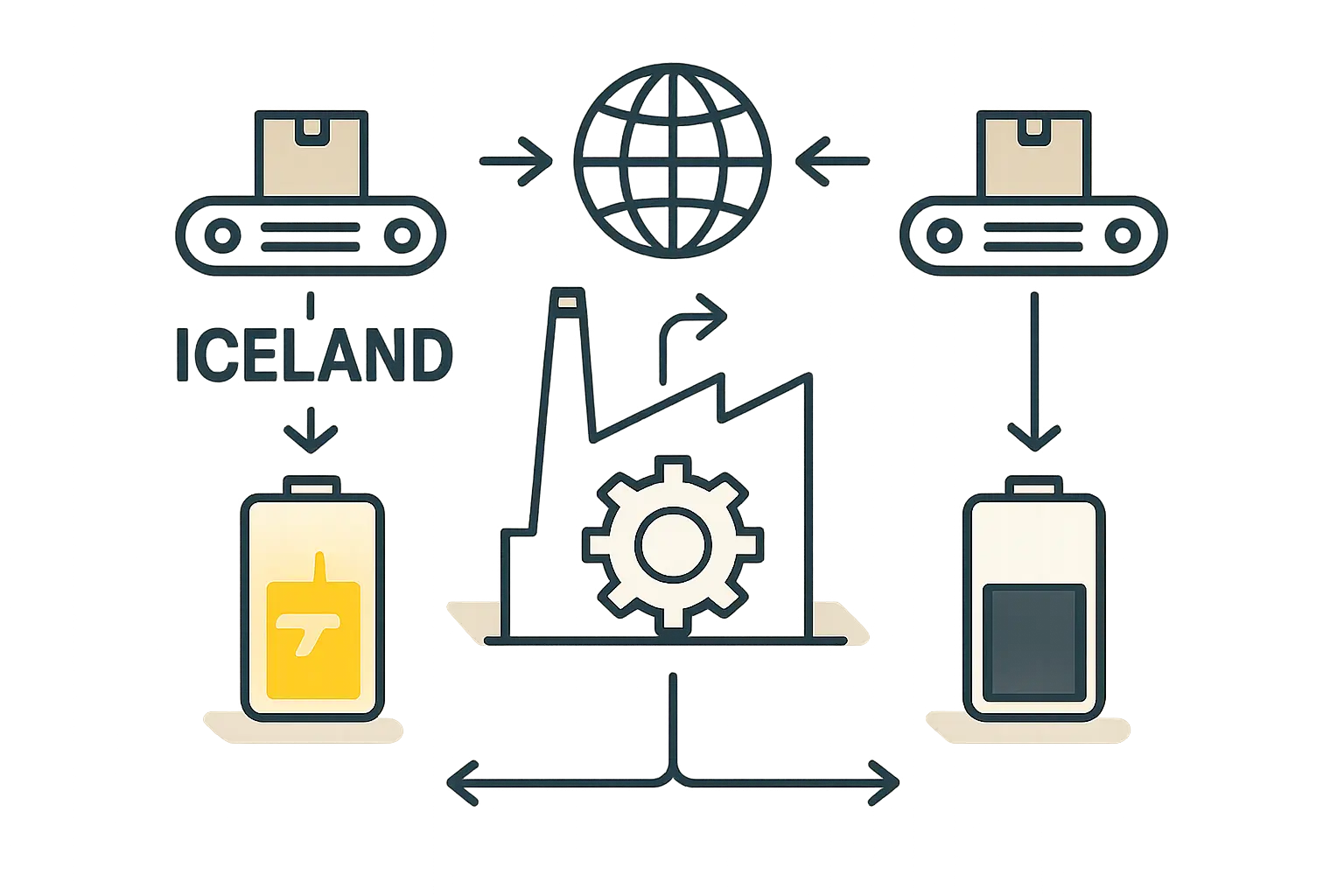
In the European Union, the average price for industrial consumers often ranges from US$0.15 to US$0.25 per kWh. A medium-sized 50 MW solar module factory operating around the clock can consume several million kWh annually. At that scale, a price difference of just US$0.10 per kWh translates into hundreds of thousands of dollars in annual savings. This is money that flows directly to the bottom line, enhancing profitability and resilience against market pressures.
The Lamination Process: A Prime Beneficiary
The [INTERNAL LINK: “solar panel lamination process” to /guides/technology/lamination-process-explained] is where the cost advantage becomes most apparent. Each cycle produces a small batch of modules and takes 15 to 20 minutes at high temperatures. In a 24/7 operation, the laminator is one of the largest and most consistent energy consumers.
By locating a factory in Iceland, the cost of this essential, energy-intensive process is dramatically reduced, turning what would be a major operational liability into a manageable expense.
Beyond Cost Savings: Strategic and Market Advantages
The benefits of manufacturing in Iceland extend beyond direct financial savings on electricity.
-
“Made in Europe” Credibility: For projects in Europe and North America, a product made in Iceland carries a “Made in Europe” label. This can be an advantage for public tenders and quality perception, and it simplifies logistical chains compared to sourcing from Asia.
-
ESG and Green Marketing: A solar module produced using 100% renewable energy has a powerful marketing narrative. For corporate or government clients with strict Environmental, Social, and Governance (ESG) requirements, this can be a decisive purchasing factor.
-
Logistical Hub: Located in the North Atlantic, Iceland has strategic sea-freight access to major ports in both North America and Europe, simplifying distribution to key solar markets.
A Balanced View: Considering the Challenges
Of course, no location is without its trade-offs. A realistic assessment of an Icelandic factory must also consider potential challenges.
-
Labor Costs: Labor costs in Iceland are higher than in traditional Asian manufacturing centers. However, since modern solar module production is highly automated, the overall impact of labor on the final product cost is reduced.
-
Raw Material Logistics: Key materials like solar cells, glass, and aluminum frames would need to be imported, requiring careful supply chain management.
These factors underscore the importance of expert planning and feasibility studies. Such projects often involve setting up [INTERNAL LINK: “turnkey solar module manufacturing lines” to /services/turnkey-lines], where logistical and operational models are designed to maximize the location’s inherent advantages while mitigating its challenges. As demonstrated in J.v.G. turnkey projects, a detailed analysis of shipping routes and supplier agreements is a critical first step.
Frequently Asked Questions (FAQ)
What is geothermal energy?
Geothermal energy is heat from beneath the earth’s surface. In volcanically active regions like Iceland, this heat is close to the surface and can be used to generate steam, which in turn drives turbines to produce electricity.
Why is lamination so energy-intensive?
Lamination requires heating a large, heavy machine to a high temperature (around 150°C) and holding that heat consistently throughout the curing process (15-20 minutes). Repeating this cycle hundreds of times per day leads to very high cumulative energy consumption.
Are there already solar module factories in Iceland?
While Iceland has a world-class aluminum smelting industry that leverages its low-cost energy, solar module manufacturing is a new concept for the region. This presents a first-mover advantage.
How would this compare to manufacturing in my home country?
The viability depends almost entirely on your local industrial electricity rates. For entrepreneurs in regions with high energy costs (like many parts of Europe, Africa, or island nations), the Icelandic model is a compelling alternative worth investigating.
What are the first steps to evaluate such a project?
The initial step is a comprehensive feasibility study. This involves modeling the costs of logistics, labor, and construction against the projected long-term savings from low-cost energy to determine the project’s overall financial viability.
Conclusion: A New Paradigm for Solar Manufacturing?
Iceland presents a thought-provoking case for strategic location selection. It demonstrates that by prioritizing the most significant operational expenditure—energy—it is possible to create a highly profitable and sustainable manufacturing model that challenges conventional wisdom.
For the forward-thinking investor, the question becomes not just “Where is labor cheapest?” but “Where is the total cost of production lowest over the long term?” In a world increasingly focused on both economic efficiency and environmental sustainability, leveraging Iceland’s geothermal advantage offers a compelling answer. Exploring this opportunity requires a shift in perspective, but the potential rewards—financial, logistical, and reputational—are substantial.