Iraq stands at a significant crossroads. With over 3,100 hours of annual sunshine, the country boasts an immense, untapped resource for solar energy. The national government has set an ambitious target of installing 12 GW of solar capacity by 2030, a clear signal of its commitment to diversifying the energy sector.
But for investors looking to establish local solar module production, a critical question arises: in a country with a nascent renewable energy sector, where will the skilled technicians and engineers come from?
This question points to a challenge that is also a profound opportunity. Iraq’s minimal installed solar capacity, combined with a high youth unemployment rate of 36%, creates a unique environment for this kind of initiative. A well-structured workforce development program can not only ensure the success of a new solar factory but also contribute directly to national economic development.
This article outlines a practical framework for building a highly competent local team, transforming a potential bottleneck into a strategic asset.
The Core Challenge: Bridging the High-Tech Skills Gap
The primary obstacle for any entrepreneur entering this sector in Iraq is the gap between the general labor pool and the specific technical skills needed for modern solar module manufacturing. Unlike traditional industries, solar production demands precision, technical expertise, and a commitment to stringent quality control.
The process involves handling delicate silicon wafers, operating sophisticated automation equipment, and performing meticulous quality checks. An untrained workforce can lead to high material wastage, low production yields, and modules that fail to meet international certification standards, undermining the entire business case. A proactive training strategy, therefore, isn’t an optional extra—it’s a foundational pillar for operational success.
A Three-Pillar Framework for Workforce Development
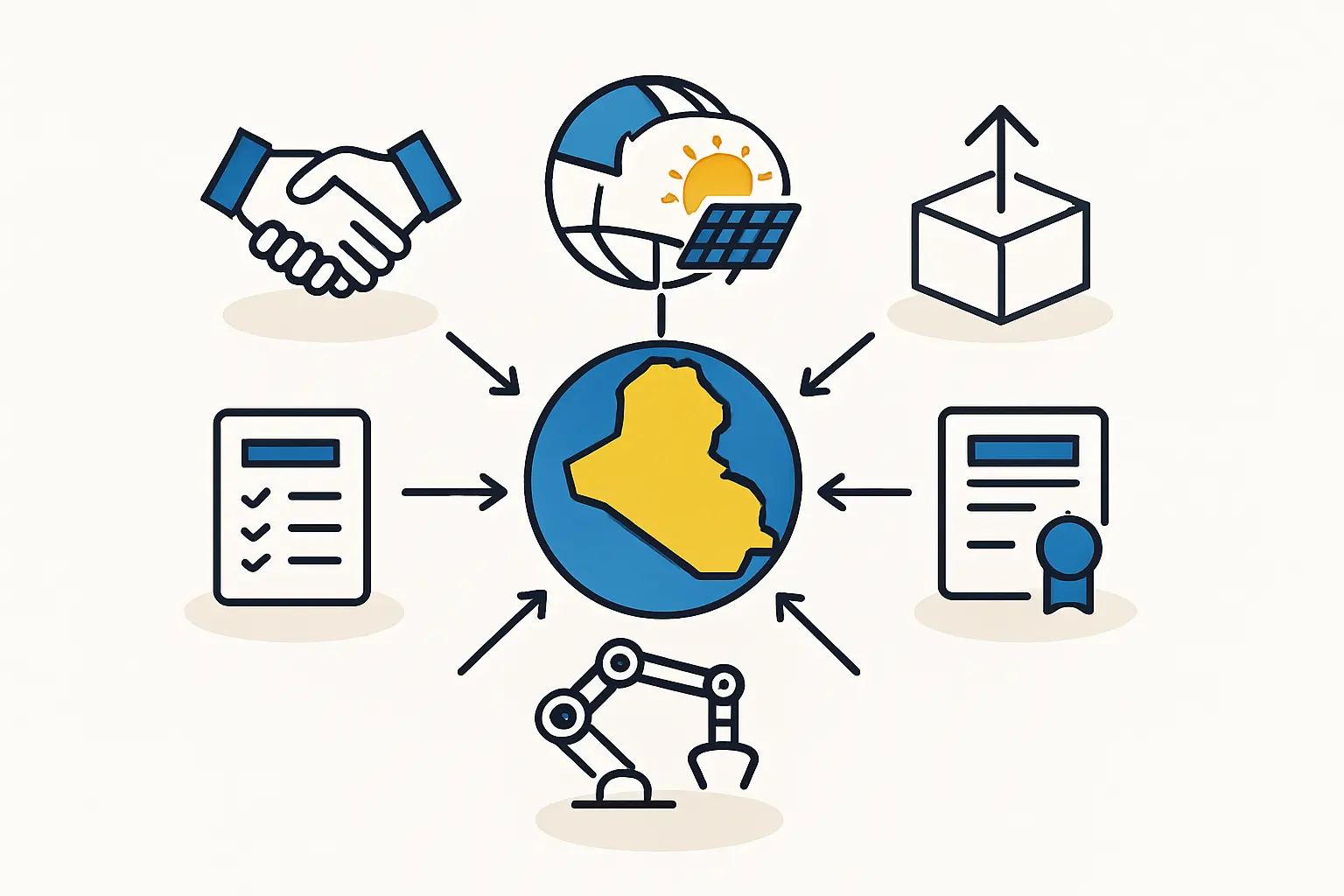
A successful training program is more than simple instruction; it’s a multi-stage process designed to build skills systematically, from foundational knowledge to advanced operational mastery. This process is best structured around three core pillars.
Pillar 1: Foundational Training Through Local Partnerships
The first step is to build a base of theoretical knowledge. Rather than starting from scratch, investors can partner with Iraq’s existing technical institutes and universities.
-
Curriculum Co-Development: Collaborate with academic partners to design a specialized curriculum focused on photovoltaic principles, manufacturing processes, and quality standards. This leverages their educational infrastructure while infusing it with industry-specific expertise.
-
Candidate Screening: Use these partnerships to identify promising engineering and technical students. Aptitude tests and interviews can help select candidates with the right mindset for detail-oriented, high-tech work.
-
Classroom Instruction: This phase covers the ‘why’ behind the ‘how’—the science of solar cells, the function of each layer in a module, and the importance of each step in the production sequence.
This initial phase ensures that trainees arrive at the factory already understanding the fundamental principles of the technology they’ll be using.
Pillar 2: Practical, On-the-Job Skill Acquisition
Theoretical knowledge must be translated into practical skill. This is achieved through structured, hands-on training on the production floor, guided by experienced supervisors.
-
Machine-Specific Modules: Training should be broken down by workstation. A future stringer operator requires different hands-on training than a laminator technician or a quality control inspector.
-
Supervised Practice: Trainees begin by shadowing experienced technicians, often brought in by the equipment supplier, then move to performing tasks under close supervision. This ‘see one, do one, teach one’ model is highly effective.
-
Focus on Precision: Emphasis is placed on proper material handling, precise execution, and adherence to safety protocols. For example, technicians must learn to handle solar cells—which are thinner than a human hair—without causing microcracks.
This phase is critical for building the muscle memory and procedural discipline required for consistent, high-quality output.
Pillar 3: Advanced Training and Leadership Development
To ensure long-term self-sufficiency, a factory needs local leaders. This requires identifying high-potential individuals from the initial cohort and investing in their continued development.
-
Training Abroad: Key engineers and future line supervisors can be sent for advanced training at the facilities of the machinery supplier or at an established solar module factory. This provides invaluable exposure to best practices in a mature production environment.
-
Quality Control and Process Optimization: Advanced training focuses not just on operating equipment, but on understanding and improving the entire production process. This includes statistical process control, root cause analysis for defects, and lean manufacturing principles.
-
Cultivating Local Experts: The ultimate goal is to create a core team of Iraqi experts who can train the next generation of technicians. This approach dramatically reduces long-term reliance on foreign specialists and builds a sustainable local knowledge base.
The Business Case: From Training Cost to Long-Term Asset
Investing in a comprehensive training program yields returns far beyond simply having a qualified workforce.
-
Improved Quality & Yield: A well-trained team makes fewer errors, leading to less material waste and a higher percentage of top-grade modules.
-
Operational Independence: This reduces the long-term cost and logistical complexity of relying on expatriate staff.
-
Social License to Operate: By creating skilled jobs and addressing youth unemployment, the factory becomes a valued contributor to the local economy, strengthening relationships with government and community stakeholders.
-
Competitive Advantage: A reputation for quality, built on the skills of the local workforce, becomes a powerful differentiator in a growing market, as evidenced by major projects like Scatec’s 525 MW development which signal increasing international interest.
Frequently Asked Questions (FAQ)
How long does it take to train a production line team?
Training a full production line team typically takes three to six months. This includes initial classroom instruction followed by intensive on-the-job training as the production line is being commissioned. Key engineers and supervisors may require a longer period that includes international training.
What are the typical costs associated with this training framework?
Costs vary, but this investment should be factored into the initial business plan. Key expenses include curriculum development, instructor fees for local and international experts, trainee salaries, and travel for advanced training abroad. This investment is often a fraction of the potential losses from poor production quality.
What initial qualifications should we look for in recruits?
For technicians, a background from a vocational or technical institute is ideal. Key attributes are attention to detail, good hand-eye coordination, and a willingness to learn and follow precise procedures. For engineers, a degree in electrical, mechanical, or industrial engineering is the standard prerequisite.
Should we hire experienced foreign staff or train a local team?
A hybrid approach is most effective. A small team of experienced expatriates is crucial initially to lead the training and establish operational standards. However, the clear objective should be to transition all roles to a fully trained local team to ensure long-term sustainability and cost-effectiveness.
Building a Sustainable Future, One Technician at a Time
The challenge of finding skilled labor in Iraq’s emerging solar sector is not a barrier but a call for strategic action. By implementing a structured, three-pillar workforce development program, investors can cultivate a world-class local team.
This approach transforms a necessity into a powerful competitive advantage, ensuring the production of high-quality solar modules while contributing directly to the nation’s economic and energy ambitions. For entrepreneurs and business leaders, this is the foundational work required to successfully start a solar module production business. It is an investment in people that pays dividends in quality, efficiency, and long-term resilience.