Disclaimer: This case study represents a composite example derived from real-world
consulting work by J.v.G. Technology GmbH in solar module production and factory optimization. All data points are realistic but simplified for clarity and educational purposes.
A Bifacial Solar Module Factory in Ma’an: The Turnkey Business Case for Jordan
Jordan’s vast desert landscapes, often perceived as arid and empty, hold one of the world’s most significant solar energy resources. With solar irradiation levels exceeding 2,000 kWh per square meter annually, this potential is undeniable. Harnessing it, however, requires more than installing standard solar panels. The desert’s unique environmental conditions present both a challenge and a technological opportunity for forward-thinking investors.
This article presents a strategic business case for establishing a specialized solar module factory in Jordan’s solar hub of Ma’an. It focuses on producing high-performance bifacial modules, a technology uniquely suited to the region’s high ground reflectivity. The venture is designed to be commercially viable while aligning with Jordan’s national energy goals, turning a regional advantage into a competitive industrial enterprise.
The Untapped Potential of Jordan’s Desert Environment
The case for advanced solar manufacturing in Jordan rests on a fundamental property of its deserts: albedo. Albedo measures how much light a surface reflects without absorbing it. While a dark field might have an albedo of 5 to 10 percent, the light-colored sands of the Jordanian desert can have an albedo of 30 to 40 percent.
This high reflectivity means a significant amount of solar energy bounces off the ground. For conventional solar installations, this reflected light is lost energy. For a specialized manufacturing operation, however, this same characteristic represents a major source of untapped value and highlights the strategic importance of bifacial solar module technology.
Why Standard Solar Modules Fall Short in High-Albedo Regions
Most solar modules installed globally are monofacial, meaning they capture light from only one side, the one facing the sun. While effective in many environments, they are not optimized for locations with high ground reflectivity. Imported standard modules are also often designed for temperate climates and can degrade quickly when faced with desert-specific challenges:
-
Extreme Temperatures: Sustained high ambient temperatures can reduce the efficiency and lifespan of standard module components.
-
Soiling and Abrasion: Fine dust and sand accumulate on module surfaces, blocking light in a process known as soiling and potentially causing microscopic abrasion from wind. This requires frequent, costly cleaning and reduces energy output.
-
Lost Energy: A monofacial module cannot capture the 30 to 40 percent of sunlight reflected from the desert floor, representing a significant missed opportunity for energy generation.

The Bifacial Advantage: Capturing Energy from Both Sides
A bifacial solar module is engineered with solar cells on both its front and back, allowing it to capture sunlight from two directions. The front side absorbs direct sunlight, while the back absorbs light reflected from the ground (albedo).
In an environment like Ma’an, this dual-capture capability can boost a module’s energy yield by 10 to 25 percent compared to a monofacial counterpart of the same size. This ‘bifacial gain’ transforms an environmental challenge into a direct commercial advantage, producing significantly more electricity from the same project footprint. A local factory producing these specialized modules can offer a technically superior product tailored to the country’s most valuable solar development zones. For a deeper technical overview, explore the principles of bifacial solar module technology.
A Strategic Business Case: Local Manufacturing in Ma’an
Establishing a manufacturing facility in Ma’an is a strategic decision grounded in both market demand and national policy. Jordan’s Vision 2025 aims to increase the share of renewable energy to 20 percent of the country’s total energy mix, a goal that requires substantial domestic capacity.
The Location Advantage
Ma’an is already home to some of the region’s largest utility-scale solar parks, with major international developers like ACWA Power and Shams Ma’an operating substantial projects there. A local factory would be perfectly positioned to serve this concentrated demand.
Economic Rationale
-
Import Substitution: Local production reduces Jordan’s reliance on imported modules, strengthening the national supply chain and insulating projects from global shipping volatility.
-
Job Creation: A high-tech factory creates skilled jobs, contributing to local economic development.
-
Regional Export Hub: By mastering technology optimized for desert conditions, the facility can position Jordan as a regional exporter of specialized solar technology to neighboring countries in the Middle East and North Africa.
Securing Demand Through Off-Take Agreements
A key part of this business model is securing demand before the factory is even built. By engaging with major utility-scale developers in Ma’an, a new manufacturing venture can negotiate off-take agreements. These are long-term contracts to supply a specified volume of modules, guaranteeing a consistent revenue stream and de-risking the initial investment.
Engineering for Excellence: The DESERT+ Technology Package
To succeed, a Jordanian factory must produce modules that are not just bifacial but exceptionally durable. This requires a specialized production process incorporating advanced materials and technologies, like the DESERT+ package developed by an experienced European turnkey engineering team. This package focuses on long-term performance in harsh environments:
-
Anti-Soiling Coatings: A specialized nanocoating is applied to the glass surface, reducing the adhesion of dust and sand particles. This lowers energy losses from soiling and significantly reduces the frequency and cost of cleaning.
-
High-Thermal-Conductivity Encapsulants: The materials used to laminate the module are chosen for their ability to withstand and dissipate extreme heat, protecting the solar cells from temperature-induced degradation.
-
IP68-Rated Junction Boxes: Junction boxes are hermetically sealed to prevent the ingress of fine dust and moisture, a common failure point for standard modules in the desert.
This focus on specialized, high-reliability components is what differentiates a local, purpose-built product from a standard import.
Implementing the Vision: A Turnkey Factory Solution
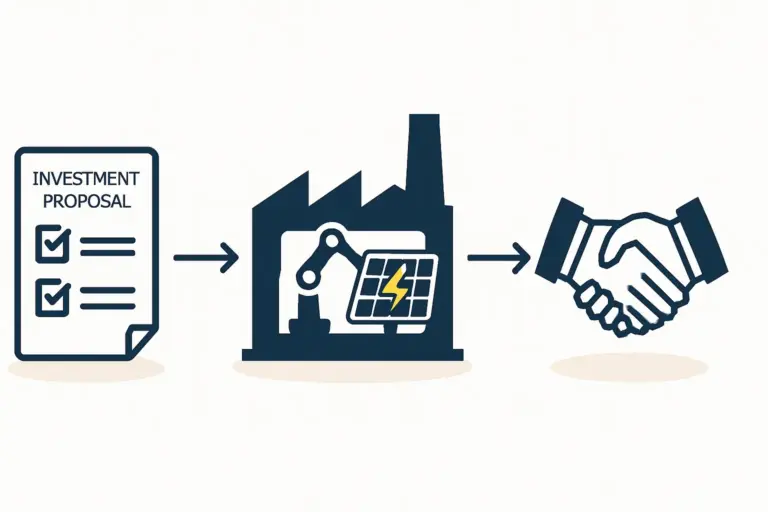
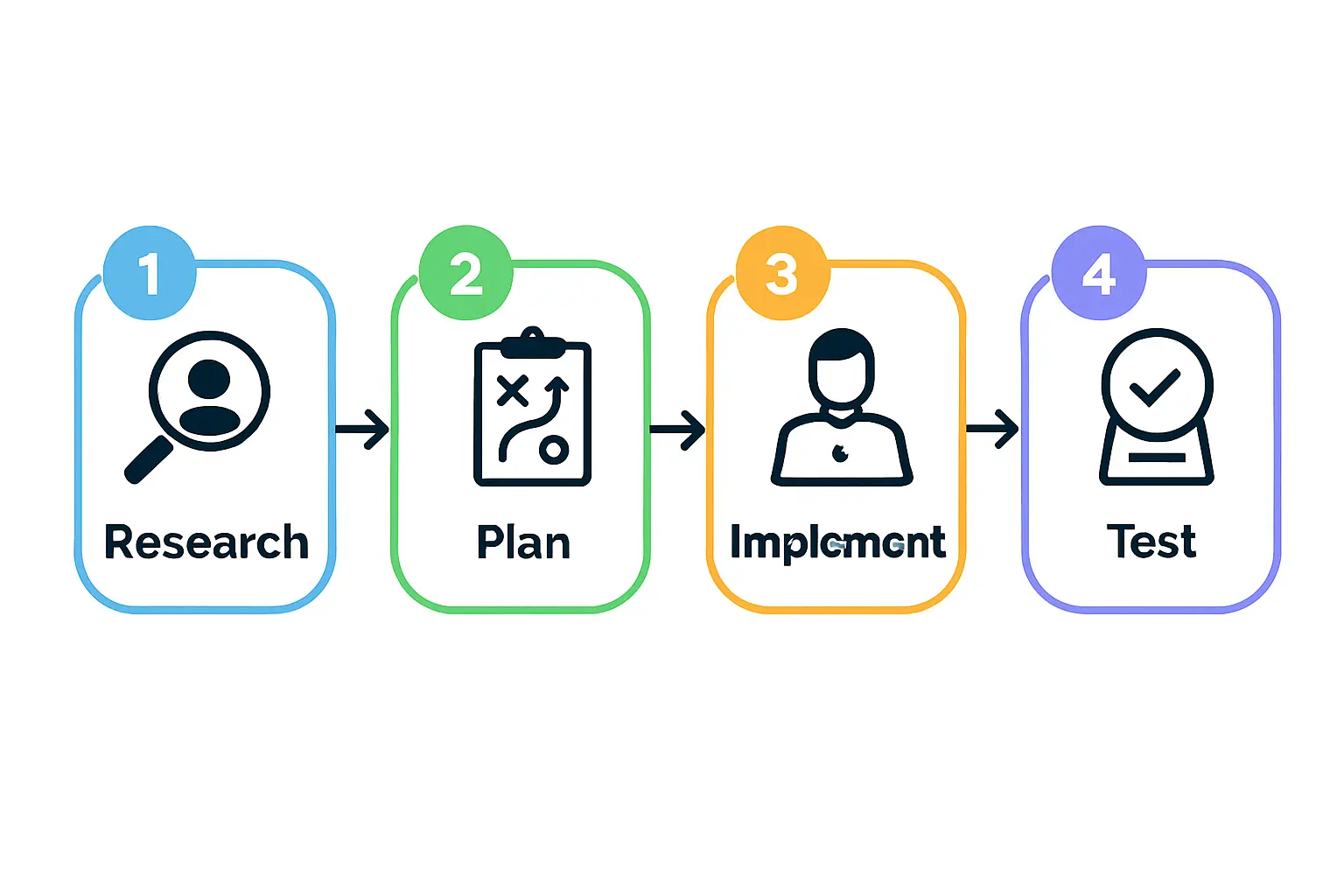
For entrepreneurs or investors new to the solar industry, launching a high-tech manufacturing operation can seem daunting, which is why a turnkey solution provider is essential. European PV manufacturers manages the process through structured phases, drawing on experience from numerous turnkey projects:
-
Feasibility and Business Planning: Validating the market, defining the technology, and securing financing.
-
Factory Design and Layout: Optimizing the production floor for efficiency and quality control.
-
Equipment Sourcing and Integration: Procuring and commissioning the specialized machinery required for bifacial and DESERT+ module production.
-
Process Implementation and Staff Training: Establishing world-class manufacturing processes and training a local workforce to operate the line to international standards.
This structured approach ensures the facility can become operational efficiently, capable of producing certified, high-quality modules from day one. Information on how such projects are structured can be found by reviewing turnkey solar factory solutions.
Frequently Asked Questions (FAQ)
What is a bifacial solar module?
A bifacial solar module is a solar panel designed to capture light from both its front and rear surfaces. This allows it to generate electricity from direct sunlight hitting the front and from sunlight reflected off the ground hitting the back, making it highly effective in locations with reflective surfaces like sand or snow.
Why is local manufacturing a better strategy than importing standard modules?
Local manufacturing allows for the production of modules specifically engineered for Jordan’s unique environmental conditions, such as high heat, dust, and high albedo. It also reduces supply chain risks, lowers transportation costs, creates local jobs, and aligns with national goals for industrial development and energy independence.
What is an off-take agreement and why is it important?
An off-take agreement is a binding contract between a producer and a buyer to purchase a specified amount of future production. For a new factory, securing these agreements with large solar park developers provides a guaranteed revenue stream, which is often crucial for obtaining project financing.
What are the primary challenges when starting a solar factory in Jordan?
The main challenges include securing initial investment capital, navigating local business regulations and permitting processes, and developing a skilled local workforce. Partnering with an experienced turnkey provider can help mitigate these challenges by providing a proven project roadmap and technical training.
What level of investment and workforce is required for such a facility?
A semi-automated facility with an annual production capacity of 50 to 100 MW typically requires an initial investment in the range of USD 5 to 10 million. Such an operation would employ approximately 50 to 80 personnel, including technicians, engineers, and administrative staff, once fully operational.
Conclusion: From National Vision to Tangible Enterprise
Establishing a specialized bifacial module factory in Ma’an represents a convergence of technological opportunity, market demand, and national strategic interests. It moves beyond simply installing imported hardware toward creating a sophisticated industrial asset one capable of producing a superior product optimized for its environment.

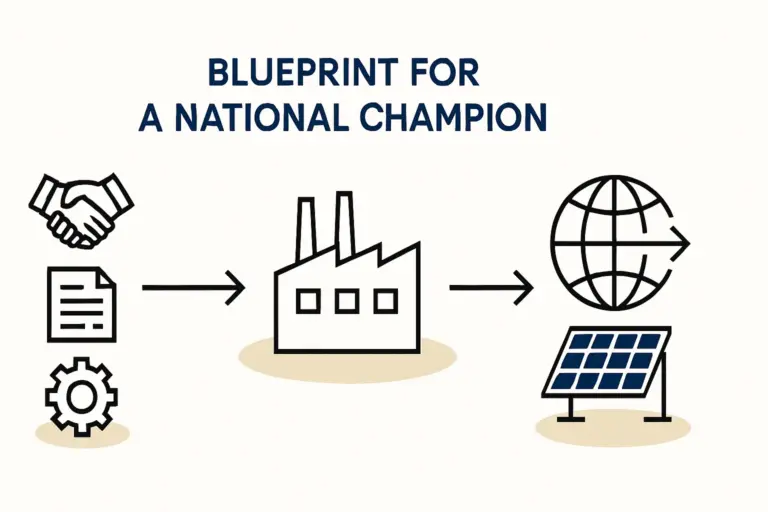
By leveraging Jordan’s high albedo, serving the needs of established utility-scale projects, and incorporating advanced DESERT+ technology, an investor can build a highly competitive and profitable enterprise. With expert guidance and a structured turnkey approach, this vision becomes an actionable blueprint for powering Jordan’s renewable energy future.
Download the Jordan Bifacial Solar Production Case Study (PDF)
Author: This case study was prepared by the
turnkey solar module production specialists at J.V.G. Technology GmbH
It is based on real data and consulting experience from J.v.G. projects
worldwide, including installations ranging from 20 MW to 500 MW capacity.