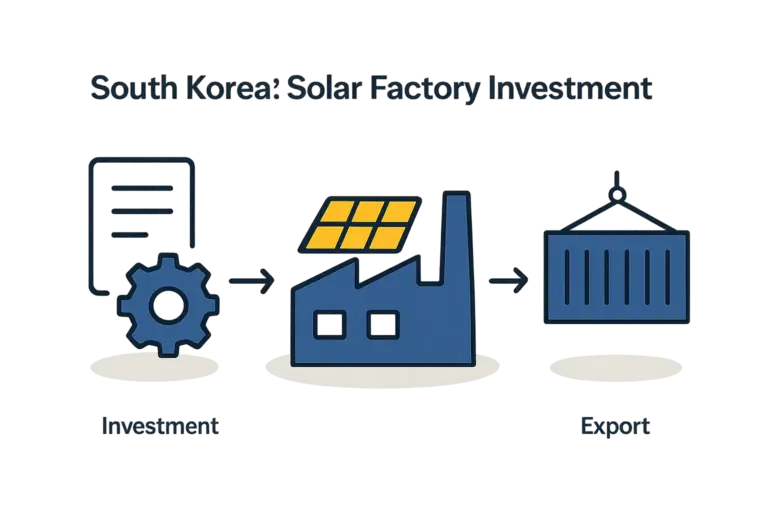
An entrepreneur can develop a flawless business plan for a new solar module factory—securing financing, identifying suppliers, and mapping out a sales strategy. Yet, a single, often underestimated factor can undermine the entire project’s profitability: logistics.
The efficiency of moving raw materials from a container ship to the production line, and finished modules from the factory to global customers, is not a minor detail—it’s fundamental to a successful manufacturing operation.
This article examines the critical role of port infrastructure in selecting a factory location. With South Korea’s highly advanced logistics network as a case study, it offers a framework for how business leaders can evaluate potential sites. The goal is to understand how the choice between a global hub like the Port of Busan and a regional gateway like the Port of Incheon can shape a factory’s entire operational model.
Why Port Proximity is a Strategic Decision for Solar Manufacturing
A solar module factory operates on a constant flow of goods. Inbound logistics involve importing critical raw materials like solar cells, high-transparency glass, aluminum frames, and encapsulants. On the outbound side, the factory exports finished, fragile solar modules to distribution centers and project sites around the world.
Each step in this supply chain represents a cost and a risk. The distance and quality of the transport route between a port and a factory directly influence several key factors.
- Operational Costs: Fuel, labor, and transport fees accumulate with every kilometer. In a competitive market, minimizing these costs is essential.
- Lead Times: Inefficient inland transport can add days or even weeks to both procurement and delivery schedules, affecting cash flow and customer satisfaction.
- Risk of Damage: Solar modules, particularly the glass, are susceptible to damage from vibrations and poor handling on substandard roads. Longer routes heighten this risk.
For perspective, a 50 MW annual capacity factory requires a significant volume of materials. Based on experience from J.v.G. turnkey projects, this translates to several dozen 40-foot containers of glass, cells, and other components arriving each month. Managing this flow efficiently isn’t an afterthought—it’s central to the business case.
Evaluating a Nation’s Port Infrastructure: The South Korean Example
South Korea offers an excellent model for analysis, with its world-class port system and status as a major manufacturing economy. Its strategic location and investment in logistics have created a highly competitive environment. When considering such a location, an investor must look beyond a single port and analyze the entire national network.
The country’s primary container gateways are the Port of Busan, the Port of Incheon, and the Port of Gwangyang. Each serves a distinct economic region and offers different strategic advantages.

Understanding each port’s unique value proposition is the first step in aligning a factory’s location with its business strategy.
Case Study 1: The Port of Busan – A Global Transshipment Hub
The Port of Busan is consistently ranked among the top ten busiest container ports globally. In 2023, it handled over 22 million TEUs (Twenty-foot Equivalent Units), making it a cornerstone of international trade.
Key Characteristics
Busan’s primary strength lies in its role as a global transshipment hub. It serves as a major stop for the world’s largest container ships traveling on deep-sea routes between Asia, North America, and Europe. For a solar manufacturer, this provides unparalleled access and frequent sailings to major export markets. The port’s massive scale and high level of automation drive efficiency, reliability, and competitive shipping rates for long-haul destinations.
Inland Connectivity and Industrial Zones
A robust network of highways and rail lines supports the port, connecting it to the industrial heartland of southeastern Korea. The surrounding area also hosts the Busan-Jinhae Free Economic Zone (BJFEZ). Locating a factory within or near such a zone can offer significant advantages, including tax incentives, streamlined customs clearance, and access to a skilled workforce and established supply chains.
A detailed review of building and infrastructure requirements is essential when evaluating sites within these zones.
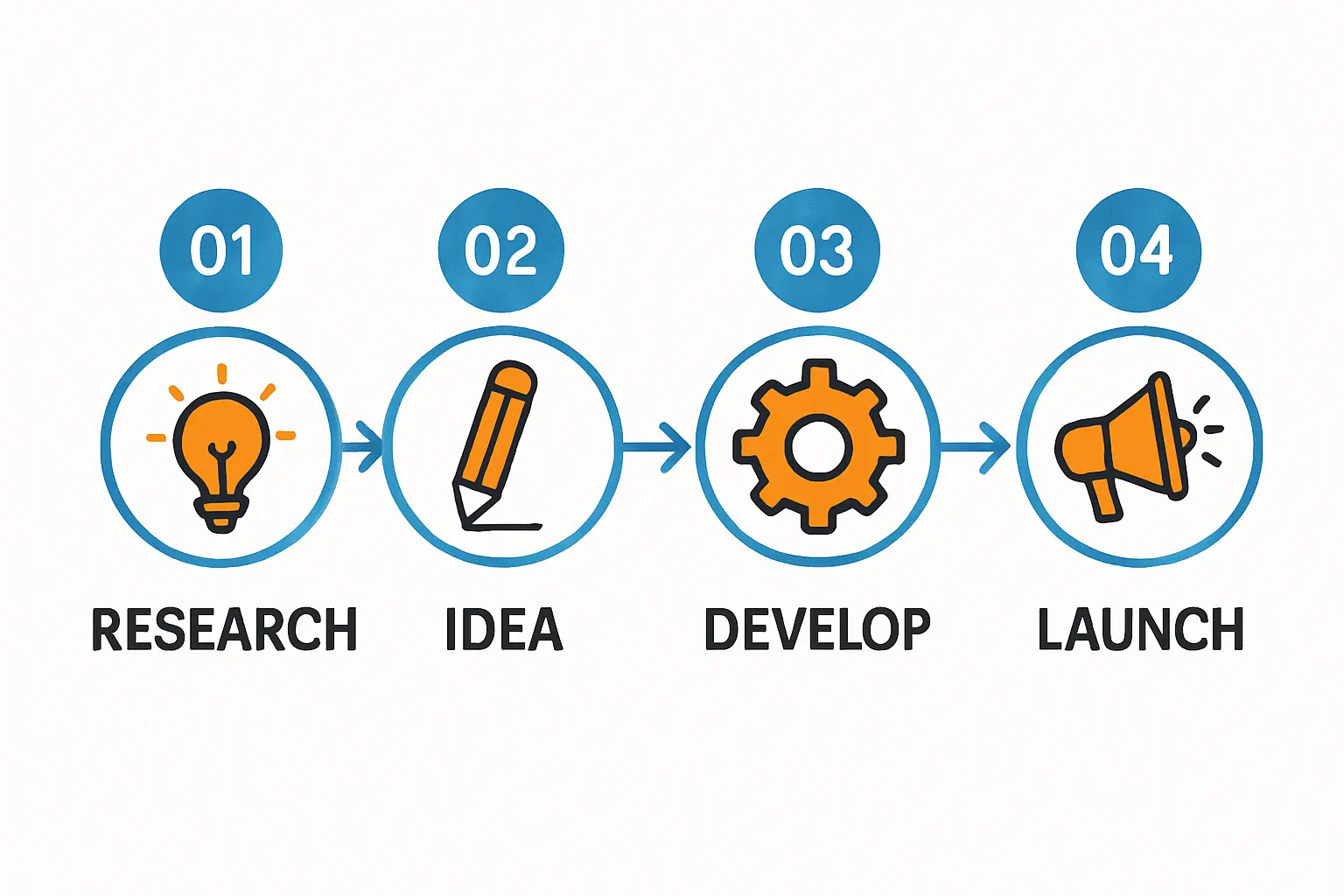
Suitability for a Solar Factory
Choosing a location near the Port of Busan is ideal for a solar module manufacturer with an export-oriented business model. If the primary target markets are in North America, Europe, or other parts of Asia, Busan offers the most direct and cost-effective sea routes. The trade-off may be higher costs for land and labor compared to less developed regions.
Case Study 2: The Port of Incheon – Gateway to the Capital Region
While smaller than Busan, the Port of Incheon is a vital logistics hub in its own right, handling over 3 million TEUs annually. Its strategic advantage lies in its location, serving as the primary maritime gateway to the Seoul Metropolitan Area—one of the largest and most dynamic economic regions in the world.
Key Characteristics
Incheon’s focus is on facilitating trade for the immense domestic market and managing trade flows with nearby China. For a solar manufacturer, this proximity to both a massive consumer base and a key source of raw materials can be a decisive factor.
Inland Connectivity and Local Market Access
The port provides direct, uncongested highway access to Seoul and its surrounding industrial clusters. This is a critical advantage for a factory focused on supplying the domestic South Korean solar market. The short ‘last mile’ to a large customer base minimizes inland transport costs and delivery times. Its strong shipping links with major Chinese ports can also simplify the sourcing of raw materials like solar cells and aluminum frames.
Suitability for a Solar Factory
A factory located near the Port of Incheon would be strategically positioned for two scenarios:
- Domestic Focus: Prioritizing sales to the large South Korean market.
- China-Centric Supply Chain: Relying heavily on components imported from China.
While global exports are possible from Incheon, they may involve feeder services to larger hubs like Busan, adding a step to the logistics chain.
Beyond the Port: Analyzing the ‘Last Mile’ Connection
A world-class port is only as effective as the infrastructure that connects it to the factory floor. A common challenge observed in J.v.G. consulting projects, particularly in emerging markets, is a bottleneck in the final leg of the journey. A container may be unloaded from a ship in hours, only to be delayed for days by inadequate roads, weak bridges, or administrative hurdles.

A crucial part of due diligence is a physical or satellite-based assessment of the route from the port to the potential factory site. Key questions to ask include:
- Road Capacity: Are the roads wide enough and rated to handle heavy, consistent truck traffic?
- Rail Access: Is there a nearby railhead, and is it equipped for container handling? Rail can be more cost-effective for high-volume transport.
- Congestion: What are the typical traffic patterns? A short distance can become a long delay in a congested area.
- Regulatory Environment: Are there local tolls, weight restrictions, or operating hour limitations that could impact logistics?
Choosing the right factory location requires a holistic view that extends far beyond the port’s perimeter.
Frequently Asked Questions (FAQ)
What is a TEU and why does it matter?
TEU stands for ‘Twenty-foot Equivalent Unit,’ the standard unit of measurement for shipping container volume. A standard 40-foot container is two TEUs. A port’s annual TEU throughput is a key indicator of its size, capacity, and global importance.
What is a ‘free economic zone’ (FEZ) and how can it benefit a factory?
An FEZ is a designated area where business and trade laws differ from the rest of the country. They are designed to attract foreign investment by offering benefits like corporate tax reductions, tariff exemptions on imported goods used for manufacturing, and simplified administrative procedures.
How much does inland transport add to the cost of a solar module?
This varies dramatically by location but can be a significant percentage of the final ‘landed cost’ of materials. In a well-connected region, it might be a minor expense. In a location with poor infrastructure 200km from the port, it could add several percentage points to the cost of goods sold, eroding profitability.
Should I choose a location near a port even if land is more expensive?
This requires a careful cost-benefit analysis. The decision comes down to balancing a higher one-time capital expenditure for land against lower, recurring transport costs over the factory’s lifetime. Often, the long-term savings and reliability of a prime logistics location justify the initial investment.
Conclusion: Making an Informed Location Decision
The choice of a port and its connecting infrastructure is a strategic decision that fundamentally shapes a solar factory’s competitive advantage. It dictates cost structure, market reach, and operational resilience. As the South Korean case illustrates, the ‘best’ port depends on the business model. An export powerhouse like Busan serves a different strategy than a domestic gateway like Incheon.
Entrepreneurs should conduct a thorough analysis, weighing the strengths of each port against the factory’s primary markets and supply chain origins. Crucially, this analysis must extend to the ‘last mile,’ ensuring that the physical and regulatory infrastructure can support a seamless flow of goods.
Developing a robust business plan for a turnkey solar module manufacturing line requires this level of detailed logistical planning. Platforms like pvknowhow.com provide structured courses and resources to guide entrepreneurs through these complex decisions, helping transform a daunting challenge into a clear, actionable plan.