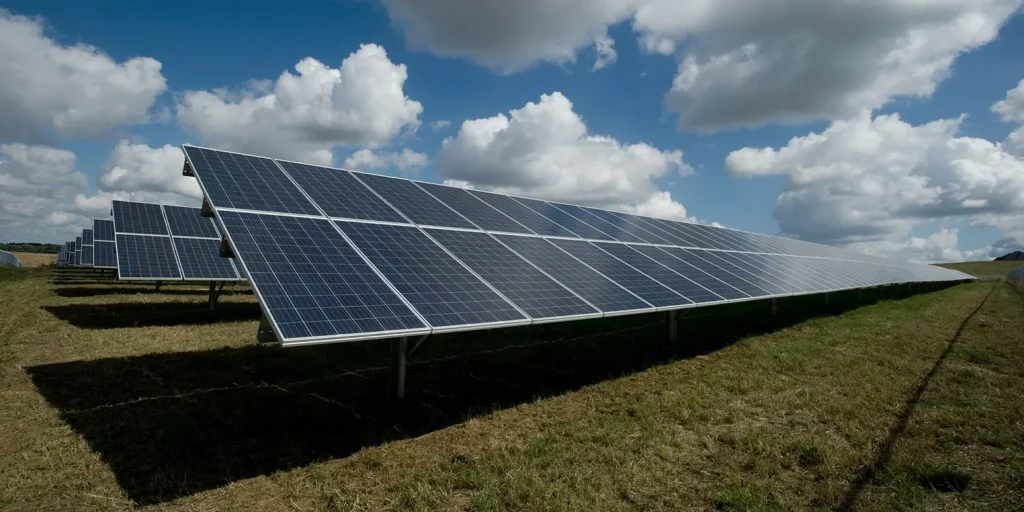
Any investor exploring solar energy opportunities in Kyrgyzstan will first notice the country’s impressive solar resource. With approximately 2,000 kWh/m² of solar irradiation annually, the potential for power generation is immense. Yet the same environment that provides this abundant sunlight also presents a unique set of technical challenges—ones that can cause standard solar modules to fail prematurely.
The country’s high-altitude, continental climate creates a demanding operational environment. Extreme temperature swings, intense ultraviolet (UV) radiation, heavy snow loads, and frequent hailstorms all demand a more robust and specialized approach to solar module design and manufacturing.
This article explores the key technological adaptations for producing solar modules that not only survive but thrive in Kyrgyzstan’s unique conditions, ensuring long-term performance and a sustainable return on investment.

Understanding Kyrgyzstan’s Unique Environmental Demands
Before selecting manufacturing equipment or defining a product, it’s crucial to understand the specific environmental stressors solar modules will face. Standard modules, often designed for more moderate European or Asian climates, are simply not built for the operational realities of Central Asia.
The Duality of High Altitude: More Light, More Stress
Kyrgyzstan’s high average altitude is a significant factor. At higher elevations, the Earth’s atmosphere is thinner, which has two primary effects:
-
Increased Irradiance and Efficiency: With less atmospheric filtering, more sunlight reaches the solar cells. Combined with the naturally lower ambient temperatures found at altitude, this allows solar cells to operate closer to their optimal efficiency and generate more power.
-
Intensified UV Radiation: The thinner atmosphere also provides less protection from UV radiation. This high-energy light accelerates the degradation of common module materials, such as the EVA (ethylene vinyl acetate) encapsulant and polymer backsheets, leading to yellowing, delamination, and a rapid loss of power output over time.
The Challenge of a Continental Climate
The region’s continental climate is characterized by extreme temperature fluctuations, not just seasonally but daily. Modules commonly experience temperatures ranging from -30°C on winter nights to over +40°C on summer days.
This constant expansion and contraction, known as thermal cycling, puts immense mechanical stress on the entire module structure. Solder joints can fatigue and crack, while the differential expansion rates of glass, silicon, and polymers can lead to microcracks in cells or delamination of layers.
Mechanical Loads: Snow and Hail
Many of the most promising sites for solar development are in mountainous regions that experience heavy snowfall and are prone to hailstorms.
Snow Load: Accumulated snow can place significant, sustained weight on a module, potentially causing the frame to bend or the glass to break.
Hail Impact: Hailstones can cause catastrophic impact damage, shattering the front glass and rendering a module useless. Standard 3.2 mm tempered glass often isn’t sufficient to withstand the severe hail events common in the region.
Key Module Technologies for High-Altitude Performance
Meeting these environmental challenges requires specific choices in module technology and materials. An entrepreneur planning for solar module manufacturing in the region can gain a significant competitive advantage by producing panels specifically engineered for local durability and longevity.
The Case for Robust Mechanical Design: Glass-Glass Modules
For environments with high mechanical stress from snow and hail, a glass-glass module construction offers superior durability compared to the standard glass-foil design. In this configuration, a second layer of heat-strengthened or tempered glass replaces the traditional polymer backsheet.

This structure offers several clear advantages:
-
Enhanced Durability: The rear glass provides exceptional protection against hail impact and can support much higher mechanical loads from snow.
-
Improved Fire Resistance: Glass is non-flammable, increasing the overall safety of the installation.
-
Resistance to Degradation: The glass back is impervious to moisture and UV radiation, protecting the cells and encapsulant from environmental degradation far more effectively than a polymer backsheet.
While the initial material cost is slightly higher, the extended lifespan and reduced failure rate of glass-glass modules provide a superior long-term value proposition, especially for large-scale projects where reliability is paramount.
Maximizing Energy Yield with Advanced Cell Technologies
To capitalize on the high-irradiation environment, choosing high-efficiency cell technologies like TOPCon (Tunnel Oxide Passivated Contact) or HJT (Heterojunction) is a strategic move. These modern cell architectures outperform older PERC (Passivated Emitter and Rear Cell) technology, particularly under the specific light and temperature conditions found at high altitudes.

These advanced cells offer a better spectral response, allowing them to convert a wider range of the light spectrum—including the UV-rich light at high altitudes—into electricity more efficiently. Their lower temperature coefficients also mean they lose less efficiency as they heat up during the day, resulting in a higher overall energy yield.
Leveraging Bifacial Technology for Snow-Covered Ground
In regions with prolonged snow cover, bifacial modules present a significant opportunity. These modules, typically built with a transparent back in a glass-glass construction, can capture reflected sunlight from the ground in what is known as the albedo effect.
Snow has a very high albedo, reflecting up to 80% of the light that hits it. This can result in an additional energy gain of 15–25% during winter months, boosting a solar plant’s overall annual production.
From Technology to Production: Factory-Level Considerations
Producing modules tailored for the local climate directly impacts a manufacturing facility’s setup, from material sourcing to the specific machinery and processes required.
For instance, handling and laminating glass-glass modules requires specific equipment within a turnkey production line that can manage the weight and properties of a second glass sheet. Similarly, processing advanced cells like TOPCon requires precise thermal process controls.
Integrating these requirements into the initial business plan for a solar factory is a critical step. Experience from J.v.G. turnkey projects shows that planning for this technological specialization from the outset ensures the factory can produce a premium, durable product that commands a strong market position. This approach transforms a manufacturing plant from a simple assembly line into a provider of specialized energy solutions for the region.
Frequently Asked Questions
Why not just import standard, low-cost solar modules for projects in Kyrgyzstan?
While the initial purchase price may be lower, standard modules are likely to degrade faster and fail at a higher rate in Kyrgyzstan’s harsh climate. This leads to higher long-term costs from replacement, lost energy production, and lower project bankability. Manufacturing locally adapted modules ensures product longevity and a more reliable energy supply.
What is the most common cause of module failure in high-altitude environments?
Material degradation from high UV exposure and mechanical failure from thermal cycling are the two most prevalent issues. The breakdown of encapsulants and backsheets can lead to moisture ingress and corrosion, while constant expansion and contraction can cause interconnection failures within the module.
Is it significantly more expensive to produce these specialized modules?
The production cost for a glass-glass or bifacial module is moderately higher due to material and process differences. However, this increase is often marginal when weighed against the significant gains in lifespan, reliability, and total energy yield. The business case is built on superior lifetime value, not the lowest possible upfront cost.
Can a small or medium-sized factory produce these advanced modules?
Absolutely. Modern, scalable production lines can be configured to produce glass-glass, bifacial, and TOPCon modules even at smaller capacities (e.g., 20–100 MW per year). The key is selecting a flexible and appropriate equipment set through careful planning.
The Strategic Advantage of Localized Module Production
Ultimately, the success of solar energy in Kyrgyzstan and similar high-altitude regions depends on deploying technology that is fit for purpose. By understanding and designing for specific environmental stressors—from UV radiation and thermal cycles to hail and snow—local manufacturers can produce a superior, more reliable product.
This not only builds a strong, defensible market position but also contributes to the development of a resilient and sustainable energy infrastructure for the future. For entrepreneurs and investors, the path to success lies not in imitation, but in intelligent adaptation.