For many entrepreneurs in the renewable energy sector, the conversation naturally gravitates toward sun-drenched regions. Yet, a compelling strategic opportunity lies in a less obvious location: manufacturing high-efficiency solar modules in Latvia for the Scandinavian market.
This analysis explores how a combination of geography, market demand, and specialized technology creates a viable niche for a European solar module manufacturer. It is a case study in leveraging regional advantages to compete effectively—moving beyond a simple cost-per-watt calculation to a more nuanced, value-driven strategy.
Why Latvia? The Logistical and Economic Foundation
A successful manufacturing operation is built on more than technology; location is a critical factor in determining efficiency and market access. Latvia presents a unique blend of logistical strengths and economic integration that make it an ideal base for serving Northern Europe.
Strategic Geographic Positioning
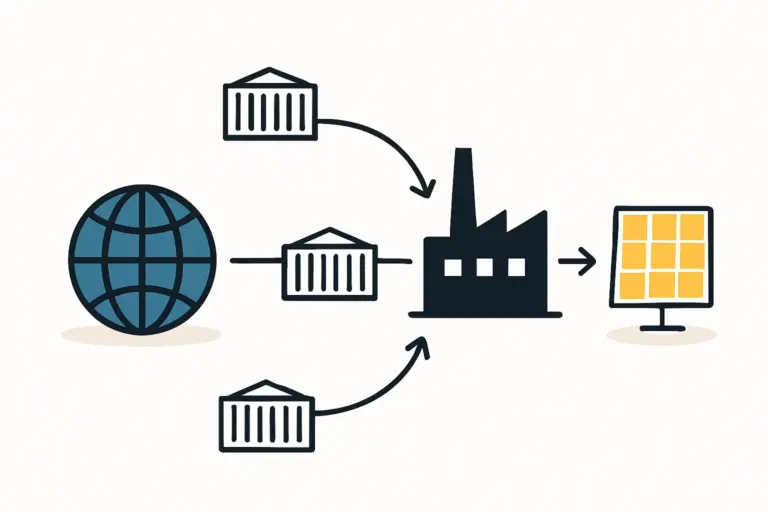
Situated on the Baltic Sea, Latvia serves as a natural gateway to Sweden, Finland, Norway, and Denmark. Its major ice-free ports—Riga, Ventspils, and Liepaja—provide year-round, cost-effective sea freight access to all major Nordic commercial centers. This proximity dramatically reduces shipping times and transportation costs compared to modules imported from Asia, a crucial advantage for project developers on tight deadlines.
Well-established road and rail networks also connect Latvia to its neighbors, offering flexible and reliable overland logistics. This infrastructure ensures a resilient supply chain for sourcing raw materials and delivering finished products.

European Union Membership and a Skilled Workforce
As a member of the European Union, a Latvian-based enterprise operates within the EU single market, eliminating tariffs and simplifying cross-border trade with Scandinavia. This creates a seamless commercial environment. Businesses may also be eligible for EU funding and subsidy programs, like those under the REPowerEU plan, designed to strengthen Europe’s domestic renewable energy manufacturing capacity.
Latvia also has a well-regarded industrial and engineering base. Its skilled, technically proficient labor force is a significant asset for establishing a high-tech manufacturing facility, ensuring that high standards for quality and operations can be met and maintained.
The Scandinavian Market: An Untapped Opportunity
The demand for solar energy in Scandinavia is accelerating, driven by ambitious national renewable energy targets and strong public and governmental support.
Several key factors are propelling this growth. Countries like Sweden and Denmark are global leaders in decarbonization and have set aggressive climate goals that require a rapid expansion of solar power capacity.
At the same time, recent geopolitical events have heightened the focus on energy independence, making locally or regionally produced energy technologies more attractive for addressing energy security concerns.
Finally, there is a distinct ‘Made in EU’ premium. Scandinavian buyers, both commercial and residential, place a high value on product quality, durability, and transparent supply chains. Modules manufactured within the EU are often perceived as higher standard and more reliable. This label is a powerful market differentiator that can justify a price premium over Asian imports and aligns with the strong corporate ESG (Environmental, Social, and Governance) criteria that are increasingly important in procurement decisions.
The Technical Advantage: Why Bifacial Modules Excel in Nordic Climates
The most critical element of this business case is the choice of technology. High-efficiency bifacial solar modules are uniquely suited to the environmental conditions of Northern Europe and offer a clear performance advantage over standard monofacial panels.
Bifacial modules capture sunlight on both their front and rear sides. While the front side functions like a traditional panel, the rear side captures reflected and diffuse light from the surrounding environment. In Nordic climates, this feature creates a significant opportunity for increased energy generation, driven by three key factors:
-
The Albedo Effect from Snow Cover: Albedo measures how much light a surface reflects. Fresh snow has a very high albedo, reflecting up to 85% of the sunlight that hits it. During the long winter months, snow-covered ground acts like a mirror, reflecting sunlight onto the back of bifacial modules. Research and field data show this can boost a module’s total annual energy output by 10–30% in snowy regions.
-
Superior Performance in Diffuse Light: Northern latitudes experience more hours of diffuse light (from overcast or cloudy skies) than direct sunlight, especially outside the summer months. Bifacial cells are inherently more efficient at capturing this ambient light, allowing them to generate more power than monofacial panels on overcast days.
-
Enhanced Durability: High-quality bifacial modules are typically built with glass on both the front and back (a glass-glass construction). This design offers superior mechanical strength and durability, making the modules more resistant to the heavy snow loads and harsh weather conditions common in Scandinavia.
Building the Factory: Key Considerations for a Latvian Operation
Establishing a manufacturing facility requires careful planning and a clear vision for its operations. The goal would be to build a modern facility focused on quality and efficiency, not sheer volume.
A typical setup for this niche market might be a 50–100 MW capacity facility. This scale is large enough to be cost-effective but focused enough to maintain high-quality standards for a premium market. Based on experience from J.v.G. Technology GmbH turnkey projects, a facility of this size can be launched with a manageable team of 30–50 employees, provided the right level of automation is implemented.
The core of the facility is its solar module manufacturing line. To produce high-efficiency bifacial modules, this line would need advanced equipment, such as high-precision stringers capable of handling modern cell technologies (e.g., TOPCon or HJT) and laminators designed for glass-glass module assembly.
A new entrant to this industry does not need to be an expert in photovoltaics from day one. However, a clear understanding of the investment requirements and a structured project plan are indispensable. Partnering with experienced consultants can provide the necessary guidance to navigate equipment procurement, factory layout, and employee training.

Frequently Asked Questions (FAQ)
What exactly is ‘albedo’ and why is it so important for this business case?
Albedo is a measure of the reflectivity of a surface, expressed as a percentage. A dark surface like asphalt has a low albedo (reflecting very little light), while a bright surface like fresh snow has a high albedo (reflecting most of the light). For bifacial solar modules, a high-albedo surface below the panels means more sunlight is reflected onto the rear side of the module, significantly increasing its total energy production. This makes the technology exceptionally effective in snowy climates.
Are bifacial modules much more expensive to produce than standard modules?
The manufacturing process for bifacial modules is very similar to that of monofacial modules. While there can be a slight increase in material costs (for instance, for a transparent backsheet or a second pane of glass), modern production techniques have minimized this difference. The substantial energy gain in the right conditions often provides a return on investment that far outweighs the marginal increase in production cost.
What production capacity is realistic for a new factory targeting this market?
A starting capacity of 20 MW to 50 MW is a common and realistic target for a new entrant. This allows the business to establish its processes, build a reputation for quality in the Scandinavian market, and secure initial customers without the immense capital outlay required for a gigawatt-scale factory. The operation can then scale up as demand grows.
How can a new Latvian factory compete with large-scale Asian manufacturers?
Competition would not be based on volume or the lowest price, but on a strategic niche built around several key advantages:
- Specialization: Focusing on high-performance bifacial modules perfectly suited for the target market.
- Logistical Advantage: Offering faster delivery times and lower shipping costs to Scandinavian customers.
- The ‘Made in EU’ Brand: Leveraging the premium placed on European quality, reliability, and adherence to ESG standards.
- Customer Proximity: Providing better service, support, and relationship management by being in the same region.
A Viable Path for Strategic Market Entry
The case for establishing a bifacial solar module factory in Latvia to serve the Scandinavian market is not built on a single advantage, but on the powerful synergy of multiple factors. The combination of Latvia’s logistical strengths, the EU’s stable commercial environment, Scandinavia’s surging demand for high-quality renewables, and the performance benefits of bifacial technology in northern climates creates a unique and defensible business opportunity.
For entrepreneurs and investors looking to enter the solar manufacturing industry, this model demonstrates the value of strategic specialization over competing in the mass market. With careful planning and expert guidance, such a venture can become a significant and profitable contributor to Europe’s energy transition.