An entrepreneur in Monrovia has a clear vision: a modern facility producing solar modules to power Liberia’s future. The factory layout is planned and the technology chosen, yet the first critical question isn’t about robotics or laminators—it’s about logistics.
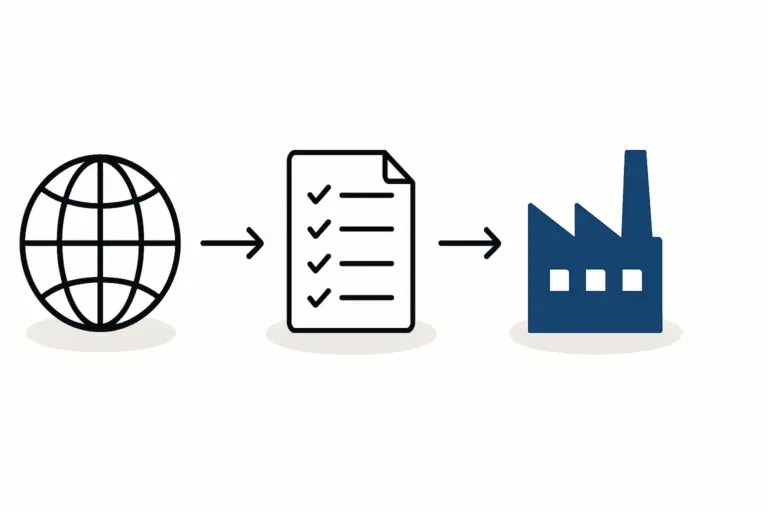
Where will the solar glass come from? How will the aluminum frames arrive? From which global hub will the solar cells be shipped? These fundamental questions lead directly into the complex world of supply chain strategy, a discipline that will ultimately determine the factory’s success or failure.
This article offers a strategic evaluation for aspiring solar manufacturers in Liberia. It provides a realistic breakdown of which materials can be sourced locally or regionally and which must be procured from established international markets, and outlines strategies for building a resilient and predictable supply chain.
The Strategic Importance of Supply Chain Design in Emerging Markets
For any manufacturing venture, the supply chain is its lifeblood. In an emerging market like Liberia, it becomes the central pillar of the entire business model.
The nation’s economic landscape, heavily reliant on commodity exports, presents a unique set of challenges and opportunities. The limited domestic manufacturing base means that most specialized industrial inputs are not readily available.
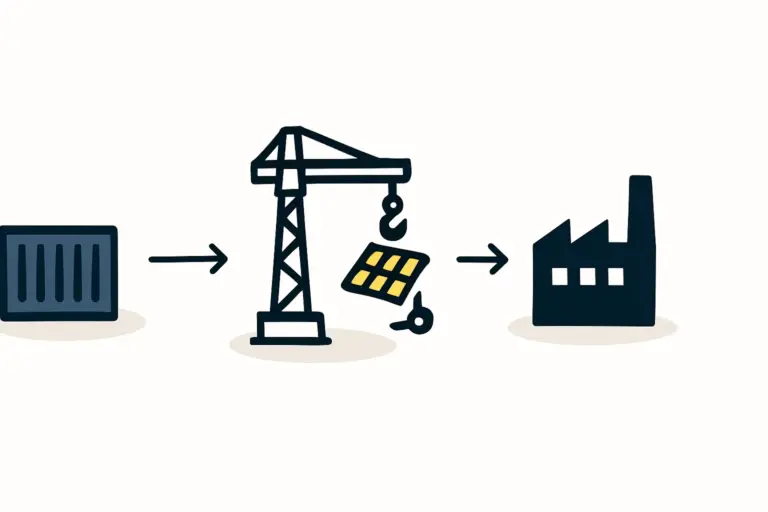
Logistical infrastructure, while developing, also requires careful planning. The Freeport of Monrovia is the primary gateway for imports, but entrepreneurs must account for potential congestion, customs clearance times, and the condition of inland road networks. These factors directly impact lead times, operational costs, and the ability to maintain consistent production.
A well-designed supply chain isn’t merely about getting parts from one point to another; it’s a core strategy for mitigating risk and ensuring the venture’s long-term profitability.
Analyzing the Bill of Materials for a Liberian Context
A standard solar photovoltaic module is built from several highly specific components. An investor in Liberia must understand which of these can realistically be sourced nearby and which require a global procurement strategy. The materials fall into three distinct categories.
Category 1: Mandatory International Procurement
These are high-technology components produced in specialized, capital-intensive facilities that do not exist in Liberia or the immediate region. Sourcing them from established global suppliers is non-negotiable for ensuring module quality, performance, and bankability.
-
Solar Cells: These are the heart of the solar module. Their production from silicon wafers is a multi-billion-dollar undertaking that requires immense cleanroom facilities and advanced semiconductor technology. New entrants must source cells from established manufacturers, primarily located in Asia.
-
Solar Glass: The front glass of a module must be low-iron, high-transmission, and fully tempered for strength and safety. This is a specialized industrial product, far different from standard architectural or automotive glass. There are no facilities in Liberia capable of its production.
-
Encapsulants (EVA/POE) and Backsheets: These specialized polymer sheets protect the solar cells from moisture, UV radiation, and mechanical stress. Their production requires a sophisticated chemical industry infrastructure, which means they must be imported.
-
Junction Boxes & Diodes: The junction box contains bypass diodes and electrical connections. While assembling the box is simple, the electronic components themselves must be sourced from specialized global manufacturers to ensure reliability and meet safety standards.
Category 2: Potential for Regional or Future Local Sourcing
This category includes materials that, over the medium term, may be sourced from more industrialized nations within the ECOWAS (Economic Community of West African States) region, reducing logistics costs compared to intercontinental shipping.
-
Aluminum Frames: Precision-extruded aluminum frames are essential for module rigidity and mounting. While Liberia lacks this industrial capacity, exploring suppliers in more industrialized neighboring countries like Ghana or Nigeria could become a viable strategy once production is stable. Initially, however, sourcing from established global suppliers is the most reliable approach.
-
Ribbons and Busbars: These tinned copper connectors that wire the cells together are specialized products. While regional suppliers might exist, quality control is paramount, as any impurities or inconsistencies can lead to module failure. For a new factory, sourcing from a vetted international supplier is the lower-risk option.
Category 3: Prime Candidates for Local Sourcing
This is the area where a new manufacturing venture can immediately contribute to the local economy and simplify its supply chain.
-
Packaging Materials: Wooden pallets, crates, cardboard boxes, and corner protectors are excellent candidates for local procurement. Liberia’s forestry sector can supply the raw materials, and local workshops can fabricate packaging to the required specifications. This not only reduces import costs for bulky items but also fosters local enterprise. The key is to ensure all packaging, especially for export, meets international ISPM 15 standards for wood treatment.
-
Labor: While not a material, a skilled and semi-skilled workforce is a critical local resource central to the factory’s operation. Investing in robust training programs is essential for success.
Building a Resilient Supply Chain: Risk Mitigation Strategies
A successful operation depends on managing the inevitable disruptions that come with complex global logistics. A proactive approach to risk is essential.
Managing Logistical Hurdles
With the Freeport of Monrovia as the single main entry point, any delays at the port can halt production. An effective strategy involves working with experienced freight forwarders and customs brokers who understand local procedures. Maintaining a buffer inventory of critical imported components is a key tactic. A safety stock of 4-8 weeks for key materials can provide the cushion needed to absorb unexpected shipping or customs delays without stopping the production line.
Hedging Against Currency and Price Volatility
Since most raw materials will be purchased in foreign currencies (like USD or EUR), the venture is vulnerable to exchange rate fluctuations. This financial risk must be incorporated directly into the solar module manufacturing business plan. Building these potential cost increases into financial models ensures the operation remains viable even with currency volatility.
Ensuring Quality Control with International Suppliers
Sourcing from thousands of miles away makes quality assurance critical. Rejecting and returning a container of faulty materials is impractical, so robust quality control must be implemented before goods are shipped. This includes establishing clear technical specifications with suppliers and creating a stringent incoming quality control (IQC) process for all raw materials upon their arrival at the factory.

A Phased Approach to Localization
Building a local supply chain is a journey, not a destination. A realistic, phased approach is recommended.
-
Phase 1 (Years 1–3): Focus on operational excellence. Import all critical and semi-critical components from vetted international suppliers while sourcing all packaging materials locally from the start. The primary goal is to master the manufacturing and assembly process and establish a reputation for quality.
-
Phase 2 (Years 4–7): Explore regional opportunities. With stable operations, begin to investigate and test materials from suppliers within the ECOWAS region, starting with aluminum frames. This can shorten lead times and reduce freight costs.
-
Phase 3 (Long-Term Vision): Drive local industrial development. As the market grows and the business becomes a significant local player, it can advocate for or partner in the development of ancillary industries, such as local aluminum extrusion or junction box assembly.
Frequently Asked Questions (FAQ)
Q1: Can we use standard glass available locally in Liberia?
No. Solar glass is a highly engineered product. It must be low-iron for maximum light transmission and thermally tempered to withstand hail, wind loads, and thermal stress. Using standard glass would result in poor performance and high rates of field failure.
Q2: What is the most common supply chain mistake new manufacturers make?
The most common mistake is underestimating logistics timelines and costs. New entrepreneurs often fail to account for potential delays in shipping, port congestion, and customs clearance, leading them to carry insufficient buffer stock. This can cause costly production shutdowns.
Q3: How can a consultant assist with procurement?
An experienced consultant or technology partner can be invaluable, offering a pre-vetted list of global suppliers for all key raw materials. They can help negotiate terms, define technical specifications, and establish the critical quality control protocols needed to ensure consistency.
Q4: Is it always cheapest to source everything from China?
While China is a dominant supplier for many components like solar cells, a blended strategy is often more resilient. Sourcing bulky items like aluminum frames from a regional supplier, if one meets quality standards, could be more cost-effective when sea freight costs are high. The optimal strategy balances component cost with shipping cost, lead time, and supplier diversification.
Conclusion: Your Supply Chain as a Competitive Advantage
For an entrepreneur entering the solar manufacturing sector in Liberia, success will be built on a hybrid supply chain. This model intelligently combines importing high-technology components from world-class global suppliers with sourcing materials like packaging locally.
Developing and managing this supply chain is a significant strategic challenge that requires foresight, planning, and a deep understanding of both global markets and local realities. When planning a new turnkey solar production line, this analysis becomes a core part of the feasibility and business planning process.
A resilient, well-managed supply chain is more than just a line item—it is a powerful and lasting competitive advantage.