When entrepreneurs enter the solar manufacturing sector, the quality of the production line is often their primary focus. Yet an equally critical—and frequently underestimated—factor is logistics. The ability to deliver finished solar modules to high-demand markets quickly and cost-effectively can determine a new venture’s profitability.
While many new manufacturers consider locations based on labor costs or proximity to raw materials, the strategic choice of an export hub can provide a decisive competitive advantage. This analysis explores how Lithuania’s Port of Klaipėda offers a compelling logistical and financial framework for serving the Scandinavian and Northern European solar markets. Balancing the many variables is essential when choosing a location for your solar factory, and a thorough understanding of regional infrastructure is paramount.
The Geographic Advantage: Why Proximity Matters
The growing demand for solar energy in Scandinavia, Germany, Poland, and the UK presents a significant opportunity. However, manufacturers in Asia or even Southern Europe face long sea voyages, which translate into higher costs, increased risk of delays, and larger carbon footprints for their products.
Klaipėda, Lithuania’s only port, is strategically positioned on the eastern coast of the Baltic Sea. As an ice-free port, it guarantees year-round operation—a crucial factor for maintaining consistent supply chains to Northern Europe. Its location provides direct, short-sea shipping routes to key markets, fundamentally changing the delivery timeline.
A manufacturer in Lithuania can therefore be far more responsive to market fluctuations than competitors thousands of kilometers away. For projects with tight installation deadlines, this responsiveness can be the difference between winning and losing a contract.

Quantifying the Benefits: Shipping Timelines and Cost Efficiency
For a business owner, theoretical advantages must translate into tangible results. The case for Klaipėda becomes clear when examining shipping times and their impact on costs.
-
Reduced Shipping Times: Standard sea freight from a major Asian port to Hamburg or Rotterdam can take four to six weeks. From Klaipėda, the transit time to major Scandinavian ports is typically just 24-48 hours. This dramatic reduction enables a just-in-time inventory model, minimizing the need for expensive warehousing in destination countries.
-
Lower Transport Costs: Shorter distances directly reduce freight costs, fuel surcharges, and insurance premiums. When competing on price per watt, these savings become a significant financial advantage and directly lower the operational costs of solar manufacturing.
-
Environmental Credentials: For an industry built on sustainability, reducing the logistical carbon footprint is becoming a valuable marketing and compliance tool. Shipping modules over a few hundred kilometers instead of across oceans significantly lowers the embodied carbon of the final product.
These efficiencies are not just marginal gains; they represent a fundamental restructuring of the supply chain that can enhance both profitability and market responsiveness.
The Free Economic Zone (FEZ): A Financial and Logistical Accelerator
Adjacent to the port lies the Klaipėda Free Economic Zone (FEZ), a special economic area designed to attract foreign investment through significant financial incentives and streamlined administration. For a new solar module manufacturer, establishing operations within the FEZ provides a powerful set of benefits:
-
Corporate Tax Incentives: Companies that invest over 1 million EUR are eligible for 0% corporate tax for the first 10 years of operation, followed by a reduced rate of 7.5% for the subsequent 6 years.
-
Tax on Dividends and Property: The FEZ also offers 0% tax on dividends for foreign investors and 0% real estate tax.
-
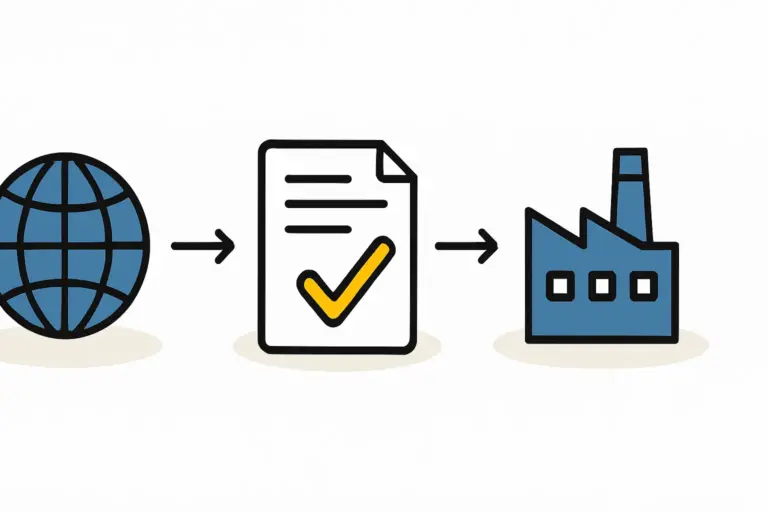
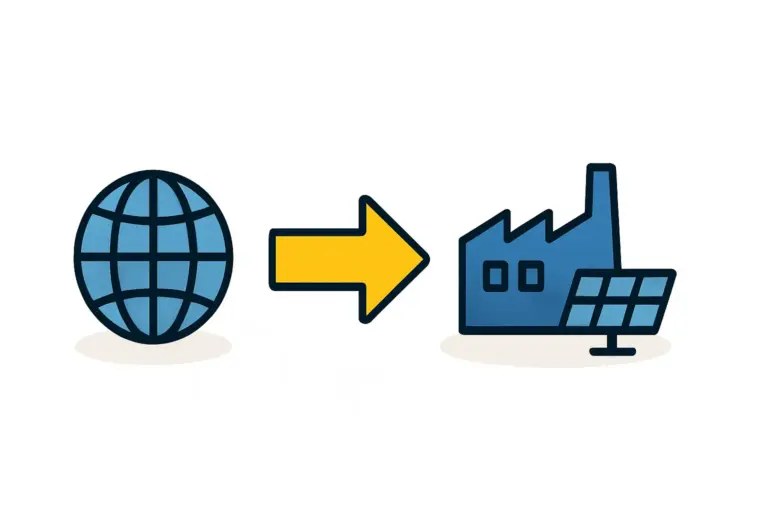
Simplified Customs Procedures: This is a crucial logistical advantage. Raw materials like solar cells, glass, and aluminum frames can be imported into the FEZ from non-EU countries without incurring import duties or Value-Added Tax (VAT). These taxes are applied only if and when the finished goods enter the EU market. This improves cash flow, as capital is not tied up in taxes on inventory.
This pairing of a world-class port with the FEZ’s financial and administrative benefits creates a highly efficient ecosystem for manufacturing and export.
Seamless Market Access: The European Union Advantage
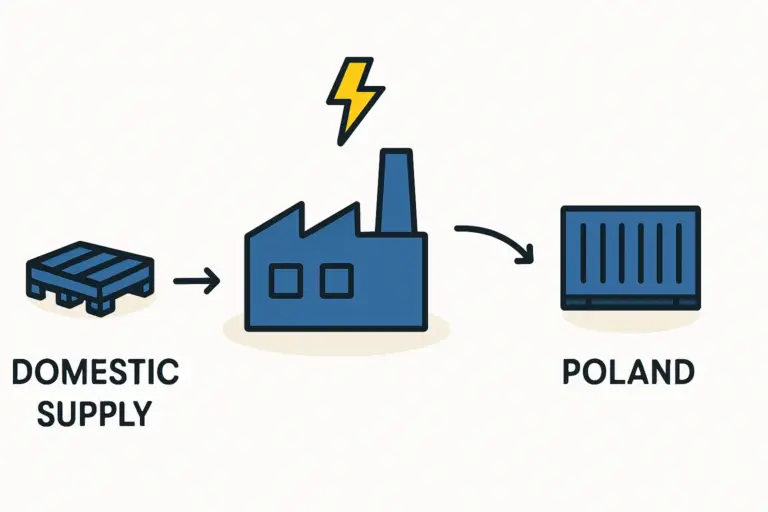
As a member of the European Union, Lithuania provides frictionless access to the entire EU single market. Once solar modules are manufactured in Klaipėda, they can be shipped to any other EU member state—such as Germany, Sweden, Denmark, or Poland—with no customs duties, tariffs, or complex border procedures.
This eliminates the administrative burden and unpredictable costs that non-EU manufacturers face when exporting to Europe. For entrepreneurs from outside the EU, establishing a production base inside the single market is the most effective way to guarantee stable, tariff-free access to one of the world’s largest solar markets.
Frequently Asked Questions (FAQ)
Is Lithuania a stable country for manufacturing investment?
Yes. Lithuania is a member of the European Union, NATO, and the Eurozone, offering a stable political and economic environment. Its legal framework is aligned with EU standards, providing security and predictability for foreign investors.
What about the language barrier for managing a factory?
While Lithuanian is the official language, English is widely spoken in the business community, and the younger workforce generally has a high level of English proficiency. Technical and managerial talent is readily available.
How does this location compare to setting up in Germany or the Netherlands?
While Germany and the Netherlands are major logistics hubs, establishing a factory in the Klaipėda FEZ typically offers significantly lower operational costs, including labor and real estate. The primary advantage, however, lies in the targeted tax incentives offered by the FEZ, which are specifically designed to attract new manufacturing investment.
What customs procedures are involved for shipping raw materials into the Klaipėda FEZ?
The FEZ operates under a special customs regime. When importing raw materials from outside the EU (e.g., solar cells from Asia), goods are processed through a simplified procedure and can be stored and used for production within the zone without paying import duties or VAT upfront. This tax deferral provides a significant cash flow benefit.

Conclusion: A Strategic Gateway, Not Just a Port
Choosing a factory location is one of the most consequential decisions a new solar entrepreneur will make. While it is tempting to focus solely on machinery and technology, a well-planned logistical strategy is what enables that technology to succeed commercially.
The Port of Klaipėda, combined with its Free Economic Zone, offers more than just a place to build a factory; it provides a comprehensive strategic framework. Geographic proximity to key growth markets, tangible cost and time savings, significant tax advantages, and frictionless EU market access—this combination makes it a compelling option for any business professional serious about capturing a share of the Northern European solar market.
Properly evaluating and integrating these logistical advantages is a core part of setting up a solar module production line built for long-term success.