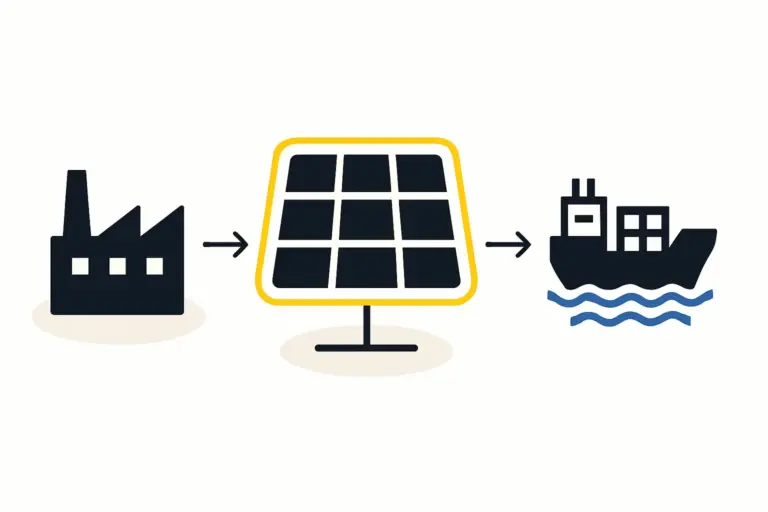
A modern solar module factory is a marvel of precision engineering, where robots and skilled technicians work in harmony. For a facility on an island like Malta, however, operational success hinges less on the technology within its walls and more on the ancient, unpredictable sea routes that supply it.
A sudden spike in container shipping costs—as the Drewry World Container Index shows, having fluctuated by over 300% in short periods—can erode profit margins before a single solar panel is produced. This article explores the unique logistical challenges of sourcing and importing raw materials to an island-based factory, offering a strategic framework for business leaders to mitigate risks, optimize costs, and build a supply chain as reliable as the solar modules it helps create.
The Island Paradox: Strategic Location, Absolute Dependence
Islands like Malta have historically thrived because of their strategic locations. Situated in the heart of the Mediterranean, Malta is a natural hub connecting European, North African, and Middle Eastern markets. Its advanced port, the Malta Freeport, is one of the busiest in the region and capable of handling the world’s largest container vessels.

This advantage, however, is paired with a critical vulnerability: near-total dependence on imports. For a solar module factory, every raw material—from heavy glass panels and aluminum frames to silicon cells and EVA encapsulant—must arrive by sea. Unlike a mainland competitor with road or rail alternatives, an island manufacturer has one primary channel. A disruption at a single port or a delay on a key shipping lane isn’t an inconvenience; it’s a direct threat to the continuity of production. This reality became starkly clear during the COVID-19 pandemic, when port congestion and container shortages brought many industries to a standstill.
Mapping the Global Supply Web
The journey of raw materials to a Maltese factory is a complex global network, riddled with potential choke points. Understanding this network is the first step toward managing its inherent risks.
The Challenge of Supplier Concentration
Today’s solar panel manufacturing relies on a handful of key components. A significant portion of these, particularly photovoltaic cells and specialized solar glass, are manufactured primarily in China. This concentration presents a major risk, as geopolitical tensions, national holidays, or changes in domestic industrial policy can instantly affect availability and pricing for the entire world.
A factory in Malta is particularly exposed, sitting at the end of a long supply line that passes through critical choke points like the Suez Canal. Any disruption there, as recent events have shown, can add weeks and significant costs to a shipment, trapping vital components at sea.
The Promise of Regional Sourcing (Nearshoring)
While global sourcing is unavoidable for certain components like silicon cells, opportunities for regional diversification exist. Exploring suppliers in the European Union, Turkey, or North Africa for materials like aluminum frames, junction boxes, and certain polymers can create a more balanced and resilient supply base.
Shorter shipping routes from these regions reduce lead times, lower transportation costs, and are often less susceptible to major global disruptions. Experience from J.v.G. turnkey projects shows that building a dual-sourcing strategy—one global and one regional—for key components is a cornerstone of operational stability.
Strategic Frameworks for Supply Chain Resilience
A resilient supply chain isn’t built on luck but on deliberate planning and strategic decision-making. For an island-based business, three areas are paramount.
1. Inventory Model: Moving from Just-in-Time to Just-in-Case
The ‘Just-in-Time’ (JIT) model, where materials arrive exactly when needed for production, is highly efficient in predictable environments. For an island factory, it’s a high-risk strategy. The variables of sea freight—weather, port delays, and customs inspections—make precise delivery times unreliable.
A more prudent approach is a ‘Just-in-Case’ (JIC) or hybrid model, which maintains a larger buffer stock of critical raw materials on-site. While this increases initial working capital requirements—a factor to consider in the overall solar factory investment—it provides the insulation needed to keep the production line running during unforeseen shipping delays. Determining the right level of buffer stock requires a careful analysis of supplier lead times, shipping lane reliability, and the criticality of each material.
2. Supplier & Logistics Partnerships: Your Lifeline to the World
Relationships with suppliers and logistics partners are as important as the materials they provide.
Multi-Sourcing: Relying on a single supplier for a critical component is a major vulnerability. A proactive strategy is to qualify at least two, and preferably three, suppliers for each key material. This provides negotiating leverage and an immediate alternative if one supplier faces production or shipping issues.
The Role of the Freight Forwarder: An experienced freight forwarder with deep knowledge of Maltese customs and the Malta Freeport is an indispensable asset. They manage complex documentation, navigate port logistics, and can often find creative solutions during periods of disruption. They are the factory’s eyes and ears in the complex world of international shipping.
Understanding Incoterms: International Commercial Terms (Incoterms) like FOB (Free on Board) or CIF (Cost, Insurance, and Freight) define precisely when responsibility for a shipment transfers from seller to buyer. A clear understanding of these terms is essential for managing risk and accurately calculating the total landed cost of materials.
3. Integrated Planning: Designing the Supply Chain from Day One
The supply chain cannot be an afterthought; it must be integrated into the factory’s initial planning and design. When choosing solar manufacturing equipment, for instance, planners must consider its compatibility with materials from different potential suppliers. The factory layout itself needs adequate, climate-controlled warehouse space to accommodate a ‘Just-in-Case’ inventory strategy.
This integrated approach is a central theme in the structured planning courses on pvknowhow.com, guiding entrepreneurs to consider logistics and sourcing right alongside production technology and financial modeling.
Frequently Asked Questions (FAQ)
What are the most critical raw materials to secure first?
Glass and photovoltaic cells are typically the most critical. Glass is heavy, fragile, and occupies significant shipping volume, making its logistics complex. Cells are the most technologically sensitive and valuable component, often with the longest lead times from specialized global suppliers.
How much buffer stock should an island factory hold?
This depends on the specific material and the reliability of its supply route. A common starting point is to hold enough stock to cover the maximum historical lead time plus a safety margin of two to four weeks. For materials sourced from distant, less reliable locations, a buffer of six to eight weeks may be more appropriate.
What are Incoterms and why do they matter for an importer?
Incoterms are globally recognized rules that define seller and buyer responsibilities in international trade. They clarify who pays for shipping, insurance, and customs duties, and at what point the risk of loss or damage to the goods transfers. For an importer in Malta, choosing the right Incoterm (e.g., CIF vs. FOB) directly affects the final cost and the level of control over the shipment.
Can a solar factory source all its materials from Europe?
While it’s possible to source many components like aluminum frames, junction boxes, and some polymers from European suppliers, sourcing high-efficiency photovoltaic cells entirely from within the EU at a competitive cost is currently very difficult. Most cell manufacturing capacity is concentrated in Asia. A hybrid global-regional sourcing strategy remains the most practical approach.
From Vulnerability to Strategic Advantage
Operating a manufacturing facility on an island presents undeniable logistical hurdles. With foresight and strategic planning, however, these challenges can be transformed into a well-managed system. By diversifying suppliers, adopting a prudent inventory strategy, and building strong logistics partnerships, an island-based solar factory can secure its operations against the unpredictability of global trade.
A resilient supply chain becomes a competitive advantage. It ensures production continuity, protects against price shocks, and builds a foundation for long-term success—turning a geographic challenge into a testament to operational excellence.