Disclaimer: This case study represents a composite example derived from real-world
consulting work by J.v.G. Technology GmbH in solar module production and factory optimization. All data points are realistic but simplified for clarity and educational purposes.
The Investor’s Blueprint: How to Launch a 200 MW TOPCon Solar Factory in Mexico for the US Market
The global energy landscape is undergoing a significant transformation, driven by policies like the US Inflation Reduction Act (IRA). The result is an unprecedented demand for high-performance solar modules, particularly those manufactured outside of traditional supply chains in Asia.
For entrepreneurs and established businesses, this shift presents a clear opportunity: to establish specialized manufacturing facilities in strategic locations to serve the lucrative North American market.
This article outlines a detailed investment and operational model for building a TOPCon solar module factory in Mexico. It explores the financial requirements, technical complexities, and strategic advantages of this approach, providing a blueprint for entering the high-stakes US solar market.
The Strategic Advantage: Why Mexico for High-Performance Solar Manufacturing?
The decision to locate a solar module factory in Mexico is a strategic one, rooted in a convergence of powerful market forces and logistical benefits. The United States market, energized by the IRA, is actively seeking reliable, high-efficiency modules from non-Chinese sources. This creates a supply gap that nearshore manufacturing is uniquely positioned to fill.
Key advantages include:
Trade and Tariff Benefits
Under the United States-Mexico-Canada Agreement (USMCA), goods manufactured in Mexico often face lower tariffs and a more streamlined customs process when entering the US, compared to imports from other regions.
Logistical Efficiency
Proximity to the US reduces shipping times and costs dramatically. This enables a more responsive supply chain, capable of meeting the just-in-time inventory needs of large-scale US solar developers.
Meeting Market Demand
US utility-scale and commercial projects increasingly specify high-wattage modules, often exceeding 550W. Manufacturing facilities must be equipped to produce these larger, more powerful formats.
The choice of technology is equally critical. TOPCon (Tunnel Oxide Passivated Contact) solar cells have emerged as the new standard for high-performance modules, consistently achieving efficiencies above 22.5%. For a new entrant targeting the premium US market, producing TOPCon modules is not just an advantage—it is a necessity.
Understanding TOPCon Technology: Beyond Standard Production
At a fundamental level, a solar module factory assembles components: solar cells, glass, backsheets, and frames. However, the transition from older PERC (Passivated Emitter and Rear Cell) technology to TOPCon introduces significant technical complexities.
While both are silicon-based, the architecture of TOPCon and PERC solar cells is fundamentally different. TOPCon technology utilizes an ultra-thin tunnel oxide layer and a layer of highly doped polysilicon. This advanced structure significantly reduces energy losses at the metal contacts, resulting in higher efficiency and better performance in high-temperature conditions—a key selling point for projects in the southern United States.
However, these benefits come with stringent manufacturing requirements:
-
Thinner Wafers: The n-type wafers used for TOPCon cells are typically thinner and more fragile than p-type PERC wafers, requiring machinery with extremely precise, gentle handling capabilities.
-
Specialized Equipment: The stringer, the machine that solders cells together into strings, must be specifically designed or calibrated for TOPCon production to avoid micro-cracks and ensure reliable connections.
-
Process Control: Lamination and curing processes must be fine-tuned to accommodate the unique properties of TOPCon cells, ensuring long-term durability and performance.
Financial and Operational Blueprint for a 200 MW TOPCon Facility
Establishing a specialized manufacturing facility requires a clear understanding of the capital investment, infrastructure, and human resources involved. The following model is based on a 200 MW annual capacity, a common and efficient scale for a new market entrant.
Investment Outline
The typical investment for a solar module production line of this scale ranges from US$6 million to US$10 million. This capital expenditure primarily covers the core production equipment, including the automated stringer, layup stations, laminator, framing machine, and advanced testing equipment (Sun Simulator and EL testers). The final cost depends on the level of automation and the equipment supplier’s origin and reputation.
Facility and Labor Requirements
A 200 MW production line requires a dedicated facility of approximately 5,000 square meters for production, with additional space allocated for raw material warehousing and finished goods storage.
The operation would need a skilled workforce of 60 to 80 personnel per shift, including machine operators, quality control technicians, maintenance engineers, and logistics staff. Proper training on the specific TOPCon equipment is crucial for maintaining high yields and product quality.

The Critical Path: Sourcing and Equipment Commissioning
The success of the entire operation hinges on two key areas: securing a reliable supply chain and ensuring the production equipment is perfectly commissioned.
Sourcing
A major challenge is securing a consistent supply of high-quality, non-Chinese TOPCon cells and other specialized materials like high-transparency solar glass. Building strong relationships with multiple Tier 1 suppliers is essential to mitigate supply chain risks.
Commissioning
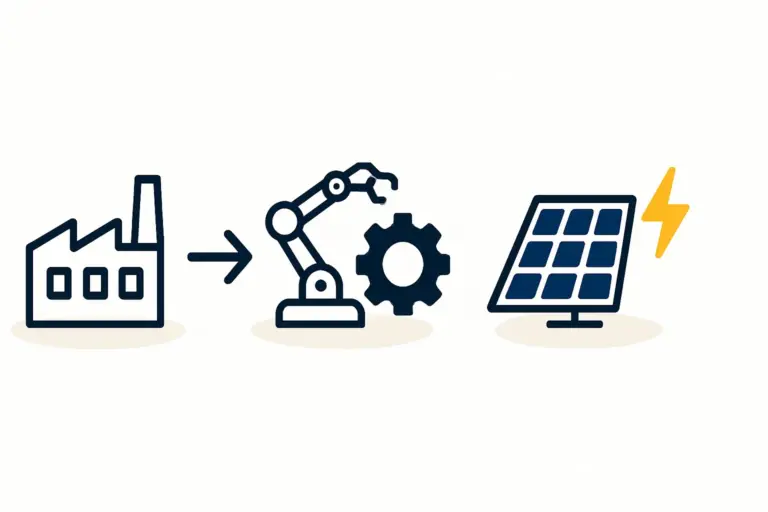
While a turnkey solar production line provides a complete equipment package, its performance is entirely dependent on expert setup and calibration—especially for TOPCon technology. The commissioning phase, managed by experienced engineers, involves auditing equipment suppliers before purchase, overseeing installation, and fine-tuning each machine. This process, which fine-tunes everything from the stringer’s soldering temperature to the laminator’s pressure cycles, is what turns theoretical performance into production reality.
Navigating US Market Entry: Compliance and Logistics
Manufacturing a high-quality module is only half the battle. Gaining access to the US market requires strict adherence to international standards and certifications.
Certifications
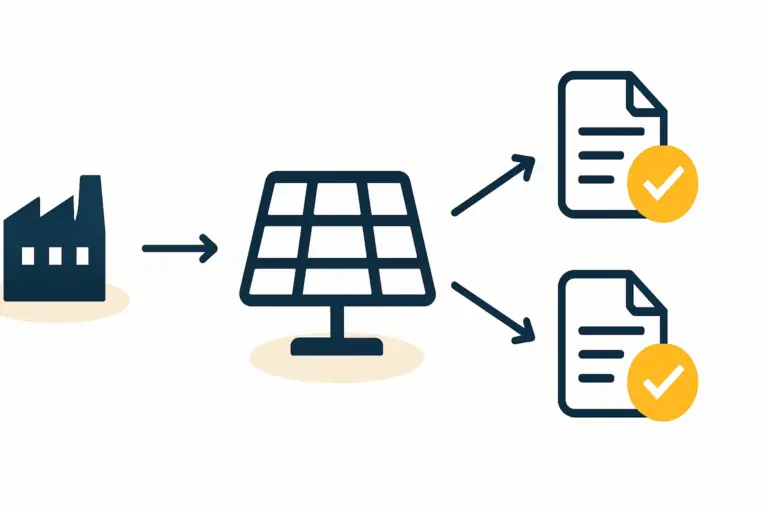
Underwriters Laboratories (UL) and International Electrotechnical Commission (IEC) certifications are non-negotiable. The testing and certification process can take several months and must be factored into the project timeline. Navigating module certifications successfully is a critical milestone for any new manufacturer.
Logistics
Establishing a secure and insured logistics chain from the factory in Mexico to distribution centers across the US is essential. This ensures that the high-value modules arrive at project sites on time and in perfect condition.
This entire process, from planning to market entry, presents a steep learning curve. As noted by one project developer, Mr. Goyal, ‘We saw the US demand for high-efficiency modules as a clear opportunity. Setting up in Mexico was a strategic decision, but calibrating the TOPCon line to meet UL standards was the real challenge. Expert guidance was crucial.’
This sentiment is common among new entrants who underestimate the technical nuances of advanced module production.
Frequently Asked Questions (FAQ)
Why not build the factory directly in the US?
While the IRA provides incentives for US-based manufacturing, establishing a new factory can involve higher labor costs, longer lead times for permits, and greater regulatory complexity compared to setting up in established industrial zones in Mexico.
What is the main difference in equipment between a PERC and a TOPCon line?
The most significant difference lies in the stringer and cell handling automation. TOPCon stringers require higher precision to handle thinner wafers without causing micro-cracks. The soldering and lamination parameters are also different and require specific calibration.
How long does it take to get a factory like this operational?
A typical timeline, from final investment decision to the first certified module leaving the factory, is approximately 9 to 12 months. This includes equipment procurement, facility preparation, installation, commissioning, and the certification process.
Can existing PERC lines be upgraded to TOPCon?
Upgrading a PERC line to produce TOPCon modules is technically challenging. It often requires replacing key machines like the stringer and can be as costly as investing in a new, dedicated line. For new investors, starting with a purpose-built TOPCon line is the more efficient path.

Conclusion and Next Steps
The opportunity to supply the US solar market with high-performance TOPCon modules from Mexico is both real and substantial. It represents a direct response to current geopolitical and economic trends, offering a path for entrepreneurs to build a significant presence in the renewable energy sector.
However, the market opportunity alone does not guarantee success. Realizing it requires meticulous planning, a deep understanding of the technical challenges of TOPCon technology, and flawless execution in sourcing, commissioning, and certification. For business professionals without a background in solar manufacturing, navigating these complexities is the primary challenge.
A structured approach, supported by expert guidance, is the most reliable way to transform this strategic vision into a profitable operational reality. For prospective investors looking to develop a comprehensive business plan and de-risk their entry into this demanding but rewarding industry, educational resources like the e-courses from pvknowhow.com can provide a structured path forward.
Download the Mexico TOPCon Solar Investment Case Study (PDF)
Author: This case study was prepared by the
turnkey solar module production specialists at J.V.G. Technology GmbH
It is based on real data and consulting experience from J.v.G. projects
worldwide, including installations ranging from 20 MW to 500 MW capacity.