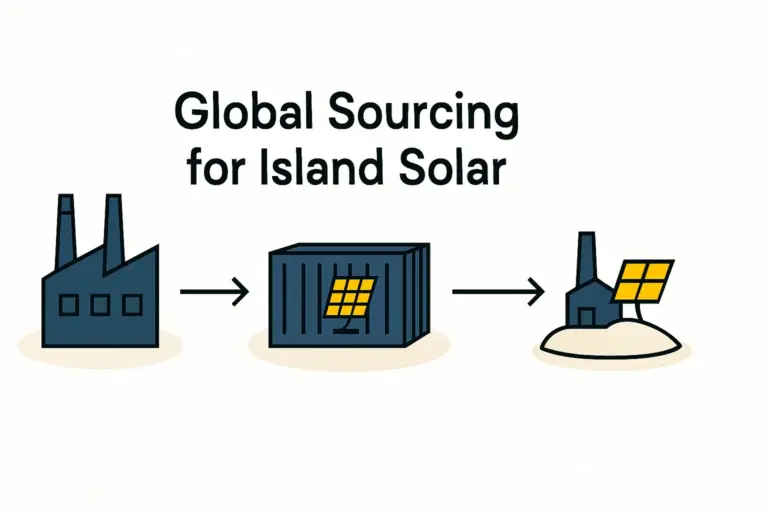
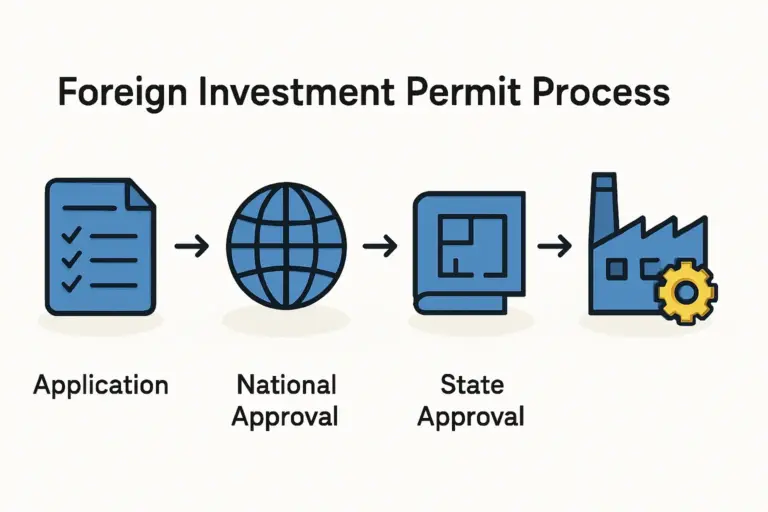
An investor looking at the Federated States of Micronesia sees a compelling opportunity: abundant, year-round sunshine and a clear need for decentralized energy. A logical next step is to establish a local solar module manufacturing facility.
However, a single critical oversight can undermine the entire venture. Standard solar modules, designed for the moderate climates of Europe or North America, will likely fail catastrophically within just a few years once exposed to the tropical marine environment of the Pacific.
The culprit isn’t a lack of sunlight, but an abundance of salt, humidity, and wind. For entrepreneurs entering this market, understanding these unique environmental challenges is not merely a technical detail—it is the foundation of a viable business model. This guide outlines the essential technical specifications for producing durable, long-lasting solar modules for regions like Micronesia.
The Unique Environmental Challenges of Micronesia
The climate in Micronesia and similar island nations presents a combination of factors that aggressively attack standard electronic and structural components. A successful manufacturing strategy must address three primary environmental threats:
-
High Salinity: The air is constantly saturated with a fine salt mist from the ocean. This saline moisture penetrates unprotected components, causing rapid corrosion.
-
Extreme Humidity: With humidity levels often ranging from 75% to 90%, moisture is a pervasive threat that can seep into the module’s layers, leading to delamination and electrical degradation.
-
Typhoon-Force Winds: The region is prone to typhoons, subjecting solar installations to extreme mechanical stress far beyond the design limits of conventional modules.
Ignoring these factors during production planning inevitably leads to premature product failure, costly warranty claims, and significant damage to a new company’s reputation.

Key Technical Specifications for Marine-Resistant Modules
To build a product that can reliably perform for 25 years or more in this environment, the manufacturing process must be tailored to enhance durability. This requires specific material choices and stringent quality control.
Combating Salt Mist Corrosion
Salt mist corrosion is an electrochemical process that aggressively degrades metallic parts. On a solar module, this affects the aluminum frame, the electrical contacts in the junction box, and even the conductive grid on the solar cells if moisture finds its way inside.
The internationally recognized standard for this is IEC 61701: Salt Mist Corrosion Testing of Photovoltaic (PV) Modules. Modules for marine applications must, at a minimum, pass severity level 6, which involves an intensive eight-week test cycle in a salt spray chamber.
Manufacturing Solutions:
- Frame: Use a high-quality, anodized aluminum alloy frame with a thicker anodization layer (e.g., 15-20 micrometers) for superior resistance.
- Junction Box: Specify junction boxes with an IP68 rating, ensuring they are fully protected against dust and long-term water immersion. Their internal electrical contacts must be made from corrosion-resistant materials.
Mitigating High Humidity and Potential Induced Degradation (PID)
Potential Induced Degradation (PID) is a performance-degrading phenomenon accelerated by high temperature, humidity, and system voltage. In simple terms, it is a form of electrical leakage that can reduce a module’s power output by 30% or more. The pervasive humidity in Micronesia makes PID a significant risk.
Manufacturing Solutions:
- Encapsulant: While standard modules often use Ethylene Vinyl Acetate (EVA) as an encapsulant, Polyolefin Elastomer (POE) offers significantly better resistance to moisture transmission and is more PID-resistant. Adapting the production line to use POE is a critical step.
- Construction: A glass-glass module construction, which uses a second sheet of glass instead of a polymer backsheet, creates a near-impermeable barrier against moisture. This design provides superior long-term protection against humidity and PID. Making these design choices requires a deeper understanding of all solar module components.
Ensuring Mechanical Strength Against Typhoon-Force Winds
Standard solar modules are typically tested to withstand a mechanical load of 2400 Pascals (Pa) on the front and back. This is sufficient for snow loads in temperate climates but inadequate for the powerful cyclonic winds of a typhoon. For these regions, modules must be certified to withstand loads of at least 5400 Pa.
Manufacturing Solutions:
- Glass Thickness: Using thicker, heat-strengthened front glass (e.g., 3.2 mm or 4.0 mm) significantly increases the module’s rigidity and resistance to impact and wind pressure.
- Frame Design: A robust, reinforced frame with specially designed corner keys is essential. The frame’s profile must be engineered to prevent flexing under extreme wind loads, which could otherwise shatter the glass and cells.
Adapting the Production Line for Marine-Grade Modules
Producing marine-grade modules does not necessarily require entirely new machinery. Rather, it demands a specific production process configuration and a meticulously selected Bill of Materials (BOM).
Setting up a turnkey solar module manufacturing line configured for these specifications is the most direct path to producing reliable products from day one. This involves engineering the line to handle materials like POE, which may require different lamination cycle parameters, and integrating quality control stations that can verify the integrity of seals and frame construction. Experience from J.v.G. turnkey projects shows that adapting the BOM and establishing rigorous quality gates are the most critical planning steps for such challenging environments.

Business Implications for New Market Entrants
These technical requirements translate directly into business strategy. While specialized components may slightly increase the upfront material cost per module, this investment is crucial for building a sustainable enterprise.
- Reduced Risk: Manufacturing a durable product dramatically lowers the financial risk associated with warranty claims and product replacements.
- Competitive Advantage: A locally produced, environment-specific module becomes a premium product, building a reputation for quality and reliability that imported, standard modules cannot match.
- Market Trust: By demonstrating a deep understanding of local conditions and providing a product that lasts, a new manufacturer can quickly become the trusted local standard.
These material choices and quality assurance measures will naturally factor into the overall investment costs for a solar factory, but they safeguard the investment long-term.
Frequently Asked Questions (FAQ)
Are these special modules much more expensive to produce?
The initial material cost for components like POE or thicker frames is moderately higher. However, since the core manufacturing process remains similar, the overall increase in production cost is manageable. This modest investment is far outweighed by the long-term value and reduced financial risk from field failures.
Can an existing factory be upgraded to produce marine-grade modules?
Yes, in many cases. The primary adjustments involve sourcing a new Bill of Materials and re-calibrating processes—particularly the lamination cycle—to accommodate different materials. The quality control protocol must also be enhanced significantly.
What is the most critical component for durability in a marine environment?
There isn’t a single one—true durability comes from the synergy of all components working together. A single point of failure can compromise the entire module. This resilience depends on the combination of a corrosion-resistant frame, a moisture-impermeable encapsulation (like POE in a glass-glass structure), and a perfectly sealed, IP68-rated junction box.
How long does it take to set up a production line for these modules?
The timeline is comparable to that of a standard line, typically under one year from detailed planning to the start of production. The key difference lies in the initial engineering and material sourcing phase, which requires specialized expertise in module design for harsh climates.
Conclusion: Building for Longevity, Not Just for Sunshine
In marine environments like Micronesia, success in solar manufacturing is determined not by a module’s ability to convert sunlight, but by its capacity to withstand the relentless assault of the elements. For investors and entrepreneurs, focusing on these robust technical specifications from the outset is what separates a short-lived operation from a lasting, profitable enterprise. A thorough understanding of these environmental challenges is the first and most critical step toward building a successful and sustainable business in this promising market.