For many entrepreneurs, the prospect of entering a new industrial sector can seem daunting. Yet, in certain markets, a confluence of factors can create a business opportunity so compelling it warrants serious investigation. This is precisely the case for solar module manufacturing in the Federated States of Micronesia, where high energy costs and strategic government initiatives have created a uniquely lucrative environment for local production.
This article offers a business-focused framework for understanding the financial dynamics of establishing a 20 MW solar module factory in Micronesia. We will move beyond technical specifications to explore the key inputs for a financial model—from initial investment to operational expenses—and project the potential returns in this distinct market.
The Micronesian Context: A Unique Business Case
Building an accurate financial model begins with understanding the market’s fundamental drivers. Micronesia is not just another location; its unique economic and geographic characteristics create a powerful business case for domestic solar manufacturing.
The most significant factor is the high cost of electricity, which averages around $0.34 per kWh. This is largely due to a heavy reliance on imported fossil fuels, a dependency that creates both economic and energy security vulnerabilities. Localizing solar panel production directly addresses this core challenge.
The region also benefits from high solar irradiation, averaging approximately 5.5 kWh/m²/day, making solar energy an exceptionally efficient and logical choice. The government has recognized this potential, launching initiatives like the $36 million Micronesia Energy Sector Development Project to encourage a shift toward renewables. These programs often include local content requirements and tax benefits, creating a protected, incentivized market for a domestic manufacturer.
Building the Financial Model: Key Investment Inputs (CAPEX)
The first component of any financial projection is Capital Expenditure (CAPEX)—the initial, one-time investment required to set up the facility. A comprehensive solar factory business plan must detail these costs with precision.
Machinery and Equipment
The core of the investment is the production equipment. For a 20 MW facility, a semi-automated line is a common and efficient choice. A complete turnkey solar production line includes all necessary machines, from cell stringing and bussing to lamination and final testing. The cost for such a line is a primary input for the financial model.
Building and Infrastructure
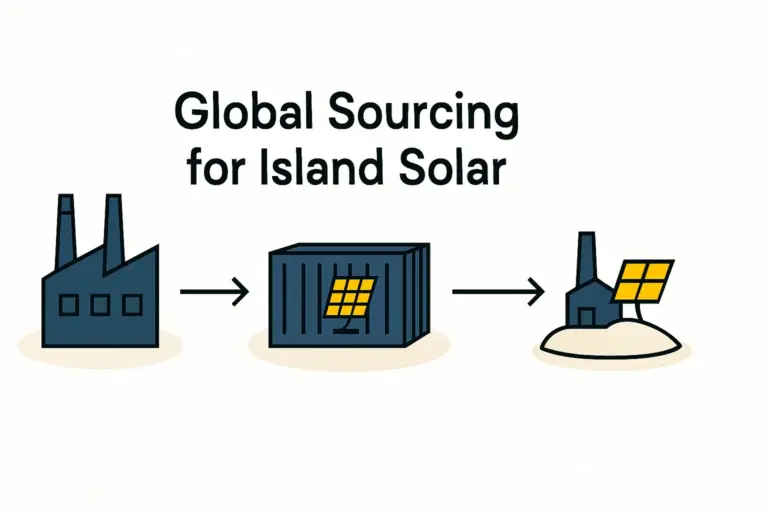
The facility will require a building of approximately 2,000–2,500 square meters. Costs include the acquisition or lease of the property, along with necessary modifications for cleanroom environments, utility connections (power, water, compressed air), and office space. In a location like Micronesia, logistical factors such as shipping heavy equipment and materials must be carefully budgeted, as they can represent a significant portion of the initial setup cost.
Initial Working Capital
Beyond fixed assets, the model must account for the working capital needed to begin operations. This includes the initial purchase of a three-month supply of raw materials, funds to cover salaries for the first few months, and other pre-revenue operational costs. This buffer ensures a smooth production ramp-up without immediate cash flow pressure.

Projecting Operational Expenses (OPEX)
Once the factory is operational, the focus shifts to ongoing Operational Expenses (OPEX). These recurring costs determine the facility’s profitability and are critical for its long-term financial health.
Raw Materials (Bill of Materials – BOM)
The largest component of OPEX is the Bill of Materials—the cost of all components that go into a finished solar panel. This includes solar cells, glass, EVA encapsulant, backsheets, and aluminum frames. For a factory in Micronesia, the landed cost of these materials is crucial; freight and import duties must be factored into the overall solar panel production cost. Careful supply chain management is essential to control these variable costs.
Labor Costs
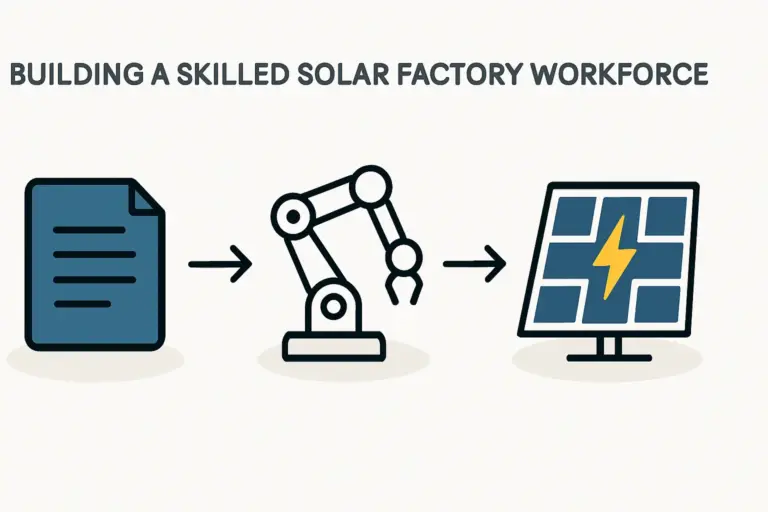
A 20 MW semi-automated line typically requires a workforce of 25 to 30 employees, including operators, technicians, and administrative staff. The financial model should reflect the local labor market, distinguishing between the costs for skilled engineers and the larger team of trained operators. Investing in proper training is key to achieving high production yields and quality.
Utilities and Overheads
This category includes factory essentials like electricity, water, and building maintenance, as well as administrative overheads such as salaries for management, sales, and accounting. A notable consideration in Micronesia is the high cost of grid electricity. Many factory planners incorporate a rooftop solar installation on the facility itself to reduce energy costs and showcase their product in action.
Revenue Projections and the Impact of Local Incentives
With a clear picture of costs, the next step is to project revenue. In Micronesia, revenue streams are uniquely influenced by local demand drivers and government policies.
Domestic Market Demand
The primary market consists of residential, commercial, and utility-scale projects within Micronesia. The high electricity price creates strong, organic demand for solar as a cost-saving alternative. The growing eco-tourism sector also provides a ready market for businesses looking to enhance their green credentials.
The Power of Government Support
This is where the business case becomes especially compelling. The availability of government incentives for solar manufacturing can dramatically improve financial outcomes. These may include:
- Tax Holidays: Periods of exemption from corporate income tax.
- Import Duty Waivers: Reduced or eliminated tariffs on imported machinery and raw materials.
- Preferential Treatment: Advantages in bidding for government-funded energy projects.
These incentives reduce costs and increase net margins, directly accelerating the return on investment.
Export Potential
Once the domestic market is served, a Micronesian factory is well-positioned to export to neighboring Pacific Island nations that face similar energy challenges. This creates a secondary revenue stream and allows the facility to scale its operations.

Calculating Return on Investment (ROI): A Sample Scenario
By bringing together CAPEX, OPEX, and revenue projections, we can calculate key performance indicators like the payback period and ROI. While a detailed model requires specific quotations and local data, a simplified scenario can illustrate the potential.
- Initial Investment (CAPEX): Let’s assume a range of $2.5–$3.5 million.
- Annual OPEX: Estimated at $6–$8 million, largely dependent on raw material costs.
- Annual Revenue (at full capacity): Projected at $8–$10 million, influenced by market prices.
In this illustrative case, the annual gross profit could be in the range of $2 million. This would suggest a simple payback period of under two years—an attractive figure for any industrial project. This is a high-level estimate; a granular analysis, often conducted with the support of experienced consultants, is necessary to validate these figures. Based on experience from J.v.G. turnkey projects, such figures are achievable with efficient planning and execution.
Frequently Asked Questions (FAQ)
What is a realistic timeline to get a 20 MW factory operational?
With a structured approach and experienced partners, a timeline of 9 to 12 months from project kickoff to the first panel production is realistic. This includes planning, procurement, shipping, installation, and commissioning.
Do I need a technical background to start this business?
No. While technical understanding is helpful, the most critical skills are in business management, finance, and logistics. A successful entrepreneur can assemble the right team and rely on a turnkey provider like J.v.G. Technology to manage the technical implementation, allowing them to focus on running the business.
How do logistical challenges in Micronesia affect the project?
Logistics are a primary consideration. They increase the initial investment due to higher shipping costs for machinery and create a need for more robust raw material inventory management. However, these same challenges act as a barrier to entry for foreign competitors, protecting the local manufacturer’s market share.
What are the biggest risks for a solar factory in this region?
The main risks include potential disruptions to the global supply chain for raw materials, currency exchange rate fluctuations, and unforeseen changes in government policy or incentive programs. A thorough risk assessment should be a core part of the business planning process.
From Model to Reality
A financial model is more than a spreadsheet; it is a strategic tool that translates a business concept into a viable plan. For entrepreneurs in Micronesia, the conditions are ripe for establishing a local solar module factory. The combination of high energy costs, abundant sunshine, and supportive government policy creates a powerful tailwind for success.
With a solid financial framework, entrepreneurs can confidently navigate this unique opportunity and turn a powerful business concept into an operational, profitable enterprise.