An entrepreneur looking at the African continent sees not just challenges, but immense opportunity. With over 600 million people lacking access to reliable electricity, the demand for energy solutions is undeniable.
While a common approach is to import solar modules from Asia, a more strategic, long-term vision involves establishing a regional manufacturing hub. This is a venture that builds local capacity, creates value, and secures a competitive advantage.
This article outlines a practical, multi-phase growth strategy for establishing a solar module factory in Morocco. It charts a path from an initial 50 MW production line to a 250 MW regional powerhouse built for Pan-African export. Modeled on projects guided by J.v.G. Technology GmbH, this case study shows how a phased investment minimizes initial risk while positioning a new enterprise for continental leadership.
The Strategic Foundation: Why Morocco?
Choosing the right location is the first critical decision in any manufacturing venture. Morocco makes a compelling case as a strategic base for a solar module factory targeting Africa. The country’s political stability, advanced infrastructure, and significant renewable energy ambitions—targeting over 52% of its energy mix from renewables by 2030—provide a solid foundation.
Morocco’s participation in the African Continental Free Trade Area (AfCFTA) also offers a powerful economic advantage. This agreement reduces tariffs and trade barriers among member nations, allowing products manufactured in Morocco to access a vast, continent-wide market more competitively than external imports. Its world-class Tanger Med port serves as a logistical gateway, efficiently connecting the factory to markets across West, Central, and North Africa.
Phase 1: Establishing the 50 MW Beachhead (Years 1-3)
Instead of a massive, high-risk investment, the journey begins with a calculated, manageable first step. The initial phase involves setting up a 50 MW semi-automated production line—a capacity large enough to be commercially viable but small enough to manage effectively as the operational teams gain experience.
Market Focus: The primary target in this phase is the domestic Moroccan market and neighboring North African countries. This approach allows the business to build a local track record, refine its sales channels, and establish a brand reputation for quality and reliability.
Technology Choice: The DESERT+ Module
For a factory in North Africa serving the continent, technology choice is paramount. Initial production will focus on DESERT+ modules, a specialized design engineered for high performance in harsh, arid climates. These modules feature enhanced durability against high temperatures, UV radiation, and abrasive sand, making them ideal for the target markets. This focus on a fit-for-purpose product provides an immediate competitive advantage against standard modules designed for more temperate climates. Further exploration of such specialized modules, like those in a Glass-Glass vs. Glass-Backsheet Modules comparative guide, can provide deeper technical context.
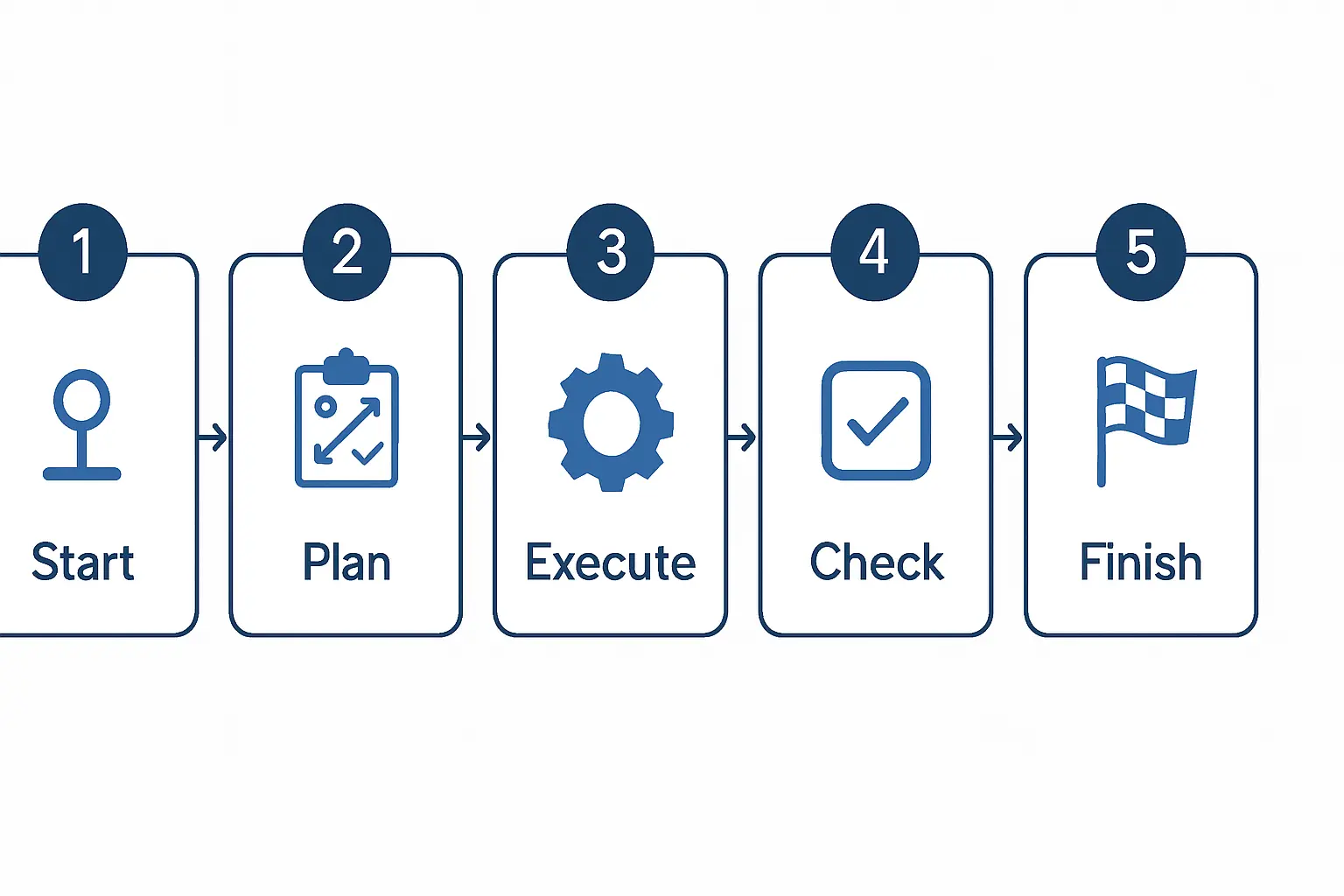
Financial Trigger for Expansion: The goal of Phase 1 is to achieve sustained profitability and capture a significant share of the local market. The key performance indicators (KPIs) to trigger the next phase of investment include:
- Operating at over 85% production capacity for at least four consecutive quarters.
- Securing stable supply contracts within Morocco and at least two other North African countries.
- Achieving a pre-defined gross margin that demonstrates the business model’s viability.
This entire setup is typically established as a turnkey solar production line, where a partner like J.v.G. provides the machinery, process engineering, and training to ensure a smooth startup.
Phase 2: Scaling to 150 MW for Regional Expansion (Years 4-6)
Once the Phase 1 objectives are met, the business is ready for significant expansion. This phase involves adding 100 MW of new capacity, bringing the total to 150 MW. This is more than a simple capacity increase; it’s a strategic upgrade.
Market Focus: With a strong foothold in North Africa, the focus shifts to Sub-Saharan Africa, particularly West and Central African nations. These are rapidly growing markets where the need for reliable power for commercial, industrial, and utility-scale projects is acute.
Technology and Process Upgrades:
- Increased Automation: The new production line incorporates a higher degree of automation to increase throughput, improve consistency, and manage labor costs as operations scale.
- Technology Diversification: This phase is an opportunity to introduce newer cell technologies, such as TOPCon, to offer higher-efficiency modules for applications like utility-scale projects where space and output are critical.
- Certification for New Markets: A key activity in this phase is securing the necessary solar module certifications for international markets, such as those required by countries in the ECOWAS bloc.
Financial and Strategic Triggers: Financing for the expansion comes from a combination of retained earnings from Phase 1 and new capital. The decision to proceed is based on confirmed demand, established logistics channels, and a clear understanding of the regulatory landscape in new target markets.
Phase 3: Achieving 250 MW and Pan-African Presence (Years 7+)
With a proven model, established brand, and extensive distribution network, the final planned expansion brings the factory’s total capacity to 250 MW. At this scale, the venture transforms from a regional player into a continental manufacturing leader.
Market Focus: The objective is a pan-African footprint, competing directly with major international suppliers across the continent—from Senegal to Kenya and from Egypt to South Africa. The factory can now bid on large-scale infrastructure projects and become a preferred supplier for regional governments and international development agencies.
Strategic Evolution:
- Economies of Scale: At 250 MW, the factory can achieve significant economies of scale in raw material purchasing, which further improves its cost-competitiveness.
- Supply Chain Integration: The business may explore backward integration, such as localizing the sourcing of frames or junction boxes, to reduce costs and strengthen the local industrial ecosystem.
- Brand as a Pan-African Standard: The ‘Made in Morocco’ brand, backed by years of reliable performance in harsh conditions, becomes a symbol of quality tailored for the African continent.
Understanding the financial requirements for starting a solar module factory at each of these scales is crucial for long-term planning and securing investment.
The Role of Long-Term Strategic Guidance
A phased growth strategy of this magnitude requires more than capital and machinery; it demands deep industry expertise and a long-term vision. This is where a partnership with an experienced engineering firm like J.v.G. Technology GmbH, guided by the multi-generational business philosophy of the Thoma family, becomes indispensable.
This guidance extends beyond the initial factory setup to include:
- Technology Roadmapping: Advising on when and how to integrate new technologies like TOPCon or HJT cells to stay competitive.
- Process Optimization: Continuously refining production workflows to maximize efficiency and minimize waste as the factory scales.
- Quality Assurance: Implementing and maintaining world-class quality control systems to ensure every module meets international standards.
- Market Intelligence: Providing insights into global supply chain dynamics and technological trends that could impact the business.
This long-term, patient approach, rooted in decades of experience since the 1990s, helps an entrepreneur navigate the complexities of the solar industry and make informed decisions at each stage of growth.
Frequently Asked Questions (FAQ)
Q1: Why is a phased approach recommended over starting with a large 250 MW factory from day one?
A phased approach significantly de-risks the investment. It allows the business to establish a market presence, generate cash flow, and build operational expertise with a manageable initial investment. It ensures that each expansion is driven by proven market demand rather than speculative forecasts, aligning capital expenditure with revenue growth.
Q2: What makes DESERT+ technology particularly suitable for Africa?
DESERT+ modules are specifically engineered to withstand the extreme environmental conditions common in many parts of Africa, including high ambient temperatures, intense UV exposure, and abrasive sand. They often feature more robust materials, such as thicker glass and specialized sealants, which prevent degradation and ensure a longer, more reliable operational lifespan compared to standard modules.
Q3: What are the primary challenges in executing such a strategy?
The main challenges include navigating complex logistics across the continent, adapting to diverse regulatory environments in different countries, managing currency fluctuations, and training a skilled local workforce. A strong local team combined with an experienced international technical partner is crucial for overcoming these hurdles.
Q4: How long does it typically take to get the initial 50 MW factory operational?
With a well-defined plan and an experienced turnkey partner, the time from a final investment decision to the first module coming off the production line is typically 12 to 15 months. This includes factory layout planning, machine procurement and shipping, installation, commissioning, and staff training.
Q5: Can this model be replicated in other regions?
Absolutely. The core principles of this phased strategy—starting with a manageable capacity, focusing on a specific regional market, using technology tailored to local conditions, and scaling based on proven success—can be adapted for new solar manufacturing ventures in other emerging markets, such as Latin America or Southeast Asia. The key is to anchor the strategy in the unique logistical, economic, and environmental context of the chosen location.