Disclaimer: This case study represents a composite example derived from real-world
consulting work by J.v.G. Technology GmbH in solar module production and factory optimization. All data points are realistic but simplified for clarity and educational purposes.
As Europe’s first generation of solar power plants approaches the end of its typical 25-year lifespan, a significant logistical and environmental challenge is emerging. Industry forecasts, including a 2016 report from the International Renewable Energy Agency (IRENA), predict a cumulative 60 to 78 million tons of solar panel waste globally by 2050. While this presents a complex problem, it also signals a substantial business opportunity for forward-thinking entrepreneurs committed to sustainability and value creation.
This article outlines a strategic business model for establishing a solar module refurbishment and recycling facility. The model proposes a hub in a geographically advantageous location, like North Africa, to process end-of-life modules from Europe for re-certification and deployment in secondary African markets.
The Emerging Challenge: A Growing Stream of Used Solar Panels
The rapid expansion of solar energy, particularly in Europe, is creating an inevitable wave of decommissioned panels. With data from SolarPower Europe showing consistently high-volume annual installations, the number of modules reaching the end of their life is set to grow exponentially in the coming years.
This trend is not just an environmental concern; it is also a regulatory one. The European Union’s Waste from Electrical and Electronic Equipment (WEEE) Directive classifies solar panels as e-waste and imposes strict collection and recycling targets. The framework mandates an 85% collection rate and an 80% recycling and recovery rate for photovoltaic modules, compelling producers and owners to find compliant disposal solutions.
However, treating every used module as “waste” overlooks its remaining potential.
The Hidden Opportunity: From Perceived Waste to Tangible Value
A common misconception is that a 25-year-old solar panel is no longer functional. In reality, its operational life is far from over. A comprehensive study by the Fraunhofer Institute for Solar Energy Systems (ISE) revealed that many decommissioned modules retain a significant portion of their original nameplate capacity—often 80% or more.
This distinction is crucial for a viable business model:
Ready to make big Profits?
The solar Industry is Booming
WE HELP NEWCOMERS to the solar industry start their own solar module production line. Customers can make BIG PROFITS by selling modules and finding investors, without wasting money and time on things they don't need!
- Recycling: This energy-intensive process breaks down a module into its constituent materials (glass, aluminum, silicon, silver, copper). It is the final step, reserved for panels that are genuinely damaged or severely degraded.
- Refurbishment: This involves testing, cleaning, and repairing minor defects (such as junction boxes or connectors) to re-certify functional modules for a second life. This approach preserves the module’s high-value embodied energy and extends its utility.
The business opportunity lies in capturing the value of functional, used panels before they are prematurely sent for recycling.
A Strategic Business Model: The North African Refurbishment Hub
Positioning a refurbishment facility in a country like Morocco provides a distinct logistical and economic advantage. It can act as a bridge between the supply of used panels from Europe and the growing demand for affordable energy solutions across Africa.
The operational flow is both logical and efficient:
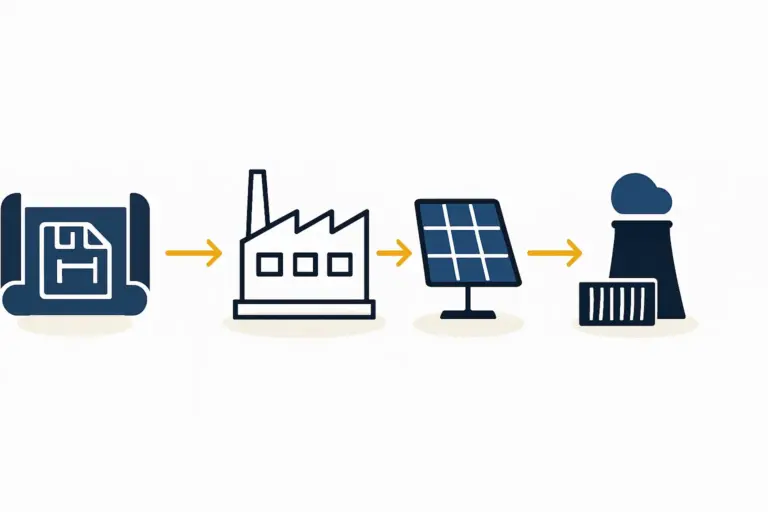
- Sourcing & Collection: Secure contracts in Europe to acquire decommissioned modules from solar farms undergoing repowering or from recycling centers.
- Logistics & Shipping: Transport the modules in bulk to the North African facility.
- Triage & Testing: Upon arrival, each module is sorted to separate repairable units from those destined for recycling.
- Refurbishment & Re-Certification: Functional modules are cleaned, repaired, and undergo rigorous performance tests using certified equipment. They are then re-certified with a new, accurate power rating.
- Distribution: The re-certified modules are sold into secondary African markets where energy demand is high and capital sensitivity is a key purchasing factor.
This model transforms a European liability—meeting recycling quotas—into a valuable asset for African energy development.
Market Dynamics: Bridging European Supply with African Demand
This circular economy approach creates a symbiotic relationship between two distinct markets.
The European Supply Side
The primary driver on the supply side is regulatory compliance with the WEEE Directive. Solar park operators and asset managers in Europe are seeking cost-effective and certified methods to handle large volumes of used panels. A refurbishment partner offers a more economically and environmentally sound alternative to simply paying for recycling.
The African Demand Side
According to the African Development Bank (AfDB), expanding access to reliable and affordable electricity is a top priority across the continent. Africa’s high solar irradiation levels make solar power an ideal solution. However, the upfront cost of new, Tier-1 modules can be a significant barrier for many commercial, industrial, and residential projects.
High-quality, German-tested, and professionally re-certified modules can be offered at a substantial discount compared to new panels, making solar projects more financially viable and accelerating energy deployment.
The Operational Framework: Key Processes and Equipment
Establishing trust and ensuring quality are paramount to the success of a refurbishment plant. The operational process must be transparent, repeatable, and backed by certified technology. Experience gained from European PV manufacturers’ turnkey projects turnkey projects confirms that a structured, factory-like approach is essential.
The core stages within the facility include:
- Visual Inspection: Technicians check for obvious physical defects like cracked glass, backsheet delamination, or frame damage.
- IV Curve Tracing: This test measures the current-voltage characteristics of the module to determine its actual power output (Pmax), open-circuit voltage (Voc), and short-circuit current (Isc) under standard test conditions.
- Electroluminescence (EL) Testing: An EL test functions like an X-ray for a solar panel, revealing hidden microcracks, soldering defects, and other issues within the solar cells that are invisible to the naked eye.
- Repair & Cleaning: If viable, minor repairs are made (e.g., replacing junction boxes or bypass diodes). The modules are then thoroughly cleaned to restore optical transparency.
- Re-Certification & Sorting: Based on the final test results, modules are graded, receive a new power rating label, and are sorted for sale.
The reliability of this entire process hinges on using precise, calibrated testing equipment, often found in a modern turnkey solar production line. Understanding the original solar panel manufacturing process is also valuable for diagnosing and repairing faults effectively.
Setting Up the Facility: From Concept to Operation
The planning and execution required to establish a refurbishment plant share many principles with new manufacturing ventures. Key considerations include securing a suitable building, managing international logistics, hiring and training skilled technicians, and implementing a robust quality management system. The fundamental steps involved are similar to those outlined in guides on how to start a solar factory.
A common concern for investors is ensuring the quality and bankability of used modules. This challenge is met through stringent testing protocols based on established international standards and meticulous record-keeping for every module processed.
Frequently Asked Questions (FAQ)
What is the primary difference between refurbishment and recycling?
Refurbishment aims to extend a product’s life by testing, repairing, and re-certifying it for its original purpose. Recycling, in contrast, is the end-of-life process of breaking a product down into its raw materials for use in new manufacturing.
Are re-certified solar modules a reliable investment?
Yes, when processed through a professional facility with certified testing equipment. Each module receives a new, accurate power rating, and EL testing ensures there are no hidden defects. They can offer reliable performance for many years, often backed by a limited warranty from the refurbisher.
What is the typical lifespan of a refurbished module?
While the original 25-year performance warranty will have expired, a high-quality refurbished module that retains 80% of its capacity can be expected to operate effectively for another 10 to 15 years, depending on environmental conditions.
What are the main regulatory hurdles?
The key challenges involve navigating international waste shipment regulations (such as the Basel Convention), securing the necessary import/export permits, and ensuring the final re-certified product meets the standards of its destination markets.
What kind of initial investment is required?
Investment levels vary based on the target capacity of the plant. Primary costs include the building lease or purchase, acquisition of specialized testing equipment (IV testers, EL imagers), logistics infrastructure, and working capital for acquiring the first batches of used modules.
Conclusion: A Viable Path for Sustainable Business
The growing volume of end-of-life solar panels from Europe signals a foundational shift in the solar industry. For entrepreneurs, particularly those located in strategic proximity to both European and African markets, this shift opens the door to a compelling business model.
By establishing a professional refurbishment and re-certification facility, a business can solve a pressing environmental and regulatory problem for Europe while simultaneously providing a valuable, affordable energy solution for Africa. This is a true circular economy model that builds value, promotes sustainability, and supports global energy equity.
Download the European to African Solar Refurbishment Case Study (PDF)
Author: This case study was prepared by the
turnkey solar module production specialists at J.V.G. Technology GmbH
It is based on real data and consulting experience from J.v.G. projects
worldwide, including installations ranging from 20 MW to 500 MW capacity.