An entrepreneur considering a new manufacturing venture often focuses on market demand, supply chains, and labor. For an advanced industrial facility like a solar module factory, however, the most critical and frequently underestimated factor is the stability of the local power grid.
A factory designed to produce instruments of energy independence can find its own operations compromised by an unreliable energy supply—a crucial paradox that investors must resolve.
This analysis explores the specific case of Nauru, an island nation with ambitions for renewable energy, to illustrate the importance of electrical infrastructure due diligence. Understanding the local grid’s capacity and, more importantly, its reliability is fundamental to planning a successful solar manufacturing operation.
Understanding Nauru’s National Power Grid
Assessing the feasibility of a new industrial project starts with understanding the environment where it will operate. Nauru’s electricity is managed exclusively by the Nauru Utilities Corporation (NUC), which faces a unique set of challenges common to many small island developing states.
Key Characteristics of Nauru’s Grid:
-
Generation Source: The nation currently relies entirely on imported diesel fuel for power generation. This reliance creates significant exposure to global fuel price volatility and potential supply chain disruptions.
-
Installed Capacity vs. Peak Demand: The NUC operates a power station with an installed capacity of approximately 10.6 MW. With a national peak demand estimated at 3–4 MW, there appears to be sufficient capacity on paper.
-
The Reliability Factor: The core issue is not total capacity, but operational reliability. The power station relies on a mix of older and newer diesel generators, and maintaining this equipment in a remote location presents ongoing challenges. The result is a grid prone to fluctuations and outages, which are tolerable for residential use but potentially catastrophic for sensitive industrial processes.
For a potential investor, these points translate directly into business risks. An unstable grid means unscheduled downtime, damaged equipment, and compromised product quality—all of which have severe financial implications.
The Energy Demands of a Solar Module Factory
A solar module factory is not a simple assembly plant; it is a sophisticated facility with highly specific energy requirements. While the total power draw is a concern, the quality and consistency of that power are paramount.
Ready to make big Profits?
The solar Industry is Booming
WE HELP NEWCOMERS to the solar industry start their own solar module production line. Customers can make BIG PROFITS by selling modules and finding investors, without wasting money and time on things they don't need!
Several stages in the solar panel manufacturing process are particularly energy-intensive and sensitive to power interruptions:
-
Cell Stringing: Automated stringer machines perform thousands of delicate soldering connections to link solar cells. A sudden power loss can halt the process mid-sequence, often damaging cells and requiring a full reset, leading to material waste and lost time.
-
Lamination: The lamination process is the most critical and energy-demanding phase. Laminators use a precise, extended cycle of high heat and pressure to encapsulate the solar cells, a process that can take up to 20 minutes. A power interruption during this cycle will ruin the entire batch of modules inside—a loss that can amount to thousands of dollars in a single event.
A typical semi-automated 50 MW factory can have a continuous power demand of 500 kW or more, with peak loads exceeding 1 MW when all machinery, including large laminators and air compressors, operates simultaneously. This power must be stable, without the voltage sags or frequency shifts common on fragile grids.
Bridging the Gap: Solutions for Reliable Factory Power
Given the gap between the Nauruan grid’s reliability and the factory’s strict requirements, connecting directly to the national grid isn’t a viable option. The solution lies in creating an independent, stable microgrid for the factory itself.
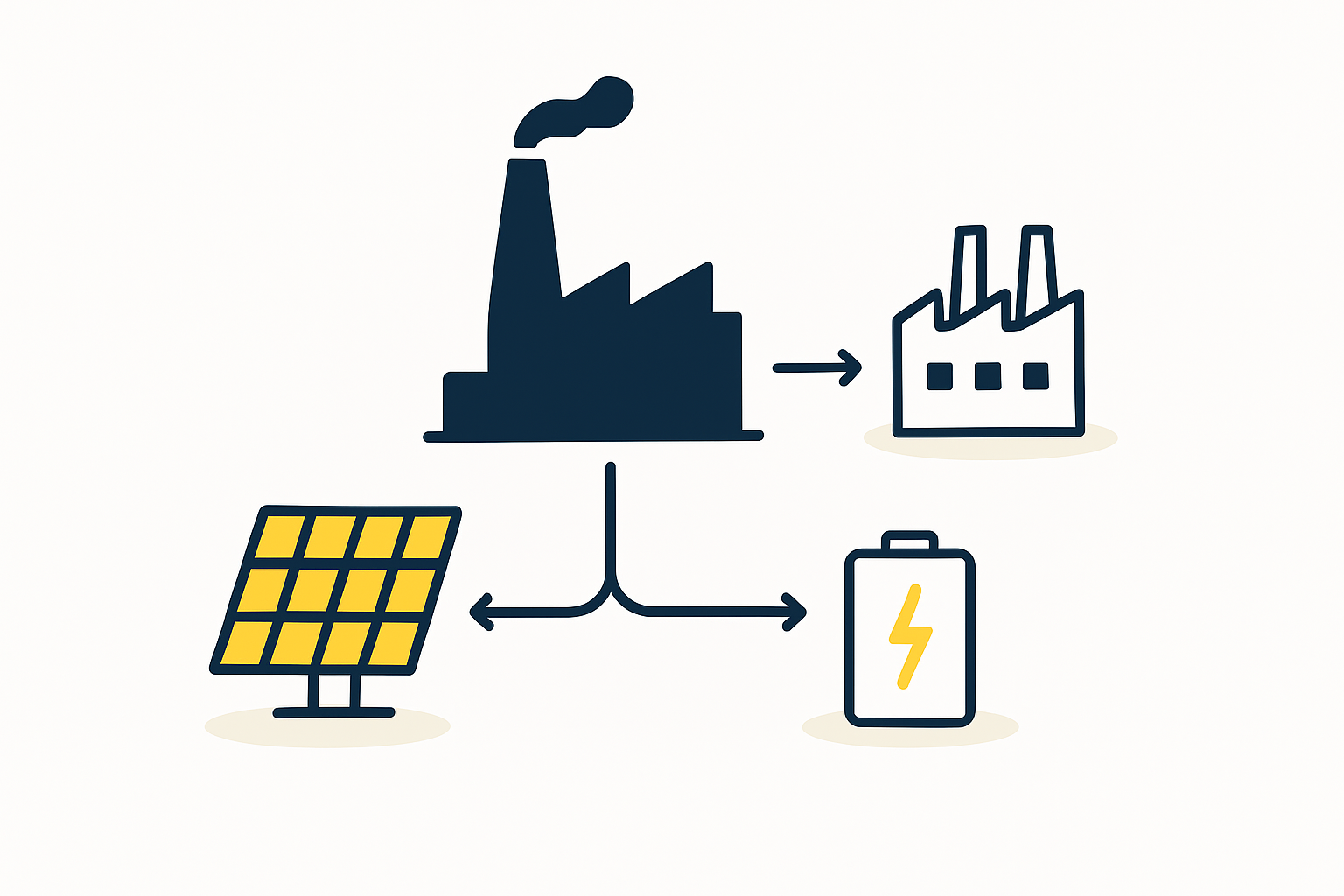
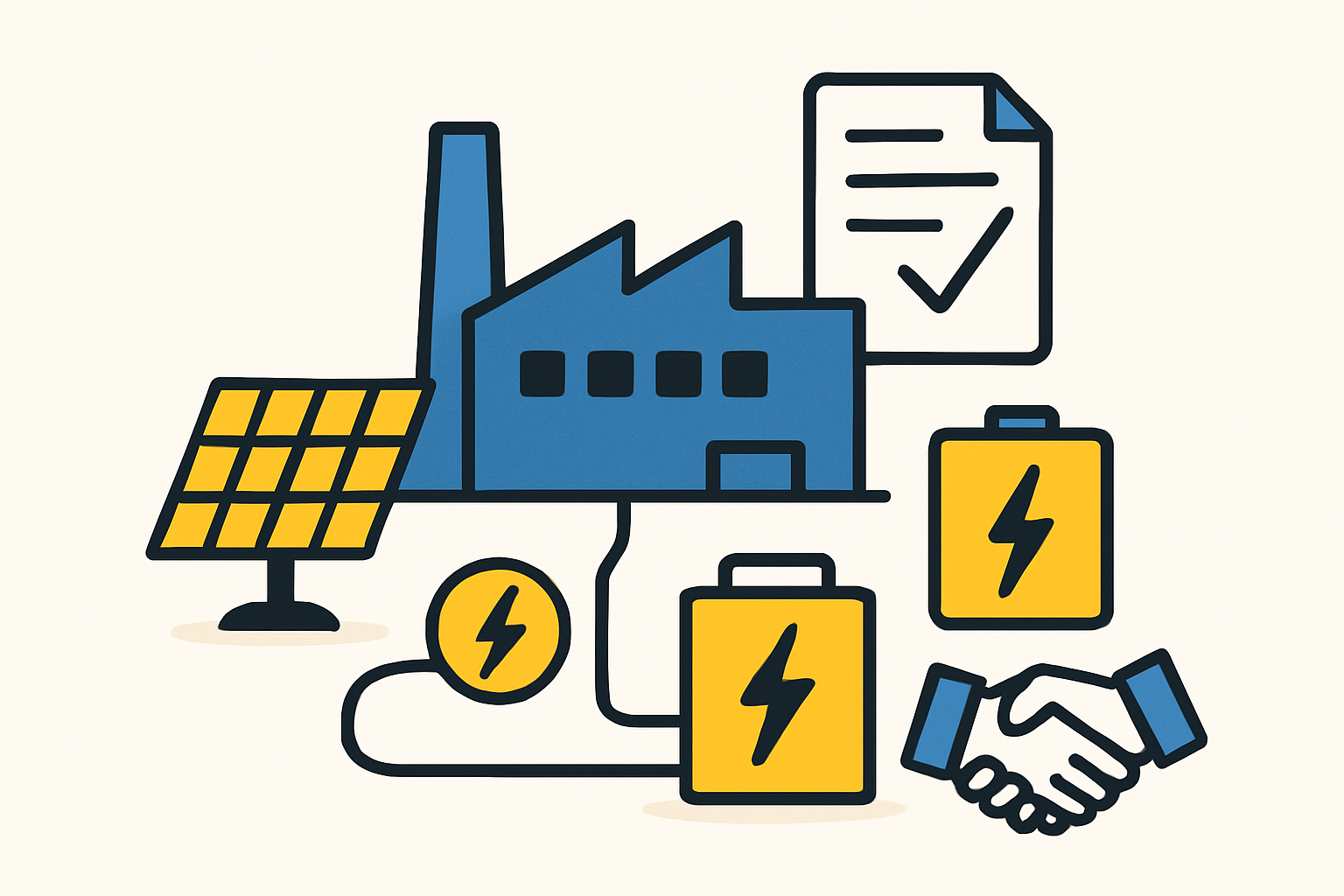
Based on experience from J.v.G. turnkey projects in regions with similar challenges, the most effective approach is a hybrid power system that combines three key elements:
-
A Dedicated Solar PV Array: A ground-mounted or rooftop solar farm is built specifically for the factory. This serves as the primary power source during daylight hours, directly reducing operational costs and reliance on diesel.
-
Battery Energy Storage System (BESS): This is the core of the stability solution. The BESS stores excess solar energy, provides power when solar generation is low (e.g., on cloudy days), and most importantly, acts as a buffer. It smooths out power fluctuations and provides an uninterruptible power supply (UPS) to critical machinery, insulating the factory from grid instability.
-
Backup Diesel Generators: While the goal is to minimize their use, backup generators provide essential redundancy. They ensure the factory can operate 24/7, regardless of weather conditions or the state of the public grid, guaranteeing production continuity.
This integrated system ensures the turnkey solar manufacturing line receives clean, stable power at all times. While this requires a higher initial capital investment, it’s a necessary step to de-risk the entire operation and ensure long-term profitability.
Integrating the Factory into Nauru’s Energy Future
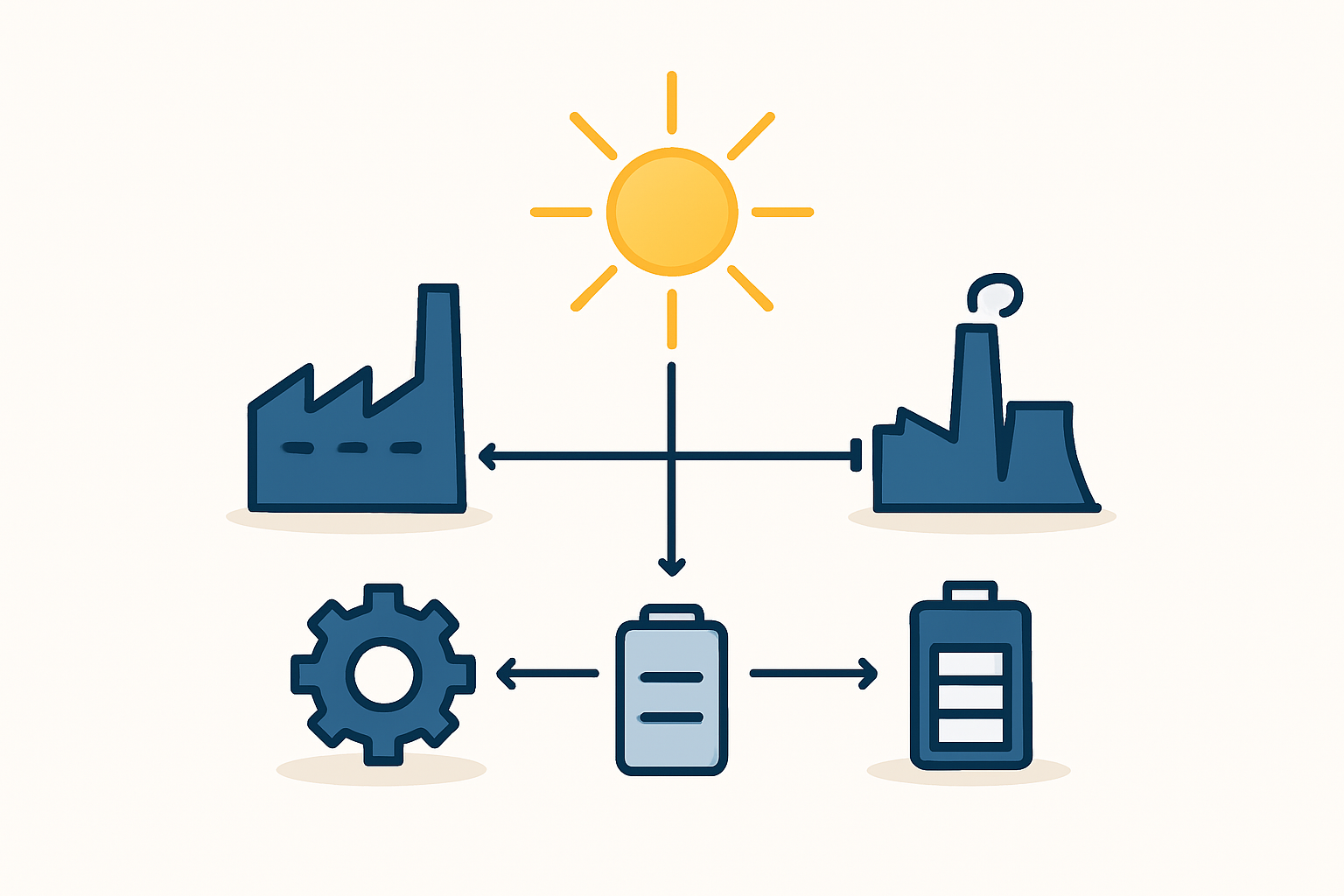
A solar factory with its own independent power system does more than just secure its own operations. It has the potential to become a strategic asset for Nauru. The Nauru Energy Road Map has set ambitious goals for increasing renewable energy penetration.
A manufacturing facility with a large solar and battery system could, in the future, provide ancillary services to the NUC grid. By supplying stable, renewable power back to the grid during its own off-peak hours, the factory could contribute to national energy security and help Nauru achieve its clean energy targets.
Frequently Asked Questions (FAQ)
Why can’t the factory just use the panels it produces?
A solar panel is just one component of a power system. To generate usable electricity, panels must be connected to inverters (to convert DC to AC power), mounting structures, and, for stable 24/7 power, a battery storage system and charge controllers. While the factory produces the panels, a separate, complete power plant must still be engineered and installed to run the facility.
What is the typical power consumption of a small-scale solar factory?
For a small to medium-sized factory (e.g., 20 MW to 50 MW annual capacity), the continuous power demand typically ranges from 250 kW to over 1 MW. The exact figure depends heavily on the level of automation and the specific technology used in the production line.
Is grid instability a common problem for new solar factories?
Yes, this is a very common challenge, particularly for investors in emerging markets or remote locations. A thorough assessment of the local electrical grid is a fundamental part of the overall factory building requirements and due diligence process. Overlooking this step is a significant business risk.
Conclusion: From Power Risk to Strategic Advantage
Analyzing Nauru’s energy infrastructure reveals a clear challenge: the national grid, in its current state, cannot support the demands of a modern solar module factory. This challenge, however, is not an insurmountable barrier.
By incorporating an independent hybrid power system into the initial project plan, an investor can transform a critical risk into a strategic advantage. This approach not only guarantees the operational stability and product quality essential for success but also aligns the project with the host nation’s long-term energy goals. A well-planned power solution is the foundation for any profitable and resilient manufacturing venture.