An investor may secure land, finalize a business plan, and arrange financing for a new solar module factory, assuming the most difficult stages are behind them. In a jurisdiction as meticulously regulated as the Netherlands, however, securing the necessary building and environmental permits is far more than an administrative step; it’s a critical project phase.
Understanding this landscape is therefore essential for a successful market entry. This guide provides an overview of the Dutch permitting and zoning framework for industrial projects like a solar module manufacturing plant. It outlines the key legislation, the application process, and the strategic considerations for navigating the system efficiently.
The Foundation of Dutch Planning Law: The Omgevingswet
As of January 1, 2024, all spatial and environmental planning in the Netherlands is governed by a single piece of legislation: the Environment and Planning Act, or Omgevingswet. This law integrates dozens of previous regulations into one coherent system. For an entrepreneur, the most significant change is the introduction of a single, integrated permit.
Instead of applying separately for a building permit, an environmental permit, and a zoning exemption, a project developer now applies for one comprehensive environmental permit (omgevingsvergunning). This single application covers all relevant aspects of the project, from construction to environmental impact.
Key takeaway for investors:
The Dutch system consolidates multiple regulatory checks into a single, streamlined, but highly detailed application process, with a focus on a holistic assessment of a project’s impact on its physical environment.
Step 1: Assessing the Municipal Environmental Plan (Omgevingsplan)
The first step, before preparing any application, is a thorough review of the local municipal environmental plan (omgevingsplan). Every municipality in the Netherlands has one of these plans, which functions as the local rulebook for land use and replaces the older, more rigid zoning plans (bestemmingsplannen).
The omgevingsplan designates which activities are permitted in specific areas. For a solar factory, the plan must allow for industrial or manufacturing activities of a certain category. This assessment typically leads to one of two outcomes:
-
The Project Complies: If the proposed factory fits within the rules of the omgevingsplan, the path to approval is relatively direct. The application will focus on proving compliance with technical and environmental standards.
-
The Project Deviates: If the plan does not permit industrial use, or if the scale of the factory exceeds defined limits, the project requires an official deviation. This makes the application process more complex and extends the timeline, as it requires the municipality to formally grant an exemption.
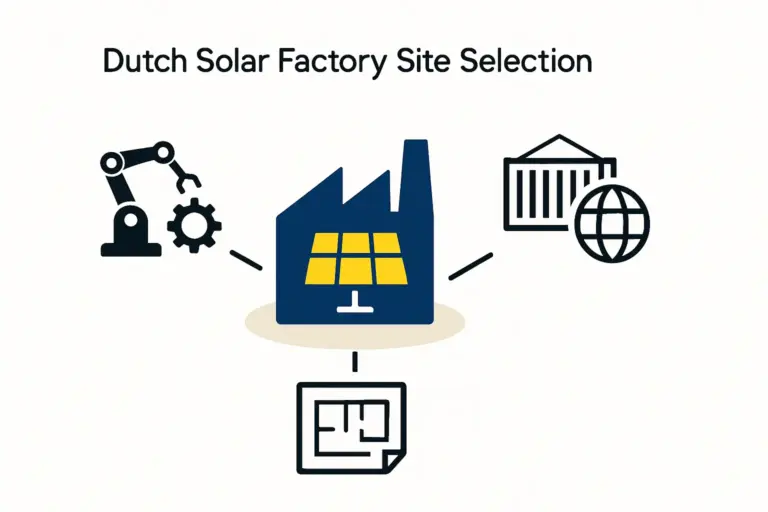
Engaging with the municipality early to clarify the site’s designation within the omgevingsplan is a crucial part of due diligence. This initial check is a core component of the site selection process for a solar manufacturing facility.

The Central Hub: Applying Through the Omgevingsloket
All permit applications are submitted and managed through a national digital portal called the Omgevingsloket. This online service acts as a single point of entry for all projects, guiding applicants through a series of questions to determine which permits and checks are required.
Through the portal, an applicant will:
- Complete a ‘permit check’ to identify requirements.
- Submit all necessary documents, including architectural drawings, technical specifications, and environmental impact reports.
- Communicate with the competent authority (usually the municipality).
- Track the status of the application.
Understanding the Permit Procedure: Regular vs. Extensive
The Omgevingswet defines two main procedures for processing an application. The nature of the project determines which one applies.
The Regular Procedure
- Timeline: 8 weeks, with a possible 6-week extension.
- Applies to: Simpler projects that fit neatly within the omgevingsplan and have minimal environmental impact.
- Process: The authority makes a decision directly. Objections can be filed after the decision is made.
The Extensive Procedure
- Timeline: 26 weeks, with a possible 6-week extension.
- Applies to: Complex projects, including most significant industrial facilities, projects that deviate from the omgevingsplan, or those with a considerable environmental footprint.
- Process: This procedure includes a formal public participation phase. A draft decision is published first, allowing stakeholders to submit their views (zienswijzen). These are considered before a final decision is made.
Business-Relevant Metric: A solar module manufacturing plant will almost certainly be subject to the extensive procedure due to its classification as an ‘environmentally burdensome activity’ (milieubelastende activiteit). This means a realistic timeline for receiving a final, legally binding permit decision is 9–12 months from the submission of a complete application.
Key Assessments Within Your Application
A solar factory’s omgevingsvergunning application is evaluated on several key criteria, the most critical being:
Building Activities (Bouwactiviteit)
This review ensures the factory’s design complies with the national Building Decree (Bouwbesluit 2012), which sets minimum standards for:
- Structural safety and integrity.
- Fire safety measures and evacuation routes.
- Energy efficiency and insulation.
- Ventilation and internal climate.
- Accessibility.
Environmental Impact (Milieubelastende Activiteit)
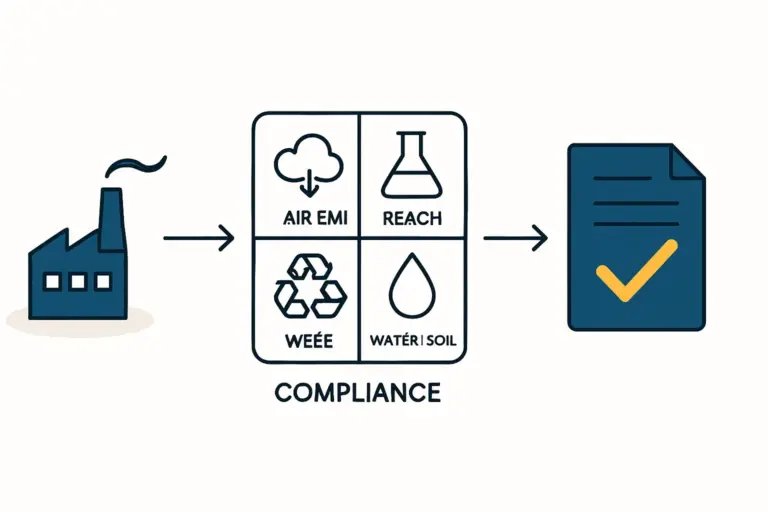
This is the most rigorous assessment for an industrial facility. Authorities will examine the factory’s operational impact, focusing on:
- Emissions: Air and water quality protection.
- Noise: Adherence to permissible noise levels for the surrounding area.
- Waste Management: Plans for processing and disposing of industrial waste.
- Storage of Materials: Safe handling and storage of chemicals, gases, and raw materials.
The Critical Role of Public Participation
The Omgevingswet places a strong emphasis on public participation (participatie). While not always legally mandatory, the government strongly urges developers to engage with local stakeholders—such as residents, nearby businesses, and community groups—before submitting a formal application.
Based on experience from numerous J.v.G. turnkey projects, initiating a dialogue with the local community early in the planning phase is not a burden but a strategic advantage. It allows concerns to be addressed proactively, builds goodwill, and can significantly reduce the risk of lengthy legal challenges and delays after the draft decision is published.
Frequently Asked Questions (FAQ)
What is the main benefit of the Omgevingswet for a project developer?
The primary benefit is integration. Instead of navigating multiple agencies and permit types, the omgevingsvergunning provides a single point of contact and a comprehensive assessment, creating a more predictable process.
Is it necessary to hire a Dutch consultant or lawyer?
While it is possible to submit an application independently via the Omgevingsloket, for a complex industrial project, it is highly advisable. A local expert with experience in Dutch environmental law and relationships with municipal planners can prevent common errors, ensure the application is complete, and manage communication with authorities effectively. This mirrors the value pvknowhow.com provides in guiding new entrants through the technical aspects of factory setup.
Can preliminary site work begin before the permit is granted?
No. Starting any construction or site preparation that requires a permit before that permit is irrevocably granted is illegal and can result in significant fines and orders to halt all work.
What happens if an application is rejected?
If a final permit is denied, the applicant has the right to appeal. The first step is typically an objection (bezwaar) to the authority that made the decision. If that is unsuccessful, the case can be taken to court (beroep).
Conclusion: A Structured Path to a Dutch Solar Factory
The Dutch permitting system, governed by the Omgevingswet, is one of the most structured and transparent in the world. While its requirements are detailed and rigorous, the process is clear and predictable for those who understand the steps.
For an international entrepreneur looking to build a solar factory, success depends on recognizing the permitting process as a core strategic element. By performing thorough due diligence on the local omgevingsplan, preparing a comprehensive application covering all environmental and building aspects, and engaging proactively with local stakeholders, a project can move from concept to reality on a solid legal foundation.