In the global race to produce clean energy, a solar module’s ‘green’ credentials are no longer just about the electricity it generates over its lifetime. Regulators, investors, and customers are now asking a more sophisticated question: How much carbon was emitted to manufacture the module in the first place?
This concept, known as embodied carbon, is creating a significant opportunity for entrepreneurs who can manufacture a verified, low-carbon alternative.
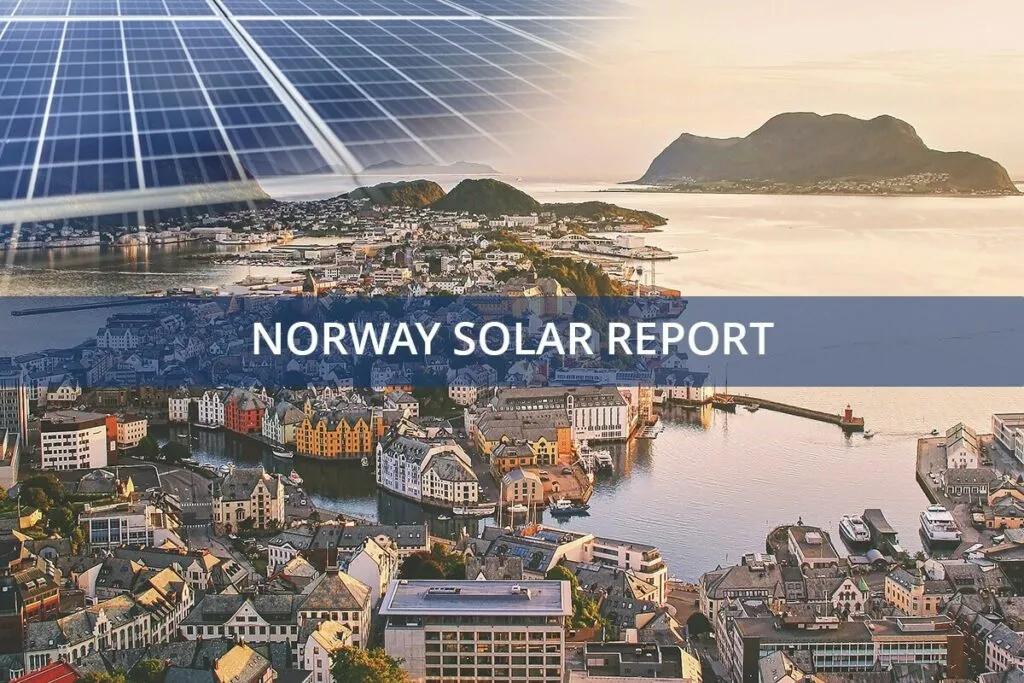
For many, the answer to this challenge lies in a place more famous for its fjords than its factories: Norway. Its vast, clean hydropower resources offer a unique foundation for producing solar modules with one of the lowest carbon footprints in the world—a decisive advantage in an increasingly discerning European market.
Understanding the Carbon Footprint of a Solar Module
The journey of a solar module from raw silicon to a finished product is an energy-intensive process. While all manufacturing steps require power, the initial stages are by far the most demanding.
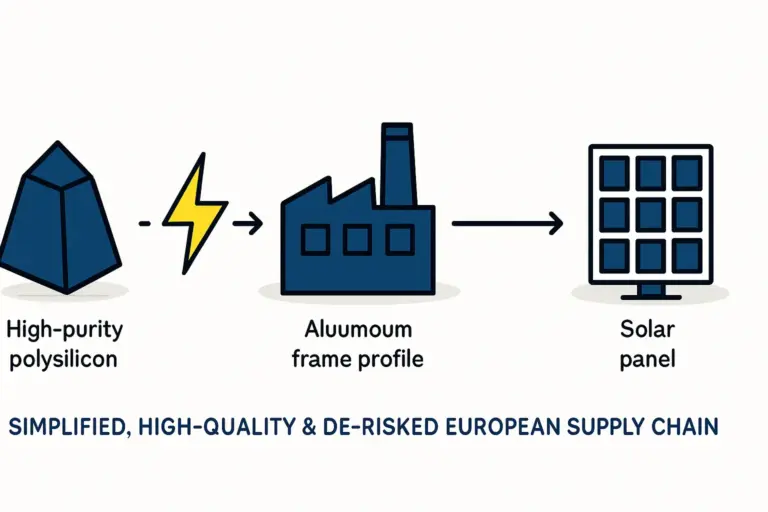
- Polysilicon Production: Converting raw silica into high-purity polysilicon requires extremely high temperatures and consumes a massive amount of electricity.
- Ingot and Wafer Production: Melting the polysilicon and drawing it into cylindrical ingots, which are then sliced into ultra-thin wafers, is another energy-heavy phase.
The source of the electricity used in these stages directly determines the module’s embodied carbon. A factory powered by a coal-dominant grid might produce a module with a carbon footprint of 800-1000 kg of CO₂ equivalent per kilowatt-peak (kWp). In contrast, a facility powered by clean energy can lower that figure dramatically.
This makes the choice of manufacturing location a strategic business decision, not just a logistical one. For a deeper understanding of the entire production chain, an overview of the solar module manufacturing process provides essential context.
The Norwegian Advantage: Manufacturing with Near-Zero Emission Energy
Norway stands apart in the global energy landscape. The country generates approximately 98% of its electricity from renewable sources, with hydropower accounting for the vast majority. This provides two critical advantages for solar manufacturing:
- Ultra-Low Carbon Power: Norwegian hydropower is one of the cleanest and most consistent forms of energy available, with a carbon intensity often below 10 g CO₂e/kWh. This translates directly to an exceptionally low embodied carbon for any product manufactured using this power.
- Stable and Predictable Energy Costs: Unlike markets reliant on volatile fossil fuel prices, Norway’s hydropower provides long-term energy price stability. This is crucial for forecasting operational costs in an energy-intensive industry.
By locating production in Norway, manufacturers can use this clean energy to produce modules with a carbon footprint significantly lower than the global average. This isn’t just an environmental benefit; it becomes a powerful commercial differentiator.

Why a Low Carbon Footprint Matters in the European Market
A low-carbon solar module is becoming essential for accessing Europe’s most valuable markets. This trend is driven by powerful regulatory and commercial forces.
Regulatory Incentives and Market Access
European governments are enacting policies that favor products with a low environmental impact. The French CRE (Commission de régulation de l’énergie) tenders, for example, award additional points to solar projects using modules with a certified low carbon footprint. This can be the deciding factor in winning large-scale contracts.
Mechanisms like the EU’s Carbon Border Adjustment Mechanism (CBAM) are also designed to penalize carbon-intensive imports, making locally produced, low-carbon goods more competitive.
The Power of a ‘Made in Europe’ Label
Beyond regulation, corporate and residential customers are increasingly demanding transparent and sustainable supply chains. A solar module manufactured in Norway using clean hydropower carries a compelling story.
It aligns with corporate Environmental, Social, and Governance (ESG) goals and assures end-users that they are investing in a truly sustainable energy solution. This narrative transforms a technical specification into a powerful marketing tool.
Strategic Considerations for Establishing a Factory in Norway
While the energy advantage is clear, a successful venture requires careful planning. Experience from J.v.G. Technology GmbH’s turnkey projects highlights several key areas for entrepreneurs to focus on.
A thorough analysis of the ideal factory location is crucial. Proximity to deep-water ports for efficient logistics across Europe must be balanced with access to high-voltage grid connections.
Securing a long-term Power Purchase Agreement (PPA) with a local hydropower provider is also fundamental. This locks in favorable energy rates and provides the long-term cost certainty needed for a robust business plan.
A clear understanding of the complete financial picture is essential. A comprehensive view of the investment requirements for a solar factory ensures the project is adequately capitalized to move from planning to full-scale production.
Frequently Asked Questions (FAQ)
Isn’t Norway too far north for solar manufacturing?
While Norway’s climate is not ideal for solar energy generation, it is an excellent location for solar manufacturing. The cool climate can be an advantage for certain industrial processes, and the country’s highly developed infrastructure and port access make it an efficient logistical hub for serving the entire European market.
How much does electricity cost in Norway?
Electricity prices in Norway are among the most competitive in Europe, particularly for industrial users with long-term contracts. While prices fluctuate, the hydropower-based system provides a stability rarely found in markets dependent on natural gas or other fossil fuels.
What parts of the manufacturing process are most energy-intensive?
The production of polysilicon and the subsequent drawing of ingots and slicing of wafers are the most energy-consuming stages. By focusing on these upstream processes, a Norwegian facility can achieve the greatest reduction in the overall carbon footprint of the final solar module.
Can a smaller factory also benefit from this advantage?
Absolutely. The principle of leveraging clean energy applies to any scale of operation, from a specialized 50 MW line to a multi-gigawatt facility. For smaller, agile factories, a low-carbon footprint can be a powerful niche strategy for competing with larger global players in high-value markets.
Conclusion: Your Path to Sustainable Solar Manufacturing
The global solar industry is evolving. Success is no longer measured solely by cost-per-watt but also by the sustainability of the entire supply chain. Norway offers a rare and compelling opportunity for entrepreneurs to build a manufacturing business that is both profitable and environmentally responsible.
By leveraging the country’s abundant and clean hydropower, a solar module factory can create a premium, low-carbon product ideally suited for the future of the European market. This strategic choice of location creates a durable competitive advantage that is difficult to replicate elsewhere.
For those ready to enter this sector, exploring a turnkey solar factory solution offers a structured path from concept to a fully operational, world-class production facility.