An investor might see Palau as a pristine paradise, an archipelago of immense natural beauty. For a business professional considering a solar manufacturing venture, however, this remote location presents a unique set of economic variables. While the strategic need for renewable energy is undeniable, a standard financial model built on mainland assumptions will fail here. Success depends on a granular understanding of Palau’s specific cost structure, from inter-island logistics to land lease protocols.
This article provides a framework for building an accurate business case for a solar module factory in Palau, examining the key local operational expenditures, realistic revenue streams, and the significant impact of government incentives—helping investors move from a broad idea to a viable financial projection.
THE STRATEGIC IMPERATIVE FOR LOCAL SOLAR MANUFACTURING
Palau’s energy landscape is shaped by its dependency and its ambition. Understanding this context is key to grasping the market opportunity.
Currently, the nation relies on imported fossil fuels for about 92% of its electricity generation, creating significant economic vulnerability. The high cost of fuel, coupled with complex supply chains, drives one of the region’s highest electricity tariffs, often around $0.37 per kWh. For businesses and residents alike, this is a substantial and unpredictable operating expense.
In response, the Palauan government has established a clear national energy policy: to achieve 100% renewable energy generation by 2032. This ambitious goal is not merely an environmental statement; it is an economic necessity. Local solar module production directly supports this policy, offering a path toward energy independence, cost stability, and economic resilience. A local factory can mitigate supply chain risks and create skilled employment, aligning perfectly with national strategic interests.
BUILDING YOUR FINANCIAL MODEL: KEY OPERATIONAL EXPENDITURE (OPEX) INPUTS
A robust financial model is the foundation of any successful industrial project. In Palau, this model must be meticulously adapted to local realities, as standard assumptions for labor, land, and logistics simply do not apply.
Land and Location: Beyond the Purchase Price
Acquiring land for industrial use in Palau is fundamentally different from many other markets. Private land ownership is limited, and most parcels are managed on a leasehold basis from clans or states.
- Lease Costs: Investors should budget for annual lease costs ranging from $1.00 to $2.50 per square meter.
- Location is Critical: Proximity to Malakal Port is paramount for minimizing logistical costs. It is crucial to factor in the expense and complexity of moving raw materials and finished goods from the port to an inland site. A detailed analysis of factory building and layout requirements must include these accessibility constraints.
Labor Costs: Navigating the Local Talent Pool
While Palau’s minimum wage is relatively low (around $3.50 per hour), projecting labor costs based on this figure alone would be a significant error.
- Skilled Labor Scarcity: The local workforce of approximately 18,000 has limited experience in specialized manufacturing. A new factory will require a substantial investment in training programs to develop the necessary technical skills.
- Expatriate Technicians: Key technical and management roles will likely need to be filled by expatriate staff, particularly in the initial years of operation. The budget must account for their salaries, housing, and associated costs.
Logistics and Supply Chain: The ‘Island Premium’
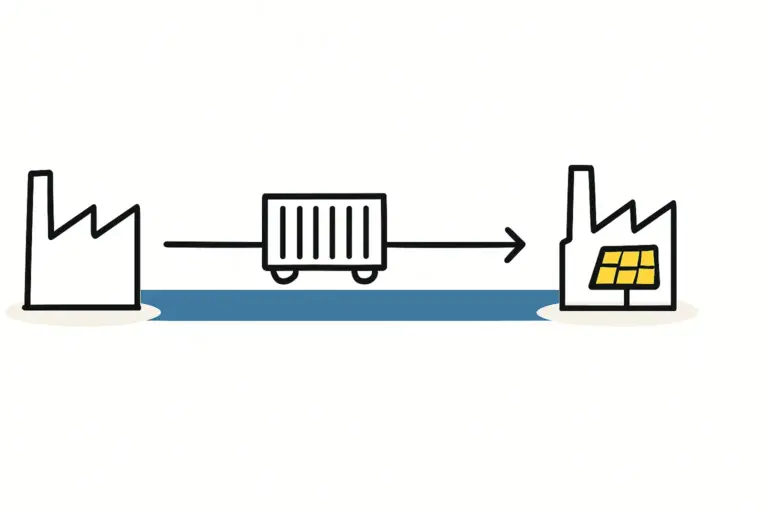
The single largest cost variable for a Palauan factory is logistics. The nation’s remote Pacific location translates into higher costs and longer lead times for both inbound raw materials and outbound finished products.
- Inbound Shipping: A standard 40-foot container shipped from a major Asian port can cost between $4,000 and $7,000.
- Ancillary Costs: Beyond freight, investors must budget for port fees, customs clearance, and local handling, which can add another 10–15% to total shipping expenses.
- Inter-Island Transport: If the factory’s market includes customers on different islands within Palau, the cost and complexity of local marine transport must also be carefully modeled.
Utilities and Infrastructure
While utility costs are high, the infrastructure is generally reliable.
Ready to make big Profits?
The solar Industry is Booming
WE HELP NEWCOMERS to the solar industry start their own solar module production line. Customers can make BIG PROFITS by selling modules and finding investors, without wasting money and time on things they don't need!
- Electricity: The Palau Public Utilities Corporation (PPUC) provides stable power, but at the high tariff rate mentioned earlier. Ironically, the solar factory itself will be a significant energy consumer, making this a major operating expense until its own solar power system is operational.
- Connectivity: Reliable internet and communications are available but can be more expensive than in larger markets. This expense must be factored into administrative overhead costs.
PROJECTING REVENUE: IDENTIFYING YOUR PRIMARY MARKETS
A clear-eyed assessment of the addressable market is essential. In Palau, revenue will likely come from three primary sources.
The Anchor Customer: Power Purchase Agreements (PPAs) with PPUC
The Palau Public Utilities Corporation represents the largest potential customer. As the national utility, it is tasked with meeting the 2032 renewable energy goal. Securing a long-term Power Purchase Agreement (PPA) to supply modules for utility-scale projects provides a foundational revenue stream. PPA rates are subject to negotiation but will be benchmarked against the high cost of diesel generation, creating a favorable negotiating position for a local producer.
The Commercial & Industrial (C&I) Sector
The most immediate market lies with Palau’s large power consumers. Hotels, resorts, retail centers, and other large businesses are heavily impacted by high electricity costs. Selling modules directly to these entities for rooftop or ground-mount installations offers them a direct path to reducing operational expenses and achieving cost predictability. This market can be served through direct sales or partnerships with local installers.
Regional Export Potential
In the long term, a Palauan factory would be well-positioned to serve neighboring island nations, such as the Federated States of Micronesia (FSM) and the Marshall Islands. These countries face similar energy challenges. While shipping costs remain a factor, a ‘Made in Palau’ brand can become a regional hallmark of quality and logistical efficiency compared to sourcing from more distant continents.
THE IMPACT OF GOVERNMENT INCENTIVES ON YOUR BUSINESS CASE
The Palauan government actively encourages foreign investment in strategic sectors like renewable energy. The Foreign Investment Act provides a framework of incentives that can dramatically improve a project’s financial viability.
- Tax Exemptions: Key provisions often include a multi-year exemption from the Gross Revenue Tax (GRT) and import taxes on manufacturing equipment.
- Quantifiable Impact: These are not minor benefits. For a factory with a projected annual revenue of $5 million, a five-year GRT exemption (at a 4% rate) translates directly to $1 million in savings, significantly enhancing the project’s Internal Rate of Return (IRR) and shortening the payback period. Factoring these exemptions into the financial model is critical to accurately reflecting the project’s true potential.
Successfully setting up a turnkey solar production line in this environment requires a partner who understands both the machinery and the market dynamics.

FREQUENTLY ASKED QUESTIONS (FAQ)
What is the biggest unforeseen cost for new investors in Palau?
Experience from similar remote projects suggests that logistical inefficiencies and customs delays are often underestimated. A 15–20% contingency budget for shipping and customs-related costs is a prudent measure.
How does the lack of a large skilled workforce impact operational planning?
It requires a front-loaded investment in training and process documentation. The operational plan must include a phased approach where expatriate experts train local supervisors, who then train the operator teams. This ensures knowledge transfer and long-term operational sustainability. The choice of machinery is also important; selecting the right manufacturing equipment that balances automation with maintainability is key.
Are the tax incentives guaranteed for new solar businesses?
Incentives are granted under the Foreign Investment Act upon approval of a Foreign Investment Application. The application must demonstrate the project’s economic benefit to Palau. While a well-structured solar manufacturing plan aligns with national policy, the incentives are not automatic and require a formal application and approval process.
How long does it typically take to secure a land lease?
The process can take anywhere from 6 to 18 months. It involves negotiations with local landowners (clans or states) and navigating the legal and administrative requirements. Engaging local legal counsel early in the process is essential.