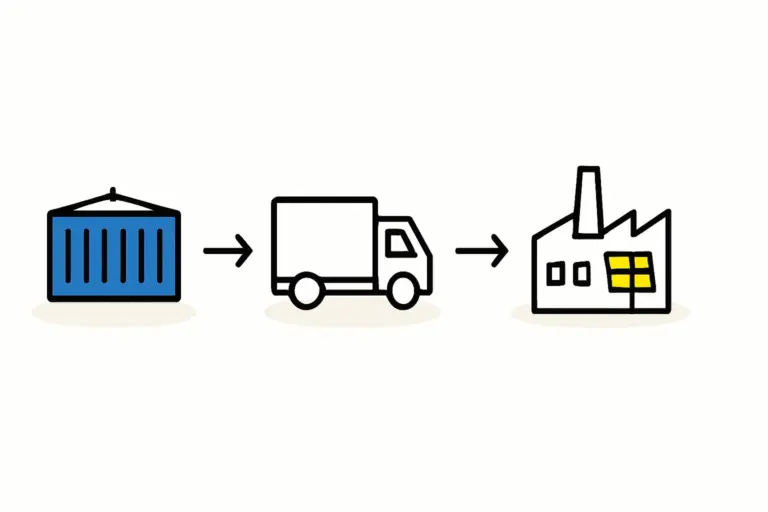
An entrepreneur in Port Moresby, facing rising electricity demand and the high cost of imported solar panels, is weighing a critical question: is it more financially viable to import finished solar modules, or to import components for local assembly?
The answer, found in Papua New Guinea’s customs tariff schedule, presents a compelling opportunity for industrial development. This analysis breaks down the import tariffs and potential tax incentives that are the foundation of a financial model for a new solar manufacturing venture. Understanding this framework is the first step toward transforming a market opportunity into a viable business plan.
The Strategic Advantage of Local Assembly: A Tariff Deep Dive
Customs duties—taxes levied on goods as they enter a country—are central to any import-based business model. These tariffs are structured using the Harmonized System (HS) codes, an international standard for classifying traded products. For a prospective solar manufacturer in Papua New Guinea, the distinction between the HS codes for finished modules and their raw materials is a critical factor in any preliminary financial model.
Papua New Guinea’s tariff schedule reveals a clear industrial strategy:
-
Finished Solar Modules (HS Code 8541.43.00): The import duty for ‘Photovoltaic cells assembled into modules or made up into panels’ is 20%. This tariff is designed to protect local industry and generate revenue.
-
Raw Solar Cells (HS Code 8541.42.00): In contrast, the import duty for ‘Photovoltaic cells not assembled into modules or panels’ is 0%.
This 20-percentage-point difference is a powerful government incentive for establishing local assembly operations. It allows a manufacturer to import the single most valuable component of a solar panel—the photovoltaic cell—without incurring any customs duty.
While the primary component is duty-free, other raw materials are subject to tariffs that must be factored into any financial calculation:
-
Solar Glass (HS Code 7007.19.00): 20% Import Duty
-
EVA/POE Film (HS Code 3920.10.00): 20% Import Duty
-
Aluminum Frames (HS Code 7604.29.90): 20% Import Duty
Even with these duties on secondary materials, the 0% rate on solar cells creates a significant, deliberate financial advantage for local producers over importers of finished goods.
Building a Preliminary Financial Model: A Simplified Example
To illustrate the impact of this tariff structure, let’s consider a simplified cost breakdown for a standard solar module. The percentages below are indicative and will vary with market conditions and technology.
-
Solar Cells: 50% of the material cost
-
Glass, Frame, and Backsheet: 30% of the material cost
-
Junction Box, EVA, and Consumables: 20% of the material cost
Assuming the total material cost for one module is $100 before shipping and duties:
Scenario 1: Importing a Finished Module
- Cost of Goods: $100
- Import Duty (20%): $20
- Landed Cost (before shipping): $120
Scenario 2: Importing Components for Local Assembly
- Cost of Solar Cells: $50
- Duty on Cells (0%): $0
- Cost of Other Materials: $50
- Duty on Other Materials (20%): $10
- Total Landed Cost of Materials (before shipping): $110
In this simplified model, the local assembler gains an immediate 10% cost advantage on materials alone, before considering savings on international shipping for bulky finished panels. This fundamental calculation is critical to understanding the investment requirements for a solar manufacturing plant.
Beyond Tariffs: Exploring Government Incentives and Tax Holidays
The favorable tariff structure is often just one piece of a broader government strategy to attract foreign and domestic investment in key sectors like renewable energy. Investors exploring opportunities in Papua New Guinea should conduct thorough due diligence with the Investment Promotion Authority (IPA) and relevant government departments to identify all available incentives.
Common incentives offered to encourage new industrial projects may include:
-
Pioneer Industry Status: New manufacturing ventures that introduce new technology or capabilities may be granted ‘Pioneer Status,’ which often comes with a corporate income tax holiday for five to ten years.
-
Duty Exemptions on Capital Equipment: Governments frequently waive import duties on the machinery and equipment required to set up a production line, significantly reducing initial capital expenditure.
-
Accelerated Depreciation: This allows a company to write off the value of its capital assets (like machinery) faster, reducing taxable income in the early years of operation and improving cash flow.
-
Training Subsidies: Support may be available for the costs associated with training a local workforce, addressing potential skills gaps.
These incentives are designed to de-risk an investment and improve the venture’s long-term profitability, signaling a government’s commitment to building a domestic manufacturing base.
Common Challenges and Considerations for Investors in PNG
While the financial incentives are compelling, a successful venture requires a realistic assessment of its operational challenges. Experience from J.v.G. turnkey projects in similar emerging markets shows that addressing logistics, infrastructure, and workforce training early is critical to success.
Any robust solar manufacturing business plan must account for local conditions in Papua New Guinea, including:
-
Logistics and Supply Chain: The cost and reliability of internal transport from ports to the factory location.
-
Infrastructure Reliability: The stability of the local power grid and access to water are essential for uninterrupted production.
-
Skilled Labour: While a semi-automated assembly line does not require a highly specialized workforce, a structured training program is necessary.

A thorough feasibility study will address these points, ensuring the business model is resilient and well-adapted to local operating conditions.
Frequently Asked Questions (FAQ)
Is the 0% tariff on solar cells a permanent policy in PNG?
Trade policies can change. However, a zero-duty policy on a core industrial component typically reflects a long-term strategy to encourage domestic value addition. Investors should engage with the IPA to understand the long-term vision and any potential reviews of the tariff schedule.
What is the typical initial investment for a small-scale assembly line?
The investment depends on the level of automation and the target capacity. A semi-automated 20–50 MW production line represents a common entry point for new market players. This scale is often sufficient to serve the national market and potentially neighboring island nations.
Do I need a technical background to start a solar factory?
No. Successful investors in this field are typically strong business professionals who understand finance, management, and market dynamics. The technical aspects of plant design, machine selection, and process optimization can be managed by partnering with an experienced engineering and consultancy firm. This approach is a central part of understanding how to start a solar panel manufacturing business.
How does local assembly affect the final cost for the consumer?
By reducing costs through tariff advantages and optimized logistics, local manufacturing can make solar energy more affordable and accessible for homes, businesses, and communities in Papua New Guinea. This not only creates a commercial opportunity but also contributes directly to national energy security and economic development.
Next Steps in Your Feasibility Study
The tariff and incentive structure in Papua New Guinea presents a clear and compelling business case for establishing a local solar module assembly plant. The government has created a framework that directly rewards investors who choose to build, hire, and produce within the country.
Your logical next step is to build on this initial analysis with a structured feasibility study. This involves developing a detailed financial model, outlining operational requirements, and creating a comprehensive business plan. A methodical approach ensures that all variables are considered, transforming a promising opportunity into a bankable project.