For entrepreneurs entering the solar manufacturing sector, the choice of location is a critical decision, influencing everything from capital expenditure and operational costs to market access.
While manufacturing hubs in Asia and Europe are well-established, strategic alternatives exist for those looking to serve emerging markets. Paraguay presents a compelling framework through its Maquila regime, offering a powerful platform for export-oriented solar module production.
This article explores Paraguay’s Maquila law, explaining how its unique tax and tariff structure can be used to establish a competitive solar module factory aimed at the Mercosur trade bloc and other international markets.
Understanding the Maquila Regime
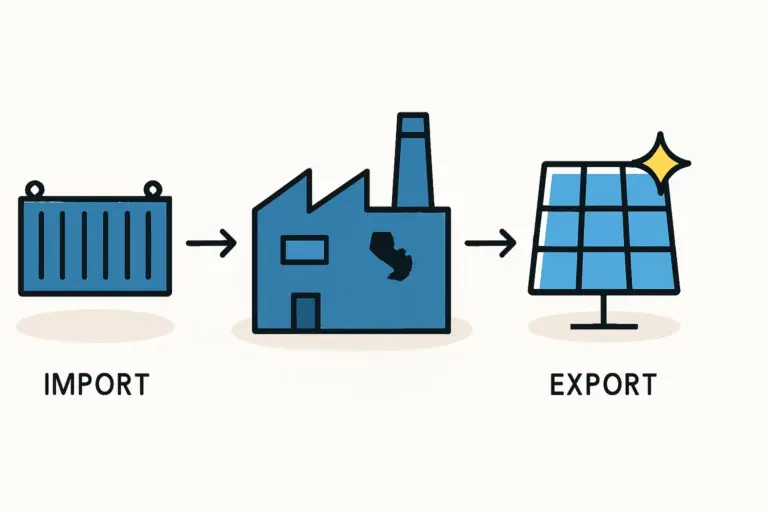
The Maquila regime is an investment incentive program designed to promote production for export. It allows a company, known as a ‘Maquiladora,’ to import raw materials, machinery, and other necessary inputs into Paraguay temporarily and duty-free. These goods are then processed or assembled into finished products within the country.
The fundamental requirement is that the majority of finished goods must be exported. In exchange, the operation is subject to a single, highly favorable tax rate: 1% applied only to the value added within Paraguay. This simple yet powerful mechanism provides a significant competitive advantage by minimizing the tax burden on both capital investment and ongoing operations.
Why Paraguay for Solar Module Manufacturing?
While the Maquila law itself is attractive, its benefits are magnified by Paraguay’s unique combination of economic and geographic advantages. Together, these factors create a uniquely favorable business environment for a solar module manufacturer.
Unprecedented Energy Advantages
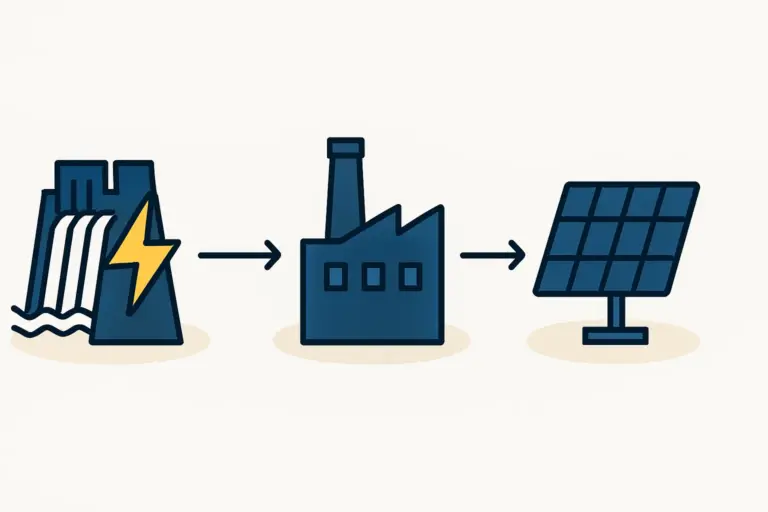
Solar module manufacturing is an energy-intensive process, and the cost of electricity directly impacts the final production cost per watt. Paraguay stands out globally for its massive hydroelectric infrastructure, primarily the Itaipu and Yacyretá dams.
This infrastructure provides an abundance of clean, reliable, and competitively priced energy, resulting in some of the lowest electricity costs in Latin America. For a factory running laminators and other heavy machinery around the clock, this translates into a substantial and sustainable operational cost advantage.
Strategic Market Access via Mercosur
Paraguay is a founding member of Mercosur, the Southern Common Market, which also includes Brazil, Argentina, and Uruguay. Manufacturing within Paraguay grants duty-free access to this combined market of over 295 million consumers.
For a solar panel manufacturer, this means finished modules can be shipped to Brazil—one of the world’s fastest-growing solar markets—without the high import tariffs often levied on goods from outside the bloc. This preferential access can be a decisive factor in pricing strategy and market penetration.
Ready to make big Profits?
The solar Industry is Booming
WE HELP NEWCOMERS to the solar industry start their own solar module production line. Customers can make BIG PROFITS by selling modules and finding investors, without wasting money and time on things they don't need!
A Stable Economic and Political Environment
Long-term investment requires a predictable environment. For more than a decade, Paraguay has demonstrated remarkable economic stability, characterized by consistent GDP growth, low inflation, and a stable currency (the Guaraní). The government has consistently supported the Maquila program as a pillar of its economic development strategy, assuring investors of the legal framework’s longevity and reliability.
Favorable Labor Conditions
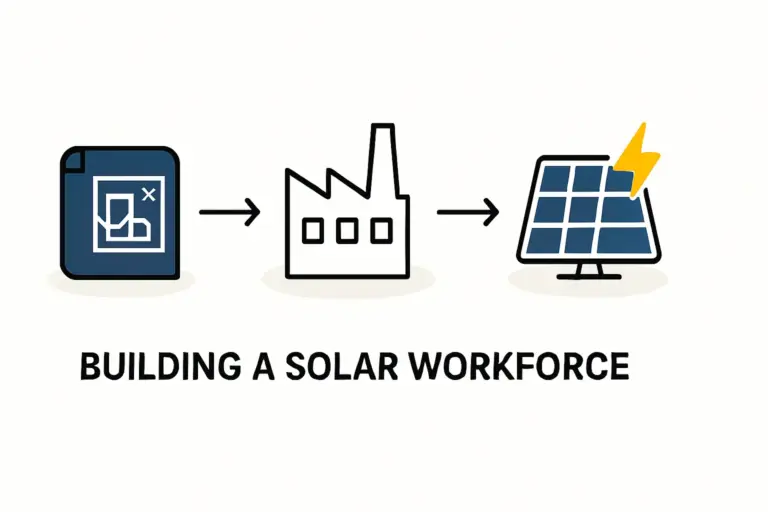
Paraguay has a young, growing population, creating a dynamic and trainable workforce. Labor costs are competitive compared to other regional and global manufacturing centers. This allows a new factory to recruit and develop a skilled team for assembly, quality control, and logistics without the high wage pressures seen in more established industrial economies.
The Maquila Advantage Applied to a Solar Factory
The practical impact of the Maquila regime is best understood by examining how it applies to the key cost centers of a solar module assembly line.
A Practical Example: The Bill of Materials (BOM)
Most components used in a solar module—including high-value items like photovoltaic cells, encapsulant films (EVA), backsheets, junction boxes, and aluminum frames—are imported. Under a standard import model, a manufacturer would pay significant duties and Value Added Tax (VAT) on these goods upon arrival.
Under the Maquila regime, these taxes are suspended. This significantly reduces the initial working capital required, since the full bill of materials for a solar panel can be procured without upfront tax burdens. The capital that would otherwise be tied up in taxes can instead be allocated to operations or expansion.
Capital Equipment and Machinery
The same principle applies to the factory’s production machinery. The investment in essential solar panel manufacturing equipment, often the largest capital outlay, is directly shielded by this tariff exemption. A complete assembly line—from stringers and bussing stations to laminators and sun simulators—can be imported without duties, dramatically lowering the initial setup cost.
The 1% Single Tax Calculation
The simplicity of the Maquila tax system is one of its most appealing features. The 1% tax is not calculated on total revenue but on the value added locally. A simplified example illustrates this:
Value of an exported container of solar modules: $200,000
Cost of imported raw materials and components for these modules: $150,000
Value added in Paraguay (labor, energy, local services, profit): $50,000
Tax Payable (1% of value added): $500
This highly efficient tax structure ensures that the company retains the vast majority of its earnings, facilitating reinvestment and growth.
The Process of Establishing a Maquila Operation
Setting up a Maquila company involves a structured approval process designed to ensure the project aligns with the goals of the regime.
The Maquila Program Application
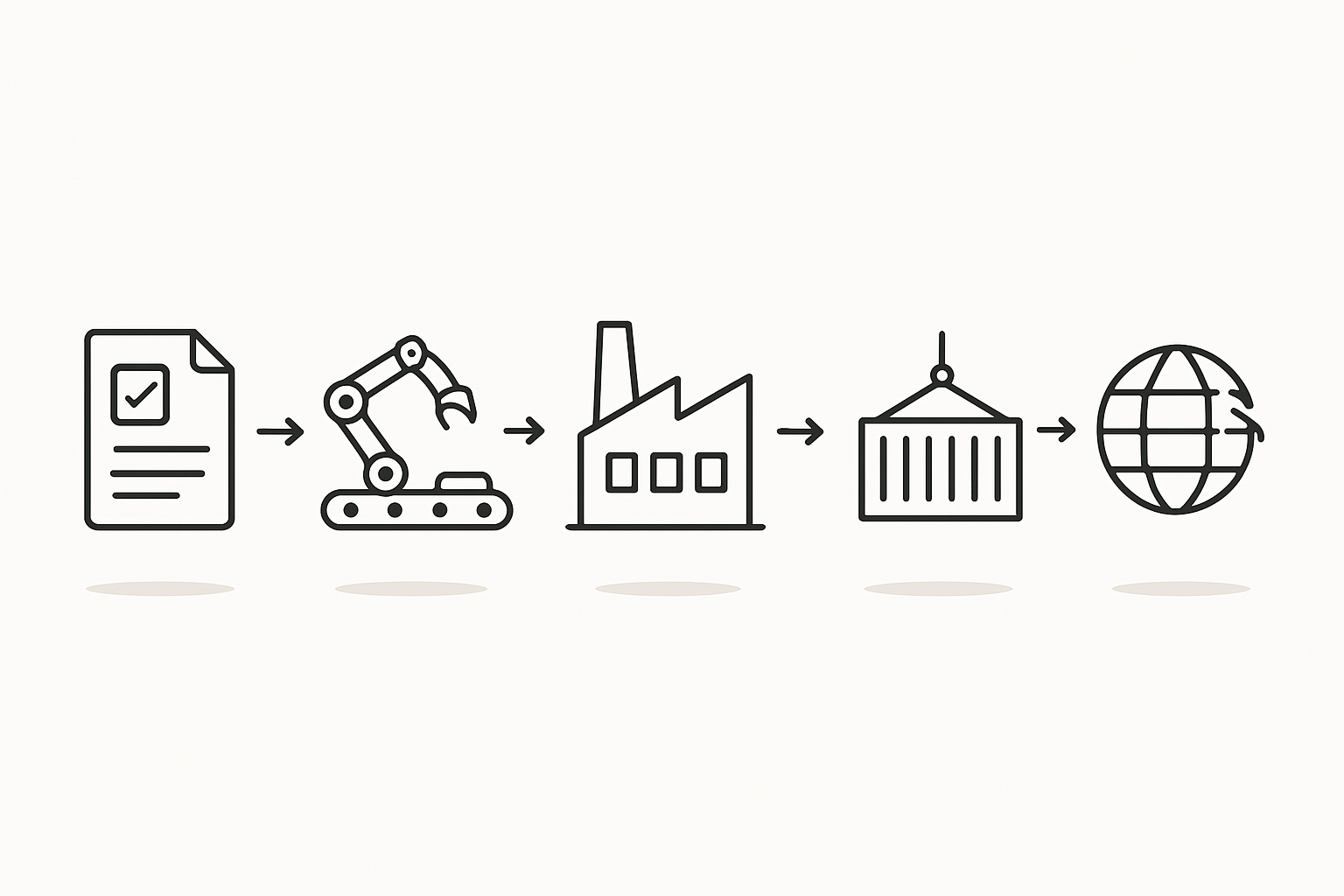
An investor must first submit a detailed investment and production program to the National Council of Maquila Export Industries (CNIME). This business plan outlines the project’s scope, including the total investment amount, machinery and raw materials to be imported, the production process, job creation estimates, and target export markets.
From Approval to Operation
Once the program is approved by CNIME, the investor can incorporate the Paraguayan company and begin importing capital goods and raw materials under the tax-suspensive regime. This regulatory step is a critical part of the overall timeline for how to start a solar panel factory, making proper planning essential. Experience from J.v.G. turnkey projects shows that securing Maquila approval requires a well-documented business plan that clearly outlines the entire production process, from raw material sourcing to finished goods export.
Frequently Asked Questions (FAQ)
What is the typical investment required for a Maquila solar factory?
While this varies, a small to medium-scale semi-automated factory with an annual capacity of 20–50 MW can often be established with an initial capital equipment investment between $1.5 and $3 million USD. The Maquila regime reduces this initial outlay by exempting the equipment from import duties.
Can a Maquila company sell products within Paraguay?
Yes, but with limitations. A Maquila company can sell up to 10% of its previous year’s total export volume to the domestic Paraguayan market. For these domestic sales, however, the company must pay the corresponding import duties on the proportional raw materials used. The primary focus of the regime remains on export.
How does the repatriation of profits work under the Maquila regime?
The Maquila regime allows for the free remittance of capital and profits abroad. There are no additional taxes or restrictions on repatriating dividends to foreign shareholders, providing clarity and security for international investors.
Is the Maquila regime only for large corporations?
No. The program is designed to be accessible to small and medium-sized enterprises (SMEs) and large multinational corporations alike. The key requirement is the export-oriented nature of the business, not its size.
What are the primary export markets from Paraguay?
The most significant and immediate market is Mercosur, especially Brazil and Argentina, due to duty-free access. However, there are no restrictions on exporting globally. Many Maquila operations also export to North America, Europe, and other parts of Latin America.
A Strategic Consideration for Global Solar Entrepreneurs
For entrepreneurs looking to enter the solar manufacturing industry, Paraguay’s Maquila regime offers a unique and compelling value proposition. Its combination of a highly efficient tax structure, low operational costs driven by inexpensive energy, and strategic, duty-free access to the burgeoning South American solar market creates a powerful competitive advantage.
While not a fit for every business model, it is a strategic option that deserves serious consideration. The next logical step for any entrepreneur developing an export-focused manufacturing plan is to conduct a detailed feasibility study and business plan tailored to this specific legal and economic framework.