Many entrepreneurs entering the solar manufacturing sector focus intensely on production technology and machinery. While essential, a critical success factor is often decided before the first machine is installed: the strategic location of the factory.
Proximity to efficient, well-connected port infrastructure can significantly impact operational costs, delivery times, and overall market competitiveness. This article explores the advantages of establishing a solar module production facility in Portugal, specifically near the major ports of Sines and Leixões. This positioning can serve as a powerful gateway for exporting finished solar modules to key international markets, including North America, Africa, and Northern Europe.
The Overlooked Factor: Why Proximity to Ports Matters in Solar Manufacturing
The final cost of a solar module is not solely determined by its manufacturing expense. Logistics, particularly the cost of transporting finished goods from the factory to the end customer, plays a substantial role. For a product like a solar module—which is relatively large, heavy, and shipped in high volumes—maritime freight is the most economically viable method for international distribution.
A key and often underestimated expense in this chain is drayage: the cost of transporting shipping containers from the factory to the port. These inland transportation costs can erode profit margins, especially when factories are located hundreds of kilometers from the coast. Strategically placing a production facility near a major port allows a business to minimize these expenses, reduce transit times, and create a more resilient, cost-effective supply chain.
Portugal’s Geographic Advantage: An Atlantic Gateway
Portugal’s location on the western edge of Europe makes it a natural ‘Atlantic gateway,’ offering direct and efficient maritime access to the Americas, Western Africa, and Northern Europe. For a business aiming to export solar modules, this position provides a distinct competitive edge over more centrally located European manufacturing sites.
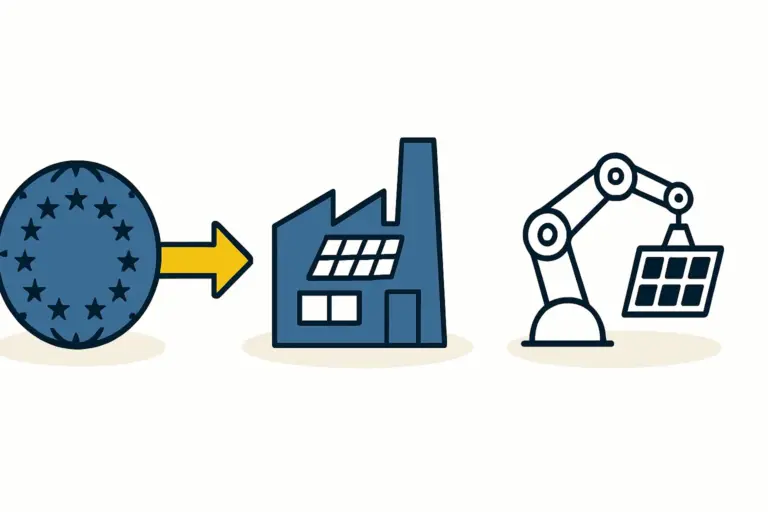
Modules manufactured in Portugal also carry the ‘Made in Europe’ designation, a significant advantage in international markets. This label can lead to preferential treatment under certain trade agreements, potentially lower tariffs, and appeals to a growing base of customers seeking to diversify their supply chains. For many large-scale energy project developers, this focus on supply chain resilience has become a critical consideration.
A Closer Look at Portugal’s Key Maritime Hubs
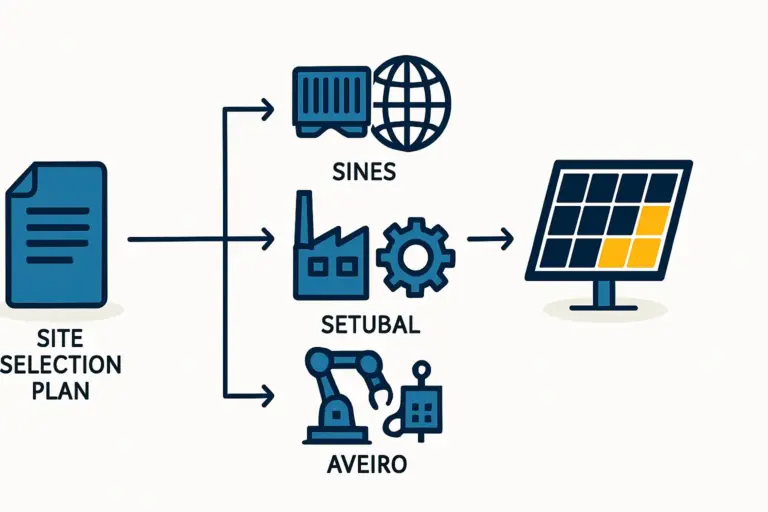
Two ports in particular stand out as prime logistical hubs for a solar module export business: the Port of Sines and the Port of Leixões.
The Port of Sines: Scale and Global Reach
The Port of Sines is the largest artificial port in Portugal and a deepwater facility capable of accommodating the world’s largest container ships. It currently handles approximately 50% of the containerized cargo traffic in the country, making it a pivotal hub for global trade.
Sines offers several key advantages:
-
Uncongested Operations: Unlike many other major European ports, Sines is known for its operational efficiency and lack of congestion, which translates to more reliable shipping schedules and a reduced risk of costly delays.
-
Direct Maritime Links: It offers direct sea routes to strategic markets in North and South America, Africa, and Northern Europe.
-
Excellent Hinterland Connections: The port is well-integrated with national road and rail networks, ensuring the efficient movement of goods to and from inland production sites.

The Port of Leixões (Porto): A Hub for European and African Trade
Located near the city of Porto in the north, the Port of Leixões is another of Portugal’s critical maritime assets. It handles roughly 25% of Portugal’s international trade and serves as the primary gateway for the economically vibrant regions of Northern Portugal and parts of Spain. Leixões is particularly well-connected to trade routes serving Northern Europe and Africa, making it an ideal export point for businesses targeting those markets.
Quantifying the Impact: From Factory Floor to Global Customer
A solar panel’s journey from the end of the solar module production line to an installation site overseas requires careful logistical planning. The final stage before its sea voyage is loading it into a shipping container and transporting it to the port.
Based on experience from J.v.G. turnkey projects, reducing the distance between the factory and the port directly lowers operating expenses. While precise figures depend on volume and local transport costs, minimizing inland haulage can save a significant percentage on overall logistics spending. For a factory producing tens of thousands of modules annually, these savings add up to a substantial financial advantage.
Beyond Logistics: The Broader Ecosystem Advantage
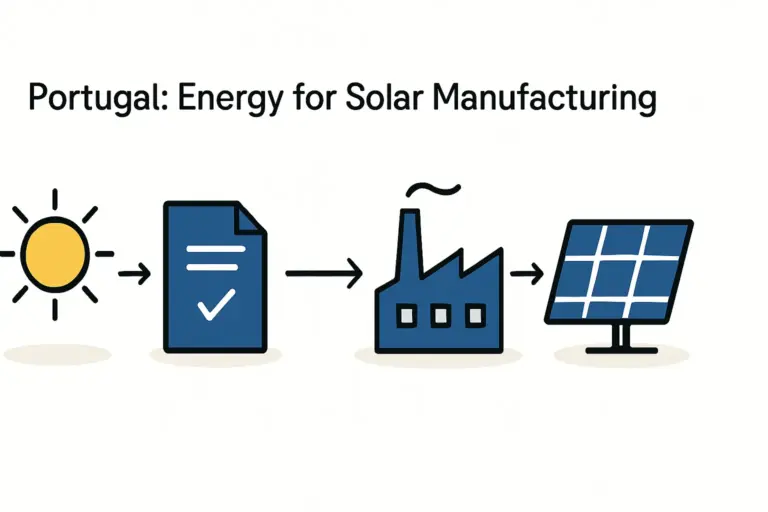
Choosing a location in Portugal offers benefits that extend beyond port access. The country has a growing renewable energy sector, driven by strong government support and some of Europe’s highest solar irradiation levels. This has cultivated a supportive ecosystem for manufacturers, including a developing base of skilled labor and local service providers. This favorable environment can also simplify meeting solar panel factory building requirements and navigating the setup process.
For entrepreneurs planning to enter this industry, understanding the entire process is crucial. A comprehensive overview of how to start a solar panel manufacturing business provides the necessary framework for making informed decisions, from initial planning to full-scale production.
Frequently Asked Questions (FAQ)
Is Portugal a good location if my main market is in the Middle East?
Portugal’s primary logistical advantage is its access to Atlantic shipping routes, making it exceptionally well-suited for markets in the Americas, Africa, and Northern Europe. While shipping to the Middle East is certainly possible, other locations in Southern or Eastern Europe might offer more direct maritime connections. However, the ‘Made in Europe’ quality mark and supply chain diversification benefits remain valuable regardless of the end market.
How much can realistically be saved by locating a factory near a port?
The exact savings vary based on fuel costs, road tolls, and labor rates. However, inland transport typically accounts for a significant portion of total shipping costs. Locating a facility within a short distance (e.g., under 100 km) of a port, rather than several hundred kilometers inland, can substantially reduce these drayage expenses per container.
Is there a skilled workforce available for solar manufacturing in these regions?
Portugal has actively invested in its renewable energy sector, leading to a growing pool of engineers, technicians, and skilled workers familiar with the industry. Universities and technical schools are increasingly offering programs geared towards green technologies, supporting the long-term availability of qualified personnel.
What are the considerations for importing raw materials?
As a member of the European Union, a factory in Portugal benefits from the EU Single Market. This can simplify the process of importing necessary raw materials and components from other EU member states, often with no customs duties. For materials sourced from outside the EU, standard import procedures apply, but the efficient port infrastructure helps facilitate this process.