Many entrepreneurs exploring new industrial ventures assume that multi-million dollar projects require an equivalent amount of private capital. In Qatar, however, aligning a project with national objectives can unlock significant financial support, changing the entire investment equation for a new solar module factory.
This isn’t about generic incentives; it’s about a structured financial partnership with institutions like the Qatar Development Bank (QDB). Qatar’s commitment to economic diversification, embedded in its National Vision 2030, has created a uniquely favorable environment for high-tech manufacturing. For a serious investor, understanding how to leverage this support is the crucial first step. This guide outlines how to structure a financial model and business plan tailored to meet QDB’s requirements, transforming a manufacturing concept into a bankable project.
Understanding the Landscape: Why Qatar Supports Local Solar Manufacturing
Securing institutional financing begins with understanding the strategic context. A proposal for a solar factory in Qatar isn’t just a commercial proposition; it’s a direct contribution to national goals. A strong business plan must demonstrate this alignment clearly.
Three key government initiatives form the bedrock of support for this industry:
-
Qatar National Vision 2030: The primary driver is the nation’s goal to build a diversified, sustainable economy and reduce its reliance on the hydrocarbon sector. Local solar manufacturing directly serves the Economic and Environmental pillars of this vision by building industrial capacity and promoting renewable energy.
-
The Tawteen Program: Led by QatarEnergy, this program aims to localize the energy sector’s supply chain. It has explicitly identified opportunities for the local production of solar panel components, signaling a committed, long-term buyer for locally manufactured modules.
-
The ‘Jahiz’ Initiatives: To lower the barrier to entry for industrial projects, the Ministry of Commerce and Industry offers pre-equipped industrial plots through its Jahiz 1 and Jahiz 2 programs. This substantially reduces the initial capital required for land and basic infrastructure—a major cost component in any factory setup.
Presenting a project that connects these strategic dots is precisely what institutions like QDB look for in a solar factory business plan. It shows the project is not only commercially viable but also strategically important to the state.
The Qatar Development Bank (QDB): Your Primary Financial Partner
The Qatar Development Bank is the principal institution mandated to foster industrial growth in the country. It provides direct financing for projects that align with the national vision, offering terms that are exceptionally competitive and designed to encourage long-term investment.
Key QDB Financing Terms for Industrial Projects
For qualifying manufacturing projects, QDB’s financing structure is designed to mitigate early-stage financial pressure and support a project through its ramp-up phase. Typical terms include:
- Financing Coverage: Up to 70% of total project costs.
- Interest Rate: A fixed rate of 2.5% for Qatari nationals and a capped rate of 4% for residents.
- Grace Period: Up to 3 years before principal repayments begin.
- Repayment Period: Up to 15 years, including the grace period.
Consider a mid-sized 50 MW solar module factory, where the total investment can range from USD 8-10 million. Under this framework, an entrepreneur could secure USD 5.6–7 million in financing at highly favorable terms, significantly de-risking the venture.
Structuring Your Business Plan and Financial Model for QDB Approval
A successful application to QDB hinges on a meticulously prepared business plan and a credible financial model. The bank’s due diligence process is thorough, and your documentation must withstand expert scrutiny.
The Feasibility Study: The Foundation of Your Application
Before building the financial model, a comprehensive feasibility study is required. This document serves as the strategic narrative for your project, demonstrating that you have rigorously assessed the market, technology, and operational requirements. It must prove the project is not just a good idea, but a viable business.
Key sections include a market analysis that references demand drivers like the Tawteen program, a technical plan detailing the production process, and the financial projections that will form the core of your application.
Critical Components of the Financial Model
The financial model translates your business strategy into a set of structured financial projections. It must be detailed, transparent, and built on realistic assumptions.
1. Capital Expenditure (CAPEX)
This section itemizes all initial, one-time costs required to establish the factory. It’s crucial to be exhaustive.
- Machinery: The cost of the entire production line. A detailed breakdown of all solar panel production line machines is essential.
- Building & Infrastructure: Costs for factory construction or retrofitting. The availability of ‘Jahiz’ plots can significantly reduce this figure.
- Installation & Commissioning: This includes costs for expert supervision, logistics, and bringing the line to full operational status. Based on experience from J.v.G. turnkey projects, underestimating these logistical costs is a common pitfall that a robust model must anticipate.
- Other Pre-production Costs: Licensing, permits, and initial staff training.
2. Operational Expenditure (OPEX)
These are the recurring costs of running the factory. Accuracy here is vital for projecting profitability and cash flow.
- Bill of Materials (BOM): The cost of all raw materials, including solar cells, glass, EVA, backsheets, and aluminum frames. Understanding the cost of materials for solar panels is fundamental to accurate OPEX forecasting.
- Labor: Salaries for operators, technicians, engineers, and administrative staff.
- Utilities: Electricity and water are significant costs in a manufacturing environment.
- Maintenance & Spares: An allowance for routine maintenance and replacement parts for the machinery.
- Overheads: Rent (if applicable), insurance, and other administrative expenses.
3. Revenue Projections and Financial Statements
Your revenue forecast must be grounded in the market analysis from your feasibility study. It’s advisable to present three scenarios—conservative, moderate, and optimistic. From these inputs, you will generate the three core financial statements required by any lender:
- Profit & Loss (P&L) Statement: Shows the company’s profitability over time.
- Balance Sheet: A snapshot of the company’s assets, liabilities, and equity.
- Cash Flow Statement: This statement, perhaps the most critical for QDB, shows how cash moves in and out of the business. It proves the company can meet its operational needs and, most importantly, its loan repayment obligations.
The QDB Application Process: A Step-by-Step Overview
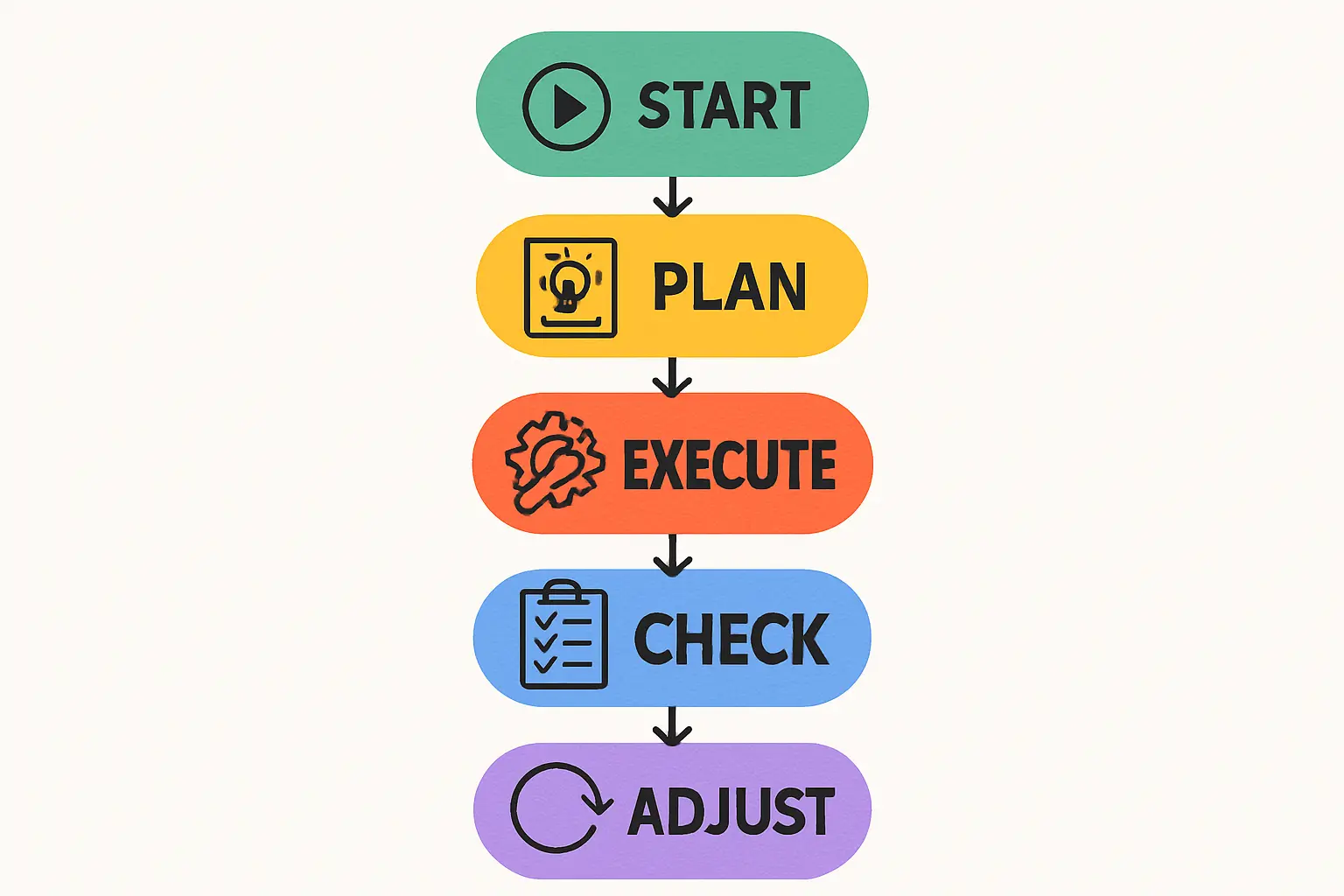
While specific requirements can change, the QDB application process for industrial financing generally follows a structured path:
- Initial Inquiry and Application Submission: The entrepreneur submits an initial application form with the comprehensive feasibility study and business plan.
- Preliminary Review: QDB assesses the project’s strategic alignment with Qatar’s development goals and its initial commercial viability.
- Detailed Due Diligence: If the project passes the initial review, QDB’s team of financial and technical experts will conduct a thorough analysis of the business plan, financial model, and technical assumptions. This may involve site visits and detailed interviews.
- Credit Approval and Offer: Upon successful completion of due diligence, the credit committee approves the project, and QDB issues a formal financing offer letter outlining the terms and conditions.
- Legal Documentation and Disbursement: Once the offer is accepted, legal agreements are signed, and funds are disbursed according to an agreed-upon schedule, often tied to project milestones.
Navigating this process requires meticulous preparation. Platforms like pvknowhow.com offer structured guidance to help entrepreneurs prepare the technical and financial documentation required by institutions like QDB.
Frequently Asked Questions (FAQ)
What is the typical total investment for a small-to-medium solar factory in the region?
For a semi-automated production line with a capacity of 20–50 MW per year, the total investment typically ranges from USD 4 million to USD 10 million. This depends heavily on the level of automation, the choice of technology (e.g., PERC, TOPCon), and building costs.
Do I need a technical background in solar energy to secure financing?
No, an entrepreneur does not need to be a photovoltaic engineer. However, the business plan must be technically sound and credible. This is why many successful applicants partner with experienced technical consultants or turnkey line providers who can supply the necessary technical data, equipment specifications, and process know-how.
How long does the QDB approval process typically take?
The timeline can vary depending on the complexity of the project and the completeness of the application. A well-prepared and comprehensive submission can expedite the process, but entrepreneurs should realistically plan for a multi-month timeline from initial submission to final approval.
Can an expatriate or foreign-owned company receive QDB financing?
Yes, QDB supports projects from residents and foreign investors. The financing terms, such as the interest rate, may differ from those for Qatari nationals. In many cases, having a local Qatari partner can be advantageous for the application process.
Conclusion: Your Next Steps in Planning
The opportunity to establish a solar module factory in Qatar is backed by an exceptionally supportive financial and strategic framework. The government’s vision, coupled with the tangible financing offered by the Qatar Development Bank, creates a clear path for investors.
Success, however, is not automatic. It depends entirely on the quality, credibility, and professionalism of your business plan and financial model. Your journey from idea to a QDB-funded project begins with moving from this overview to a detailed project definition. The next step is to determine your factory’s capacity and technology, as these decisions will form the foundation of a truly bankable financial model.