An entrepreneur planning to establish a solar module factory often focuses on machinery, financing, and facility construction. However, a less visible but equally critical factor underpins the operation’s long-term viability: the consistent, cost-effective flow of raw materials. For a venture in Saint Vincent and the Grenadines (SVG), this journey begins at Kingstown Port. A misstep in customs, a delay in clearance, or an unforeseen tariff can disrupt the entire production schedule before the first solar panel is even assembled.
This guide breaks down the customs procedures, tariff structures, and logistical challenges of importing key solar components into SVG. Understanding these factors is not merely an administrative task; it is a strategic necessity for building a resilient and profitable manufacturing business in the Caribbean.
The Journey of Core Components to Kingstown
The success of a solar module assembly line depends on a reliable supply of three primary inputs: solar glass, photovoltaic cells, and EVA (Ethylene Vinyl Acetate) encapsulant film. These materials are typically sourced from established global manufacturers in Asia or Europe. Their journey concludes at Kingstown Port, the primary commercial seaport in SVG, which handles the majority of the nation’s containerized and general cargo.
Planning a robust supply chain begins with understanding the specific nature of each component.
Key Imported Materials for Solar Module Assembly
A solar module is a precisely engineered product, and each layer plays a critical role in its performance and longevity. The main imported components include:
- Solar Glass: This is not standard glass. It is a highly specialized, low-iron, tempered glass designed for maximum light transmission and durability against environmental factors.
- Photovoltaic (PV) Cells: As the heart of the solar panel, these are responsible for converting sunlight into electricity. They are delicate, high-value components that require careful handling during shipment.
- EVA Encapsulant Film: This polymer-based film laminates the PV cells between the glass and the backsheet, providing adhesion, insulation, and protection from moisture.
The physical properties and value of these goods directly influence shipping and customs requirements, making a thorough understanding of the raw materials for solar panel manufacturing essential.
Customs Procedures and Tariffs in SVG
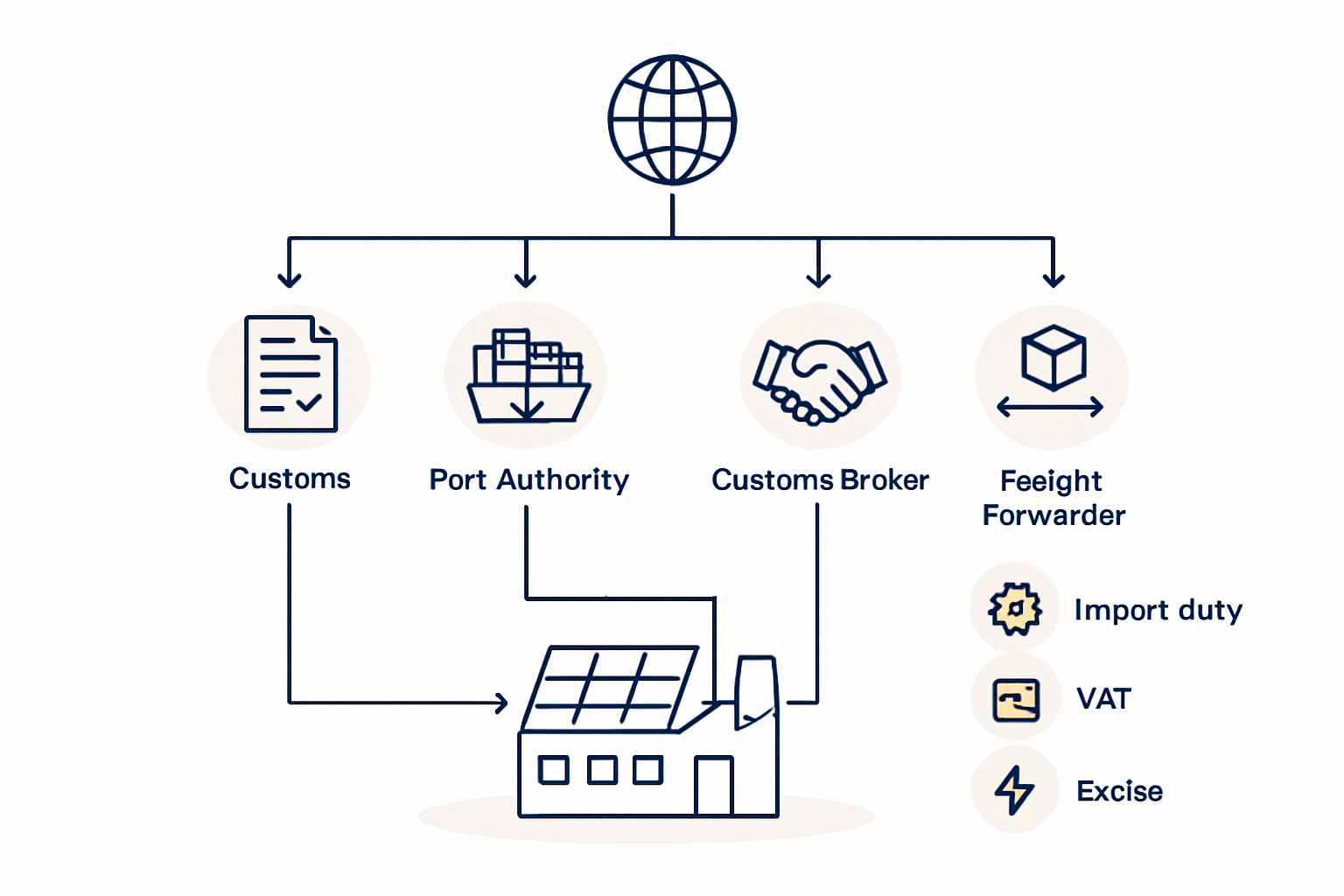
Once a container of raw materials arrives at Kingstown Port, it falls under the jurisdiction of the Saint Vincent and the Grenadines Customs and Excise Department. Navigating this stage efficiently is crucial for avoiding costly delays and penalties.
The Harmonized System (HS) Codes
All imported goods must be classified using the international Harmonized System (HS) nomenclature. This code determines the applicable tariff rate and is non-negotiable. Using an incorrect HS Code can lead to significant fines and delays.
Based on J.v.G. Technology GmbH’s experience in global factory setups, the typical HS codes for primary solar components are:
Ready to make big Profits?
The solar Industry is Booming
WE HELP NEWCOMERS to the solar industry start their own solar module production line. Customers can make BIG PROFITS by selling modules and finding investors, without wasting money and time on things they don't need!
- Solar Cells: 8541.40
- Solar Glass (Tempered/Laminated): 7007.19 or 7007.29
- EVA Film: 3920.10
Verifying these codes with a local customs broker is imperative, as interpretations can vary.
Tariffs and Potential Exemptions
SVG is a member of the Caribbean Community (CARICOM), which means it adheres to the Common External Tariff (CET). For most goods, the CET ranges from 0% to 20%. The specific rate is determined by the HS Code assigned to the product.
However, there is a significant opportunity for businesses in the renewable energy sector. The government of SVG, aligned with CARICOM policies, often provides incentives for green energy investments. This may include duty and tax exemptions on the importation of machinery and raw materials for manufacturing.
Securing these exemptions is not automatic. It requires a formal application process and approval from relevant government bodies, such as Invest SVG. This single step can dramatically improve the project’s financial projections and the overall cost of setting up a solar module factory.
The Customs Clearance Process
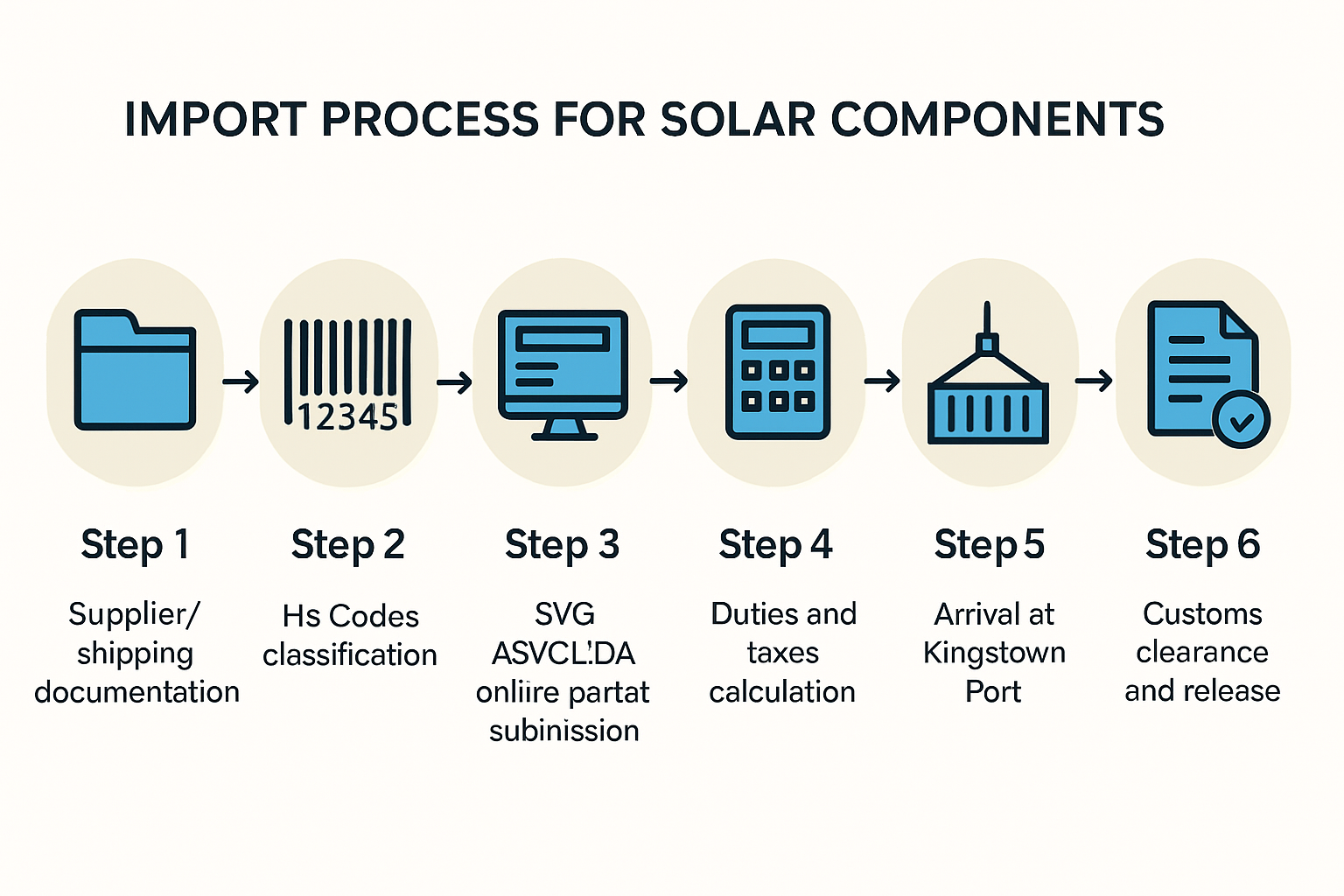
The process for clearing goods is managed through the ASYCUDA World system, a computerized customs management platform. While streamlined, it demands precision.
The typical clearance workflow involves these steps:
- Submission of Documents: A licensed customs broker submits the import declaration electronically, along with essential documents like the Bill of Lading, Commercial Invoice, Packing List, and Certificate of Origin.
- Assessment: Customs officials review the declaration to verify the classification (HS Code), valuation, and origin of the goods.
- Inspection: While not every shipment is physically inspected, customs reserves the right to examine cargo to ensure it matches the declaration. Given the high value of PV cells, this stage requires careful coordination.
- Payment of Duties and Taxes: If duties are applicable, they must be paid before the goods can be released.
- Release: Once all requirements are met, a release order is issued, and the container can be transported from the port to the factory.
Practical Logistical Challenges and Solutions
Theory and practice can differ significantly at any port. Kingstown, while efficient for its scale, presents challenges that an investor must anticipate.
- Port Congestion and Storage: As the primary port for an island nation, Kingstown can experience periods of congestion. Limited yard space means containers must be moved promptly upon clearance to avoid incurring demurrage fees. A well-timed shipping schedule is essential.
- Specialized Handling: Solar glass is heavy and fragile, while PV cells are sensitive to impact. Working with logistics partners who have the correct equipment (e.g., forklifts with appropriate capacity) and experience handling such materials is crucial. This consideration extends to choosing the right solar manufacturing equipment for unloading and moving materials within the factory itself.
- Hurricane Season: Operating in the Caribbean requires planning for the Atlantic hurricane season (typically June to November). This may involve securing additional insurance coverage, planning for potential port closures, and maintaining a larger inventory of raw materials as a buffer against supply chain disruptions.

The most effective solution to these challenges is to engage a reputable, local customs broker and freight forwarder early in the planning process. Their on-the-ground knowledge of port operations, customs personnel, and regulatory nuances is an invaluable asset.
Frequently Asked Questions (FAQ)
Q1: What is the single most important document for customs clearance?
While all documents are necessary, the Commercial Invoice is arguably the most critical. It establishes the transaction value of the goods, which is the basis for calculating customs duties. Any discrepancy on this document can trigger a full inspection and re-evaluation.
Q2: How long does customs clearance typically take at Kingstown Port?
With correct documentation and a proficient customs broker, clearance can often be completed within 2–5 business days. However, delays can occur due to documentation errors, if a shipment is flagged for physical inspection, or during peak congestion periods.
Q3: Can a new company apply for duty-free incentives before starting operations?
Yes. In fact, it is advisable to begin the application process for investment incentives and duty exemptions with Invest SVG and other government ministries well in advance of the first shipment’s arrival. This ensures the necessary approvals are in place to prevent paying duties upfront.
Q4: What is the difference between a freight forwarder and a customs broker?
A freight forwarder manages the logistics of moving goods from the supplier to the port of destination. A customs broker is a licensed professional who deals directly with the customs authority on behalf of the importer to clear the goods. Often, a single logistics company can provide both services.
Conclusion: Logistics as a Strategic Pillar
For an entrepreneur entering the solar manufacturing space in Saint Vincent and the Grenadines, mastering the logistics of importing raw materials is not a secondary concern—it is a cornerstone of the business model. The flow of goods through Kingstown Port directly influences production costs, operational uptime, and ultimately, market competitiveness.
Proactively addressing HS classifications, pursuing available tax incentives, and building strong relationships with local logistics partners can transform a potential bottleneck into a streamlined, predictable part of the operation. This strategic foresight is what separates a struggling plant from a thriving regional manufacturing leader.