Disclaimer: This case study represents a composite example derived from real-world
consulting work by J.v.G. Technology GmbH in solar module production and factory optimization. All data points are realistic but simplified for clarity and educational purposes.
Converting a Facility into a Solar Module Factory: A Feasibility Guide
Many entrepreneurs own a valuable but underutilized asset: an empty industrial building. As global demand for renewable energy surges, many are asking the same question: can an existing warehouse or factory be repurposed for solar module manufacturing? This approach, known as a ‘brownfield’ conversion, presents a compelling alternative to constructing a new facility from the ground up.
The opportunity is substantial. According to the International Energy Agency (IEA), global solar PV manufacturing capacity is expanding at a historic pace. For an investor with available real estate, converting that structure can be a faster entry into this burgeoning market. This path, however, requires a rigorous technical and financial assessment to ensure its viability.
This guide outlines the critical factors to consider when evaluating an existing facility for conversion into a state-of-the-art solar module production plant.
An existing industrial facility holds significant potential, but requires careful assessment before conversion.
The Strategic Advantage of Brownfield Conversions
Retrofitting an existing building—a ‘brownfield’ project—can offer significant business advantages over new ‘greenfield’ construction, provided the facility meets key criteria.
Accelerated Timeline: The primary benefit is speed. Eliminating the lengthy processes of land acquisition, extensive civil works, and new construction can compress the project timeline significantly. Research from institutions like the Fraunhofer Institute for Solar Energy Systems (ISE) suggests that brownfield projects can reduce setup time by 20-30% compared to greenfield alternatives. Based on experience gained from European PV manufacturers’ turnkey projects, a typical conversion can be completed in 8-12 months from planning to initial operation.
Reduced Capital Expenditure: A conversion can substantially lower the initial investment for a solar panel factory. Savings come primarily from construction and site preparation costs. For example, one project of a premier EU provider in North Africa, a client saved over $1.2 million in projected construction costs by converting an existing facility, reallocating those funds to high-performance equipment.
Leveraging Existing Infrastructure: Brownfield sites often come with established utility connections (electricity, water, gas), access roads for logistics, and even pre-existing permits. These can simplify the setup process, especially in complex regulatory environments.
Critical Assessment Areas for a Factory Conversion
While the benefits are clear, not every building is suitable. A successful conversion hinges on a detailed feasibility study focusing on three core areas: structural integrity, process flow, and environmental systems.
1. Structural and Civil Engineering Audit
An existing building was designed for a different purpose, so its specifications may not align with the demands of a modern solar factory. A thorough structural audit is therefore a mandatory first step.
Floor Loading Capacity: A solar module production line includes heavy machinery, particularly laminators and glass handling systems. The concrete slab foundation must be able to support these concentrated and distributed loads without risk of cracking or subsidence. This is one of the most common challenges identified in feasibility studies by EU PV factory turnkey providers.
Ceiling Height and Clear Span: Production lines require significant vertical clearance for equipment, maintenance access, and material handling systems like overhead gantries. A low ceiling can severely restrict equipment choice and operational efficiency.
Roof Integrity: The roof must not only be weatherproof but also strong enough to support industrial-grade HVAC units, air filtration systems, and potentially a rooftop solar array to power the factory’s own operations.
Vibrational Assessment: The foundation and structure must be stable enough to prevent vibrations from heavy machinery from interfering with sensitive processes like automated cell stringing and electroluminescence (EL) testing.
2. Equipment Layout and Process Flow Planning
A building’s physical dimensions and layout dictate how efficiently equipment can be arranged. The goal is to establish a logical, linear flow of materials, from receiving raw components to dispatching finished modules.
Placing a production line within a pre-existing footprint is a complex puzzle. Columns, internal walls, and irregular shapes can create bottlenecks. A detailed 3D layout plan is essential to confirm adequate space for machinery, operator movement, material storage, and future maintenance.
This plan must also map out logistical points, including loading docks for trucks, quarantine areas for incoming materials, and a secure storage area for finished products.
3. Environmental and Utility Requirements
Solar module manufacturing is a precision process that requires a highly controlled environment to ensure product quality, performance, and a 25-year lifespan.
Cleanroom Integration: The heart of the production process—cell stringing, layup, and lamination—must occur in a controlled environment to prevent dust and particles from contaminating the modules. This requires constructing a ‘room within a room’ that meets specific cleanroom standards, typically ISO 8 or better. The existing building must accommodate not only the physical structure but also the extensive HVAC and filtration systems it requires.
Power Supply: Solar factories are energy-intensive, making an audit of the local grid connection a critical step to ensure it can provide a stable, sufficient supply of high-quality power. In regions with unstable grids, which are common in many emerging markets, planning for backup power generators or battery storage systems is essential.
HVAC and Air Management: Beyond the cleanroom, the entire facility requires robust climate control to manage temperature and humidity, which can affect raw materials like EVA encapsulant. The HVAC system therefore becomes a major consideration for both the building’s structural capacity and its ongoing operational costs.
Project Management: From Assessment to Operation
A successful brownfield conversion follows a structured, phased approach managed by an experienced engineering team.
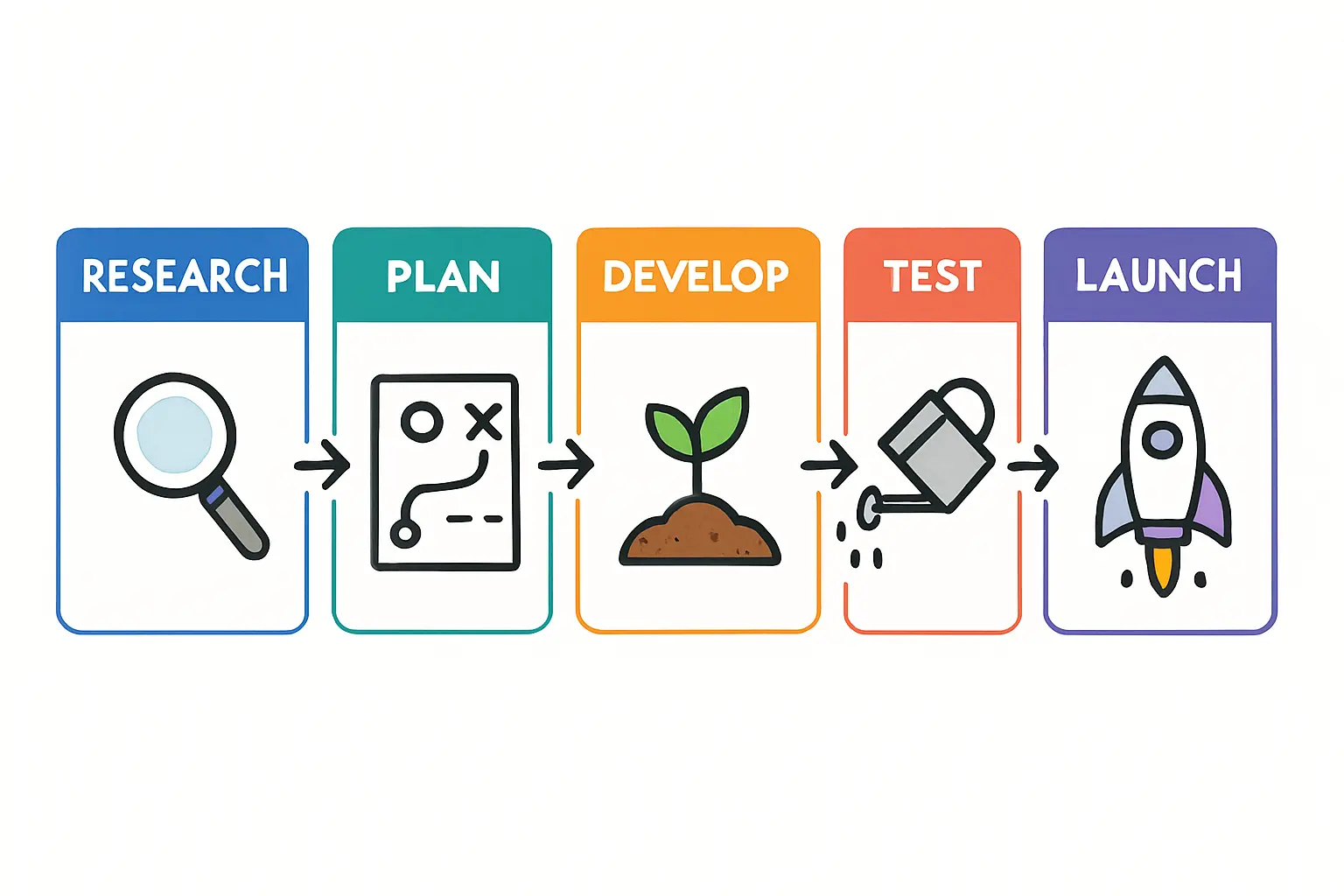
Phase 1: Feasibility Study (1-2 months): An intensive on-site audit of the building, preliminary layout design, utility assessment, and detailed budget estimation. This phase determines if the project is viable.
Phase 2: Detailed Engineering and Procurement (2-4 months): Finalizing the equipment layout, designing the facility modifications (including electrical, mechanical, and civil), and placing orders for long-lead-time machinery.
Phase 3: Facility Retrofitting and Installation (4-6 months): This is the core execution phase, involving any necessary civil works, installing the cleanroom and utilities, and physically placing and connecting the production equipment.
Phase 4: Commissioning and Ramp-Up (1-2 months): Systematically testing all equipment, training the local workforce, running initial test batches, and gradually increasing production volume to the target capacity.
This systematic process transforms an empty shell into a fully operational, state-of-the-art manufacturing plant.

Frequently Asked Questions (FAQ)
What is the biggest hidden cost in a factory conversion?
The most significant unforeseen expenses often arise from upgrading the main electrical supply from the local utility grid or discovering that the floor slab needs extensive reinforcement to meet the load requirements of the production machinery.
Can any industrial building be converted?
No. A professional feasibility study is non-negotiable. Key disqualifying factors often include insufficient ceiling height, a floor that cannot be cost-effectively upgraded, or a layout with too many internal columns that prevent a logical process flow.
How does the conversion process affect equipment selection?
Building constraints can influence machinery choices. For instance, a facility with a lower ceiling height might require a more compact stringer machine or a customized material handling solution instead of a standard overhead gantry system.
Is a brownfield project always cheaper than a new build (greenfield)?
Not always. If the required retrofitting is extensive—for example, requiring a complete roof replacement and a new foundation slab—the costs can approach or even exceed those of a new construction. The initial feasibility study is crucial for making an accurate financial comparison.
Conclusion: A Viable Path with Expert Guidance
Converting an existing facility into a solar module factory is a strategically sound approach that can offer significant time and cost advantages. It allows investors to bring a valuable product to market faster by leveraging an existing asset.
However, success hinges on meticulous, expert-led planning. A thorough assessment of the building’s structural, logistical, and environmental capabilities is the foundation for a profitable manufacturing operation. While the process involves navigating numerous technical complexities, it is a manageable and highly rewarding endeavor when guided by a structured process. For entrepreneurs looking to enter the solar industry, understanding this conversion process is a critical first step.
Download the Solar Facility Conversion Feasibility Guide (PDF)
Author: This case study was prepared by the
turnkey solar module production specialists at J.V.G. Technology GmbH
It is based on real data and consulting experience from J.v.G. projects
worldwide, including installations ranging from 20 MW to 500 MW capacity.