Disclaimer: This case study represents a composite example derived from real-world
consulting work by J.v.G. Technology GmbH in solar module production and factory optimization. All data points are realistic but simplified for clarity and educational purposes.
Powering a Nation: The 12-Month Blueprint for Senegal’s 50 MW Solar Factory
For many entrepreneurs and national planners, the goal of universal electricity access can seem daunting. Senegal aims to achieve this by 2025, but a significant gap remains, particularly in rural areas where the grid is sparse.
While importing solar modules offers a temporary solution, a more strategic approach involves building local industrial capacity. This approach not only accelerates electrification but also creates lasting economic value through job creation and technological independence.
This article outlines a detailed proposal for a 50 MW turnkey solar factory in Senegal. Designed specifically to supply the country’s rural electrification programs, such as the PUDC and PUMA, it would produce high-performance modules engineered for the demanding Sahel climate. The plan demonstrates how a strategic investment in local manufacturing can directly support national development goals.
The Opportunity: Aligning with Senegal’s National Electrification Strategy
Senegal has made significant progress in extending its power grid, yet national electricity access has hovered around 57% in recent years, with a stark disparity between urban and rural regions. To close this gap, the government has launched ambitious initiatives, including the Emergency Community Development Program (PUDC) and the Urgency Program for the Modernization of Border Areas (PUMA). These programs are managed by key agencies like the Senegalese Agency for Rural Electrification (ASER) and the National Agency for Renewable Energies (ANER).
The success of these programs hinges on a reliable, cost-effective supply of solar modules. Establishing a local manufacturing facility offers several strategic advantages over importation:
- Supply Chain Resilience: Reduces dependency on international logistics and volatile pricing.
- Economic Development: Creates skilled jobs and fosters a domestic technology ecosystem.
- Customization: Allows for the production of modules specifically designed for local climate conditions.
- Cost Control: Mitigates currency fluctuation risks and reduces transportation costs over the long term.
With some of the highest solar irradiation levels in the world, averaging 5.8 kWh/m² per day, Senegal is ideally positioned to leverage solar technology as a cornerstone of its development.

A Technical Solution Engineered for the Sahel: DESERT+ Technology
Standard solar modules often underperform in the hot, dusty, and humid conditions common to West Africa. High temperatures accelerate cell degradation, while dust accumulation reduces energy output. The DESERT+ module technology, developed by EU-based photovoltaic manufacturing solution partner, directly addresses these challenges.
This technology is an ideal fit for a Senegalese factory focused on off-grid and mini-grid applications. Key features of DESERT solar modules include:
- Glass-Glass Construction: Two layers of glass encase the solar cells, providing superior protection against humidity, sand abrasion, and mechanical stress. This design is highly resistant to Potential Induced Degradation (PID), a common failure mode in hot climates.
- Bifacial PERC Cells: The modules capture sunlight from both sides. This feature can increase energy yield by up to 30% when installed over reflective surfaces like sand, significantly boosting the output of power plants.
- Enhanced Durability: The robust construction ensures a longer operational lifespan and lower degradation rates, making it a reliable power source for critical rural infrastructure.
By producing these specialized modules locally, a Senegalese factory can provide a superior product that guarantees long-term performance for the nation’s most vital electrification projects.
The Turnkey Proposal: A 50 MW Production Facility
The proposed project is a complete turnkey solar module production line designed for rapid, efficient implementation, providing everything an investor needs to enter the market, from factory planning to staff training.
Project Scope and Capacity
A 50 MW annual production capacity is strategically sized to meet the demands of agencies like ASER and ANER without overwhelming the nascent market. This volume is sufficient to supply hundreds of mini-grids and thousands of individual solar home systems each year, making a measurable impact on national electrification targets.
Implementation and Consulting Partners
Implementation would be led by a European PV manufacturer, a German engineering firm with decades of experience establishing solar factories worldwide. Technical and strategic consulting would be provided to ensure the project benefits from proven German engineering standards and deep industry experience.
Core Business Model
The primary business model is Business-to-Government (B2G). The factory would operate as a key supplier to Senegal’s national electrification programs, bidding on tenders from ASER and ANER. This model provides a stable and predictable revenue stream, underpinned by the government’s long-term commitment to universal energy access.
The Manufacturing Process
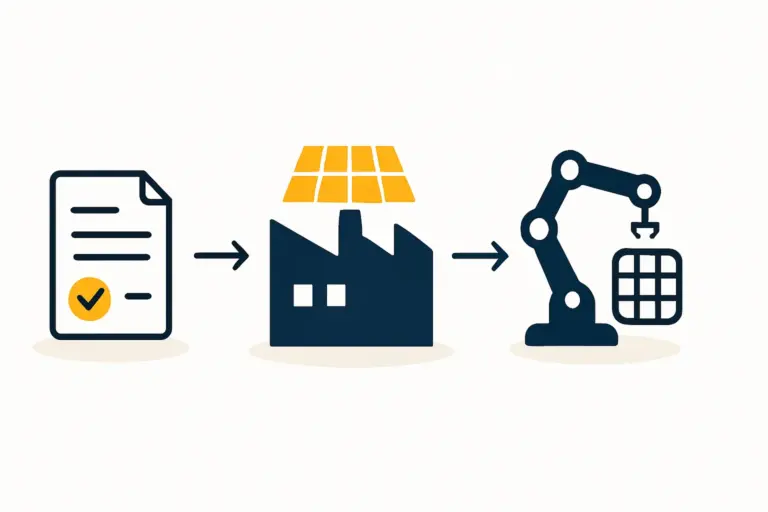
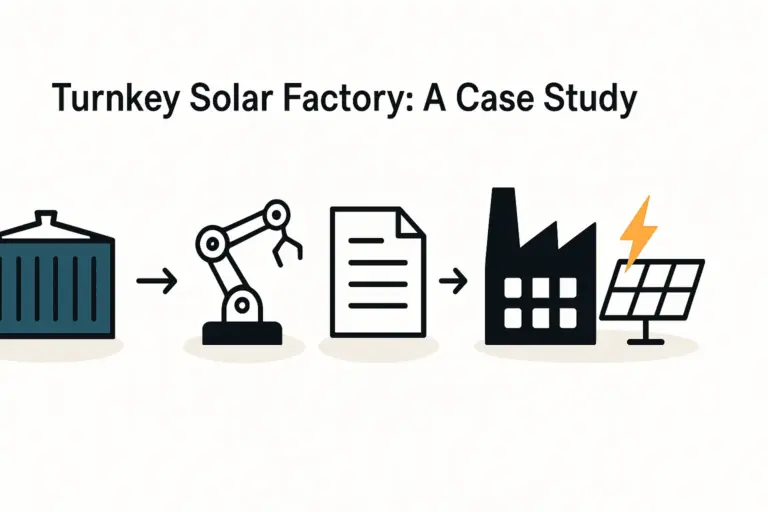
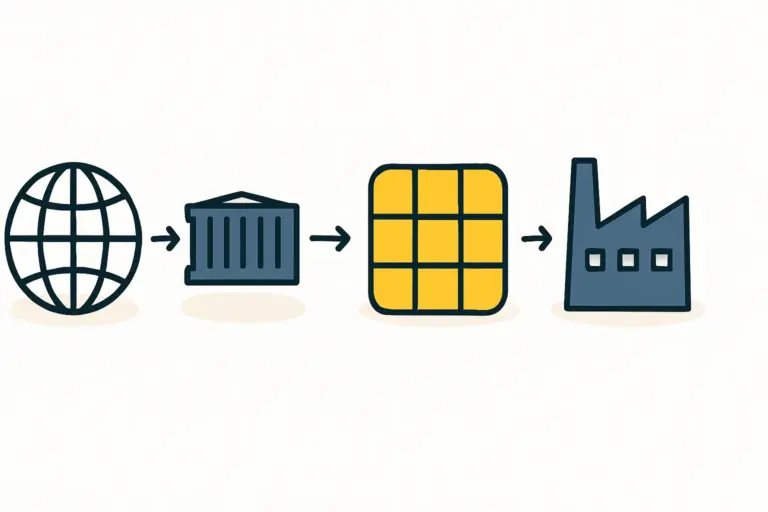
The factory would handle the final and most critical stage of module production. The solar panel manufacturing process involves assembling imported solar cells and other raw materials into finished, certified DESERT+ modules. This approach balances local value creation with the practicalities of the global solar supply chain.

Project Framework: Investment, Timeline, and Operations
A clear framework is essential for any successful industrial project. Data from similar a premier EU provider projects offers a clear picture of what is required.
Financial Overview
The estimated investment required for a solar factory with a 50 MW turnkey capacity is between 5 and 7 million euros. This figure covers machinery, installation, technology transfer, and initial staff training. Financing for such a strategic project can often be secured through development finance institutions like Germany’s KfW or the West African Development Bank (BOAD), alongside local commercial banks and private equity.
Implementation Timeline
A key advantage of the turnkey model is its speed of execution. From the signing of the contract to the start of commercial production, the entire process can be completed within 9 to 12 months. This allows an investor to quickly begin supplying modules and generating revenue.
Human Resources
A 50 MW facility would create approximately 70–80 direct jobs for technicians, engineers, and administrative staff. This focus on local employment is a core benefit, contributing to skills development and economic empowerment in the host region. An EU PV factory turnkey supplier provides comprehensive training to ensure the local team can operate the plant to international standards.

Frequently Asked Questions (FAQ)
Why not just continue importing solar modules?
Importing modules addresses immediate needs but fails to build long-term value. Local manufacturing creates jobs, transfers technical skills, strengthens the national supply chain, and insulates the country from global price shocks and logistical disruptions. It is an investment in industrial sovereignty.
Is 50 MW the right capacity to start with?
Fifty megawatts is an ideal entry-point capacity. It is large enough to achieve economies of scale and supply major national projects, yet small enough to avoid creating market oversupply. The factory layout is designed for future expansion, allowing capacity to scale in line with growing national and regional demand.
What expertise is required from the investor?
The investor does not need to be a solar technology expert. The turnkey model is designed for business professionals and entrepreneurs who have strong management skills and local market knowledge. Experienced European turnkey engineering team and its partners provide all the technical expertise, from plant design and machine selection to process optimization and quality control.
Can this model be replicated in other African countries?
Absolutely. The principles of this proposal—aligning with national development goals, using climate-appropriate technology, and starting with a strategic turnkey setup—are highly transferable. Any country with strong solar resources and a commitment to local industrialization can adapt this blueprint to its specific needs.
Next Steps in Exploring Solar Manufacturing
Establishing a solar module factory is a significant but achievable undertaking. It represents a unique opportunity for entrepreneurs in Senegal and across the region to enter a high-growth industry while making a profound contribution to national development.
The journey begins with thorough planning and education. Understanding the technology options, financial requirements, and operational logistics is the critical first step. Resources like the pvknowhow.com e-course offer a structured path for investors to build their knowledge and prepare a robust business plan for this promising venture.
Download: Senegal Solar Factory Turnkey Case Study (PDF)
Author: This case study was prepared by the
turnkey solar module production specialists at J.V.G. Technology GmbH
It is based on real data and consulting experience from J.v.G. projects
worldwide, including installations ranging from 20 MW to 500 MW capacity.