Disclaimer: This case study represents a composite example derived from real-world
consulting work by J.v.G. Technology GmbH in solar module production and factory optimization. All data points are realistic but simplified for clarity and educational purposes.
While an empty industrial building often represents a past chapter of economic activity, for an entrepreneur in South Africa today, it can also signify a major future opportunity. With the country’s persistent energy challenges and a government push for localization, the prospect of manufacturing solar modules has never been more relevant. Starting from scratch is a formidable task, which makes the strategic approach of repurposing existing industrial infrastructure—a brownfield conversion—all the more appealing.
This analysis explores the financial, logistical, and regulatory factors that make converting an existing industrial site (a brownfield) into a modern solar module production facility in South Africa a compelling alternative to building a new factory from the ground up (a greenfield project).
The Strategic Advantage of Brownfield Sites in the South African Context
Market demand is the primary driver for any new solar module factory. In South Africa, recurrent load shedding by Eskom has created an urgent, sustained need for alternative energy sources. At the same time, government initiatives like the Just Energy Transition (JET) Partnership and local content requirements encourage domestic manufacturing, creating a favorable environment for local producers.
A brownfield strategy directly leverages this context, offering several key advantages:
- Accelerated Time-to-Market: Constructing a new industrial facility can take 12 to 18 months or longer when factoring in land acquisition, zoning, and civil works. Converting an existing building can significantly shorten this timeline, potentially getting a production line operational in under a year. This speed allows an enterprise to capture market demand more quickly.
- Reduced Initial Capital Expenditure: Greenfield projects require substantial investment in land, foundations, steel structures, and utility connections. A brownfield site already has these elements in place. While retrofitting is necessary, the savings on major civil engineering works can reduce initial setup costs by as much as 30-40%.
- Existing Infrastructure and Logistics: Industrial sites are typically located in areas with established road networks, access to ports, and proximity to a skilled labor force. They also often have the high-capacity electrical connections required for manufacturing—a critical element that can be a major hurdle and expense for new sites.
Key Financial Considerations: An Investment Breakdown
While a brownfield conversion offers savings, a thorough financial assessment is critical. The investment isn’t just about acquiring a building; it’s about transforming it into a specialized, high-performance manufacturing environment.
Typical Cost Allocation in a Brownfield Conversion:
- Site Acquisition & Assessment (10-20%): This includes the purchase or lease of the property and, crucially, a detailed technical audit. This audit assesses structural integrity, floor load capacity, electrical systems, and potential environmental contamination.
- Building Retrofitting & Upgrades (25-35%): A significant cost center, this stage may involve reinforcing floors to support heavy machinery, upgrading HVAC systems to create a dust-free environment, installing new electrical panels and wiring, and ensuring the building meets modern safety standards.
- Production Machinery & Equipment (40-50%): This is typically the largest portion of the investment. It includes core machines like the solar module stringer machine, laminators, and testing equipment. The choice of machinery will define the factory’s capacity and technological capabilities.
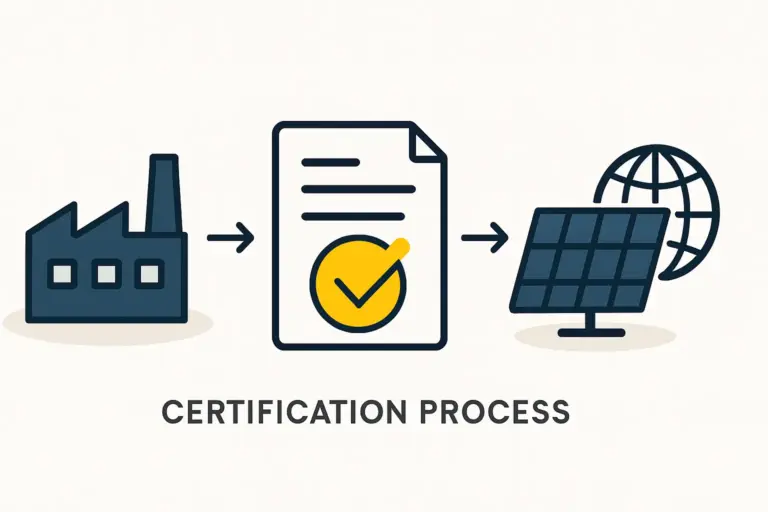
- Permitting, Certification & Contingency (5-10%): This allocation covers navigating municipal approvals, obtaining necessary environmental clearances, and setting aside a buffer for unforeseen challenges during the retrofitting process.
A detailed overview of the capital needed can be found in this guide on the investment requirements for a solar module factory. Based on experience from J.v.G. Technology GmbH turnkey projects, a 20-50 MW semi-automated line in a retrofitted facility is a viable entry point for many entrepreneurs.
Technical and Logistical Assessment: From Old to New
The success of a brownfield conversion hinges on a meticulous technical evaluation. An old warehouse is not automatically suitable for producing high-precision electronics like solar modules. European engineering standards are often applied during this phase to ensure the final facility meets global quality benchmarks.
Core Audit Checklist for a Potential Site:
- Floor Quality and Load Capacity: Solar module production lines involve heavy equipment. The concrete floor must be perfectly level, free of cracks, and able to support the static and dynamic loads of machinery. Grinding and sealing are common requirements.
- Ceiling Height and Column Spacing: A minimum clear height of 5-6 meters is typically needed to accommodate machinery and material flow. The layout of support columns must allow for an efficient, linear production line without creating bottlenecks.
- Electrical Infrastructure: The facility must have a reliable three-phase power supply sufficient for all machines running simultaneously. The audit must verify the capacity of the main incomer, the condition of internal wiring, and the potential need for a new transformer or backup power generation—a critical consideration in regions with unstable grids.
- Environmental Controls (HVAC): Solar cell handling and lamination require a clean, climate-controlled environment. An existing warehouse’s ventilation system is rarely adequate. A new HVAC system designed to maintain stable temperature, humidity, and low particle counts is a standard requirement.
A comprehensive site audit prevents costly surprises. For example, discovering an uneven floor after machinery has been delivered can cause significant delays and budget overruns.
The Role of European Engineering Expertise in Conversion Projects
Bridging the gap between an old industrial shell and a state-of-the-art production facility requires specialized knowledge. This is where the methodical approach of experienced engineering partners becomes invaluable.
A partner with a background in German engineering, for instance, typically manages the entire process, from initial site selection to final commissioning. This includes:
- Detailed Site Auditing: Using precise instruments to verify every technical parameter of the building against the requirements of the production line.
- Custom Layout Planning: Designing the optimal flow of materials and processes within the existing building’s constraints.
- Managing Retrofitting: Overseeing local contractors to ensure that all upgrades—from electrical systems to cleanroom construction—are executed to international standards.
- Equipment Integration: Ensuring that the machinery, building services, and operational workflows function together seamlessly as a complete system.
This integrated approach, often delivered as a turnkey solar panel production line, de-risks the project for investors who may not have a technical background in photovoltaics. It transforms the challenge of conversion into a structured, manageable process.
Frequently Asked Questions (FAQ)
What is the ideal size for a building to be converted?
For a semi-automated production line with a capacity of 20-50 MW per year, a building with a clear floor space of 3,000 to 5,000 square meters is generally sufficient. This allows for the production line itself, raw material storage, finished goods warehousing, and administrative offices.
Are there environmental risks with brownfield sites?
Yes, some older industrial sites may have soil or groundwater contamination from previous activities. A Phase I Environmental Site Assessment (ESA) is a standard part of due diligence. In South Africa, repurposing such sites is often viewed favorably by authorities, provided a clear remediation plan is in place.
Can any industrial building be converted?
Not all buildings are suitable. Key disqualifiers include low ceilings, extensive structural decay, an insufficient power supply that cannot be easily upgraded, or a layout with too many internal obstructions. A professional technical audit is non-negotiable.
How does a brownfield project align with South Africa’s economic goals?
It aligns perfectly. Converting a disused facility revitalizes an existing asset, creates local manufacturing jobs, strengthens the domestic supply chain for renewable energy, and supports the “Just Energy Transition” by repurposing infrastructure—all key priorities for the nation’s economic development.
Conclusion: A Pragmatic Path to Local Production
For business professionals in South Africa looking to enter the solar industry, the brownfield conversion model offers a pragmatic and powerful strategy. It lowers the initial investment barrier, accelerates entry into a high-demand market, and aligns with national economic objectives.
However, the path from an empty warehouse to a productive factory requires careful planning and technical expertise. Success isn’t determined by the building alone but by the rigor of the assessment, the quality of the retrofitting, and the seamless integration of production technology. With a structured approach guided by experienced engineering partners, a dormant industrial site can be transformed into a key asset in South Africa’s clean energy future.
Download Case Study: Converting Brownfield Sites for Solar Production in South Africa [PDF]
Author: This case study was prepared by the
turnkey solar module production specialists at J.V.G. Technology GmbH
It is based on real data and consulting experience from J.v.G. projects
worldwide, including installations ranging from 20 MW to 500 MW capacity.