Disclaimer: This case study represents a composite example derived from real-world
consulting work by J.v.G. Technology GmbH in solar module production and factory optimization. All data points are realistic but simplified for clarity and educational purposes.
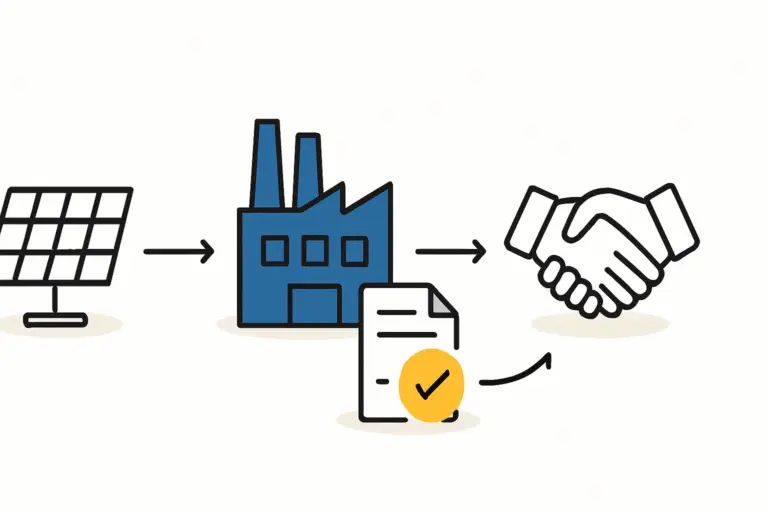
South Africa’s energy landscape is undergoing a profound transformation. A persistent power deficit, requiring an estimated 50–60 GW of new generation capacity by 2030, has driven the government to establish a powerful policy framework to accelerate renewable energy adoption. For investors, this situation presents more than just a demand for power; it is a strategic industrial opportunity.
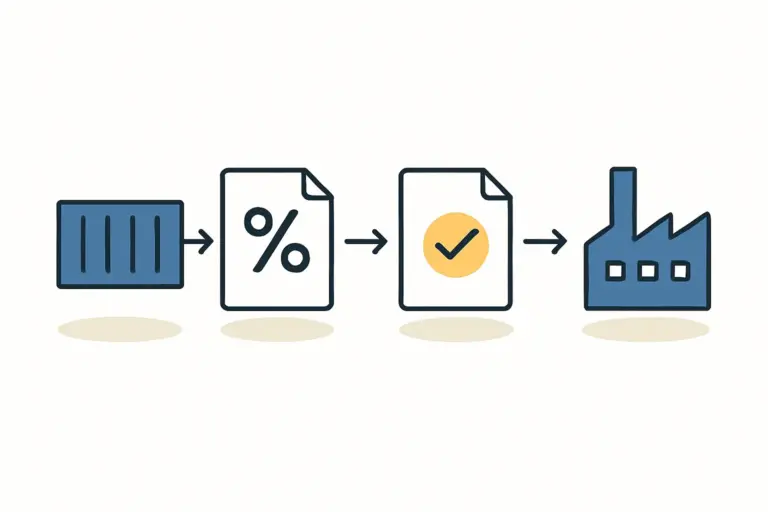
The Renewable Energy Independent Power Producer Procurement Programme (REIPPPP) is the cornerstone of this policy, but its true potential lies in its local content requirements. With targets moving towards 100% local content for solar PV modules, the programme is designed to catalyze a domestic manufacturing industry. For professionals new to the sector, however, the path from identifying this opportunity to operating a successful, multi-stage manufacturing enterprise can seem complex.
This blueprint outlines a logical, phased approach for entering and scaling a solar manufacturing business in South Africa. The strategy focuses on starting with a manageable core operation and systematically expanding to capture more of the value chain—increasing margins, securing the supply chain, and building a resilient, long-term industrial asset.
Understanding the Core Challenge: Supply Chain Dependency
The current South African solar market, while growing, relies heavily on imported components. Most local facilities focus on the final assembly of solar modules, using imported solar cells, glass, backsheets, encapsulants, and junction boxes. This reliance on international supply chains, predominantly from Asia, presents several significant business risks:
- Logistical Volatility: Global shipping disruptions can lead to costly delays and unpredictable project timelines.
- Currency Fluctuation: Dependence on imported goods exposes businesses to the volatility of the South African Rand against major currencies, making financial forecasting difficult.
- Limited Value Capture: By performing only the final assembly, manufacturers leave a substantial portion of the product’s value—and profit margin—in the hands of international suppliers.
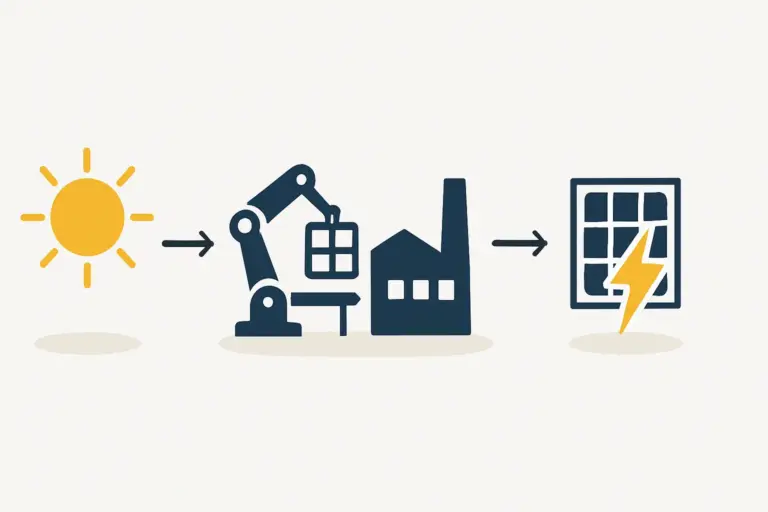
A vertical integration strategy directly addresses these challenges by bringing the manufacturing of key components in-house over time, transitioning the business from an assembler to a fully-fledged manufacturer.
The Components of a Solar Module
To understand vertical integration, it is essential to first understand the product. A standard crystalline silicon solar module consists of several key layers and components, each with its own manufacturing process.
Initially, most of these components are imported for assembly. The strategic question is not if one should localize production, but how and in what sequence. A rushed, overly ambitious attempt to manufacture everything from day one carries immense capital risk and operational complexity. A phased approach, by contrast, allows a business to grow its capabilities in step with its market presence and cash flow.
A Four-Phase Blueprint for Strategic Vertical Integration
This blueprint de-risks the investment by breaking down the journey into manageable, sequential phases. Each phase builds upon the last, increasing local content, improving profitability, and strengthening the business’s competitive position.
Phase 1: Establish a Core Solar Module Assembly Line
Establishing a modern solar module assembly line is the logical entry point into the market. This phase involves importing all primary components and focusing on excellence in the final assembly, lamination, and testing processes.
- Objective: To become a registered local manufacturer, meet initial REIPPPP local content thresholds, and establish a market presence with a high-quality finished product.
- Operations: Tabbing and stringing of solar cells, layup of module materials, lamination, framing, junction box application, and final quality control (e.g., sun simulation and electroluminescence testing).
- Key Benefit: This is the fastest route to market. Based on experience gained from European PV manufacturers’ turnkey projects, a 50–100 MW assembly line can be planned, built, and commissioned in under 12 months. The initial investment for a factory at this stage is focused and manageable.
Phase 2: Localize High-Value, Lower-Complexity Components
Once the assembly line is running efficiently, the next step is to localize components that offer the best return on investment. Aluminum frames and junction boxes are prime candidates.
- Objective: To reduce reliance on key imported items, gain greater control over the supply chain, and significantly increase the local content percentage of the final product.
- Operations:
- Aluminum Frames: Setting up a facility for cutting, machining, and anodizing aluminum extrusions. The raw extrusions can still be sourced from larger suppliers initially.
- Junction Boxes: Establishing an injection molding and assembly line for junction box housings, and integrating diodes and cables.
- Key Benefit: These components are bulky and expensive to ship. Local production can yield immediate logistics savings and improve margins. The technical barrier to entry for these processes is considerably lower than for core components like cells or glass.
Phase 3: Intermediate Component Manufacturing (Encapsulants & Backsheets)
This phase represents a significant step up in technical capability, moving into material science and chemical processing.
- Objective: To achieve near-total independence from imported polymer-based components, further securing the supply chain and capturing more value.
- Operations:
- Encapsulant (EVA) Film: Investing in polymer extrusion and calendering lines to produce the adhesive films that bond the module layers together during lamination.
- Backsheets: Setting up lamination or co-extrusion lines to produce the multi-layer polymer sheets that protect the rear of the module.
- Key Benefit: These materials are critical to the long-term performance and durability of a solar module. In-house production provides complete control over quality and allows for the development of proprietary material formulations tailored to specific climates, such as the high-UV environments found across Southern Africa.
Phase 4: The Long-Term Vision (Solar Glass & Cells)
The final stage of vertical integration involves the most capital-intensive and technologically complex components: solar glass and photovoltaic cells.
- Objective: To achieve maximum local content and establish the business as a cornerstone of the national renewable energy industrial base.
- Operations: This phase requires establishing a float glass plant with tempering capabilities for solar glass, and a highly sophisticated clean-room facility for wafering, cell processing, and testing.
- Key Benefit: While requiring substantial investment, this phase offers the highest potential margins and creates a formidable barrier to entry for competitors. It positions the company as a regional technology leader.
Strategic Considerations for Implementation
A successful multi-phase investment requires more than just technical planning; business and logistical factors play a critical role.
Site Selection and Logistics
The location of a manufacturing plant is a decision with long-term consequences. Proximity to deep-water ports (like Durban, Gqeberha, or Cape Town) is essential during the initial phases when components are imported. As the operation integrates vertically, access to industrial zones with reliable power, water, and transportation infrastructure becomes paramount.
The Role of an Expert Technical Partner
For an entrepreneur or a company entering from another industry, navigating the complexities of plant design, equipment sourcing, and phased implementation can be daunting. Engaging a technical partner with a proven track record in the solar industry is a critical de-risking strategy.
An experienced partner provides more than just machinery. They assist with factory layout, process optimization, quality control protocols, and technology transfer. This ensures that each phase is built on a solid foundation, avoiding costly mistakes and accelerating the timeline from planning to production. A partner can oversee the entire project as a turnkey solar factory solution, allowing the business owner to focus on commercial strategy.
Frequently Asked Questions (FAQ)
-
What exactly is the REIPPPP local content requirement?
The REIPPPP mandates that a certain percentage of a renewable energy project’s capital cost must be spent on locally manufactured goods and services. For solar PV projects, the “Designation Master Plan” has set ambitious targets, aiming for up to 100% local content for modules in recent bid windows and creating a protected market for domestic producers. -
How long does it typically take to set up a Phase 1 assembly line?
A well-planned project, guided by an experienced technical partner, can move from an initial investment decision to a fully operational 50–100 MW module assembly line in approximately 10–12 months. -
Why is it not advisable to start with solar cell manufacturing (Phase 4)?
Solar cell manufacturing is extremely capital-intensive and technologically complex, requiring massive scale (typically over 1 GW) to be cost-competitive with global leaders. Starting with module assembly allows a business to enter the market with a lower initial investment and build the commercial foundation needed to justify larger, more complex expansions later. -
How does vertical integration directly improve profitability?
It improves margins in three ways: 1) It reduces the cost of goods by eliminating the supplier’s profit margin on components. 2) It reduces international shipping and import tariff costs. 3) It provides greater control over the production process, reducing waste and improving efficiency. -
What are the primary skills needed for a Phase 1 workforce?
A typical 50 MW assembly line requires a workforce of around 25-30 people per shift. The roles include machine operators, quality control technicians, maintenance engineers, and logistics staff. Most operational skills can be taught through structured training programs, often provided by the equipment supplier or technical partner.
Conclusion: Building a Resilient Industrial Future
The opportunity in South Africa’s solar sector extends far beyond simply generating electricity. It is a chance to build a robust domestic manufacturing industry that creates jobs, develops technical skills, and ensures the country’s long-term energy security.
For the investor, the key to success lies in a strategic, disciplined approach. Following a phased blueprint for vertical integration—starting with module assembly and methodically incorporating component manufacturing—allows a business to grow sustainably, manage risk, and align itself perfectly with national industrial policy. With the guidance of a knowledgeable technical partner, this path transforms a complex industrial challenge into a clear and achievable investment opportunity.
Download: South African Solar Manufacturing Case Study (PDF)
Author: This case study was prepared by the
turnkey solar module production specialists at J.V.G. Technology GmbH
It is based on real data and consulting experience from J.v.G. projects
worldwide, including installations ranging from 20 MW to 500 MW capacity.