Disclaimer: This case study represents a composite example derived from real-world
consulting work by J.v.G. Technology GmbH in solar module production and factory optimization. All data points are realistic but simplified for clarity and educational purposes.
For the international investor, the African continent presents immense opportunities, particularly in the renewable energy sector. While many see individual national markets, a more strategic perspective reveals a larger, interconnected economic zone ripe for development: the Southern African Development Community (SADC). A manufacturing base in South Africa, designed to serve this region, presents a compelling business case that reaches far beyond its national borders.
This blueprint outlines the strategic considerations for establishing a solar module production facility in South Africa with a primary focus on exporting to the 15 other SADC member states. It covers the unique advantages of regional trade agreements, logistical planning, and the critical need for climate-specific product development.
The SADC Market: A Region of Substantial Energy Demand
The Southern African Development Community is an economic bloc of 16 member states with a combined population exceeding 340 million and a collective GDP of over $720 billion. Despite its economic potential, the region faces a significant energy deficit. The Southern African Power Pool (SAPP) estimates that the region needs approximately 4,000 MW of new electricity generation capacity each year to meet growing demand and support economic development.
This energy gap creates a prime opportunity for solar power. Many SADC nations, such as Malawi, Mozambique, and the Democratic Republic of Congo, have some of the world’s highest solar irradiation levels yet are among the countries with the lowest rates of electrification. A manufacturing facility located within the region can meet this demand more effectively than international competitors.
Why South Africa is the Ideal Hub for Regional Distribution
While several SADC countries offer potential, South Africa offers a unique combination of attributes that make it the logical anchor for a regional manufacturing strategy.
- Advanced Infrastructure: As the most industrialized economy in the region, South Africa has a sophisticated network of ports, roads, and rail lines essential for both importing raw materials and exporting finished modules. The Port of Durban, for example, is one of the busiest in Africa and serves as a critical gateway to the global supply chain.
- Stable Financial Systems: The country’s well-established banking and financial services sector provides a stable environment for managing international transactions, securing financing, and mitigating investment risks.
- Skilled Labour Pool: South Africa has a deeper pool of technical and managerial talent compared to many of its neighbours, accelerating the setup and operational phases of a new factory.
These factors combine to create a robust platform for building a reliable and efficient export-oriented business.
Leveraging the SADC Protocol on Trade: A Key Competitive Advantage
The SADC Protocol on Trade is perhaps the most significant strategic advantage of manufacturing within the region. This agreement is designed to create a free trade area among member states, offering substantial benefits for locally produced goods.
Understanding “Rules of Origin”
For a solar module to qualify for duty-free access across SADC borders, it must be classified as an “originating good.” This generally means a certain percentage of its value must be added within the SADC region. By assembling solar modules in South Africa, the finished product meets these local content requirements.
This provides a powerful competitive edge over modules imported from China, Europe, or North America, which would otherwise be subject to import tariffs in each destination country. For an investor, this trade agreement transforms a South African factory from a national supplier into a regional powerhouse.
Navigating the documentation and compliance for these rules is a critical step. Based on experience gained from European PV manufacturers’ turnkey projects, partnering with experts who understand these regional trade nuances from the outset can prevent costly delays and ensure market access.
Technical and Logistical Considerations for a Regional Strategy
An export-focused model requires careful planning that accounts for the diverse conditions across the SADC region.
Designing Modules for Diverse African Climates
A “one-size-fits-all” approach to solar module design is inadequate for the SADC market. The region’s varied climates demand specialized products tailored to local conditions. A successful manufacturer will need to produce modules designed for:
- Coastal Regions (e.g., Mozambique, Namibia): Modules require enhanced anti-corrosion coatings and robust junction boxes to withstand salt mist and high humidity.
- Desert Environments (e.g., Botswana, parts of South Africa): Designs must prioritize heat dissipation and use materials resistant to abrasion from sand and dust.
- High-Altitude Locations (e.g., Lesotho): Modules need reinforced frames to handle higher wind loads and UV-resistant materials to prevent premature degradation from intense solar radiation.
Navigating Cross-Border Logistics
While South Africa’s infrastructure is strong, moving goods into neighbouring countries comes with its own set of challenges. A comprehensive logistics plan must account for:
- Border Crossings: Delays at land borders are common. Establishing relationships with reliable freight forwarders who specialize in the region is essential.
- Road Conditions: The quality of road networks can vary significantly once outside South Africa, impacting transport times and costs.
- Warehousing: Strategically placed warehousing in key target markets may be necessary to ensure product availability and reduce delivery times.
The Role of a Turnkey Partner in De-Risking the Venture
For an entrepreneur without a background in photovoltaics, establishing a sophisticated manufacturing operation can seem daunting. This is where a partnership with an experienced turnkey provider becomes invaluable.
An effective partner manages the technical complexities, allowing the business owner to focus on strategy and market development. Key responsibilities of a turnkey provider include:
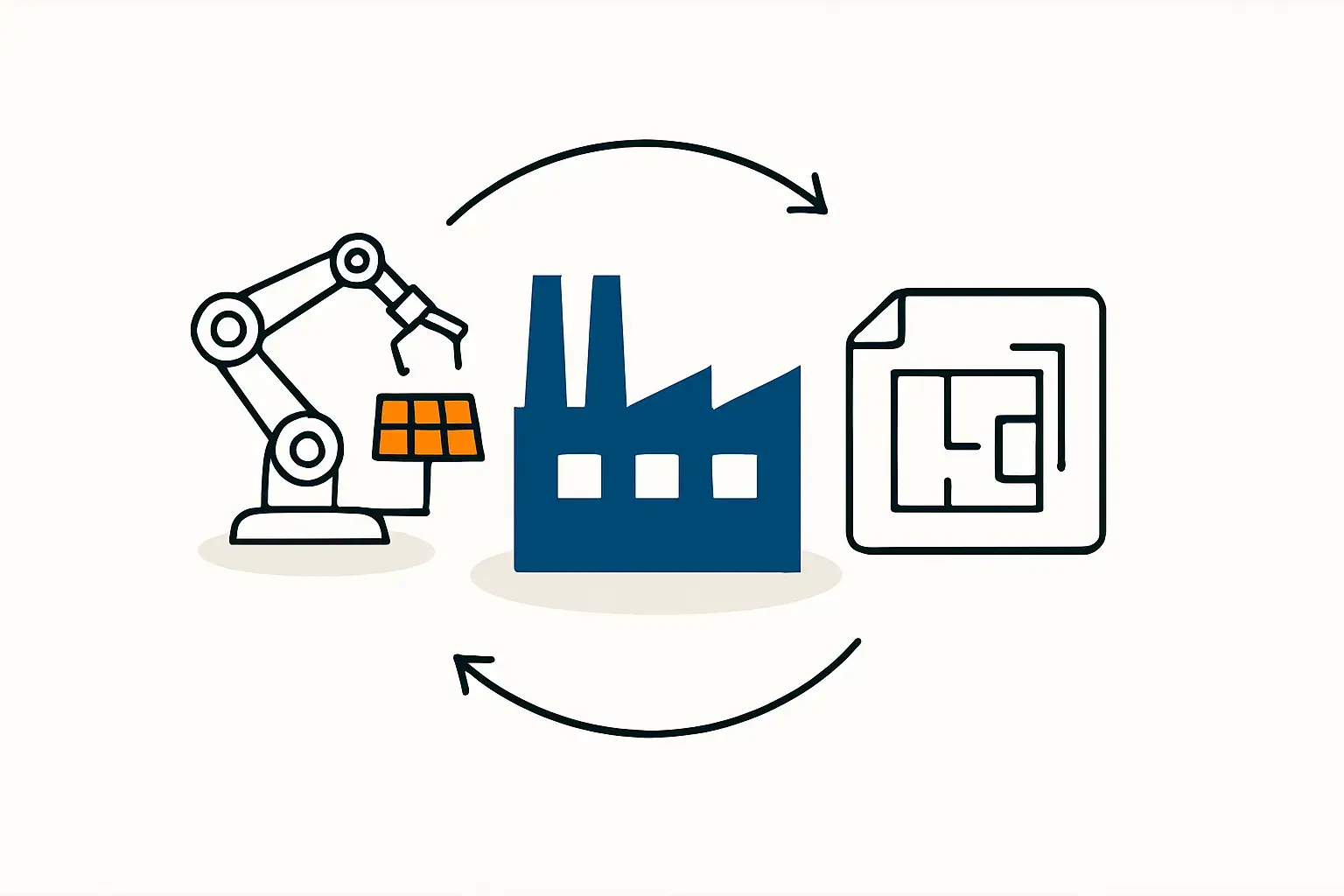
- Facility Design: Creating an efficient factory layout optimized for the planned production capacity.
- Equipment Sourcing: Selecting, procuring, and commissioning the right machinery for a complete turnkey solar production line.
- Staff Training: Developing a comprehensive training program for local operators and technicians to ensure quality standards are met.
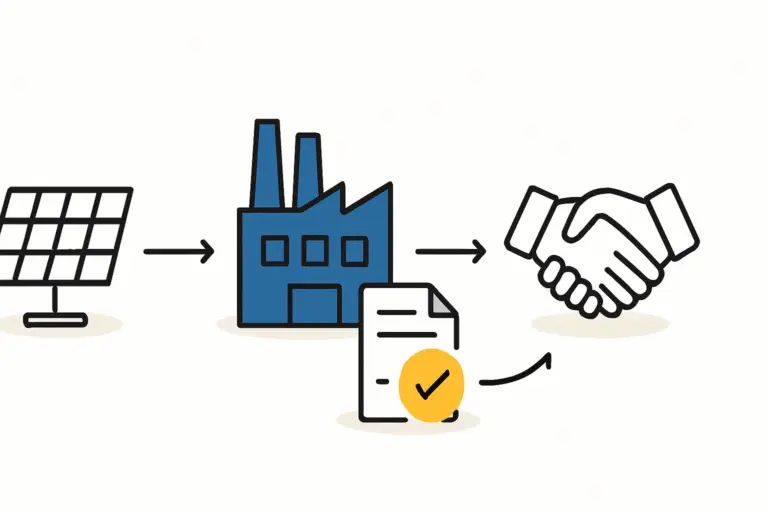
- Certification Support: Guiding the facility through the necessary quality and safety certifications, including regional standards like those governed by SADCSTAN (SADC Cooperation in Standardization).
This approach significantly reduces the project timeline and mitigates risks associated with technology selection and implementation.
Initial Investment and Capacity Planning
A common starting point for a regional export hub is a facility with an annual production capacity of 50-100 MW. This scale is large enough to achieve economies of scale while remaining manageable for a new entrant. The overall investment requirements will cover machinery, building modifications, raw material inventory, and operational working capital. A detailed business plan is the first step to securing financing and outlining a path to profitability.
Frequently Asked Questions (FAQ)
What exactly is the Southern African Development Community (SADC)?
SADC is a regional economic community of 16 member states in Southern Africa. Its goal is to further socio-economic cooperation and integration among its members. The member states are Angola, Botswana, Comoros, Democratic Republic of Congo, Eswatini, Lesotho, Madagascar, Malawi, Mauritius, Mozambique, Namibia, Seychelles, South Africa, Tanzania, Zambia, and Zimbabwe.
What does “local content” mean in the context of the SADC Protocol on Trade?
“Local content” refers to the portion of a product’s value that is created within the SADC region. For solar modules assembled in South Africa, the labour, facility overhead, and locally sourced components contribute to this value. Once a certain threshold is met, the product is considered “originating” from the SADC and qualifies for preferential trade treatment.
How long does it typically take to establish a solar module factory?
With a well-structured plan and an experienced turnkey partner, a 50-100 MW solar module line can become operational in under a year, from initial planning to the first certified module coming off the line.
Are there specific certifications required to sell solar modules across the SADC region?
While international certifications like IEC 61215 and IEC 61730 are the global benchmark, regional bodies like SADCSTAN work to harmonize standards. A manufacturing facility must have a robust quality management system (like ISO 9001) and produce modules that meet or exceed these internationally recognized technical standards to gain market acceptance.
Conclusion: A Strategic Entry into a Growing Market
Establishing a solar manufacturing facility in South Africa is more than an investment in one country; it is a strategic entry point into the entire Southern African region. By leveraging South Africa’s superior infrastructure and the significant tariff advantages of the SADC Protocol on Trade, an entrepreneur can build a durable competitive advantage.
The key to success lies in meticulous planning, a deep understanding of the regional market’s diverse needs, and a partnership with technical experts who can guide the project from concept to full-scale production. For the discerning investor, this represents a clear and actionable opportunity to address a critical energy need while building a profitable and impactful enterprise.
Download: South Africa Solar Export Hub Case Study [PDF]
Author: This case study was prepared by the
turnkey solar module production specialists at J.V.G. Technology GmbH
It is based on real data and consulting experience from J.v.G. projects
worldwide, including installations ranging from 20 MW to 500 MW capacity.