An entrepreneur spends months meticulously selecting the finest German-made solar manufacturing equipment. After the contracts are signed and the machinery is shipped, the entire project timeline grinds to a halt—not in the engineering phase, but at the port of arrival. The containers sit for weeks, mired in unforeseen customs hurdles and documentation challenges. This scenario is an all-too-common reality for new industrial projects in emerging markets.
The success of a solar factory in Sudan hinges as much on the quality of its machines as on the efficiency of its supply chain. For any investor, understanding the logistical landscape—from customs clearance at Port Sudan to the complexities of inland transportation—is a primary strategic concern, not a secondary detail. This article outlines the critical logistical factors to integrate into your business plan from day one.
The Strategic Gateway: Understanding Port Sudan’s Role
Port Sudan is the country’s principal maritime entry and exit point, handling the vast majority of its international trade. For a solar module factory, this port serves two fundamental purposes: receiving imported manufacturing equipment and raw materials, and potentially exporting finished solar panels to regional markets.
While the port is a vital asset, operators must plan for its specific operational conditions. Factors like capacity, handling equipment for oversized or heavy cargo, and storage facilities can all influence timelines. A thorough assessment of the port’s capabilities, aligned with the specific requirements of heavy machinery, is a crucial first step.

Unpacking the Customs Clearance Process
Navigating customs is often the most unpredictable phase of the import process. Delays here can have significant ripple effects on project timelines and budgets. A proactive, well-prepared approach is essential.
Key Documentation Requirements
Precision in documentation is non-negotiable. Customs authorities require a complete and accurate set of documents; even minor discrepancies can lead to major delays. Essential paperwork typically includes:
- Commercial Invoice: Details the transaction between the seller and buyer, including the value of the goods. This is critical for duty and tax assessment.
- Bill of Lading (B/L): The contract between the owner of the goods and the shipping company. It serves as a receipt and title document.
- Packing List: An itemized list of the contents of each container or crate, including weights and dimensions. This is vital for physical inspections.
- Certificate of Origin (COO): Verifies the country where the goods were manufactured. It can be important for tariff and trade agreement purposes.
Experience from J.v.G. turnkey projects shows that engaging a reputable local customs broker early is one of the most effective ways to mitigate risk. These professionals have the on-the-ground knowledge to ensure all paperwork complies with current regulations, potentially saving weeks of costly delays.
Common Delays and How to Mitigate Them
Several factors can stall the clearance process:
- Incorrect Valuation: Disputes over the declared value of goods are common. Providing clear, verifiable invoices and supporting documentation from the supplier of the solar module manufacturing equipment is crucial.
- Physical Inspections: Random or targeted inspections are a standard part of the process. Properly organized packing lists that match the container’s contents precisely can expedite these checks.
- Regulatory Changes: Customs rules and tariffs can change. A local partner provides real-time updates that are often not immediately available internationally.
The Critical Journey Inland: Transporting Heavy Equipment
Once equipment clears the port, the next significant challenge begins: moving heavy, sensitive machinery to the factory site, which may be hundreds of kilometers inland.
Assessing Infrastructure: Roads and Railways
The primary transport corridors from Port Sudan to major industrial centers like Khartoum pose their own unique challenges. While a national road network exists, its condition varies significantly.
- Road Conditions: Planners must account for road quality, road width, turning radii, and the load capacity of bridges along the chosen route. A detailed route survey is often a necessary investment before the shipment arrives.
- Weight and Size Limitations: Stringer machines, laminators, and glass washing units are not only heavy but also have large dimensions. Specialized transport vehicles, permits, and sometimes even police escorts may be required.
- Seasonal Factors: The rainy season can render certain routes impassable for heavy trucks, making seasonal planning a critical component of the project timeline.
The initial factory layout and design should inform the delivery sequence, ensuring that foundational equipment arrives in a logical order that matches the construction and installation schedule.

Security and Insurance
Ensuring the safe transit of high-value assets is paramount. This involves two key elements:
- Physical Security: Depending on the route and current conditions, arranging for security escorts can be a prudent measure to deter theft or interference.
- Comprehensive Insurance: ‘All-risk’ cargo insurance is vital, covering the goods from the port to the final factory site, not just to the port of entry (Cost, Insurance, and Freight – CIF). This protects the investment against damage or loss during the arduous inland journey.
From Production to Market: Reversing the Logistics Chain
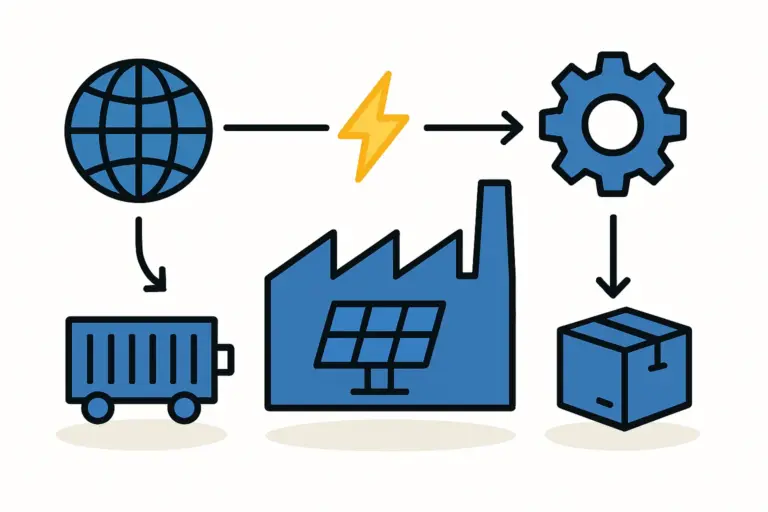
Effective logistical planning isn’t just about imports. Once the factory is operational, it must efficiently ship finished solar modules to customers. The same infrastructure challenges apply, but with a different type of product: fragile, high-volume, and time-sensitive.
An efficient outbound supply chain requires robust packaging solutions to minimize breakage, reliable transport partners, and a clear strategy for reaching domestic and potential export markets. The inbound supply of solar panel raw materials will also depend on these same logistical pathways, making a well-managed supply chain the lifeblood of the entire operation.
The Indispensable Role of a Local Logistics Partner
For any international investor without prior experience in Sudan, attempting to manage this complex chain of operations independently is a significant risk. A qualified local logistics partner is not a cost but an investment in efficiency and predictability.
An effective partner provides a suite of services, including:
- Expert customs brokerage
- Route planning and surveys
- Management of a fleet of appropriate transport vehicles
- Navigating local permits and regulations
- Providing crucial on-the-ground intelligence
In a complete turnkey solar factory setup, the selection and management of this logistics partner are integrated into the overall project plan from the start.

Frequently Asked Questions (FAQ)
How long does customs clearance typically take in Port Sudan?
While times vary, a well-prepared shipment with correct documentation can clear customs in two to four weeks. Discrepancies or complications, however, can extend this process to several months. For initial budgeting, it’s wise to plan for a conservative timeline of four to six weeks.
What are the main costs associated with inland transport?
Key costs include freight charges (based on weight, volume, and distance), insurance premiums, special permits for oversized loads, road tolls or taxes, and potentially the cost of security escorts. These costs should be budgeted as a significant part of total project logistics.
Does the equipment supplier typically handle shipping and customs?
This depends on the incoterms (International Commercial Terms) of the purchase agreement. If the terms are Ex Works (EXW), the buyer is responsible for all logistics from the supplier’s door. Under Cost, Insurance, and Freight (CIF) terms, the supplier manages shipping to the destination port, but the buyer handles customs and inland transport. A comprehensive turnkey provider often manages the entire process door-to-door.
Conclusion: Integrating Logistics into Your Core Business Plan
Logistical planning for a solar factory in Sudan is far more than a simple line item in a budget—it is a complex, mission-critical function that directly impacts project timelines, financial viability, and operational success.
By understanding the realities of customs procedures at Port Sudan and the challenges of the inland transport network, investors can shift from a reactive to a proactive stance. Building a resilient supply chain requires detailed planning, conservative timelines, and, most importantly, the right local expertise. With these elements in place, an entrepreneur can successfully navigate the journey from port to production and unlock the immense potential of solar manufacturing in the region.