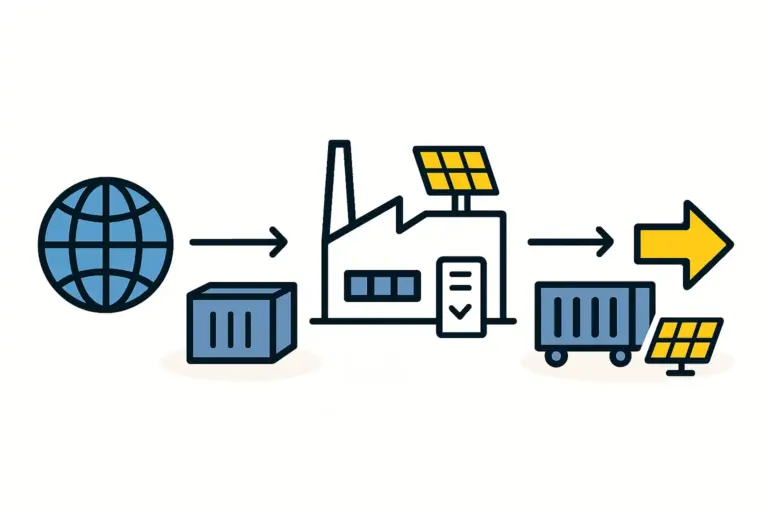
For international entrepreneurs exploring new manufacturing frontiers, Sri Lanka presents a compelling case. Its strategic position on global shipping routes is a significant advantage, but the journey toward running a successful factory begins with securing the right location.
This process involves more than a simple land transaction. It requires a deep understanding of the local business landscape, particularly the country’s Export Processing Zones (EPZs) and their infrastructure.
An investor might see the potential on a map, but success is ultimately determined by the reliability of the power grid, the efficiency of port access, and the clarity of administrative processes. Overlooking these ground-level realities can turn a promising venture into a series of operational challenges.
Understanding Sri Lanka’s Export Processing Zones (EPZs)
The Sri Lankan government, through its Board of Investment (BOI), established EPZs to attract foreign direct investment and stimulate export-oriented industries. These designated industrial parks provide a streamlined and favorable environment for manufacturers.
For businesses entering the market, the BOI acts as the central point of contact, simplifying what could otherwise be a complex bureaucratic process. The primary advantages offered within these zones are financial and logistical:
-
Tax Incentives: The BOI offers significant fiscal benefits, including exemptions on corporate income tax for a specified period and concessions on other levies.
-
Duty-Free Operations: Investors can import necessary machinery, equipment, and raw materials without incurring customs duties, which substantially reduces initial capital outlay.
-
Simplified Administration: The BOI provides a ‘single window’ facility for investors, assisting with approvals, permits, and coordination with other government agencies.
Established zones like Katunayake and Biyagama are prime examples of this model, hosting numerous international manufacturing operations and featuring mature infrastructure.
The Process of Land Acquisition Within an EPZ
Securing land within a Sri Lankan EPZ is a structured process managed entirely by the Board of Investment. This is not a speculative real estate market but a formal allocation based on the merit of the proposed business.
Step 1: Submission of the BOI Application
The first step is to submit a formal application to the BOI detailing the proposed project. This document outlines the business model, production technology, market analysis, and financial projections. A solid business plan is the cornerstone of a successful application.
Step 2: Project Evaluation
The BOI thoroughly evaluates the proposal. Key assessment criteria include the project’s export potential, the level of investment, the technology being introduced, and the number of local employment opportunities it will create. This stage ensures new ventures align with Sri Lanka’s national economic goals.
Step 3: Land Allocation and Lease Agreement
Upon approval, the BOI allocates a suitable plot of land within one of its EPZs. Crucially, land is not sold freehold to foreign entities. Instead, the BOI grants a long-term lease, typically for 50 years, with options for renewal. This leasehold model provides the security of tenure needed for long-term industrial planning.
Critical Infrastructure Assessment: Beyond the Land Lease
While the BOI facilitates a favorable business environment, investors must conduct their own rigorous due diligence on the practical infrastructure available at the allocated site. For an operation like a solar module assembly line, where consistency and precision are paramount, reliable infrastructure isn’t just an advantage; it’s a necessity.
Power Supply: The Primary Concern
A stable electricity supply is non-negotiable for manufacturing. Sri Lanka has, at times, faced challenges with its national grid, including periods of power rationing. Any manufacturing operation, especially one with sensitive automated equipment, must plan for this contingency.
An assessment should confirm the quality of the grid connection to the specific zone and include a strategy for backup power. This typically involves investing in on-site diesel generators or a dedicated solar-plus-battery-storage system to ensure uninterrupted production during grid outages.
Water and Waste Management
Solar panel production requires access to clean water for processes like glass washing. It is essential to verify that the EPZ provides a consistent supply of treated water suitable for industrial use. Equally important is the infrastructure for managing industrial effluent. Investors must ensure the zone’s central wastewater treatment facilities can handle the factory’s output in compliance with environmental regulations.
Logistics and Transport Connectivity
Realizing Sri Lanka’s geographical advantage depends on efficient logistics. When evaluating an EPZ, it’s crucial to analyze its connectivity to key transport hubs. Proximity to major seaports like Colombo or Hambantota is critical for managing the supply chain for both importing raw materials and exporting finished modules. The quality of the road network connecting the zone to these ports directly affects transport times and costs.
Business Environment and Labor Considerations
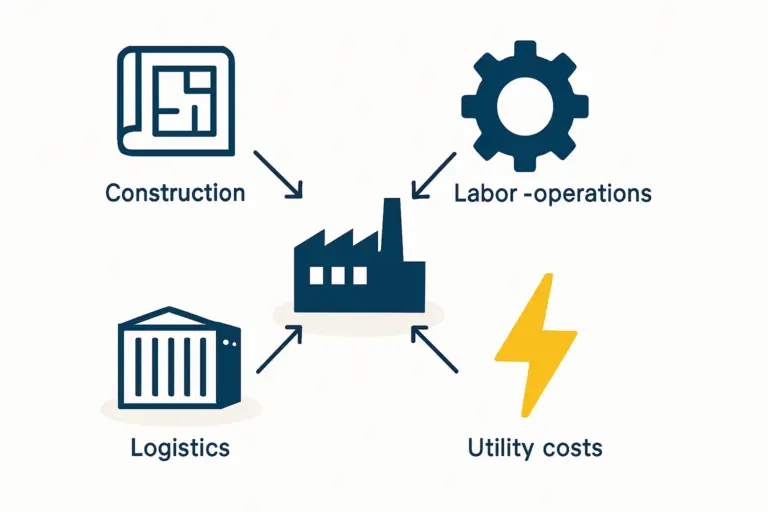
Beyond physical infrastructure, Sri Lanka’s literate and trainable workforce is a key asset—a significant advantage for industries requiring skilled technicians and operators. However, the overall investment must account for labor costs, training programs, and adherence to local labor laws. Understanding these regulations from the outset is vital for smooth and sustainable operations.
Experience from turnkey projects, such as those managed by J.v.G. Technology GmbH, shows that a detailed site assessment covering these technical and human resource factors is a crucial step before making a final investment decision.
Frequently Asked Questions (FAQ)
Can a foreign entrepreneur own land directly in an EPZ?
No, direct freehold ownership of land by foreign entities is generally restricted. The standard model within an EPZ is a long-term lease agreement, typically for 50 years, granted and managed by the Board of Investment (BOI). This provides the necessary security for industrial investment.
What are the typical lease costs in a Sri Lankan EPZ?
Lease rates vary depending on the specific EPZ, its location, and the level of infrastructure development. Premier zones with better connectivity and facilities will command higher rates. The BOI provides a schedule of charges upon formal inquiry.
How long does the BOI approval process typically take?
The timeline for approval can range from several weeks to a few months. The duration depends on the complexity of the project, the completeness of the application, and the clarity of the business plan submitted.
Are the tax incentives guaranteed for the entire lease period?
Tax incentives, such as corporate income tax holidays, are granted for a specific, predetermined period, often between 5 and 10 years. This period is defined in the agreement signed with the BOI and does not typically extend for the full duration of the land lease.
Conclusion: Laying the Groundwork for Success
Securing a location in a Sri Lankan Export Processing Zone is a strategic first step for any entrepreneur looking to establish a manufacturing base in the region. The incentives and administrative support offered by the BOI create a welcoming environment.
However, this promising framework must be matched with meticulous, on-the-ground due diligence. A thorough assessment of power stability, water supply, and logistical infrastructure is not a mere box-ticking exercise—it is fundamental to de-risking the entire investment. By approaching site selection with a clear understanding of these operational realities, an investor can build a venture on a solid and reliable foundation, poised to capitalize on Sri Lanka’s unique strategic advantages.