An investor considering a new venture often focuses first on machinery and capital. Yet experience shows that the success of a solar panel manufacturing plant depends just as much on its people. Sri Lanka, with its high literacy rate and strategic location, presents a compelling case for investment.
A common misconception, however, is that a workforce of ready-made solar assembly experts is waiting to be hired. The reality is more nuanced and requires a strategic approach to workforce development. This article breaks down the Sri Lankan labor market for entrepreneurs planning to enter the solar module assembly industry. It outlines typical wage structures, evaluates the existing training landscape, and proposes strategies for building a skilled and efficient team from the ground up.
The Sri Lankan Labor Market: A High-Level Overview
Sri Lanka’s greatest asset is its human capital. With a population of approximately 22 million and a labor force of nearly 9 million, the country boasts one of the highest literacy rates in Asia at over 92%. This creates a solid foundation of educated and trainable individuals.
Understanding the current economic context is crucial, however. The nation is in a period of economic recovery, which presents both opportunities and challenges. While a talent pool is available, factors like inflation and currency fluctuations influence wage expectations. A trend of skilled professionals seeking opportunities abroad—often called ‘brain drain’—also means that retaining top talent requires a competitive and supportive work environment. For a new industrial venture, creating such an environment can become a significant competitive advantage.
Availability of Skilled Personnel: The Education-to-Industry Gap

While Sri Lanka’s educational system produces a steady stream of graduates in engineering and technical fields, there is an understandable gap between academic theory and the specific, hands-on skills required for solar module assembly. An entrepreneur is unlikely to find a large number of candidates with prior experience operating a solar stringer, laminator, or EL tester.
This is not a prohibitive barrier, but a standard operational challenge to overcome. The local workforce often has experience in adjacent sectors like apparel or electronics manufacturing, giving them transferable skills like attention to detail, process discipline, and experience in a quality-controlled environment. These attributes provide an excellent foundation for a solar assembly team.
A new factory owner’s core task, then, is to bridge this gap with targeted, practical training. The necessary skills are highly teachable, and a well-structured program can develop proficient operators and technicians within weeks. Planning this training is a critical part of the project’s full scope, which includes creating a complete solar panel manufacturing machine list and aligning workforce skills with equipment requirements.
Typical Wage Structures for a Solar Module Factory
Understanding local compensation standards is essential for creating a realistic financial model. Wages in Sri Lanka are competitive within the South Asian region. Below are typical monthly salary ranges, which can vary based on location, experience, and qualifications. It is also important to factor in mandatory employer contributions to the Employees’ Provident Fund (EPF) and Employees’ Trust Fund (ETF), which typically add about 15% to the gross salary cost.
Assembly Line Operators and Technicians
These roles form the core of the production team. Operators are responsible for specific stations, while technicians often have broader responsibilities, including machine setup, troubleshooting, and minor maintenance.
Ready to make big Profits?
The solar Industry is Booming
WE HELP NEWCOMERS to the solar industry start their own solar module production line. Customers can make BIG PROFITS by selling modules and finding investors, without wasting money and time on things they don't need!
Salary Range: LKR 40,000 – 80,000 per month (approximately $130 – $265 USD)
Engineers and Quality Control Specialists
Engineers oversee the production process, manage efficiency, and ensure technical standards are met. Quality control (QC) specialists are vital, inspecting materials and finished modules to ensure they meet certification standards.
Entry-Level Engineers: LKR 50,000 – 100,000 per month (approximately $165 – $330 USD)
Experienced Engineers (3-5+ years): LKR 150,000 – 300,000+ per month (approximately $500 – $1,000+ USD)

Strategies for Building a Competent Workforce
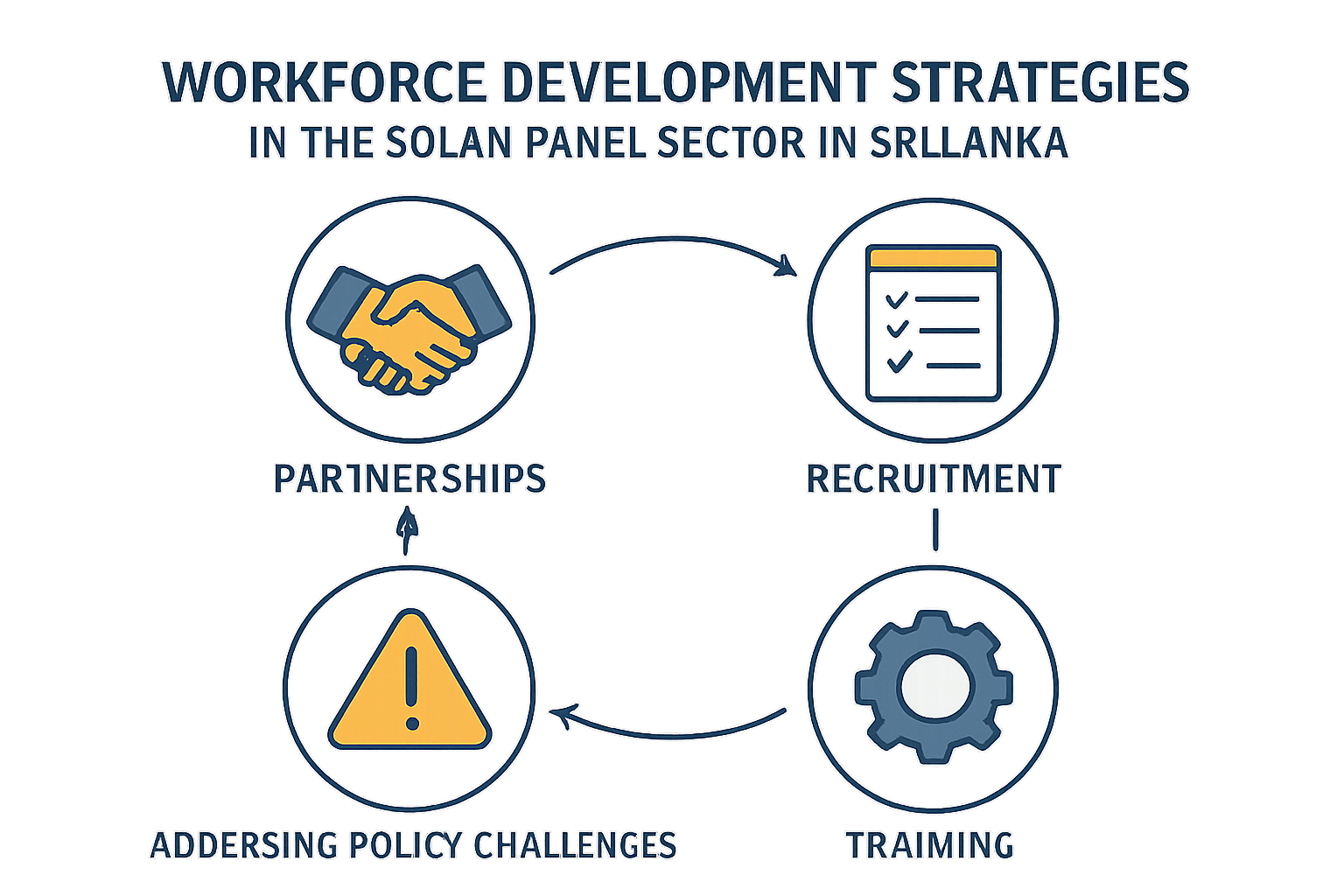
Since hiring a pre-trained team is not a realistic option, a new enterprise must focus on building one. This proactive approach ensures the workforce is trained specifically on the factory’s machines and processes, leading to higher quality and efficiency.
Leveraging Vocational Training Programs
Sri Lanka has a network of vocational and technical training institutions, such as the Tertiary and Vocational Education Commission (TVEC) and the Vocational Training Authority (VTA). These organizations provide a solid foundation in electrical, mechanical, and electronic principles. Graduates from these programs are ideal candidates for recruitment, as they already have a baseline of technical knowledge and an aptitude for hands-on work. While they will still require factory-specific training, their learning curve will be significantly shorter.
The Importance of On-the-Job Training
The most critical component of workforce development is a structured, in-house training program. Experience with turnkey projects shows that this training is often delivered by the equipment suppliers themselves. When a new production line is installed, the manufacturer’s engineers typically remain on-site for several weeks to train the local team on:
- Machine operation and safety protocols.
- Standard maintenance procedures.
- Quality control checkpoints for each production step.
- Troubleshooting common issues.
This direct knowledge transfer is the fastest and most effective way to build a self-sufficient and highly skilled operational team. It’s an essential step in learning how to start a solar panel manufacturing business successfully.
Recruiting Strategy: Identifying Potential over Experience
The most effective recruitment strategy is to prioritize aptitude and attitude over specific PV experience. An ideal candidate profile for an assembly operator or technician includes:
- Strong technical aptitude and comfort working with machinery.
- A meticulous work ethic and strong attention to detail.
- A proven ability to follow standardized processes.
- A positive attitude and an eagerness to learn new skills.
By focusing on these core competencies, a factory can build a loyal and capable team that grows with the company.
FAQ: Common Questions on Sri Lankan Solar Manufacturing Labor
-
What are the key labor laws to be aware of?
Sri Lanka’s labor laws are generally protective of employees. Key considerations include regulations on working hours, overtime pay, and contract termination. Employers are also required to contribute to social security funds (EPF and ETF) for their employees. -
How long does it take to train a new assembly line team?
For a team with a solid technical aptitude, an intensive training period of 4 to 8 weeks is typically sufficient to achieve operational proficiency. This includes classroom instruction and extensive hands-on practice supervised by experienced trainers. -
Is it better to hire experienced engineers from other industries or train new graduates?
There are benefits to both. An experienced engineer from a related field like electronics or automotive manufacturing can bring valuable knowledge of industrial processes and quality management. A new graduate may lack this experience but can be trained precisely to the company’s standards and may bring fresh enthusiasm and long-term potential. A balanced team often includes both. -
How does the labor cost in Sri Lanka compare to other countries in the region?
Sri Lanka’s labor costs are generally competitive with those in India and lower than in many East Asian manufacturing hubs. The primary advantage, however, is not just cost but the high educational standard of the workforce, which can lead to faster learning, better quality control, and greater innovation.
Conclusion: Your Workforce as a Strategic Asset
Sri Lanka offers a compelling environment for establishing a solar module assembly plant, anchored by a literate, trainable, and cost-effective workforce. The key to success lies not in finding pre-existing experience but in implementing a robust strategy for training and development.
By investing in people, an entrepreneur can overcome the initial skills gap and build a highly efficient team capable of producing world-class solar modules. This commitment to workforce development should be a cornerstone of any robust solar panel manufacturing business plan, turning the local labor pool from a simple resource into a sustainable competitive advantage.