Entrepreneurs considering Switzerland for a new manufacturing facility often picture a single, highly efficient business environment. While efficiency is a hallmark of the Swiss system, the business landscape is far more nuanced.
Switzerland operates not as one unified economic zone, but as a federation of 26 distinct cantons, each with its own government, laws, tax system, and economic priorities.
Choosing the wrong canton can lead to unforeseen delays, higher operational costs, and missed financial incentives. Conversely, selecting the right one can accelerate a project’s timeline and greatly improve its long-term financial viability. This guide offers a framework for navigating the Swiss cantonal landscape, helping investors make a strategic location decision based on critical factors like regulation, timelines, and financial support.
Understanding Switzerland’s Federal Structure: Why Cantons Matter
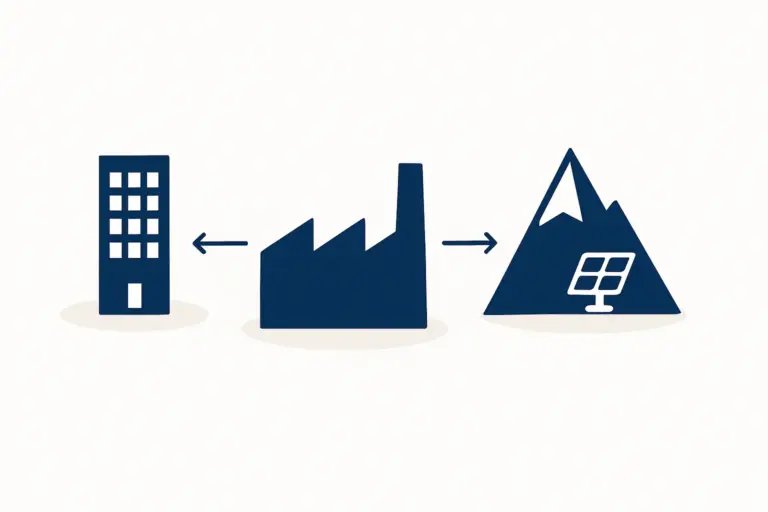
Before comparing specific locations, understanding the division of power in Switzerland is essential. Business operations are governed by a three-tiered legal system:
-
Federal Level: Sets the national framework for areas like corporate law, value-added tax (VAT), and customs.
-
Cantonal Level: Holds primary authority over corporate and individual taxation, building permits, environmental regulations, and economic development incentives. This is the most critical level for a new factory project.
-
Municipal Level: Manages local zoning laws, building codes, and utility connections, operating within the cantonal framework.
For an entrepreneur establishing a solar module factory, the cantonal government will be the primary counterpart for nearly every critical step, from securing a building permit to negotiating a potential tax holiday. A deep understanding of these cantonal differences is, therefore, not just an advantage—it’s essential for successful project planning.
Key Factors for Comparing Cantonal Business Environments
A systematic comparison is crucial, and investors should evaluate potential cantons against a consistent set of business-critical criteria.
Corporate Taxation Landscape
Perhaps the most widely discussed variable is the corporate tax rate, which differs substantially from one canton to another. The effective corporate tax rate, including federal, cantonal, and municipal taxes, can range from as low as 11-12% in cantons like Zug or Nidwalden to over 20% in others.
However, the headline rate is only part of the story. Many cantons offer significant tax incentives for new businesses that create local jobs and align with their economic strategy. These can include:
- Tax Holidays: Partial or full relief from cantonal and municipal taxes for up to 10 years.
- Preferential Rulings: Pre-negotiated agreements with tax authorities that provide clarity and favorable treatment for specific business activities.
Investors from the Middle East or North America, for instance, often focus solely on the lowest tax rate. A more prudent approach involves assessing the complete incentive package a canton might offer for a project in the renewable energy sector.
Permitting and Approval Timelines
Time is a critical resource in any industrial venture. The efficiency and complexity of the permitting process can vary significantly between cantons. Key approvals for a new factory include building permits, environmental impact assessments, and operational licenses.
Based on experience from J.v.G. turnkey projects, a well-prepared application in a business-friendly canton can navigate the approval process in 6 to 9 months. In a more densely populated or heavily regulated canton, the same process could extend to 12 or even 18 months. This variance directly impacts capital expenditure and the timeline to revenue generation.
The clarity and accessibility of cantonal authorities are also key factors. Some cantons have dedicated economic development teams that act as a single point of contact, guiding investors through the administrative process. Evaluating the responsiveness of these agencies is a strong indicator of a canton’s commitment to attracting new business. For a deeper look into construction specifics, understanding the detailed Factory Building Requirements is an essential step.
Financial Incentives and Economic Development Support
Beyond tax relief, cantons may offer direct financial support to attract strategic industries like solar manufacturing. These incentives are often tailored to the canton’s economic development goals and can include:
- Direct Grants or Subsidies: For investment in machinery or R&D activities.
- Loan Guarantees: Reducing the risk for financing partners.
- Support for Land Acquisition: Assisting in identifying and acquiring suitable industrial plots.
- Innovation Parks: Providing access to shared infrastructure and research networks.
Cantons in regions undergoing economic transformation, such as Valais or Jura, may offer more aggressive incentive packages for industrial projects compared to established economic centers like Zurich or Geneva.
Labor Laws and Access to a Skilled Workforce
While federal law provides a baseline for labor regulations, cantonal practices and the local talent pool differ. A factory in the Greater Zurich Area benefits from proximity to world-class universities (ETH Zurich, University of Zurich) and a large, multilingual workforce.
Establishing a facility in a more rural canton, however, may require a more proactive strategy for recruiting specialized engineers and technicians. Analyzing the availability of a skilled workforce for your solar factory is a critical component of regional due diligence.
A Comparative Snapshot: Three Cantonal Profiles
To illustrate these differences, we can look at three distinct cantonal profiles.
Canton of Zug: The Low-Tax Hub
- Focus: Known globally for its extremely low corporate tax rates and highly efficient, business-friendly administration. Approval processes are typically among the fastest in Switzerland.
- Potential Challenge: The cost of industrial land and labor is among the highest in the country. Competition for resources is intense.
Canton of Zurich: The Economic Powerhouse
- Focus: Offers unparalleled access to international transport links (Zurich Airport), a vast pool of highly skilled talent, and a dense network of financial and professional services.
- Potential Challenge: Corporate tax rates and operating costs are higher. Regulations, particularly concerning land use and environmental standards, can be more stringent.
Canton of Valais: The Industrial & Energy Specialist
- Focus: Actively promotes itself as a hub for renewable energy and industrial technology. It offers significant financial incentives, available industrial land at competitive prices, and strong support from its economic development agency.
- Potential Challenge: Its location in the Alps is more remote than a hub like Zurich, which can be a factor for logistics and international executive travel.
The Strategic Importance of Due Diligence
A superficial analysis based on publicly available tax rates is insufficient and carries significant risk. The optimal location depends entirely on the specific priorities of the project. Is speed-to-market the primary driver? Or is long-term cost optimization more important? Does the project require proximity to a major research university?
Engaging with cantonal authorities early, armed with a clear and professional business plan, is crucial for success. This demonstrates commitment and allows for a productive dialogue about potential support and regulatory pathways. This initial planning is a core component of developing a robust solar factory business plan.
Frequently Asked Questions (FAQ)
Is it necessary to speak the local language (German, French, Italian) to deal with cantonal authorities?
While English is widely spoken in business contexts, official applications, legal documents, and final negotiations are almost always conducted in the canton’s official language. Engaging local legal and business representation is essential for navigating these formal processes effectively.
How binding is the information provided by a cantonal economic development agency?
Information from these agencies is a reliable and valuable starting point. However, formal, legally binding commitments, such as a specific tax ruling or building permit, are only secured after a complete application is submitted for detailed review.
Can a foreign-owned company acquire land for a factory in Switzerland?
Yes. The Swiss law known as ‘Lex Koller’ restricts the acquisition of residential property by non-residents, but it generally does not apply to real estate used for commercial or industrial purposes. A company, regardless of its ownership, can acquire land and buildings for its business operations, provided the correct legal process is followed.
Are incentives available for all types of factories?
No. Incentives are typically targeted. Cantons use them strategically to attract industries that align with their economic vision, such as high-tech manufacturing, pharmaceuticals, R&D, and renewable energy. A solar module factory is often viewed favorably, as it aligns with national and cantonal energy strategy goals.
Conclusion and Next Steps
Switzerland presents a stable and high-quality environment for industrial investment, but it is not a monolithic market. It is a mosaic of 26 distinct economic regions. The choice of canton is, therefore, one of the most consequential decisions an investor will make, directly influencing project costs, timelines, and profitability for years to come.
This decision demands a detailed, data-driven analysis that weighs the competing advantages of taxation, regulatory speed, available talent, and direct financial support. By understanding this complex landscape, an entrepreneur can move beyond assumptions and make a strategic choice that lays the foundation for a successful and sustainable manufacturing operation. To further understand the financial implications, exploring a detailed solar factory investment plan is a logical next step in the planning process.