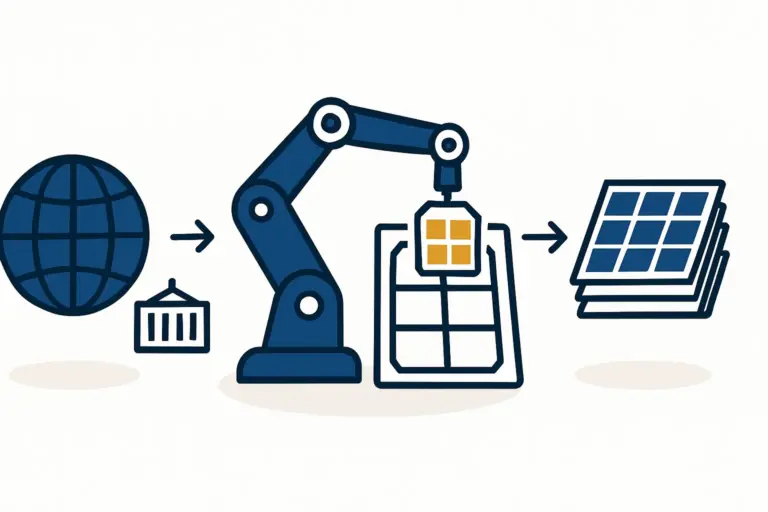
An entrepreneur has finalized the selection of state-of-the-art machinery for his new solar module factory. The purchase order is signed, and the equipment is crated and ready for shipment from a port in Europe or Asia. While this feels like a major milestone, the journey from the port of Dar es Salaam to the factory floor presents a more complex challenge.
This final leg of the supply chain—involving customs duties, port logistics, and inland transport—is where many projects face unexpected costs and significant delays. This article provides a practical guide for business professionals on the procedures, costs, and potential challenges of importing solar production equipment into Tanzania. Understanding this process isn’t just a logistical exercise; it’s a critical component of accurate financial planning and project scheduling.
Understanding the Tanzanian Import Framework: Key Regulations
Importing capital goods into Tanzania is governed by a framework managed primarily by the Tanzania Revenue Authority (TRA). For entrepreneurs setting up a solar factory, two key elements are particularly important:
-
The East African Community (EAC) Common External Tariff (CET): Tanzania is a member of the EAC, which maintains a harmonized tariff structure. The CET categorizes imports into three main bands: 0% for raw materials and capital goods, 10% for intermediate goods, and 25% for finished goods. This is highly advantageous for solar manufacturing, as most production machinery qualifies for the 0% duty rate.
-
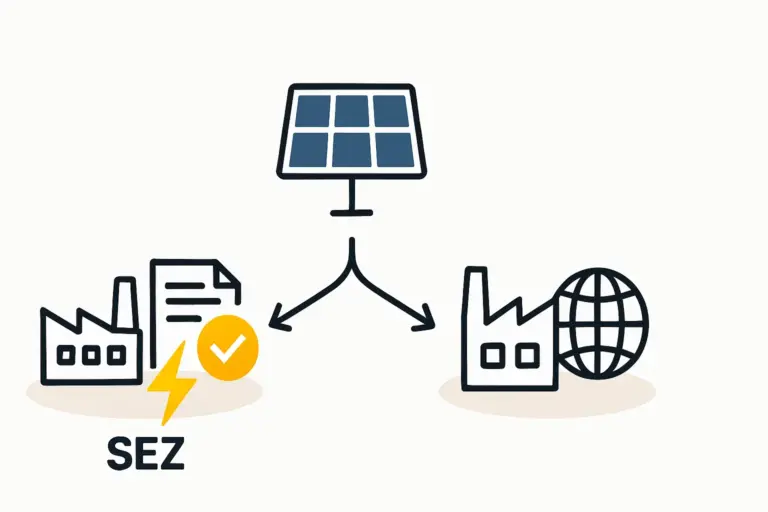
The Tanzania Investment Centre (TIC): Registering a project with the TIC can provide a Certificate of Incentives, which may offer further benefits and streamline certain processes. While not always mandatory, it can be a strategic step for significant investments.
A successful import process begins long before the goods arrive at the port. It starts with proper classification and documentation.
Decoding HS Codes for Solar Manufacturing Equipment
Every product imported into Tanzania must be classified under a specific Harmonized System (HS) Code. This global standard determines the applicable import duty. Incorrect classification is one of the most common reasons for customs disputes and delays.
For a standard solar module production line, key pieces of equipment and their likely HS classifications under the EAC CET include:
-
Automatic Stringer Machine: Generally classified under HS Code 8486.10.00 (‘Machines and apparatus for the manufacture of semiconductor boules or wafers’). This category typically falls under the 0% duty rate, as it is considered essential manufacturing equipment.
-
Solar Module Laminator: Often classified under HS Code 8477.59.00 (‘Other machinery for working rubber or plastics’). As a core piece of capital equipment, this also qualifies for the 0% duty rate.
-
Solar Cell Tester (IV Tester): This falls under testing equipment, typically HS Code 9030.33.00 (‘Instruments and apparatus for measuring or checking electrical quantities’). This category is also subject to 0% duty.
While the 0% duty on capital goods is a significant advantage, remember that Value Added Tax (VAT) at the standard rate (currently 18%) and other port-related fees still apply. The VAT is calculated on the total CIF (Cost, Insurance, and Freight) value plus any applicable duties.
The Port Clearance Process at Dar es Salaam: A Step-by-Step Guide
The Port of Dar es Salaam is the primary gateway for cargo entering Tanzania. While efficient, the process is detailed and requires precision.
A typical clearance workflow involves the following steps:
Step 1: Pre-Arrival Documentation
Before the vessel even docks, your appointed agent must have a complete and accurate set of documents. This includes the Bill of Lading, a detailed Commercial Invoice, a Packing List that matches the invoice precisely, and a Certificate of Origin. As experience from turnkey projects shows, any discrepancy between these documents will halt the process immediately.
Step 2: Engaging a Clearing and Forwarding Agent (CFA)
It is mandatory to use a licensed CFA in Tanzania to handle customs procedures. Selecting a reputable and experienced agent is one of the most critical decisions an importer will make. They act as your legal representative and navigate the system on your behalf.
Step 3: Customs Declaration via TANCIS
The CFA will lodge a customs declaration through the Tanzania Customs Integrated System (TANCIS). All supporting documents are uploaded to this electronic platform, which initiates the clearance process.
Step 4: Verification and Valuation
The TRA will review the declaration, and officials may conduct a physical inspection of the container to verify that its contents match the declaration and that the HS codes are correct. They will also assess the declared value of the goods to ensure it aligns with market rates. A clear and transparent invoice is essential to avoid valuation disputes.

Step 5: Duty and Tax Payment
Once the TRA issues a final assessment, the importer must pay any duties, the 18% VAT, and other levies such as port charges and scanning fees.
Step 6: Release and Inland Transport
After all payments are confirmed, the TRA issues a release order. The container can then be collected from the port for transport to the factory site. This final step requires careful coordination with a reliable logistics company equipped to handle heavy and sensitive machinery.
Common Challenges and How to Mitigate Them
Even with a clear process, importers can still face hurdles. Awareness and preparation are the best ways to mitigate them.
Challenge 1: Documentation Errors
This is the most frequent cause of delay. A single typo, a mismatch between the packing list and invoice, or an incorrect HS code can freeze a shipment in the system for weeks.
Mitigation: Insist on impeccable documentation from the equipment supplier. A partner with experience in a turnkey line setup will understand these requirements and provide compliant, error-free paperwork.
Challenge 2: Valuation Disputes
The TRA may question the declared value of the machinery, especially if it appears low. This can lead to a re-valuation and a higher tax bill.
Mitigation: Maintain a clear paper trail, including proof of payment (telegraphic transfer receipts) and the original proforma invoice from the manufacturer. This provides the evidence needed to support the declared value.
Challenge 3: Port Congestion and Demurrage Fees
If clearance takes longer than the allotted free time (typically 7 days), the port authority and shipping line will begin charging expensive daily storage fees, known as demurrage.
Mitigation: Ensure your CFA lodges the declaration as early as possible and follows up proactively. Having all documents and funds ready for payment before the vessel arrives is essential for avoiding these punitive costs.
Frequently Asked Questions (FAQ)
Are there any import duty exemptions for solar manufacturing equipment in Tanzania?
Yes. Under the EAC Common External Tariff, most capital goods and machinery for manufacturing are classified under the 0% duty band. However, this does not exempt the import from VAT (18%) and other port fees.
How long does the customs clearance process typically take in Dar es Salaam?
For a well-prepared shipment with accurate documentation, the process can take between 7 and 14 days. If there are documentation queries, valuation disputes, or physical inspections, it can easily extend to three weeks or more.
What is the role of a Clearing and Forwarding Agent (CFA)?
A CFA is a licensed professional company that manages the entire customs clearance process on behalf of the importer. They prepare and submit declarations, coordinate with the TRA and port authorities, and arrange for the final release of the cargo. Their services are mandatory for commercial imports.
Do I have to pay Value Added Tax (VAT) on imported machinery?
Yes, VAT is payable at the standard rate of 18%. It is calculated on the CIF value (Cost, Insurance, Freight) of the goods plus any import duties. For VAT-registered companies in Tanzania, it may be possible to claim this import VAT back on a subsequent VAT return, helping with cash flow.
How does a turnkey provider help with logistics?
An experienced turnkey provider like J.v.G. Technology GmbH supports the process by preparing all necessary technical specifications, compliant commercial invoices, and packing lists required by Tanzanian customs. This expertise in documentation is fundamental to preventing costly delays and ensuring a smooth import.

Planning Your Next Steps
Successfully importing solar manufacturing equipment into Tanzania is a matter of diligent preparation, not luck. The customs and logistics phase is a critical part of your project plan and must be factored into both the budget and the timeline.
Understanding these requirements from the outset is essential for creating a realistic and accurate business plan. By anticipating the steps, preparing flawless documentation, and working with experienced local partners, you can ensure your valuable equipment arrives at your factory site safely and without unnecessary expense or delays. For a comprehensive overview of the entire process, from initial planning to full production, the structured educational resources at pvknowhow.com offer a complete roadmap.