Battery Pack Basics & Key Technology Choices
Planning a factory starts with the fundamental technology choices that define the entire project. These early decisions affect everything from the building and machinery to the workforce and final product. This guide breaks down the core concepts of battery pack assembly for business professionals, step by step.
What a Battery Pack Factory Is – and What It Is Not
The first crucial distinction is the difference between a battery cell factory and a battery pack factory. They are two completely different types of industrial operations.
A battery pack factory does not produce the basic battery cells.
Instead, it is an assembly plant. It purchases individual battery cells from specialized, large-scale manufacturers. Its job is to assemble these pre-made cells into a finished, functional battery system.
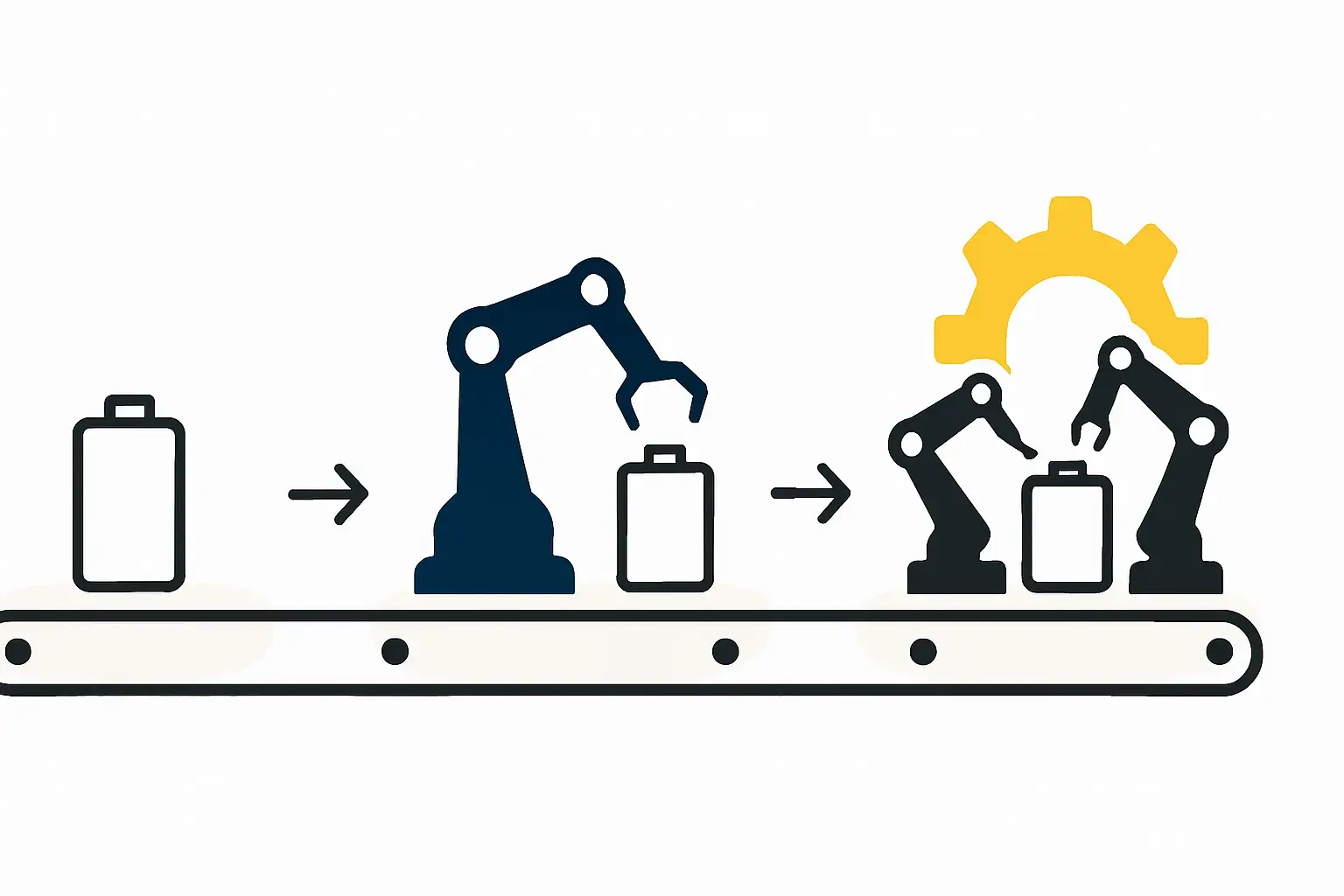
The assembly process can be broken down into a few key stages:
- Cell Handling: Incoming cells are inspected, sorted, and prepared for assembly.
- Module Assembly: Cells are connected in series and parallel to create a larger unit called a module. This involves processes like laser welding or wire bonding.
- Pack Assembly: Multiple modules are combined and placed into a final housing or enclosure.
- System Integration: A Battery Management System (BMS) is installed. The BMS is the electronic “brain” that monitors and protects the battery. Cooling systems (air or liquid) and safety components are also added.
- Final Testing: The completed battery pack undergoes extensive testing to ensure performance, safety, and quality standards are met.
This distinction is critical, as confusing cell production with pack assembly is a common source of planning errors. Cell manufacturing is a highly complex, capital-intensive chemical process requiring billions of dollars in investment. In contrast, battery pack assembly is a sophisticated mechatronics process that can be started at a much smaller scale. Understanding this difference is the first step toward a realistic business plan.
Lithium-Ion as Today’s Standard Technology
The dominant technology in the battery industry today is lithium-ion. While other technologies exist, nearly all modern energy storage and electric vehicle applications rely on some form of lithium-ion chemistry.
Within the lithium-ion family, there are several different chemical compositions, or “chemistries.” For a new investor, two are critical to understand from a business perspective:
- LFP (Lithium Iron Phosphate): This chemistry is known for its high safety, long cycle life, and lower cost. Its main disadvantage is a lower energy density, meaning it is heavier and larger for a given amount of energy. It is an excellent choice for applications where weight and size are less critical, such as stationary energy storage systems.
- NCM (Nickel Cobalt Manganese): This chemistry offers a higher energy density, providing more power in a smaller, lighter package. This makes it ideal for electric vehicles, where minimizing weight and space is a primary goal. However, it is typically more expensive and requires more complex thermal management than LFP.
The choice between LFP and NCM is not about which is “better” overall. It is a strategic decision based entirely on the final battery pack’s intended application.
Battery Cell Formats and Their Meaning
After deciding on a chemistry, the next choice is the physical form of the battery cell. The industry uses three main formats, and this choice dictates the design of the assembly line.
- Prismatic Cells: These rectangular cells in a hard metal casing resemble small, flat bricks. Their shape makes them easy to stack into compact modules, which is ideal for large energy storage systems and some electric vehicles. The assembly process is designed around handling these rigid, block-like units.
- Cylindrical Cells: These small, round cells look like larger versions of a standard AA battery, such as the well-known 2170 or 4680 formats. Their main advantages are excellent thermal stability and mature, high-speed manufacturing processes. Assembling a pack requires connecting thousands of these small cells, demanding highly specific machinery and production logic.
- Pouch Cells: These cells have a soft, flexible foil casing. They are lightweight and space-efficient, as their shape can be adapted to fit available space, making them popular in consumer electronics and some electric vehicles. However, they require a rigid, protective structure within the battery pack to prevent swelling or damage.
Crucially, a factory designed for one cell format cannot easily produce packs using another. The machinery for handling, connecting, and testing prismatic cells is completely different from what is needed for cylindrical or pouch cells. This choice is a fundamental decision that locks in the factory’s technical capabilities.
Application Comes Before Factory Design
A clear pattern emerges from these initial choices: every technical decision depends on the final use case. This means the most critical step in planning a battery pack factory is to first define the target market and application.
The factory must be designed around the product, not the other way around.
Typical application groups include:
- Energy Storage Systems (ESS): These stationary batteries for residential, commercial, or utility-scale use prioritize safety, long life, and low cost. LFP prismatic cells are a very common choice for this market.
- Electric Vehicles (EV): This includes batteries for cars, buses, motorcycles, or scooters. These applications demand high energy density, light weight, and fast charging. NCM or LFP cells in either pouch or cylindrical formats are often used.
- Industrial or Special Applications: This covers a wide range of uses, such as electric forklifts, medical equipment, marine vessels, or drones. These often have unique requirements for shape, durability, or performance, demanding a highly specialized design.
One factory cannot efficiently serve all these applications at once. The engineering, supply chain, and production processes for an ESS pack are fundamentally different from those for an EV pack.
The Most Common Investor Mistake
Based on experience from real-world projects, the most common and costly mistake is trying to build a “flexible” factory that can produce batteries for many different applications. While this seems like a good way to capture a larger market, it almost always leads to failure.
Attempting to serve multiple, unrelated applications with a single production line results in:
- Higher Cost: This approach requires purchasing many different types of machines, most of which will be underutilized. Tooling changeovers are slow and expensive, reducing overall efficiency.
- Higher Complexity: Managing different cell suppliers, BMS designs, housing components, and quality control processes for multiple products is operationally complex and difficult to manage.
- Lower Quality: It is nearly impossible for a team to master production when its focus is constantly shifting. Specialization allows for process optimization and deep expertise, which leads to higher quality and reliability.
Successful battery pack factories are specialized. They choose a specific application—for example, residential energy storage—and design their entire operation to serve that one market with maximum efficiency and quality.
Transition to the Next Lesson
Understanding these foundational choices—application, chemistry, and cell format—is the essential first step to planning a successful battery pack factory. These decisions form the strategic basis for the entire project.
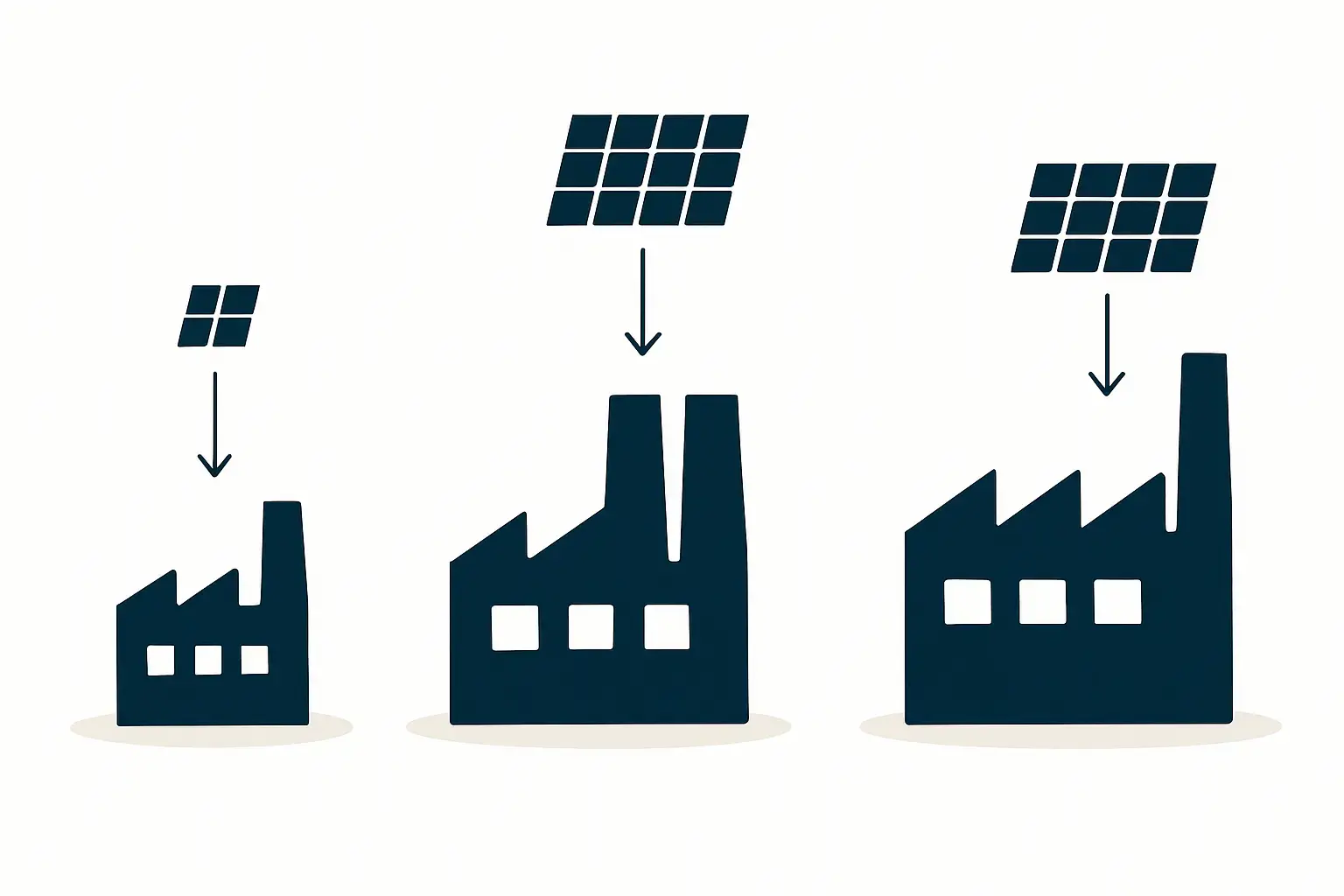
Once these strategic decisions are made, the next logical step is to define the scale of the operation. The next lesson will explain how to determine the right factory size and production capacity for your chosen application.