Why Investment Is Often Misunderstood
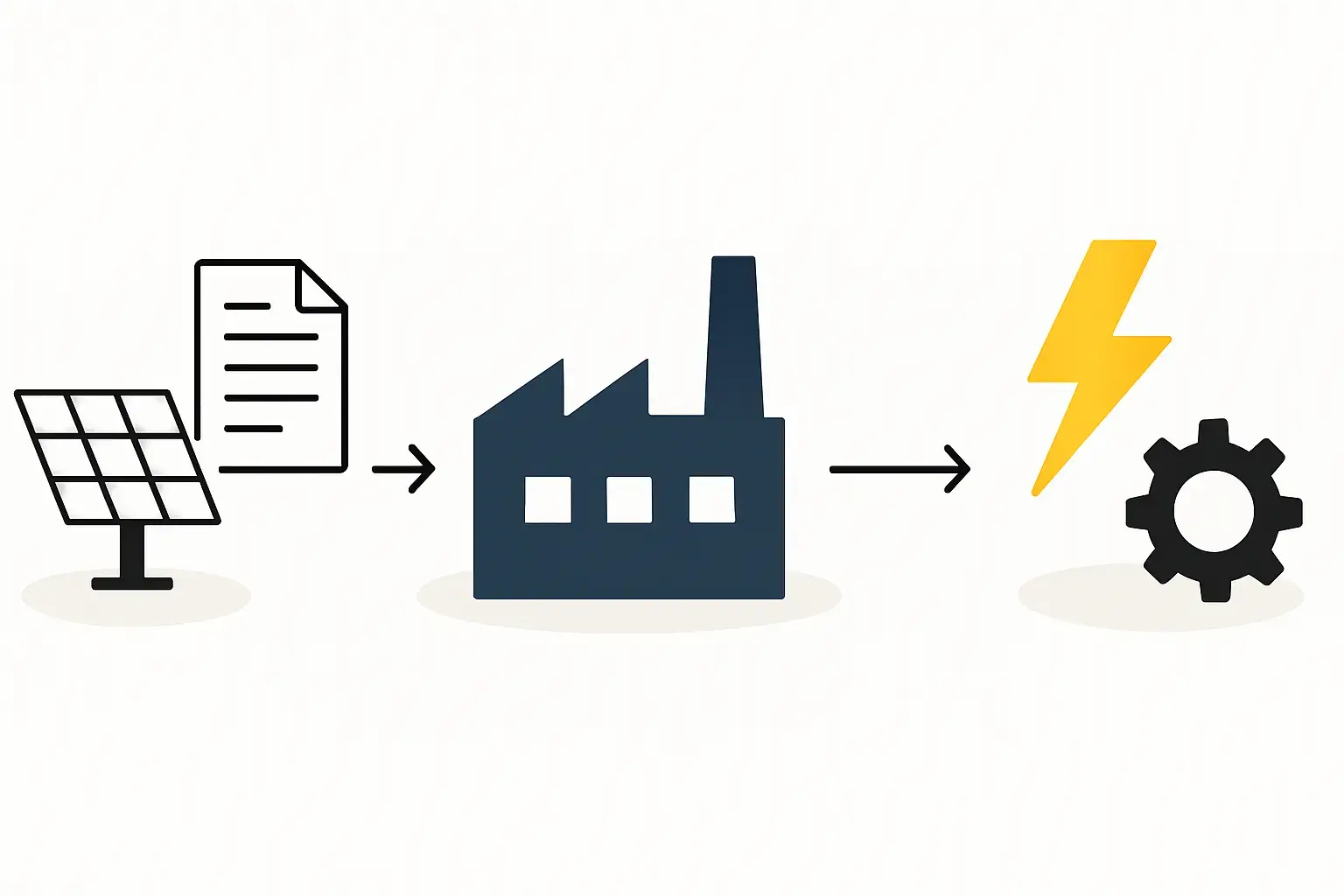
When professionals consider entering the solar recycling industry, their first question is often about the total investment required. Focusing on a single number, however, can lead to false expectations and poor strategic decisions. While a large investment figure may seem like the sign of a serious, high-potential project, this view is often misleading.
In the specialized field of solar panel recycling, a higher investment doesn’t automatically guarantee better economic performance or profitability. A sustainable business is built not on the size of its budget, but on a deep understanding of its cost structure. The goal is not simply to fund a plant, but to build an operation where costs are understood, managed, and aligned with a viable business model.
Main Investment Blocks in a Solar Recycling Factory
A solar recycling factory is a complex industrial facility, and its total investment is the sum of several distinct components. Understanding these is the first step toward a realistic financial plan.
- Land and Site Preparation: This includes purchasing or leasing suitable industrial land and preparing it, which may involve grading, foundation work, and ensuring access to public roads and utilities.
- Buildings and Infrastructure: This covers the construction of the main processing building, warehouses for incoming and processed materials, administrative offices, and basic quality control areas. It also includes essential infrastructure like electrical connections, water supply, and waste management systems.
- Processing Equipment: Often the largest single investment, this includes all the machinery required for the recycling process—from the initial dismantling and size reduction of panels to the mechanical separation of materials like glass, aluminum, silicon, and metals.
- Automation and Control Systems: Modern recycling plants use automated systems to control machinery, monitor processes, and collect data. The level of automation directly impacts both the initial investment and long-term labor requirements.
- Environmental and Safety Systems: Critical for responsible operation, these systems include air filtration, wastewater treatment, fire protection, and worker safety systems. Because they are dictated by local regulations, these systems are non-negotiable.
How Plant Size Influences Investment Range
The required investment is directly related to the factory’s planned processing capacity, or size. This relationship, however, is not linear. As a plant grows, its complexity increases at a faster rate than its throughput.
- Small Plants (e.g., up to 10,000 tons/year): These facilities typically require the lowest initial investment, often using more manual labor and simpler machinery. They are suitable for markets with a low but growing volume of end-of-life solar panels.
- Medium Plants (e.g., 10,000–40,000 tons/year): These operations require more structured systems, a higher degree of automation, and more advanced logistics for handling larger volumes. The investment in infrastructure and control systems is significantly higher.
- Large Plants (e.g., over 40,000 tons/year): These major industrial installations demand a significant upfront financial commitment. They rely on high levels of automation, complex material handling systems, and robust infrastructure to operate reliably.
Doubling a plant’s capacity often more than doubles the investment. This is because larger facilities require more complex engineering, planning, and project management to operate effectively.
Operating Costs vs. Capital Costs
A common mistake in financial planning is focusing solely on the initial investment while underestimating the ongoing costs of running the factory. This requires a clear distinction between two types of costs.
Capital costs (also known as Capital Expenditure or CapEx) are the one-time expenses required to build the factory, including the buildings, machinery, and systems described earlier.
Operating costs (also known as Operating Expenditure or OpEx) are the recurring expenses required to run the factory year after year. These ongoing costs are frequently underestimated, which can lead to serious financial problems. Key drivers of operating costs include:
- Labor: Salaries for operators, technicians, administrative staff, and management.
- Energy: Electricity and other energy sources needed to power the machinery and facilities.
- Maintenance: Spare parts, consumables, and service activities required to keep equipment operating safely and reliably.
- Logistics: The costs of transporting end-of-life panels to the factory and shipping recovered materials to buyers.
- Compliance and Reporting: Ongoing costs associated with environmental monitoring, permit renewals, and regulatory reporting.
Experience shows that many recycling ventures fail not from a lack of initial capital, but from operating costs that consistently exceed revenues over the long term.
The Role of Regulation and Compliance Costs
As a heavily regulated industry, solar panel recycling is governed by environmental laws dictating how materials must be handled, processed, and stored. These regulations create specific and unavoidable costs.
These compliance costs are mandatory and include investments in emissions monitoring systems, fees for operating permits, and the costs of regular government reporting. The specific requirements and associated costs vary significantly depending on the country and local jurisdiction.
These costs tend to increase with plant size. A larger plant has a greater environmental footprint and therefore faces stricter scrutiny and more extensive reporting requirements. Ignoring these costs during the planning phase creates significant long-term business risk, including potential fines, operational shutdowns, and reputational damage.
Strategic Takeaway
To build a viable solar recycling business, decision-makers should focus on the underlying logic of their costs, not just the total investment figure.
- Investment must match a realistic plant size. Planned capacity should be based on a careful analysis of the available supply of end-of-life panels in the target region, not on ambition alone.
- Cost structure defines long-term viability. A business plan that carefully accounts for both capital and operating costs is far more likely to succeed. Pay special attention to operating costs, as they determine the business’s sustainability.
- Conservative assumptions reduce risk. When forecasting costs for energy, labor, and compliance, it is wise to use conservative estimates. This creates a financial buffer and makes the business more resilient to unexpected challenges.
Transition to the Next Lesson
Now that you understand the logic behind investment and operational costs, the next crucial step is securing funding. In the next lesson, we will explore financing models, common financial risks, and the long-term economic factors that determine a solar recycling project’s success.