Why the Last Check Matters
An inverter factory is a complex industrial system—more than just a collection of machines and a workforce. It’s an integrated process where every component, from the supply chain to the final testing protocol, must function in harmony. The success or failure of this system hinges on the foundational decisions made long before the first piece of equipment is installed.
These early decisions create a path dependency. Once capital is committed and construction begins, the project gains a momentum that makes fundamental changes exceptionally difficult and costly. Many of the most common and damaging problems in new inverter manufacturing ventures cannot be fixed with operational effort or post-launch adjustments. These flaws are embedded in the initial concept, and an experienced review is one of the most effective tools for identifying these risks while they still exist only on paper.
Decisions That Are Hard to Change Later
Certain strategic choices become effectively permanent once the factory is built. Attempting to alter them later involves unacceptable costs, extensive downtime, and significant delays that can jeopardize the entire business case.
Inverter Type and Product Focus
The choice between producing string inverters, central inverters, or microinverters defines the entire production logic, dictating the required machinery, assembly line layout, specific testing equipment, and the skill sets of the technical staff. A factory designed for high-volume residential string inverters cannot easily be reconfigured to produce low-volume, high-power central inverters for utility-scale projects.
Factory Size and Scalability
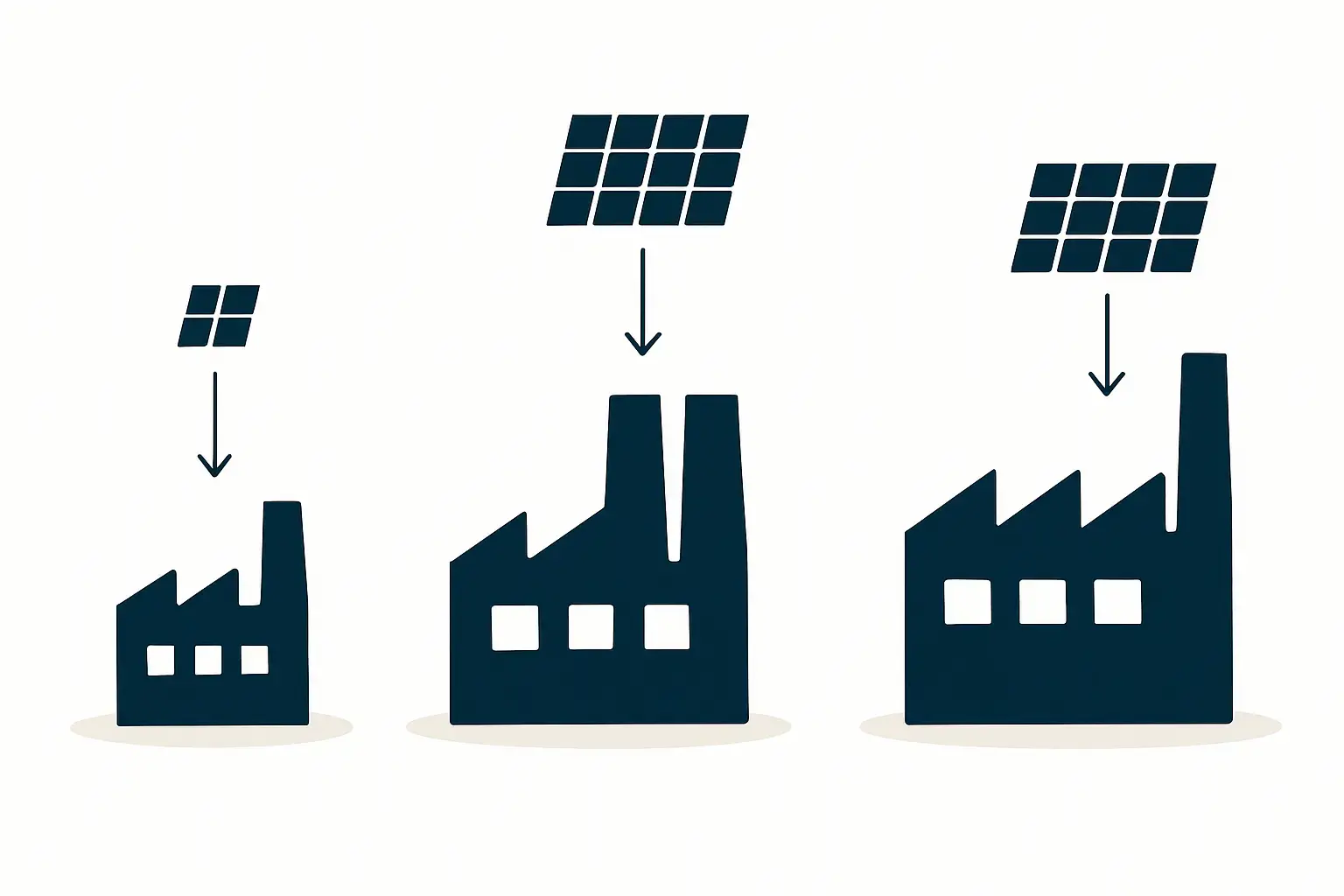
The physical footprint of the building and the layout of the production floor set a hard limit on throughput. A facility designed for an annual capacity of 500 MW cannot be doubled to 1 GW without major reconstruction or an entirely new building. Initial planning for material flow, storage, and future expansion lines is one of those critical decisions that are nearly impossible to correct later.
Level of Automation
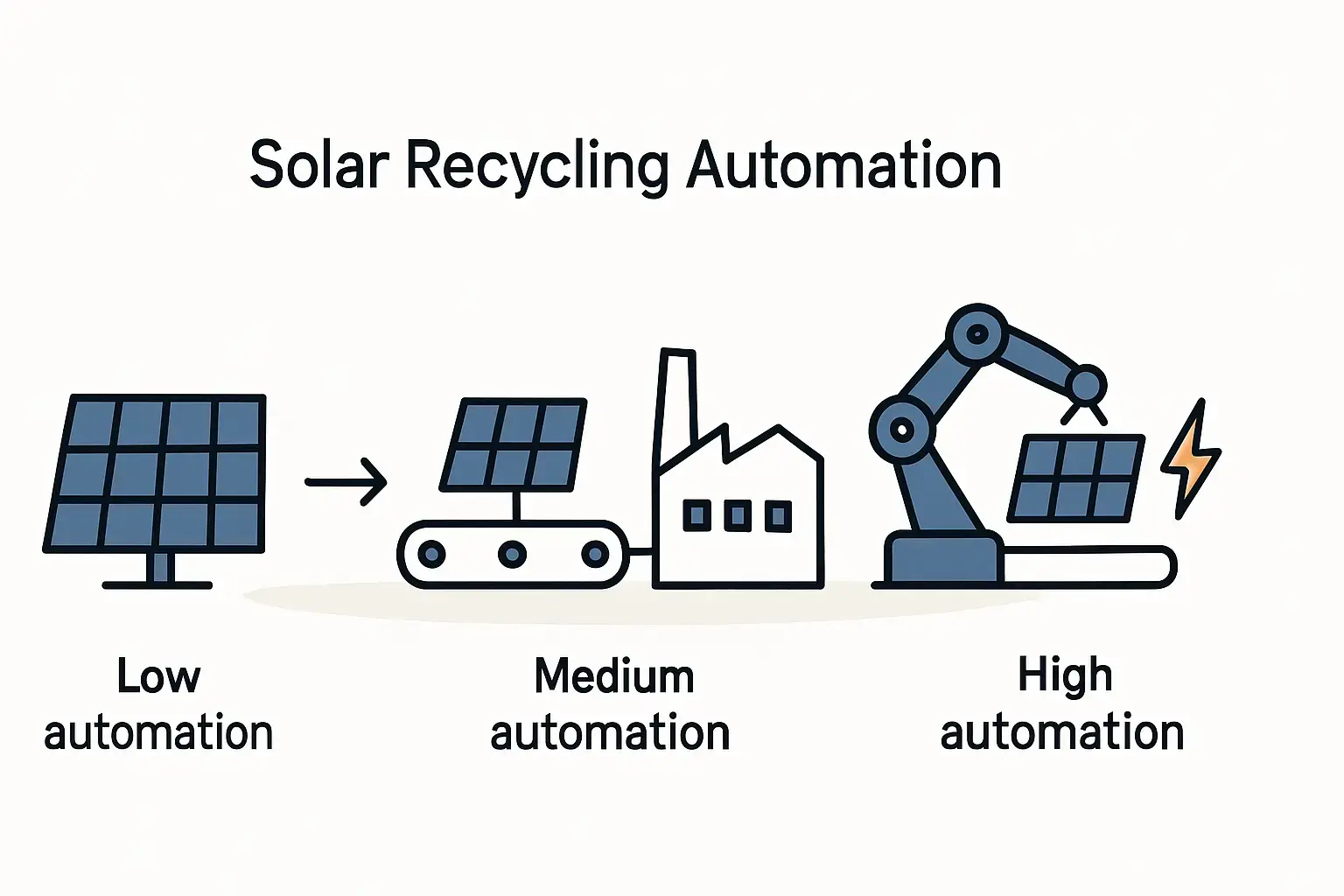
The degree of automation is a strategic choice with long-term consequences. A manual or semi-automated assembly line requires more space per unit of output and a different workforce structure than a fully automated line. Changing this level later is not as simple as adding a robot; it often requires a complete redesign of the process flow, material handling systems, and quality control stations.
Testing and Certification Concept
The strategy for product testing and market certification is deeply integrated into the factory’s design. The space, electrical infrastructure, and environmental conditions required for end-of-line testing, aging tests, and certification-related validation activities are substantial. If these elements are undersized or poorly planned, achieving required certifications can become a major bottleneck, preventing market entry and revenue generation.
Typical Pre-Investment Blind Spots
Experience with real inverter factory projects shows that most plans look coherent and viable on the surface. The most critical risks are often hidden in unstated assumptions and overlooked details. These blind spots are common and understandable for entrepreneurs entering a new industrial sector.
Underestimating Certification Effort
Entrepreneurs often underestimate the time, cost, and technical rigor required to achieve certifications such as IEC, UL, or country-specific grid requirements. This is not a simple administrative task; it is a structured technical validation process that can take many months and requires dedicated resources and equipment. A business plan that assumes immediate market entry after production start is often unrealistic.
Overestimating Early Sales Volume
A common planning error is projecting rapid market penetration and high initial sales volumes. In practice, building a brand, establishing distribution channels, and gaining the trust of installers and project developers takes time. A factory built for high volume can suffer from high fixed costs if sales ramp up more slowly than expected.
Choosing Automation Too Early
While automation can increase efficiency, it also introduces rigidity. For a new market entrant, flexibility is often more valuable than maximum throughput. Highly automated lines are optimized for specific product designs. Manual or semi-automated lines can adapt more easily to early design changes driven by market feedback.
Copying Factory Concepts from Other Markets
A factory layout that works well in one region may not function in another. Concepts developed for markets with stable infrastructure, experienced labor, and efficient logistics may fail where these conditions do not exist. Local factors must be considered in every factory design.
What an Experience-Based Review Adds
An external, experience-based review does not replace project ownership or management responsibility. Its role is to challenge assumptions and test realism before commitments are made.
Layout Review
This review focuses on material flow, space usage, safety considerations, and maintainability. Potential bottlenecks and impractical design choices can often be identified at this stage.
Process Logic Review
This examines the sequence of production and testing steps. It checks whether process choices, cycle times, and quality controls are realistic and appropriate for the target product and market.
Investment Logic Review
This review compares planned investments with expected output and business assumptions. It questions whether certain equipment or automation levels are justified for the planned production volume and market situation.
Timing: When Expert Input Helps Most
Independent review is most valuable before decisions are locked in.
- Before machinery contracts are signed
- Before building layouts are finalized
- Before automation concepts are fixed
Late corrections are always more expensive than early validation.
This Is Not About Selling Services
Not every project requires external consulting. Some organizations have the internal experience needed to challenge their own assumptions effectively.
What matters is objective validation. Whether this is done internally or with external support is secondary. Consulting is one possible tool, not a mandatory requirement.
Strategic Takeaway
Industrial projects tend to fail because of early decision errors, not because of poor execution later.
- Early, realistic planning reduces risk.
- Most failed projects show similar warning signs in their initial plans.
- Smaller, controlled starts often outperform large, optimistic launches.
Final Note
This course was designed to explain structure, logic, and typical risks in inverter factory projects. It does not promise success. The next step is a conscious decision based on realistic expectations and a clear understanding of the risks involved.
If you would like to discuss your project situation, a conversation with an experienced, neutral party can help clarify remaining uncertainties.