Many entrepreneurs believe a battery factory’s size is defined by the size of its machines. It’s a common—and costly—misunderstanding. In reality, the assembly line is just one part of a much larger operational footprint. A successful factory plan must account for production flow, material storage, logistics, and future growth from day one.
Understanding the true physical requirements of a battery pack factory is the first step toward building a realistic business plan. This guide breaks down the key factors that determine a factory’s size, helping you avoid common planning mistakes that can limit your business before it even begins.
What “Factory Size” Really Means
When planning a new facility, the term “factory size” refers to more than just the building’s dimensions. It’s a combination of four distinct elements that must work together seamlessly:
- Production Output: The relative production capacity of the factory, defined by how much output can be achieved per shift or per day, depending on product complexity and automation level.
- Production Space: The physical area required for the assembly line, testing equipment, and the internal movement of materials.
- Storage Space: The warehouse area needed for raw materials, components, and finished products.
- Total Land Area: The full site, including the building, logistics zones, parking, loading docks, and space reserved for future expansion.
Projects often run into trouble when the focus is solely on production machinery. Without adequate space for storage and logistics, even the most efficient assembly line can be starved of materials or blocked by finished goods, causing production to halt. Experience from numerous turnkey projects shows that planning for all four elements is essential for long-term success.
Production Size – Output Level
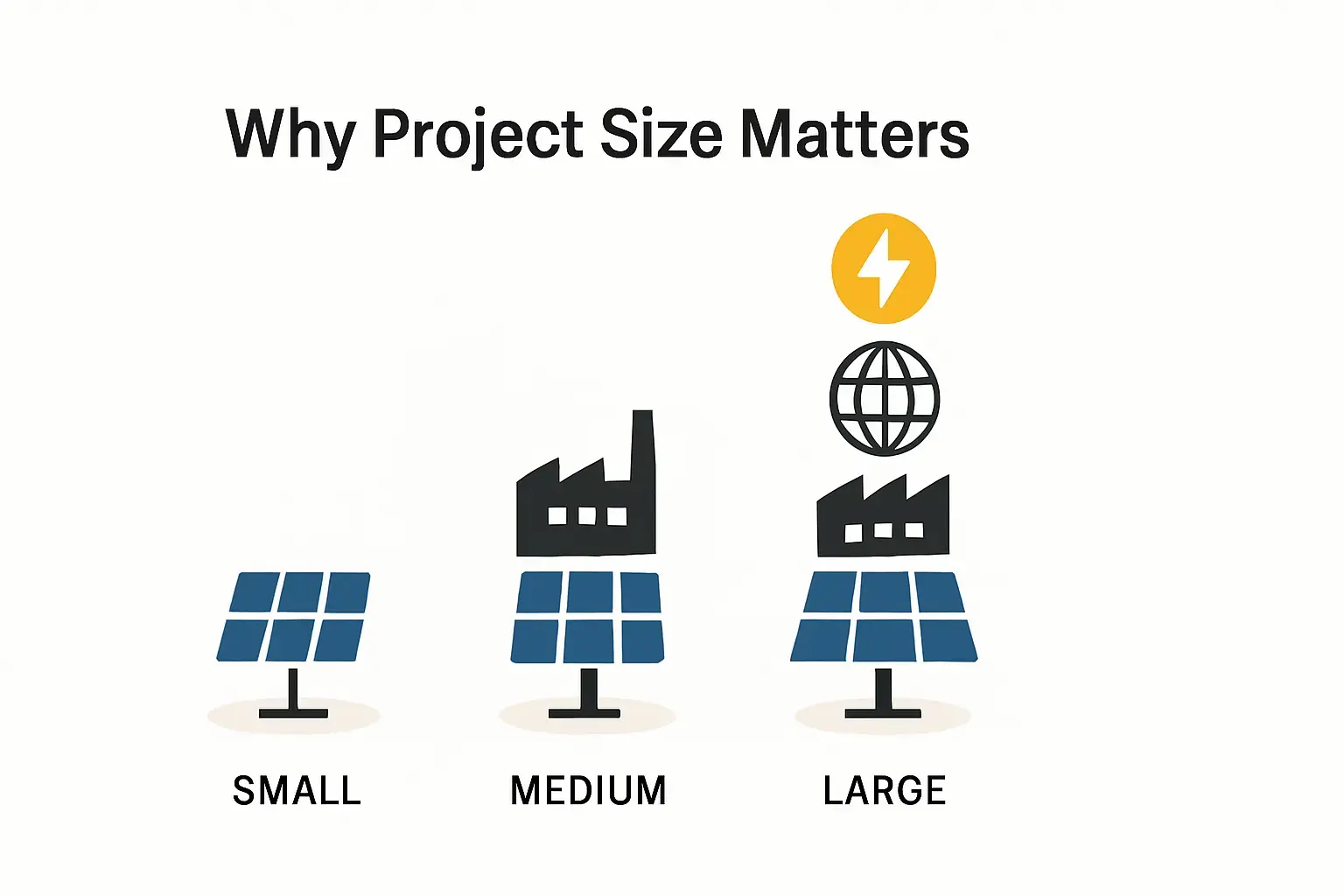
The starting point for any factory plan is its intended production output. This does not refer to a fixed number of battery packs per year, but to the overall operational scale of the factory. In practice, output levels can be grouped into three general categories:
- Small Output: Often involves more manual or semi-automated processes, suitable for market entry, pilot production, or specialized battery packs.
- Medium Output: Typically uses a balanced mix of manual and automated stations to achieve higher throughput and consistent quality.
- Large Output: Relies on high levels of automation for mass production of standardized battery packs.
The target output level is influenced by several factors. Battery pack complexity is critical; a simple energy storage module requires a different process than a high-voltage automotive battery. Automation level also plays a major role, as automated lines require different layouts, safety zones, and support areas than manual workstations. The final application—energy storage, mobility, or industrial use—defines the required assembly process and therefore the realistic output range.
Production Hall Size
The production hall is the heart of the factory, but its required size is always larger than the combined footprint of the machines alone. The total production space must include several operational zones:
- The Assembly Line: The physical space occupied by machinery and workstations.
- Internal Transport Paths: Clear and safe pathways for personnel, carts, forklifts, or automated transport systems.
- Buffer Zones: Intermediate storage areas for semi-finished products between process steps, essential for maintaining stable production flow.
- Testing and Quality Control: Dedicated space for end-of-line testing, quality inspections, and controlled rework areas.
A common planning mistake is to calculate space based only on machine dimensions. In real factory layouts, surrounding operational areas can easily double the required floor space.
Typical production hall size ranges are:
- Small Factory: 500–1,000 square meters
- Medium Factory: 1,000–2,500 square meters
- Large Factory: 2,500–5,000+ square meters
Adequate space planning improves safety, reduces bottlenecks, and allows smoother scaling.
Warehouse and Storage Space
In battery pack production, storage is a core operational function, not a secondary consideration. Insufficient warehouse space is one of the most common causes of production disruptions.
Storage planning must cover three distinct areas:
- Incoming Materials Storage: Battery cells, housings, electronics, and other components arrive in bulk and require controlled, well-organized storage. Battery cells, in particular, often require specific safety, fire-protection, and environmental conditions.
- Production Buffer Storage: Small quantities of material must be available directly at the line to ensure uninterrupted operation.
- Finished Goods Storage: Completed battery packs need secure storage while awaiting final inspection, packaging, and shipment.
Because materials are purchased in batches and customer orders can be large, warehouse space often matches or exceeds the size of the production hall. For example, a factory with a 1,500-square-meter production area may require an additional 1,500 square meters or more for storage.
Land and Site Size
The total land area is the final and often underestimated component of factory planning. The production and warehouse building should never occupy the entire plot.
Surrounding land is strategically important for:
- Future Expansion: Additional production lines or warehouse extensions can be added without relocating the factory.
- Logistics and Access: Sufficient space for truck access, loading operations, and internal traffic flow.
- Safety Distances: Compliance with local safety and fire regulations.
- Utilities and Infrastructure: Space for transformers, energy systems, water treatment, or backup power units.
As a planning guideline, factory buildings typically occupy around 30–50% of the total land area. A facility with a combined building size of 3,000 square meters may therefore require a land plot of approximately 6,000 to 10,000 square meters.
Typical Factory Size Categories
Combining these elements allows a first classification into three practical factory profiles. These categories serve as orientation points, not fixed rules.
Small Entry Factory
- Relative Production Output: Low to moderate volume, with manual or semi-automated processes, suitable for structured market entry.
- Typical Production Hall Size: ~500 square meters
- Typical Warehouse Size: ~500 square meters
- Typical Land Size: ~2,000–3,000 square meters
Professional Start Factory
- Relative Production Output: Medium volume, with a balanced level of automation for efficiency and flexibility.
- Typical Production Hall Size: ~1,500 square meters
- Typical Warehouse Size: ~1,500 square meters
- Typical Land Size: ~6,000–8,000 square meters
Industrial-Scale Factory
- Relative Production Output: High volume, with extensive automation for mass production.
- Typical Production Hall Size: ~3,000 square meters
- Typical Warehouse Size: ~4,000 square meters
- Typical Land Size: ~15,000+ square meters
All figures are indicative. Actual requirements depend on battery design, automation concept, regulatory environment, and growth strategy.
Transition to the Next Lesson
Once the physical scale of the factory—from production output to land area—is clearly defined, the next logical step is to analyze the investment structure. Understanding how factory size translates into machinery cost, infrastructure investment, and operational expenses is essential for building a realistic and sustainable business case.