What a Utility-Scale Solar Power Plant Is—and What It Is Not
1. Introduction: Why Clear Definitions Matter
Many promising solar energy projects fail before construction even begins. This failure is often not technical or financial, but stems from a misunderstanding of what the project truly is. Investors and entrepreneurs frequently enter the market with assumptions based on smaller, more familiar solar systems, leading to flawed expectations about timelines, costs, responsibilities, and risks.
A clear definition is the essential first step for any successful venture. It ensures all stakeholders—from investors to engineers to regulators—are discussing the same type of project. Without this shared understanding, planning becomes ineffective and budgets unreliable.
This course focuses exclusively on large, grid-connected projects known as utility-scale solar power plants. Our focus will not be on residential rooftop panels or small commercial systems. Understanding this distinction is crucial for navigating the industrial energy sector.
2. What a Utility-Scale Solar Power Plant Is
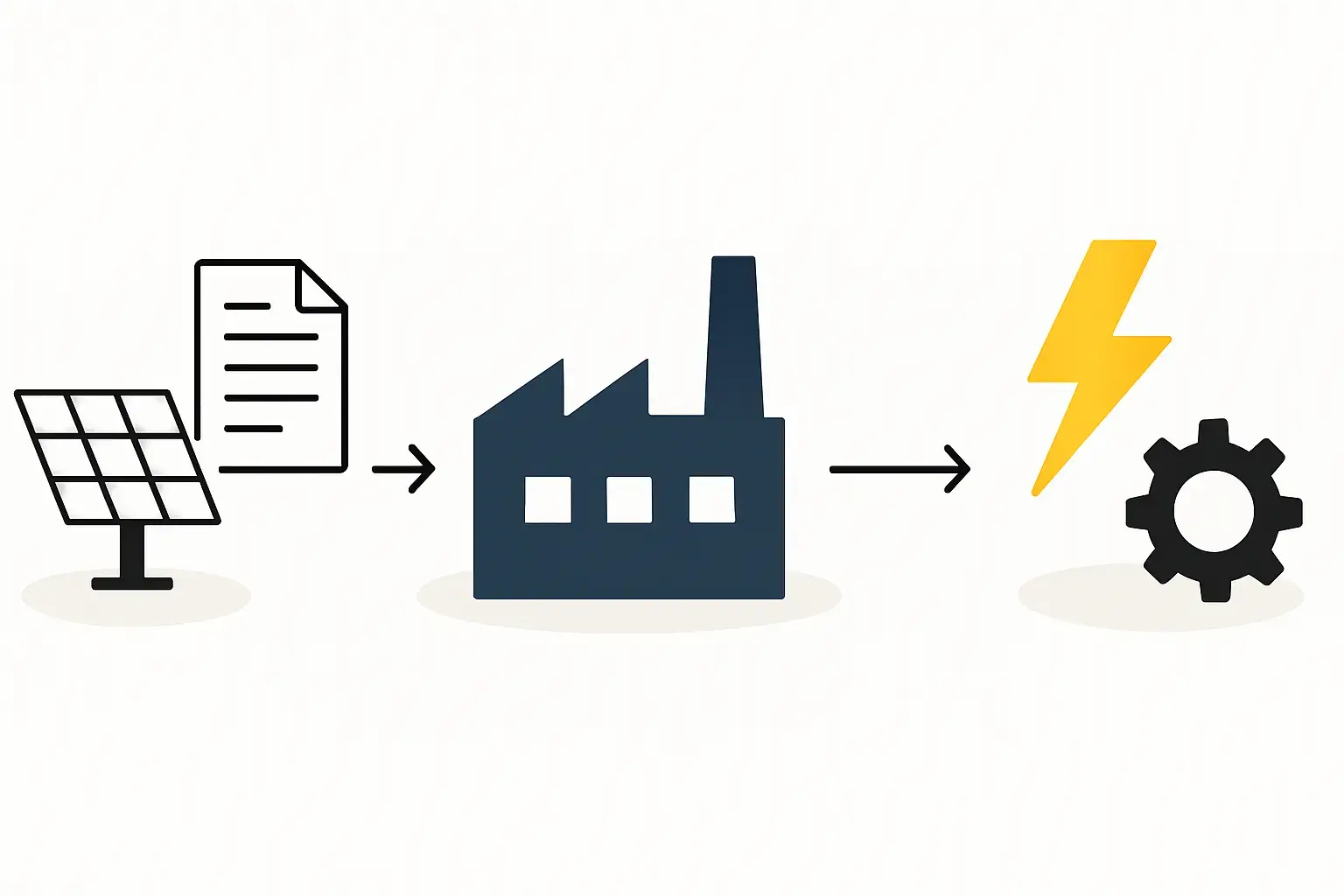
At its core, a utility-scale solar power plant is a piece of industrial infrastructure. It is best understood not as a collection of solar panels, but as a long-term project designed to generate and deliver large volumes of electricity to a national or regional power grid.
Think of it like a traditional power station, a dam, or a major highway. It is a capital-intensive asset that is planned, permitted, built, and operated over a lifecycle of 20 to 30 years or more.
The main components of such a project include:
- Land Use: A significant area of land, often hundreds of hectares, is required. The land must be suitable for construction and legally secured, and it must receive sufficient sunlight.
- Grid Connection: This forms the critical link between the solar plant and the high-voltage transmission network. It involves grid studies, approvals, and the construction of substations and power lines to feed electricity into the grid.
- Main Technical Building Blocks: The plant itself consists of solar modules, mounting structures, inverters that convert electricity from DC to AC, and transformers that increase the voltage for grid injection.
- Long-Term Operation: Once built, the power plant requires long-term operation, monitoring, and maintenance (O&M) to ensure it performs safely and reliably over decades.
This is not a product that can simply be purchased; it is a complex industrial project that must be developed from the ground up.
3. What a Utility-Scale Solar Power Plant Is NOT
Understanding what a utility-scale project is not is just as important, as many costly mistakes originate from false comparisons. This is often the point where expectations begin to drift from reality.
A utility-scale solar power plant is NOT:
- A residential or commercial rooftop system. The scale, regulatory framework, technical requirements, and business model are fundamentally different. A rooftop system serves a single building; a utility-scale plant feeds electricity into the public grid.
- A quick trading or short-term business. These are long-term infrastructure assets designed to operate over decades. They are not structured for fast resale or short-term profit realization.
- A guaranteed profit model. While solar resources are predictable, project profitability is not guaranteed. It depends on electricity market conditions, grid access, operational performance, financing terms, and regulatory stability. Sunlight is free, but converting it into reliable, grid-compliant electricity involves significant cost, responsibility, and risk.
- A purely technical equipment purchase. Procuring solar modules and inverters is only one part of the overall project. A substantial share of the effort lies in engineering, permitting, land rights, contractual structure, and construction management.
Confusing these points leads directly to flawed project planning:
Ready to make big Profits?
The solar Industry is Booming
WE HELP NEWCOMERS to the solar industry start their own solar module production line. Customers can make BIG PROFITS by selling modules and finding investors, without wasting money and time on things they don't need!
- Wrong Timelines: Expecting a project to be completed in months when permitting, grid approval, and construction sequencing can take several years.
- Wrong Budgets: Allocating capital mainly to equipment while underestimating the costs of land acquisition, grid studies, civil works, permitting, and legal support.
- Wrong Risk Expectations: Focusing on equipment prices while overlooking larger risks such as regulatory delays, grid constraints, or contractual weaknesses.
4. Utility-Scale vs. Small-Scale Solar
Experience installing small solar systems does not automatically translate into developing large power plants. For new investors, it is critical to understand these fundamental differences.
Project Complexity:
- Small-Scale: Uses standardized components and relatively simple installation processes.
- Utility-Scale: Requires site-specific engineering, complex logistics, and coordinated management of multiple contractors and interfaces.
Permitting and Regulation:
- Small-Scale: Often involves a limited set of permits from local authorities.
- Utility-Scale: Requires multiple permits and approvals from regional and national bodies, including environmental and land-use approvals. This process is often lengthy and legally complex.
Grid Requirements:
- Small-Scale: Connects to the local low-voltage distribution grid through a standardized process.
- Utility-Scale: Must connect to the high-voltage transmission or sub-transmission grid. This requires detailed technical studies, formal grid capacity allocation, and approval from the grid operator. In many projects, grid connection is the most critical, costly, and time-consuming development step.
Investment Structure:
- Small-Scale: Typically funded through direct purchase or simple bank financing.
- Utility-Scale: Commonly financed through structured project financing, involving equity investors, lenders, and long-term electricity sale agreements such as Power Purchase Agreements (PPAs).
5. The Investor Perspective
For any business professional or investor, viewing a utility-scale solar power plant through the correct lens is essential.
- It is a project-based investment. The value lies not only in physical equipment, but in the complete project structure: land rights, permits, grid access, contracts, and operational capability.
- Success depends on structure, not just sunlight. Even technically strong projects can fail if land rights are insecure, grid agreements are unclear, or permits are incomplete.
- Risk management is more important than optimizatio