The United Kingdom’s commitment to achieving 70GW of solar capacity by 2035 is more than an ambitious environmental target; it signifies a substantial commercial opportunity. For entrepreneurs looking to enter the solar manufacturing sector, this government-led drive creates a powerful financial tailwind. Understanding how to navigate and secure available incentives can significantly de-risk an initial investment and accelerate a new venture’s path to profitability.
Aimed at business professionals new to the solar industry, this guide provides a clear overview of the UK’s financial support landscape. It covers the primary categories of government assistance, the strategic approach for a successful application, and the common challenges to anticipate.
Understanding the UK’s Green Industrial Strategy
Government incentives are not arbitrary grants; they are strategic instruments designed to achieve national policy goals. UK support for solar manufacturing is deeply rooted in three core objectives:
-
Net Zero Emissions: Onshoring the production of photovoltaic (PV) modules is critical to building a resilient supply chain for the country’s decarbonization efforts.
-
Energy Security: Reducing reliance on imported energy hardware is a matter of national strategic importance, a lesson reinforced by recent global supply chain disruptions.
-
Economic Growth and Job Creation: New manufacturing facilities create skilled jobs, stimulate regional economies, and position the UK as a leader in green technology.
An application is far more likely to succeed if it clearly demonstrates how the proposed project aligns with these strategic priorities. The business case must extend beyond its own profitability to articulate its contribution to the UK’s broader industrial and environmental ambitions.
Key Categories of Financial Support for Solar Manufacturers
Financial support for a new solar factory typically falls into three main categories. A comprehensive funding strategy often involves a combination of these sources.
National Grants and Innovation Funds
These programs are generally administered by central government bodies like UK Research and Innovation (UKRI) and its subsidiary, Innovate UK. They are highly competitive and tend to focus on projects that introduce novel technologies or advanced manufacturing processes.
For a new solar manufacturer, this could involve funding to:
- Implement innovative cell or module technologies that promise higher efficiency.
- Develop automated manufacturing processes that reduce costs and improve quality.
- Establish pilot lines for next-generation PV products.
Securing this type of funding requires a clear focus on the project’s research and development aspects.
Regional Development Grants
These incentives are offered by devolved administrations (e.g., Scottish Enterprise, Invest Wales) and Local Enterprise Partnerships (LEPs) in England. Their primary objective is to attract investment and create employment in specific geographic areas, particularly those undergoing economic transition.
Unlike national innovation funds, the criteria for regional grants often focus more on direct economic impact, such as:
- The number of skilled jobs to be created.
- The total capital investment into the region.
- Partnerships with local suppliers and educational institutions.
The location of a new facility can be a critical factor in the level of grant support available. A project situated in a designated enterprise zone or development area may be eligible for more substantial assistance.
Capital Allowances and Tax Relief
This is one of the most direct and broadly available forms of government support. Capital allowances allow businesses to deduct a significant portion of their expenditure on plant and machinery from their taxable profits. Under the UK’s ‘full expensing’ policy, companies can claim a 100% first-year allowance for main rate plant and machinery investments.
For a solar manufacturer, this means the substantial cost of key production line items can be written off against tax in the year of purchase. This directly improves cash flow during the critical start-up phase. Additionally, businesses developing new manufacturing techniques may be eligible for R&D tax credits, further reducing their tax burden. Maximizing this relief requires detailed planning around the acquisition of solar module manufacturing equipment.
The Application Process: A Strategic Approach
Securing government funding requires a meticulous and strategic approach. Grant-awarding bodies receive numerous applications and must deploy public funds responsibly. A professional and comprehensive submission is essential.
Building a Compelling Case
A successful application rests on a robust foundation. Experience from J.v.G. turnkey projects shows that funding bodies look for evidence of thorough planning and long-term viability. The core of this is a comprehensive business plan that clearly articulates the project’s market opportunity, financial projections, and operational strategy. The plan must demonstrate not only what will be built, but how it will operate sustainably.
Common Pitfalls to Avoid
Many promising applications fail due to avoidable errors. Common pitfalls include:
- Incomplete Financial Projections: Failing to provide detailed, multi-year forecasts for revenue, costs, and cash flow.
- Vague Operational Plans: Lack of detail on the factory layout and building requirements or the production process itself.
- Misalignment with Fund Objectives: Submitting a proposal that does not directly address the specific criteria of the grant program.
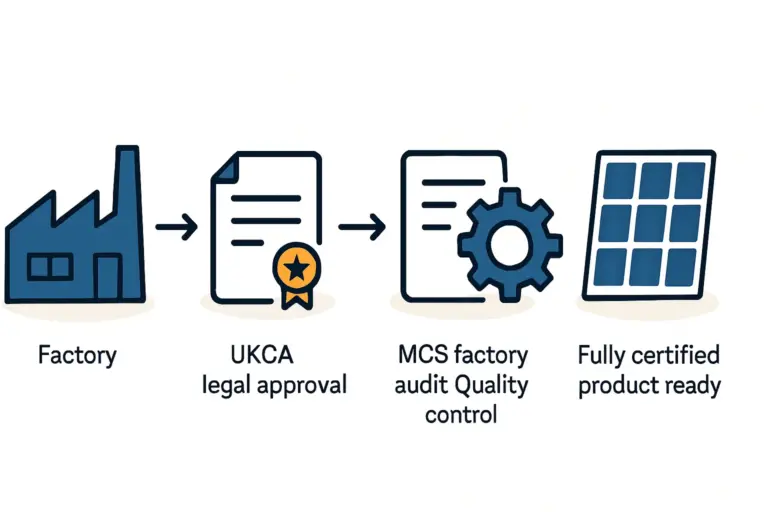
- Underestimating Timelines: Not accounting for the full project timeline, from construction to obtaining necessary certifications like IEC and UL.
Frequently Asked Questions (FAQ)
What is the typical size of a government grant?
This varies widely, from tens of thousands of pounds for small-scale innovation projects to multi-million-pound packages for large manufacturing facilities that create significant employment. The amount is typically a percentage of the total project cost.
How long does the application process take?
For substantial grants, the process can take anywhere from six to twelve months from initial submission to the final decision. It involves multiple stages of review and due diligence.
Do foreign-owned companies qualify for UK grants?
Yes. The primary criteria are the investment and jobs being created within the UK, not the nationality of the parent company. Applicants must typically establish a UK-registered entity to receive the funds.
Is matchmaking with UK partners a requirement?
While not always mandatory, demonstrating collaboration with UK-based research institutions, universities, or supply chain partners can significantly strengthen an application, particularly for innovation-focused funds.
What are the reporting requirements after receiving a grant?
Grant recipients are subject to regular monitoring to ensure they are meeting agreed-upon milestones, such as job creation targets or capital expenditure deadlines. This requires diligent project management and transparent reporting.
Preparing for Success
Securing government incentives is not a simple transaction but a strategic partnership. The available support in the UK offers a significant advantage to well-prepared entrepreneurs looking to establish a solar manufacturing presence. Success hinges on a deep understanding of the government’s objectives, a meticulously prepared business case, and a clear explanation of the project’s long-term economic and environmental value. By approaching the process with diligence and professionalism, business leaders can transform policy ambitions into a tangible financial foundation for their venture.