An entrepreneur planning a solar module factory in a place like Vanuatu faces a critical early decision: where to source raw materials? While the manufacturing giants of Asia are often the default choice, offering vast scale and low unit costs, regional hubs like Australia and New Zealand present a compelling alternative based on logistical efficiency. This isn’t just a matter of preference—it’s a fundamental strategic decision that directly impacts project timelines, capital expenditure, and long-term profitability.
Building a resilient and cost-effective supply chain starts with understanding the unique cost structures for different components. For a factory in the Pacific, the shortest distance isn’t always the most economical path.
The Geographic Dilemma: Proximity vs. Scale
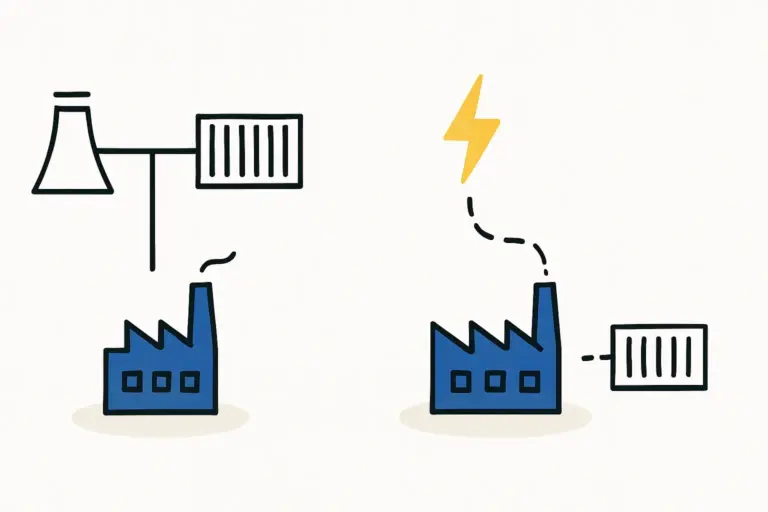
The core of the sourcing challenge lies in balancing two powerful but opposing forces. Asian markets—primarily China, but also Vietnam and South Korea—represent the global center of photovoltaic manufacturing. They offer unparalleled economies of scale, a diverse supplier ecosystem, and highly competitive pricing on technical components.
Australia and New Zealand, in contrast, offer the significant advantage of proximity. Shorter shipping routes mean lower freight costs, faster lead times, and simpler logistics. For a business in Vanuatu, a country reliant on imports and with developing port infrastructure, these regional advantages can be substantial.
Furthermore, regional trade agreements, such as the Pacific Agreement on Closer Economic Relations (PACER) Plus, can also reduce or eliminate tariffs, offering a direct financial benefit that sourcing from Asia may not provide.
A Component-by-Component Analysis
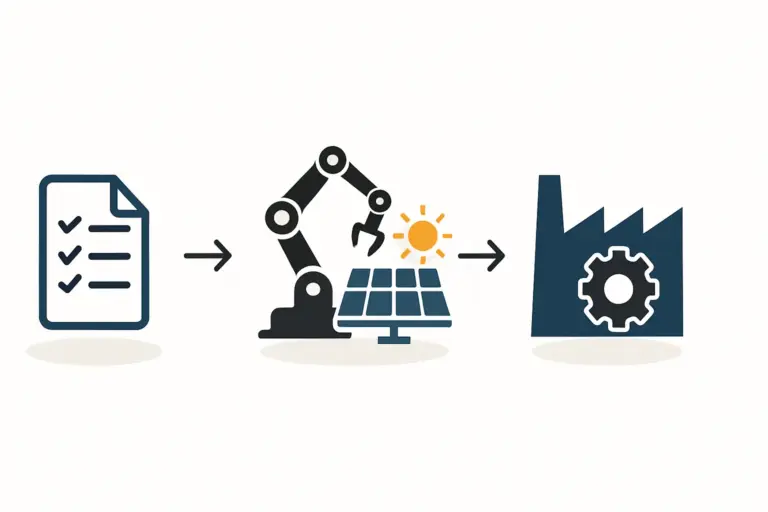
A solar module is an assembly of various parts, each with its own cost, weight, and logistical profile. A sophisticated sourcing strategy moves beyond a one-size-fits-all approach by analyzing each component to find its most logical point of origin. The manufacturing process involves assembling these distinct materials into a final, certified product.
High-Value, Low-Weight Components: The Case for Asia
For the most technologically advanced and lightweight components, Asia remains the undisputed leader.
-
Solar Cells: As the active component that converts sunlight into electricity, solar cells are the heart of the module. Chinese manufacturers produce the vast majority of the world’s supply at a cost-per-watt currently unmatchable by other regions. Because of their high value and low relative weight, the added shipping cost from Asia is a small fraction of the component’s total value—an acceptable trade-off.
-
Junction Boxes, Ribbons, and Encapsulants: Similarly, smaller electrical components like junction boxes, tabbing ribbons, and specialized polymer sheets (EVA/POE) are produced at an immense scale in Asia, making established, large-scale producers the most efficient source.
Heavy, Bulky Components: The Case for Australia & New Zealand
The economic calculation changes dramatically for materials that are heavy, bulky, and relatively low-cost per kilogram.
- Solar Glass: Tempered, low-iron solar glass is the single heaviest component in a standard module. Shipping a 40-foot container of glass from Shanghai to Port Vila, Vanuatu, can be significantly more expensive than shipping the same container from Brisbane, Australia. The cost of freight can easily exceed the cost savings on the material itself.

- Aluminum Frames: Like glass, extruded aluminum frames are also bulky and heavy. Sourcing them from a closer industrial base in Australia can cut shipping costs and reduce lead times from weeks to just days. This allows for more flexible inventory management and reduces the working capital tied up in transit.
The Hybrid Sourcing Model: A Strategic Solution
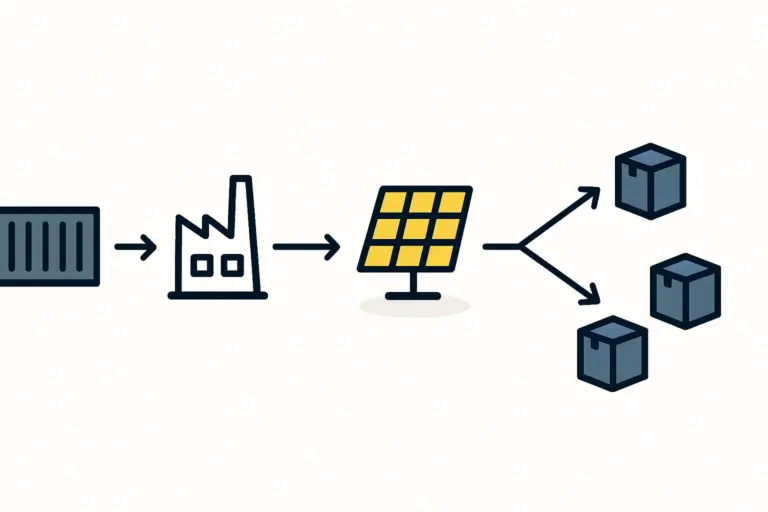
The most effective approach for a solar factory in the Pacific isn’t an ‘either/or’ choice but a ‘both/and’ strategy. A hybrid sourcing model intelligently leverages the strengths of both regions:
-
Source high-tech, low-weight components (cells, junction boxes) from leading Asian suppliers.
-
Source heavy, bulky materials (glass, frames) from regional suppliers in Australia or New Zealand.
This blended strategy optimizes for what is known as ‘landed cost’—the total price of a product once it has arrived at the factory door, including the unit price, shipping, insurance, and import duties.
Experience from J.v.G. Technology GmbH turnkey projects shows this model is highly effective. One client in a Pacific Island nation initially planned to source all materials from China. After a detailed logistical analysis, they shifted to sourcing glass and frames from Australia. The move cut their shipping expenditure on these items by nearly 40% and shortened their supply cycle, improving cash flow and operational resilience.
This approach requires robust supplier vetting and diligent quality control for all vendors, regardless of location, to ensure every component meets the required technical specifications.
Practical Considerations for Implementation
Executing a hybrid sourcing strategy requires careful planning. For a facility in Vanuatu, factors such as customs clearance times, which typically range from three to seven days, must be built into production schedules.
Communication with suppliers in Australia and New Zealand is often simpler due to overlapping time zones, which helps accelerate problem-solving. Coordinating with Asian suppliers, in contrast, may require adjusting work schedules to accommodate different business hours.
Ultimately, designing the supply chain is an integral part of planning a turnkey solar production line. It’s a foundational element that influences factory layout, warehousing requirements, and financial projections from day one.

Frequently Asked Questions (FAQ)
Why not source all materials locally in a country like Vanuatu?
Most Pacific Island nations lack the industrial base required for specialized manufacturing like solar glass tempering, aluminum extrusion, or solar cell production, so importing these key components is a necessity.
Are Australian-made components more expensive than Asian ones?
The unit cost (the price per item at the factory of origin) for some components may be higher in Australia. However, for heavy items, the significantly lower shipping and logistics costs often mean a lower final landed cost compared to sourcing from Asia.
How do trade agreements like PACER Plus provide a benefit?
These agreements are designed to facilitate trade between Pacific Island nations and Australia/New Zealand. They often lead to reduced or zero import tariffs on qualifying goods, providing a direct cost saving that may not be available for goods imported from outside the agreement zone.
What is the biggest hidden cost in sourcing for a solar factory?
For new entrepreneurs, the most frequently underestimated expense is ocean freight for bulky materials like glass and frames. This significant operational cost can erode profits if not managed carefully through strategic sourcing.
Building a Resilient Supply Chain
For an entrepreneur entering the solar manufacturing sector in the Pacific, success depends on meticulous planning. The decision of where to source raw materials isn’t a minor detail but a cornerstone of the business model.
A hybrid strategy, leveraging Asia’s dominance in high-tech components and Australia’s and New Zealand’s logistical advantages for bulk materials, offers a balanced and financially sound path forward. By focusing on the total landed cost rather than just the supplier’s unit price, a new factory can establish a competitive, resilient, and profitable operation from the start.