
Reviewed October 2026.
Quick answer: A PV module laminator removes air from the module stack and applies a controlled temperature, vacuum and pressure profile so the encapsulant bonds the glass, cells and rear layer. The correct recipe comes from the encapsulant supplier and must be validated for the exact module design. Do not select a laminator on headline cycle time alone.
For a factory decision, compare usable chamber area, recipe control, temperature uniformity, vacuum stability, membrane and seal service, loading concept, changeover time, local spare parts and the measured yield of the complete line. Qualification still depends on the finished module passing the relevant design and safety program, including IEC 61215-1:2021 and IEC 61730-1:2023.
What is a Solar Panel Laminator?
A solar panel laminator is a specialized machine that applies heat and pressure to bond the various layers of a photovoltaic module together. It ensures the solar cells are hermetically sealed within the protective layers of the solar module, creating a strong, unified component.
The laminator is crucial for ensuring a solar panel’s durability and protection from the elements. It encapsulates the solar cells between a top layer of glass and a polymer back sheet, typically using an adhesive like ethylene-vinyl acetate (EVA).
Ultimately, a PV laminator is essential for guaranteeing the final product’s quality, performance, and longevity.
These layers typically include:
• Tempered glass: Forms the protective front layer of the solar panel.
• Encapsulant (usually Ethylene Vinyl Acetate – EVA): Fills gaps and shields cells from environmental factors like dust.
• Solar cells: The core component that converts sunlight into electricity.
• Back sheet: Seals the back of the module, providing additional protection.
Key Component of Solar Panel Laminator
Solar panel laminators use a combination of heat and pressure to fuse a panel’s layers into a durable, weather-resistant unit. This process relies on several essential components.
Heating System
The heating system must deliver the encapsulant supplier’s validated temperature profile uniformly across the usable chamber area. Record platen temperature maps, warm-up behaviour, sensor calibration and the module-stack temperature during acceptance. A single generic temperature range is not a safe recipe because EVA, POE and other encapsulants use different cure or bonding requirements.
Vacuum Chamber
The vacuum chamber plays an essential role by removing air bubbles during the encapsulation process. This step is vital for ensuring the encapsulant adheres properly to the cells. Without it, trapped air and contaminants could reduce the panel’s efficiency and lifespan. By evacuating air and debris, the chamber allows for a smooth, flawless application of the encapsulation.
Pressure and membrane system
Vacuum laminators normally control pressure through the chamber and a flexible membrane rather than a pair of pressure rollers. The machine must apply the validated recipe uniformly across the usable area without shifting cells, trapping bubbles or damaging the stack. Ask the supplier for temperature maps, vacuum curves, membrane life, seal replacement steps and evidence from the intended module format.
Cooling System
Cooling requirements depend on the laminator design, encapsulant and downstream handling. Some systems cool the module outside the lamination chamber. Ask the supplier to show where cooling occurs, how module temperature is measured before handling and whether the cooling step limits line throughput.
Control System
The control system manages the lamination chamber’s pressure, temperature, and vacuum levels. It also governs the process timing, ensuring each step is executed consistently. Modern control systems allow for precise adjustments and monitoring, which is crucial for maintaining a high-quality, reliable lamination process.
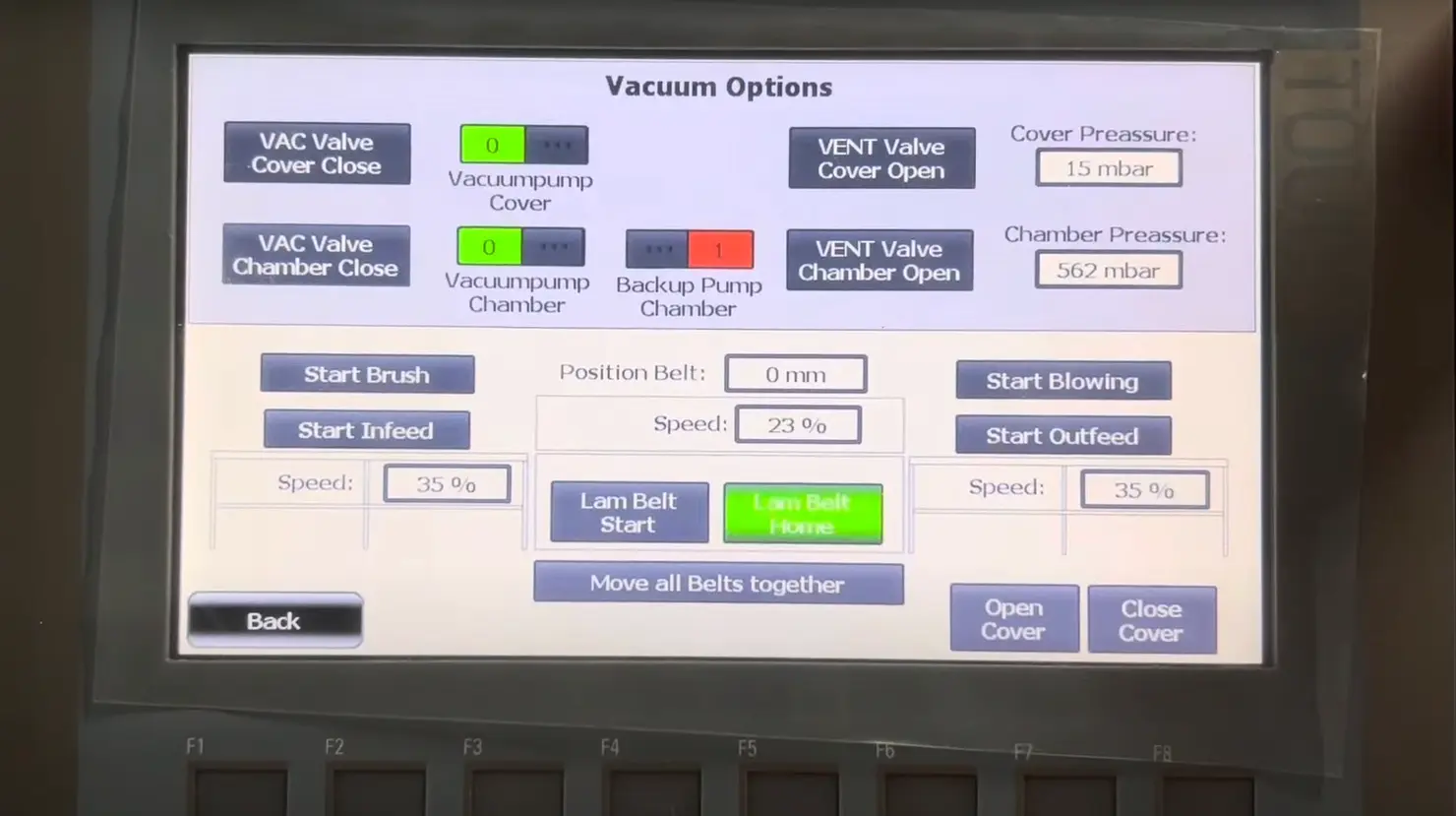
control panel of a solar module laminator
Types of Solar Panel Laminators
Lamination machines primarily fall into two categories: semi-automatic and fully automatic. Each type offers distinct features, advantages, and drawbacks:
| Feature | Semi-Automatic PV Laminators | Fully Automatic PV Laminators |
|---|---|---|
| Automation Level | Partial automation; some tasks automated, but human intervention required for others | High level of automation; minimal human intervention required |
| Loading/Unloading | Manual loading and unloading of components | Fully automated robotic handling for loading and unloading |
| Control System | Intermediate control systems; some automated controls | Advanced computer control systems for precise management of temperature, pressure, and vacuum |
| Temperature Regulation | Semi-automated temperature control | Fully automated temperature regulation |
| Pressure Application | Semi-automated pressure application | Fully automated pressure application |
| Vacuum System | Semi-automated vacuum system | Advanced vacuum system with automated control |
| Production Volume | Suitable for medium-sized production environments | Ideal for large-scale industrial production |
| Efficiency | Moderate efficiency; balance between manual and automated processes | High efficiency due to full automation |
| Quality Consistency | Improved quality consistency; some automation ensures better control | High quality consistency; automated systems ensure uniformity |
| Initial Investment | Moderate initial investment | High initial investment |
| Operational Costs | Moderate operational costs | Lower operational costs in the long term due to reduced labor and increased efficiency |
| Maintenance Requirements | Moderate maintenance requirements | Higher maintenance requirements due to complex automated systems |
| Best Suited For | Medium-sized production environments aiming for a balance between cost and efficiency | Large-scale industrial production where high output volume and consistent quality are required |
Semi-Automatic PV Laminators
Semi-automatic solar panel laminators combine manual and automated processes. Operators manually load the solar cells, encapsulant materials, and cover sheets into the machine. While the machine automates tasks like temperature control and pressure application, it still requires human intervention for loading and unloading components.
- Pros:
- Balance between automation and manual intervention.
- Suitable for medium-sized production environments.
- Improved efficiency over manual laminators.
- Moderate initial investment.
- Cons:
- Requires human intervention.
- Not as fast or efficient as fully automatic laminators.
- Moderate operational and maintenance costs.
Fully Automatic PV Laminators
Fully automatic solar laminators represent the pinnacle of efficiency and automation in solar module manufacturing. These machines use robotic handling technologies for loading and unloading modules, and integrated computer control systems manage the entire lamination process, including temperature regulation and pressure application.
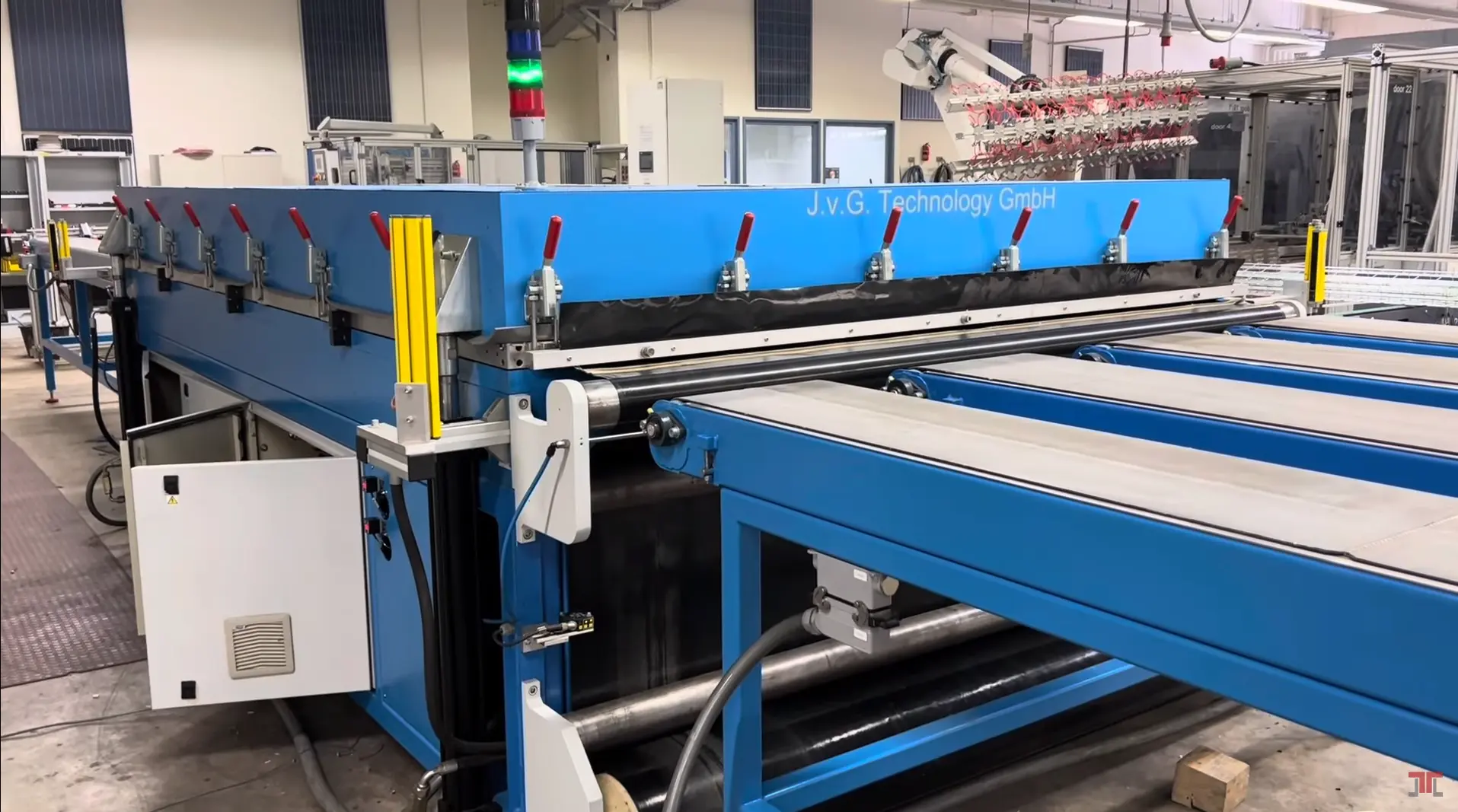
large full auto photovoltaic module laminator
- Pros:
- High degree of automation.
- Consistent quality.
- High productivity and throughput.
- Lower operational costs in the long term.
- Cons:
- High initial investment.
- Requires significant setup and maintenance.
- Higher maintenance requirements due to complex automated systems.
Detailed Solar Module Lamination Process
Solar module lamination is a critical procedure in which solar cells are encased between protective, weather-resistant materials. This process is vital for shielding the sensitive components from environmental factors like moisture, dust, and physical stress. The entire lamination process within a solar laminator can be broken down into seven key steps:
1. Assembly: The interconnected solar cells are laid out on a back sheet. The encapsulant and tempered glass are then placed on top to complete the assembly.
2. Loading: The entire assembly is then carefully loaded into the laminator.
3. Vacuuming: Air is evacuated from the chamber to remove any pockets that could interfere with panel performance.
4. Heating and cure: The machine follows the temperature and time profile validated for the chosen encapsulant and module stack. Record actual stack temperature rather than relying only on the platen setpoint.
5. Pressure phase: Chamber pressure and membrane action are controlled so the stack bonds without cell displacement, bubbles or edge defects.
6. Cooling and handling: The module is cooled or transferred according to the validated process before trimming, framing and inspection.
7. Unloading: Finally, the completed solar panel is extracted from the laminator.
This video shows a solar laminator from J. v. G. technology GmbH laminating a solar panel.
Benefits of Photovoltaic Module Lamination
The lamination process in photovoltaic (PV) module manufacturing offers several significant benefits that enhance the overall performance, quality, and cost-effectiveness of solar panels. Here are the key advantages:

1. Process repeatability
Good lamination does not create a universal efficiency gain. It must produce the specified bond and insulation result repeatedly for the exact glass, cell, encapsulant, rear layer and module format. Verify the recipe with material-supplier data, temperature mapping, vacuum curves and samples from the intended bill of materials.
2. Consistent Quality
The lamination process is highly regulated and automated, which helps maintain consistent quality levels in manufactured solar panels. According to the International Energy Agency (IEA), advanced lamination techniques contribute to the production of defect-free panels, which is crucial for maintaining performance consistency over the panel’s lifespan.
This controlled environment ensures that each panel meets industry standards. For instance, the International Electrotechnical Commission (IEC) standards (such as IEC 61215 and IEC 61730) require rigorous testing for durability and performance, which high-quality lamination helps achieve.
3. Cost of quality
Compare measured yield, membrane and seal consumption, energy use per accepted module, maintenance time, changeover time and the cost of scrap or rework. Use supplier quotations and your own production assumptions. A generic percentage cannot replace a factory-specific calculation.
Why is Lamination Important?
Lamination serves several critical purposes in solar panel production:
1. Protection: The encapsulant layer safeguards the delicate solar cells from moisture, dust, and other environmental elements that could degrade their performance or cause failure.
2. Structural integrity: The lamination process creates a rigid and robust structure for the solar panel, ensuring it can withstand wind, hail, and other physical stresses.
3. Electrical insulation: The encapsulant acts as an electrical insulator, preventing short circuits and ensuring safe operation.
4. Optical and electrical result: Lamination should avoid bubbles, displacement, contamination and other agreed defects. It does not create a universal efficiency increase. Verify electrical output and insulation on the finished module against the approved specification.
Choosing the Right Laminator for Your Solar Manufacturing
Selecting the right laminator is a critical decision for ensuring smooth, cost-effective solar panel production. Here are the key factors to consider:
1. Production Volume
Do not infer line output from the words “fully automatic”. Calculate throughput from usable chamber area, validated recipe time, loading and unloading, cooling, changeover, maintenance and the bottleneck of the complete line. Ask the supplier to demonstrate the calculation with your module format.
2. Encapsulant Material
The type of encapsulant material used is a crucial consideration, as the laminator must be compatible with it. Common materials include Ethylene Vinyl Acetate (EVA), Polyvinyl Butyral (PVB), and Thermoplastic Polyolefin (TPO). While EVA is the most widely used due to its strong adhesion and durability, newer materials like TPO are gaining popularity for their superior UV resistance and lower processing temperatures, which can lead to energy savings.
3. Energy Efficiency
Record electrical and thermal energy per accepted module under the same recipe and production load. Compare standby demand, warm-up, chamber utilization and cooling. Automation level alone does not determine energy use.
4. Budget
Budget is a primary consideration when purchasing a laminator. Fully automatic models have a higher initial cost due to their advanced technology and high-volume capabilities. In contrast, semi-automatic laminators are more affordable upfront and offer a balanced mix of automated and manual features, making them a suitable choice for medium-sized operations.
Additional Considerations for Solar Laminator Users
Beyond the basic types, several other aspects are crucial to consider:
1. Automation level: Laminators can range from manual to fully automated, with varying degrees of operator involvement.
2. Safety Features: Modern laminators incorporate various safety features to protect operators. These include emergency shut-off buttons, temperature and pressure monitoring systems, and fire suppression mechanisms.
3. Maintenance: Regular maintenance is essential for ensuring a laminator’s optimal performance and longevity. This includes cleaning heating elements, replacing worn seals, and calibrating control systems.
Factory Acceptance Test for a PV Laminator
Run the acceptance test with the intended module stack, not an easy reference sample. Freeze the recipe and record chamber position, temperature map, vacuum and pressure curves, cycle time, loading time, alarms and operator interventions. Inspect the output for bubbles, displacement, edge condition and other agreed defects. Then repeat the run across enough cycles to show that the result is stable.
- Before the test: approve the bill of materials, module drawing, recipe range, instruments and defect criteria.
- During the test: record every cycle, interruption, manual correction and failed module.
- After the test: compare accepted output with the promised line balance and document spare parts, calibration, training and maintenance handover.
Acceptance of the laminator does not replace qualification of the finished module. Material or design changes may require re-evaluation under the applicable IEC program. Review the upstream stringer process and downstream EL inspection as part of the same line decision.
Conclusion
A laminator is suitable only when its usable area, recipe control, service concept and measured yield fit the complete production line. Freeze the module and encapsulant design, run your material through the proposed machine, and make acceptance criteria part of the quotation. Then compare the upstream stringer process and the downstream framing and inspection steps before deciding.
Free PDF: Learn how a PV module laminator enhances solar panel quality.