Kyrgyzstan Solar Report

Discover comprehensive insights into the statistics, market trends, and growth potential surrounding the solar panel manufacturing industry in Kyrgyzstan

  1. Climate Top. (2024). Bishkek climate by month: A year-round guide. Retrieved November 8, 2024, from https://weather-and-climate.com/average-monthly-Rainfall-Temperature-Sunshine,bishkek-kg,Kyrgyzstan
  2. ProfileSolar.com. (2024). Solar PV analysis of Bishkek, Kyrgyzstan. Retrieved November 8, 2024, from https://profilesolar.com/locations/Kyrgyzstan/Bishkek/
  3. GlobalPetrolPrices.com. (2024). Kyrgyzstan electricity prices, March 2024. Retrieved November 8, 2024, from https://www.globalpetrolprices.com/Kyrgyzstan/electricity_prices/
  4. International Energy Agency (IEA). (2024). Executive summary – Kyrgyzstan 2022 – Analysis. Retrieved November 8, 2024, from https://www.iea.org/reports/kyrgyzstan-2022/executive-summary
  5. International Renewable Energy Agency (IRENA). (2024). Renewable energy statistics 2024. Retrieved November 9, 2024, from https://www.irena.org/-/media/Files/IRENA/Agency/Publication/2024/Jul/IRENA_Renewable_Energy_Statistics_2024.pdf
  6. PVKnowHow.com. (2024). Solar energy project in Kyrgyzstan advances with IFC. Retrieved November 8, 2024, from https://www.pvknowhow.com/solar-energy-project-in-kyrgyzstan/
  7. United Nations Development Programme (UNDP). (2012). Renewable energy snapshot: Kyrgyzstan. Retrieved November 8, 2024, from https://www.undp.org/sites/g/files/zskgke326/files/migration/eurasia/Kyrgyzstan.pdf
  8. International Energy Agency (IEA). (2024). Kyrgyzstan – Countries & regions. Retrieved November 8, 2024, from https://www.iea.org/countries/kyrgyzstan/electricity
  9. 24.KG. (2024). Power outages suspended in Kyrgyzstan. Retrieved November 9, 2024, from https://24.kg/english/288621_Power_outages_suspended_in_Kyrgyzstan/
  10. Journal NEO. (2024). Renewables in Kyrgyzstan: The green future of Central Asia. Retrieved November 9, 2024, from https://journal-neo.su/2024/06/03/renewables-in-kyrgyzstan-the-green-future-of-central-asia/
  11. International Renewable Energy Agency (IRENA). (2023). Renewable readiness assessment: Kyrgyz Republic 2022. Retrieved November 8, 2024, from https://www.irena.org/-/media/Files/IRENA/Agency/Publication/2022/Dec/IRENA_RRA_Kyrgyz_Republic_2022.pdf
  12. World Salaries. (2024). Average solar photovoltaic installer salary in Kyrgyzstan. Retrieved November 9, 2024, from https://worldsalaries.com/average-solar-photovoltaic-installer-salary-in-kyrgyzstan/
  13. Worldometer. (2024). Kyrgyzstan population (2024). Retrieved November 9, 2024, from https://www.worldometers.info/world-population/kyrgyzstan-population/
  14. Eurasianet. (2024). Shortage keeping warehousing costs high in Central Asia. Retrieved November 8, 2024, from https://eurasianet.org/shortage-keeping-warehousing-costs-high-in-central-asia
  15. Coworker.com. (2024). See all coworking spaces in Bishkek, Kyrgyzstan. Retrieved November 8, 2024, from https://www.coworker.com/kyrgyzstan/bishkek?view=list
  16. International Energy Agency (IEA). (2024). Kyrgyzstan’s power system security policy context. Retrieved November 8, 2024, from https://www.iea.org/reports/strengthening-power-system-security-in-kyrgyzstan-a-roadmap/kyrgyzstan-s-power-system-security-policy-context
  17. Trading Economics. (2024). Kyrgyzstan – Access to electricity (% of population). Retrieved November 9, 2024, from https://tradingeconomics.com/kyrgyzstan/access-to-electricity-percent-of-population-wb-data.html
  18. Observatory of Economic Complexity (OEC). (2024). Kyrgyzstan (KGZ) exports, imports, and trade partners. Retrieved November 9, 2024, from https://oec.world/en/profile/country/kgz
  19. United Nations Economic Commission for Europe (UNECE). (2019). Draft national sustainable energy action plan of the Kyrgyz Republic. Retrieved November 9, 2024, from https://unece.org/fileadmin/DAM/project-monitoring/unda/16_17X/E2_A2.3/NSEAP_Kyrgyzstan_ENG.pdf
  20. PV Magazine. (2024). Eurasian Development Bank to finance 300 MW of solar in Kyrgyzstan. Retrieved November 8, 2024, from https://www.pv-magazine.com/2024/05/27/eurasian-development-bank-to-finance-300-mw-of-solar-in-kyrgyzstan/
  21. Power Technology. (2024). Power plant profile: Masdar Kyrgyzstan Solar PV Park, Kyrgyzstan. Retrieved November 8, 2024, from https://www.power-technology.com/data-insights/power-plant-profile-masdar-kyrgyzstan-solar-pv-park-kyrgyzstan/
  22. International Finance Corporation (IFC). (2024). Disclosure – Kyrgyz Solar 2. Retrieved November 8, 2024, from https://disclosures.ifc.org/project-detail/AS/608895/kyrgyz-solar-2

Key points

  • All figures have been converted into USD

Yearly sunshine (sun hours per year)

On average, there are 2,550 hours of sunlight per year (out of a possible 4,383). 1

Read less

Figure 01 Average daily Sunshine Hours in Bishkek, Kargyzstan

kWh per kWp installed

The average annual yield of a utility-scale solar energy installation in the Kargyzstan is 1,767 kWh/kWp per year.2

Read more


Average cost per kWh from utility company

The residential electricity price in Kyrgyzstan is USD 0.013 per kWh.3

Read more


Reliability of electrical power supply grid

The aging and inefficient network results in significant losses. Furthermore, hydro-based electricity production is highly vulnerable to seasonal and weather variations, making electricity supply less reliable, particularly during winter months when water inflows are reduced, and demand is high.4

Read less


Detailed Information

  • All figures have been converted into USD
  • Total solar panel production capacity (installed)

    As of 2023, Kyrgyzstan has no installed solar power capacity, with a total of 0 MW.5

    Total solar panel production capacity (projected)

    Kyrgyzstan’s future target for solar energy development is part of its broader Energy Sector Development Strategy, which sets an ambitious goal of achieving 1,500 MW of renewable energy capacity by 2035.6

    Average costs of various electricity generation sources (coal, natural gas, solar, etc)

    Current electricity generation costs are not given but;

    • A 2011 UNDP study estimated the generation costs of renewable energy at $0.19 per kWh for small hydropower plants, $0.20 per kWh for wind and biomass, and $0.32 per kWh for solar power.7

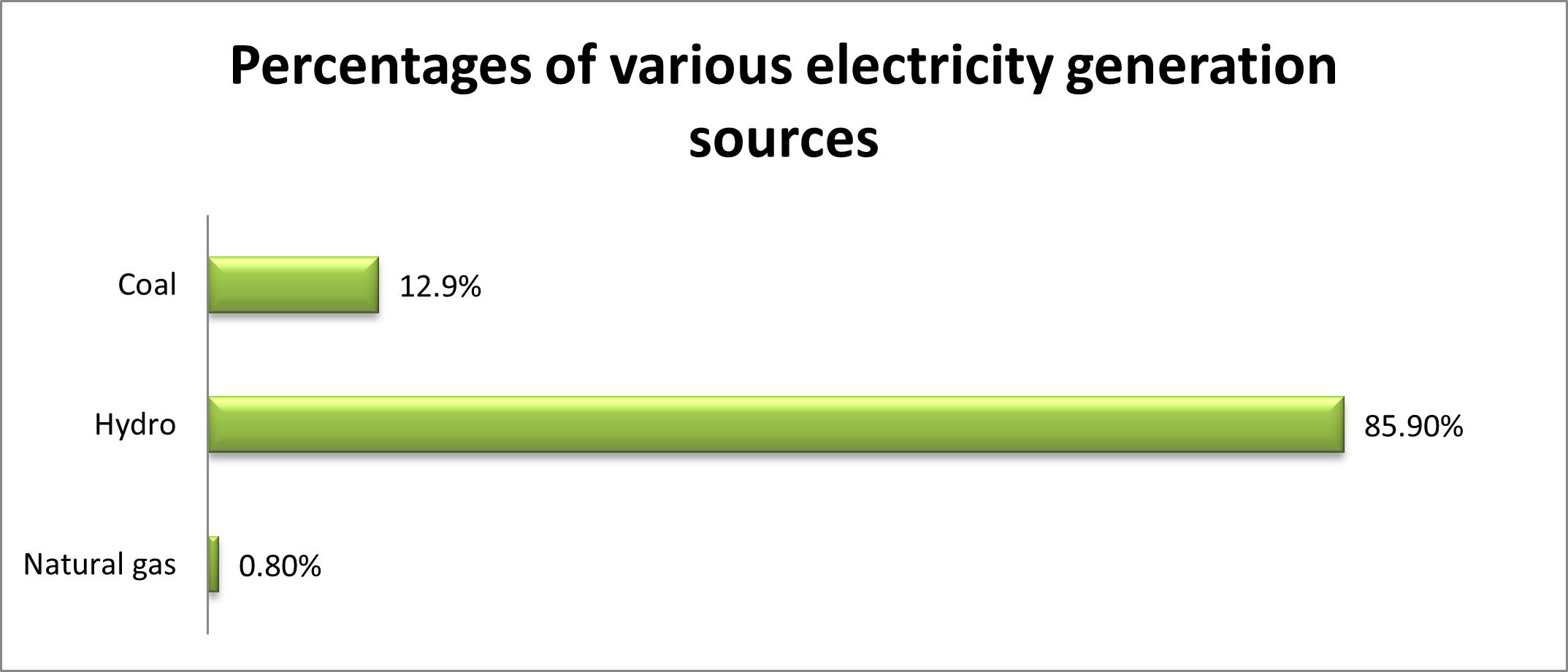
    Percentages of various electricity generation sources (coal, natural gas, solar, etc)

    8

    Average daily availability of electricity from the national grid (measured in hours)

    Exact number of hours not available but following information is available,9

    • The average daily availability of electricity in Kyrgyzstan is generally reliable, with most areas experiencing consistent supply. On March 8, 2024, electricity consumption decreased to 61,117 million kilowatt-hours due to warmer weather, prompting the suspension of short-term regulatory measures.
    • However, planned outages, such as those scheduled in Bishkek and Chuy Region on June 27, indicate that electricity can be temporarily unavailable for up to 9 hours in some areas during maintenance or peak demand.

    Number of residential solar panel installations

    Exact number is not given but;6

    Current installation  

    • Currently, the adoption of residential solar panel installations in Kyrgyzstan remains limited, with most solar energy initiatives focused on utility-scale projects and pilot installations.
    • Few households have adopted rooftop solar systems due to limited awareness, financial constraints, and a lack of incentives for residential installations.

    Projected installations  

    • By 2035, residential solar energy contributes to around 10-15% of the total 1,500 MW target, this could translate into approximately 150,000 to 225,000 households adopting solar power systems.

    Total number of solar farms (installed and projected)

    Installed Solar Farms 61122

    According to available information, Kyrgyzstan currently has a very limited number of operational solar farms i.e., only one, with most renewable energy focused on hydropower.

     Projected Solar Farms 10

    As of May 2024, the country is working on the construction of 9 solar power plants across various regions.

    Off-grid market demand for solar panels (current and projected)

    11

    Current Off-Grid Market Demand in Kyrgyzstan:

    • The current off-grid solar market demand in Kyrgyzstan is modest and primarily driven by small enterprises, households, and pilot projects aimed at improving energy access in rural areas.
    • These include initiatives like solar installations in health facilities, kindergartens, and schools. For example, solar systems ranging from 1.5 kW to 3 kW have been implemented in 19 rural health facilities under UN-supported projects to ensure reliable medical services.
    • Commercial installations of off-grid PV systems, solar water heaters, and biogas plants occur at a small scale, with around 10-20 systems installed annually. Demand is supported by international organizations like UNDP, which has facilitated renewable energy projects for community infrastructure, such as heat pumps and solar water heaters in educational and health institutions.

    Future Off-Grid Market Demand in Kyrgyzstan:

    • The future off-grid solar market in Kyrgyzstan is expected to grow significantly as the country aims to diversify its energy mix and address rural energy access challenges.
    • A key driver is the planned construction of a 1,000 MW solar power plant in Issyk-Kul, supported by Chinese investment, signaling increasing interest in large-scale solar initiatives.
    • Pilot solar district heating projects and community-focused renewable energy systems are also paving the way for expanded adoption. Government-backed projects, combined with international donor efforts, are expected to stimulate market growth, creating opportunities for deploying solar solutions in underserved areas.
    • As technology becomes more affordable and demand for sustainable energy rises, off-grid solar systems are likely to play a critical role in supporting Kyrgyzstan’s energy transition and rural development goals.

    On-grid market demand for solar panels (current and projected)

    11

    Current On-Grid Solar Market Demand in Kyrgyzstan:

    • The on-grid solar market in Kyrgyzstan is still in its infancy, with no utility-scale solar PV installations currently operational.
    • However, declining costs of renewable energy technologies have made solar PV increasingly competitive, with the global average levelized cost of energy (LCOE) for utility-scale solar PV dropping to 0.057 USD/kWh by 2020.
    • This cost advantage, coupled with the country’s abundant solar potential, especially in the Osh and Issyk-Kul regions, highlights significant opportunities for grid-connected solar projects.
    • Growing energy demand, which has risen by 75% since 2010, and reliance on expensive energy imports underscore the need for clean and sustainable solutions.
    • The modular nature and short construction timelines of solar PV systems further bolster their appeal for addressing rising domestic demand efficiently and sustainably.

    Future On-Grid Solar Market Demand in Kyrgyzstan:

    • The future on-grid solar market in Kyrgyzstan is poised for significant growth, driven by plans for large-scale installations, including a proposed 1,000 MW solar power plant in the Issyk-Kul region.
    • Government strategies to diversify the energy mix and reduce reliance on imported fossil fuels will likely accelerate the development of utility-scale solar projects.
    • Renewable energy’s competitiveness relative to coal and gas imports strengthens the case for solar PV integration into the national grid. As technology costs continue to decline and funding opportunities increase, on-grid solar projects are expected to play a critical role in meeting Kyrgyzstan’s growing energy needs while enhancing energy security and sustainability.
    • The seasonal variability in hydropower generation, particularly during winter, also creates a compelling case for solar PV as a complementary energy source to stabilize the grid.

    Average monthly income of workers in solar industry (labor cost)

    A Solar Photovoltaic Installer working in Kyrgyzstan typically earns approximately $1,670 USD/yr. The salary can range from the lowest average of about $880 USD/yr to the highest average $2,500 USD/yr.12

    Population of the country

    The current population of Kyrgyzstan is 7,229,885 13

    Average overhead costs of solar panel production (with a brief breakdown)

    Estimate for Factory Rent

    Monthly Average Warehouse Rental Cost 14

    The average warehouse rent in Kyrgyzstan is approximately $114 per square meter per year

    Key Components of Administrative Costs

    Salaries and Wages: 12

    A Solar Photovoltaic Installer working in Kyrgyzstan typically earns approximately $1,670 USD/yr. The salary can range from the lowest average of about $880 USD/yr to the highest average $2,500 USD/yr

    Commercial Electricity Prices 3

    The electricity price for businesses is USD 0.037 per kWh.

    Monthly Rents for Office Space 15

    In Bishkek, coworking space costs range from approximately $70 to $140 per month, while private office rentals range between $240 and $400 per month, depending on location and amenities.

    A summary of the energy infrastructure

    Electricity Generation 16

    • Kyrgyzstan’s electricity generation is predominantly from hydropower, which accounts for around 90% of its total output, with seven large and 12 smaller hydropower plants located on the Naryn River. The country plans to expand its hydropower capacity by 4.6 GW.
    • Fossil fuels, mainly coal, contribute a small portion, while net imports make up nearly 15% of the electricity generation

     Transmission & Distribution 11

    • The power transmission and distribution system in Kyrgyzstan faces significant challenges due to aging infrastructure, with about 45% of generation capacity and 40% of underground cables in urgent need of replacement.
    • This has led to reliability issues, particularly in winter when demand exceeds capacity. Financial constraints caused by low retail tariffs, which are among the world’s lowest, result in underinvestment and maintenance neglect.
    • While reforms have aimed to address these issues, subsidies for small residential consumers and affordability concerns have limited progress.

     Energy Access 17

    • Recent data shows that Kyrgyzstan has near-universal electricity access, with approximately 99.7% of the population connected, positioning it as a country with high energy access.

    Energy Exports 18

    • Kyrgyzstan’s major exports include refined petroleum ($145M), gold ($139M), precious metal ore ($135M), dried legumes ($100M), and scrap copper ($87.7M). Key export destinations are Russia ($1.07B), Kazakhstan ($445M), Uzbekistan ($240M), Turkey ($146M), and the United Arab Emirates ($105M).

    Some of the government regulations surrounding solar panel production

    In Kyrgyzstan, solar energy is increasingly promoted as a means to enhance sustainability and diversify the energy mix. However, the regulatory framework for solar remains underdeveloped, with significant gaps in legislation and enforcement. Below are the key regulations in the country:19

    Sustainable Development Strategy (SDS) and National Development Program (NDP)

    • The government’s long-term Sustainable Development Strategy for 2018-2040 and medium-term National Development Program until 2026 aim to increase the share of renewable energy, including solar, to 10% of the energy mix.
    • These policies promote solar as a complementary energy source to reduce dependence on hydro and hydrocarbon-based power, which are susceptible to seasonal fluctuations.

    Law “On Energy Industry” (1996)

    • Establishes the regulatory framework for the fuel and energy complex, focusing on economic efficiency and the protection of consumer and manufacturer interests.

    Law “On Electrical Energy Industry” (1997)

    • Ensures reliable, safe, and continuous energy supply, while promoting private sector involvement and energy saving. It also sets penalties for energy theft.

    Law “On Renewable Energy Sources” (2008)

    • Promotes the development of renewable energy sources, including solar, and introduces financial incentives such as customs duty exemptions for RES plants and equipment.
    • Solar energy projects are incentivized with a tariff multiplier of 6.0 for solar energy.

    Key Provisions for Solar Energy

    • Solar energy producers are entitled to a tariff multiplier of 6.0, ensuring returns on investment within a maximum payback period of 8 years.
    • Energy distribution companies must purchase all electricity generated by RES plants, including solar, that is not consumed by the producer.

    Relevant Regulations and Amendments

    • Resolution No. 476 (2009)
    • Governs the construction, acceptance, and grid connection of RES plants, including solar energy installations.

    Law “On Energy Efficiency of Buildings” (2011)

    • Promotes energy-efficient construction practices, which can support the integration of solar energy systems in buildings.

    Government initiatives in solar panel production (includes investments and subsidies)

    Kyrgyzstan has undertaken several initiatives to promote solar energy and diversify its energy mix. These actions include investments, partnerships, and subsidies aimed at increasing solar power adoption across the country. Below are key government initiatives and programs driving the transition to solar energy, along with specific figures:1911

    Small-Scale Solar Subsidies

    • The Kyrgyz government provides subsidies for small-scale solar installations, particularly for households and businesses in rural areas.
    • These subsidies cover up to 30% of installation costs for solar systems, making solar power more affordable for households, especially in regions with unreliable grid access.

    UNDP Solar Energy Program

    • The United Nations Development Programme (UNDP), in collaboration with the Kyrgyz government, launched a program to promote solar energy in remote regions.
    • This initiative has provided over 3,000 solar-powered water pumps and off-grid solar systems for rural communities, benefiting approximately 15,000 people in remote areas.

    World Bank Renewable Energy Projects

    • The World Bank has financed renewable energy projects in Kyrgyzstan, including the development of small solar parks.
    • In 2020, the World Bank approved a $25 million loan for renewable energy projects, including solar power plants, to enhance energy access and infrastructure. The Bank also supports the integration of solar energy into the national grid through grants aimed at enhancing energy infrastructure and technical capacity.

    GIZ Renewable Energy Partnerships

    • The German Agency for International Cooperation (GIZ) is working with Kyrgyzstan on renewable energy projects, including the installation of solar systems in schools, hospitals, and public facilities.
    • GIZ has contributed $5 million to fund solar energy initiatives, providing solar systems to over 200 public buildings in rural areas and training 250 local engineers on solar technology installation and maintenance.

    Tax Incentives for Solar Equipment

    • The government has introduced tax exemptions on imported solar panels and related equipment to lower the upfront cost of solar installations.
    • The exemptions have helped reduce the cost of solar panels by 20-30%, incentivizing businesses and households to invest in solar energy solutions.

    Renewable Energy Development Fund

    • Kyrgyzstan is establishing a Renewable Energy Development Fund, which will provide low-interest loans for renewable energy projects, including solar.
    • The government aims to allocate KGS 500 million (approximately USD 6 million) to the fund, with an emphasis on supporting small and medium-sized enterprises in adopting solar energy solutions and improving energy efficiency.

    Notable solar projects in the country (installed and projected)

    2021226

    Current Projects

    Kyrgyz Solar 2
    Location:
    Kyrgyz Republic
    Capacity:
    Up to 300 MW (Phase 2); Total up to 500 MW (full project)
    Project Start Date:
    July 1, 2024 (Estimated)
    Project Status:
    Active
    Clients:
    Ministry of Economy of the Kyrgyz Republic and Ministry of Energy and Industry of the Kyrgyz Republic

    Project Overview:

    • The Kyrgyz Solar 2 project, facilitated by IFC’s Advisory Services, aims to attract private sector participation in Kyrgyzstan’s power sector through public-private partnerships (PPP).
    • The project involves the design, construction, financing, and operation of up to two solar PV plants with a combined capacity of up to 300 MW under Phase 2, ultimately contributing to a total project capacity of 500 MW.

    Future Projects [6]

    Solar Power Plant Projects in Batken and Talas Regions

    Location: Batken and Talas Regions, Kyrgyzstan
    Capacity:
    100-150 MW each (total potential up to 500 MW)
    Inauguration Date:
    Expected commercial operation start by late 2026
    Project Stage: Pre-construction, with development plans finalized and construction starting in 2025

    Details:

    • The solar power plants in Batken and Talas are part of Kyrgyzstan’s ambitious renewable energy development strategy.
    • Each plant is designed as a large-scale, ground-mounted solar project, strategically located in regions with high solar irradiance and flat terrain. Together, the plants aim to generate clean energy sufficient for over 125,000 households annually, significantly reducing reliance on imported electricity and fossil fuels.
    • The Talas plant is expected to power over 50,000 homes, while the Batken plant will cater to 75,000 households.

    Toru-Aigyr Solar Power Plant

    Location: Toru-Aigyr, Issyk-Kul Region, Kyrgyzstan
    Capacity: 300 MW
    Inauguration Date: Expected commercial operation start by late 2025
    Project Stage: Financing secured; construction to commence soon

    Details:

    • The 300 MW solar power plant in Toru-Aigyr is financed by a $210 million agreement between the Eurasian Development Bank (EDB) and Bishkek Solar. This funding will cover a 15-year term to develop the project, which aligns with Kyrgyzstan’s renewable energy goals. The plant will supply electricity to the National Electric Grid of Kyrgyzstan under a 25-year purchase agreement.
    • The project will bolster Kyrgyzstan’s energy security and stability while adhering to international environmental and technical standards. The EDB has invested significantly in renewable energy since 2015, with this project marking another step toward achieving the country’s sustainable development objectives.

    Masdar Kyrgyzstan Solar PV Park

    Location: Kyrgyzstan
    Capacity: 200 MW
    Inauguration Date: Expected commercial operation in 2026
    Project Stage: Permitting; construction set to commence in 2025

    Details:

    • The Masdar Kyrgyzstan Solar PV Park is a 200 MW ground-mounted solar power project owned entirely by Abu Dhabi Future Energy Company (Masdar).
    • The project will be developed in a single phase and is currently in the permitting stage. Construction is scheduled to start in 2025, with the plant entering commercial operation in 2026.

    Some of the notable solar companies (plus brief details on what they do)

    Solar Power Solutions Pvt Ltd

    Location:
    The company operates in multiple cities across Kyrgyzstan, including Bishkek, Osh, Jalal-Abad, Karakol, Tokmok, Kara-Balta, and Naryn.

    Website:
    https://www.solarpspl.com/solar-company-in-kyrgyzstan

    Product and Services

    • Solar Power Solutions Pvt Ltd offers a wide range of products and services, including the manufacturing and supply of high-quality solar panels known for their durability and efficiency.
    • The company specializes in solar installations, catering to diverse energy needs with solutions like rooftop solar plants, large-scale solar power plants, solar water heaters, solar pumps, solar lights, and solar EV charging stations.
    • Additionally, it provides EPC (Engineering, Procurement, and Construction) services, designing customized solar energy systems for residential, commercial, and industrial clients.
    • Their focus is on delivering sustainable and renewable energy solutions tailored to reduce carbon footprints and promote eco-friendly practices.


    New-Tek LLC

    Location:
    The company is a joint Kyrgyz-German enterprise operating in Kyrgyzstan, with a focus on serving markets in the CIS countries, Europe, and the Middle East.

    Website:
    https://newtek-schmid.com/en

    Products and Services:

    • New-Tek LLC specializes in the production and supply of high-quality solar modules.
    • Their products feature Grade A silicon cells, ensuring high mechanical durability, minimal degradation, and compliance with German and international safety standards.
    • With a production capacity of 240,000 solar modules annually and a state-of-the-art manufacturing facility spanning 10,000 square meters, New-Tek is a key player in the renewable energy sector.
    • Their offerings include solar panels, inverters, batteries, and comprehensive solar power solutions tailored to the needs of residential and commercial clients.


    SGS (Société Générale de Surveillance SA)

    Location:
    The company has offices and labs in Kyrgyzstan, with additional operations and headquarters globally.

    Website:
    https://www.sgs.com/en-kg/service-groups/solar

    Products and Services:

    • SGS provides assessment, verification, testing, and consultancy for solar projects at every stage—from conceptual design to manufacturing, transportation, installation, and maintenance of solar power systems.
    • Specific services include PV module certification, factory inspection, power measurement, quality assurance, final installation inspection, commissioning surveys, and technical documentation reviews.
    • They also deliver specialized support like IR inspections, vibration measurements, and due diligence for renewable energy projects. SGS emphasizes quality control, health and safety management, and adherence to global standards, ensuring sustainable and efficient energy solutions.

More about Kyrgyzstan Solar Business

Our Services

Business Plan E-Course 

Learn more about our free e-Course here

Full Scale Solar Production Service

Learn more about our full scale production service here

Consulting Service

Learn more about our free consulting service here

Turnkey Service

Learn more about our free turnkey service here

Are you interested in starting your own solar module production line?

We can help you start your own solar module production company. With our 100% turnkey service, we will deliver the needed machines, do a technology transfer, provide expert and excellent support, and help you with the know-how needed to start even if you don't have any previous experience in this industry.

Start Your Own Solar Panel Production Line Today!

>