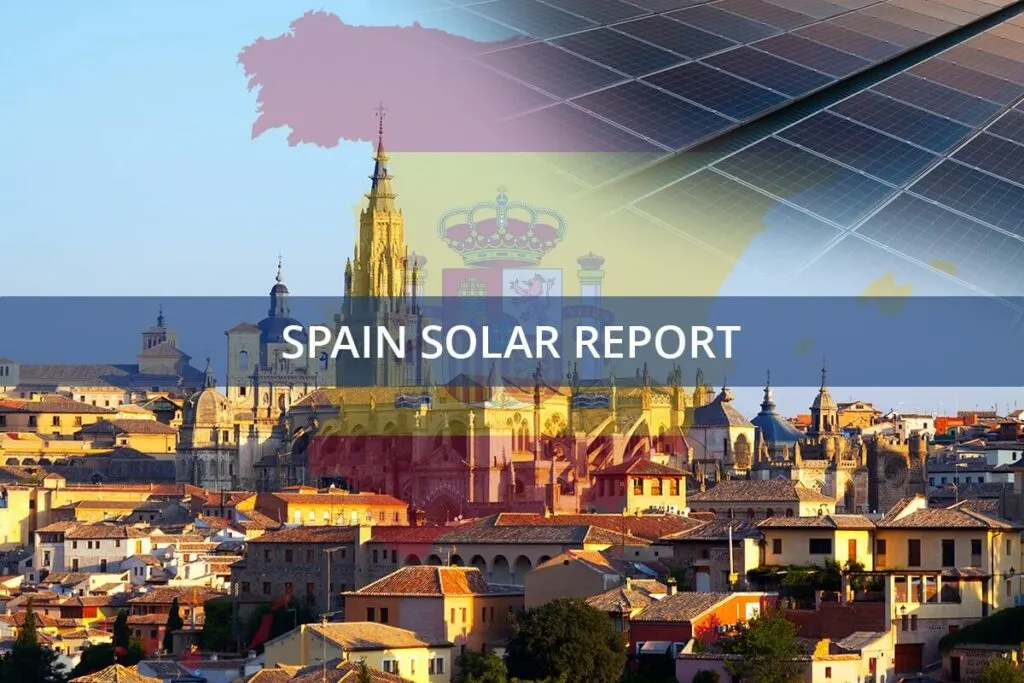
Spain has approved 7.2 GW of new solar photovoltaic (PV) projects this year, with 3.1 GW of that total approved in the second quarter.
Ambitious Renewable Energy Projects
This significant step toward its renewable energy goals marks a pivotal moment for the country. The latest data from the Foro Sella Renewable Energy Observatory report paints a promising picture for Spain’s renewable energy landscape, confirming a major surge in approvals.
During the second quarter of 2024 alone, 46 renewable energy projects with a combined capacity of 3,526.5 MW secured administrative authorization. This highlights Spain’s aggressive push to meet its ambitious green energy targets.
However, the development of solar in Spain is not uniform across all regions. Castilla y León is leading the way with 1,336.3 MW, leveraging its geographic and climatic advantages. Andalusia follows with 864.8 MW, and Castilla-La Mancha has approved 391.3 MW. In contrast, nine regions received no project authorizations, revealing uneven progress in renewable energy development across the country.
Solar Energy Takes the Lead
Solar energy was the dominant force in Spain’s renewable sector this quarter. An overwhelming 3,155.8 MW of the 3,526.5 MW in newly authorized projects was allocated to solar PV installations.
This clear preference for solar power reflects both technological advancements and the country’s favorable climate, making it an optimal choice for large-scale projects. In stark contrast, wind energy accounted for only 390.7 MW of the total capacity approved this quarter. Despite wind energy’s global importance, its development in Spain was overshadowed by the rapid expansion of solar.
By mid-2024, Spain’s total authorized renewable capacity reached an impressive 9,482 MW. Solar continues to dominate this figure, contributing 7,109 MW, while wind energy accounts for 2,373 MW. These numbers underscore the government’s strategic focus on expanding its solar capacity.
Despite this progress, Spain faced environmental hurdles in the second quarter of 2024. Only one positive Environmental Impact Statement (EIA) was issued, for a 19.3 MW solar project in the Valencian Community.
In contrast, seven projects totaling 717 MW received negative EIAs. These rejections impacted more wind capacity (398.6 MW) than solar (318.5 MW), highlighting the ongoing challenge of balancing rapid renewable energy growth with environmental sustainability.
Future Prospects and Public Involvement
Looking ahead, 42 renewable energy projects totaling 4,864.5 MW entered the public information phase during the second quarter—a crucial step for transparency and stakeholder engagement. Solar PV plants account for 75% (3,649.7 MW) of this capacity, followed by wind projects at 22% (1,070.8 MW) and hydroelectric energy at 3% (144 MW).
This public consultation phase helps ensure projects proceed with broad support and minimal conflict. The dominance of PV projects in this stage further underscores the powerful momentum behind solar energy, driven by both investor confidence and public interest.
As Spain continues to expand its renewable energy portfolio, addressing environmental sustainability and regional disparities will be crucial. Integrating public feedback and adhering to strict environmental regulations are essential for sustaining this momentum and maintaining public trust.
Spain’s progress in renewable energy sets an inspiring example for global sustainability efforts. With continued investment and strategic planning, the country is poised to lead the transition to a cleaner, greener future.