
While solar power is a leading choice for renewable energy, ensuring the reliability and durability of solar panels is a key challenge. Testing how well they perform in real sunlight requires specialized equipment.
For solar manufacturers, the challenge is guaranteeing that a new panel will deliver its rated power as sunlight changes. The answer lies with sun simulators.
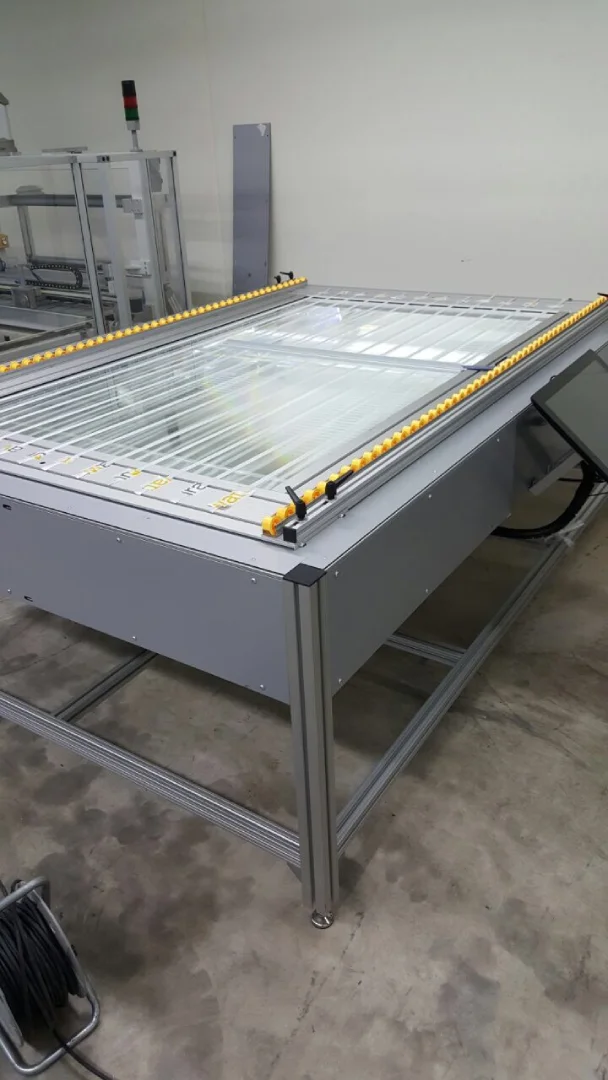
PV Sun simulator for solar panel testing.
Sun simulators are specialized machines that replicate the spectrum and intensity of natural sunlight, allowing solar companies to verify a panel’s power output, efficiency, and other critical performance metrics in a controlled setting.
This article explores sun simulators and their vital role in solar panel manufacturing.
The Purpose of Sun Simulators in Solar Manufacturing
Sun simulators are specialized machines designed to replicate the characteristics of sunlight in a controlled laboratory environment. They play a crucial role in solar panel production by enabling manufacturers to:
• Test and measure the electrical output of solar cells and modules under simulated sunlight.
• Implement quality control measures to ensure that panels meet high standards for efficiency and performance.
• Evaluate the performance of new solar cell technologies in a controlled environment.
How Solar Sun Simulators Work
Sun simulators use various light sources to replicate sunlight. The most common technologies include:
• Xenon Arc Lamps: These light sources emit a broad spectrum similar to sunlight, making them a good option for basic testing. However, they require regular maintenance to perform optimally and offer limited spectral control.
• Metal Halide Lamps: These lamps offer a more controlled and stable spectrum than xenon lamps, though they may not perfectly match the solar spectrum.
• LED Sun Simulators: This newer technology provides precise spectral control, high efficiency, and long lifespans. However, creating the necessary spectrum may require an array of LEDs.
The light source within a sun simulator is housed in a chamber equipped with:
• Collimation optics: Lenses and mirrors that collimate the light, improving uniformity across the test area.
• Filters: Spectral filters that refine the light source output to match the desired reference spectrum.
• Irradiance measurement system: Sensors that measure and control light intensity inside the chamber, ensuring illumination remains accurate.
Types of PV Sun Simulators
Sun simulators come in various configurations based on their application:
• Class A, B, and C Simulators: These classifications follow the internationally recognized IEC 60904-9 standard. Class A simulators offer the highest precision and consistency in light quality and distribution, making them ideal for research and development. Class B simulators are suitable for production line testing, while Class C units are basic simulators for simple experiments and fundamental tests.
• Steady-State vs. Flash Simulators: Steady-state simulators use continuous light, while flash simulators use short, intense bursts. Steady-state models are well-suited for measuring characteristics like current-voltage curves and power output, while flash simulators are better for studying degradation and other changes over time.
• Large Area vs. Small Area Simulators: Large-area simulators illuminate an entire solar panel, whereas small-area simulators focus light onto specific cells for more detailed examination.
Factors to Consider When Choosing a Sun Simulator for Solar Panel Testing
Choosing the right sun simulator depends on several factors critical for ensuring accurate and reliable results.
Light Source and Lamp Type
The type of lamp used in a solar simulator significantly impacts its performance. Different lamps vary in their spectral output, intensity, and stability:
- LED Bulbs: LEDs offer excellent efficiency and enable rapid measurements compared to older lamp technologies. These lights can accurately replicate the solar spectrum, like the AM1.5 spectrum, and are highly reliable. For example, the J.v.G. LED Basic 2.0 Flasher.
- Xenon Bulbs: Known for closely mimicking the solar spectrum, these lamps are often used in high-end simulators due to their broad spectral output and high intensity.
Intensity and Spectral Match
The intensity of the light beam and its spectral match to natural sunlight are crucial:
- Intensity: High-quality solar flashers often test each module multiple times in quick succession to ensure consistent intensity and faster measurements. Typically, the standard intensity for solar simulators is 1,000 W/m², known as “1 sun.”
- Spectral Match: The simulator should accurately replicate the solar spectrum, either AM1.5 for terrestrial applications or AM0 for space applications.
Temporal Stability and Spatial Uniformity
For consistent results, the stability of the light output over time and the uniformity of its distribution across the test area are vital:
- Temporal Stability: Ensuring that the light intensity remains constant during testing is critical for long-term experiments.
- Spatial Uniformity: The light should be evenly distributed across the test area to avoid variations in test results.
Collimation
Collimation refers to how parallel the light rays are, which is important for accurately simulating natural sunlight conditions:
- High Collimation: Necessary for applications requiring precise light direction, such as in calibration laboratories.
Automation and Control
The simulator’s control system, including lamp ignition and intensity adjustments, affects both its usability and lifespan:
- Automated Shutters: These can help control light exposure without causing premature lamp wear.
- Manual vs. Automated Control: Manual controls may suffice for basic needs, but automated systems offer greater precision and ease of use.
Calibration and Standards Compliance
For reliable testing, it is essential that the solar simulator complies with international standards and is properly calibrated:
- Standards Compliance: Look for compliance with standards such as IEC 60904-9 and ASTM E927 for spectral match, spatial non-uniformity, and temporal instability.
- Calibration: Regular calibration of the simulator is necessary to maintain testing accuracy.
Application-Specific Requirements
Different applications may have unique requirements for solar simulators:
- Aerospace PV Testing: Requires simulators that can accurately replicate space conditions.
- General Solar Panel Testing: Needs simulators that can mimic terrestrial sunlight conditions and provide consistent results.
Benefits of Using Sun Simulators
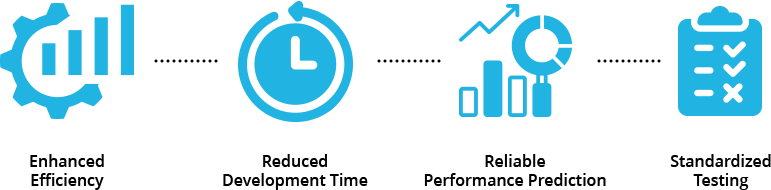
Enhanced Efficiency
By replicating sunlight in a laboratory, sun simulators allow companies to test various materials and designs to maximize power output, making them crucial for optimizing performance. This controlled testing helps ensure that solar products will perform reliably across different locations and weather conditions.
Reduced Development Time
Sun simulators accelerate the development of new solar technologies. Unlike traditional testing that relies on inconsistent natural sunlight, simulators provide a stable, repeatable light source. This allows for faster iteration and refinement, shortening the time it takes to bring new innovations to market.
Reliable Performance Prediction
Accurate performance prediction is essential for the commercial success of solar panels. Sun simulators enable manufacturers to measure a panel’s energy output under standardized conditions, helping them verify product quality and provide reliable estimates of real-world energy production.
Standardized Testing
Sun simulators enable standardized testing for consistent and comparable results across the industry. Adherence to international standards like IEC 60904-9 is vital for global market acceptance, product certification, and building consumer confidence.
Importance of PV Sun Simulators
Sun simulators are vital tools in solar panel manufacturing, giving producers a reliable way to test and control product quality. By ensuring each panel meets its performance standards under simulated light and environmental conditions, these systems help designers create more durable, efficient products with improved real-world performance.
The Importance of Calibration and Maintenance
Regular calibration and maintenance are crucial for ensuring a sun simulator provides accurate results. Calibration involves comparing the simulator’s output against a reference standard to correct any deviations, while routine maintenance includes tasks like cleaning optical components, inspecting the light source, and replacing filters.
Proper maintenance ensures manufacturers can depend on the simulator for trustworthy data—an essential part of accurate solar panel testing.
Safety Considerations
Sun simulators use high-intensity lamps that can pose safety risks if not handled properly. Key safety precautions include:
- Always wear appropriate eye protection when operating the simulator.
- Adhere to the manufacturer’s operational and safety guidelines.
- Ensure the testing area is well-ventilated to prevent the equipment from overheating.
Future Trends in Sun Simulator Technology
Sun simulator technology continues to evolve to meet the growing demands of the solar industry. Key trends in this area include:
• Increased Use of LEDs: LEDs offer superior wavelength control, higher efficiency, and longer operational lifespans. As this technology advances, more affordable and sophisticated LED-based sun simulators are expected to become available.
• Improved Spectral Matching: As solar cell technologies advance, sun simulators will require more precise spectral matching capabilities to accurately assess the performance of these new innovations.
• Integration with Automation Systems: Sun simulators will be increasingly integrated into automated testing systems to streamline data collection and boost productivity on production lines.
Sun Simulators: Essential for Solar Advancement
Sun simulators are indispensable tools for solar panel production and research. By enabling performance testing and characterization in a controlled environment, they are key to ensuring panels are robust, reliable, and efficient. As solar technology advances, the importance of sun simulators will only grow, solidifying their role in developing the next generation of solar cells and modules.
Download the “Maximize Output with Sun Simulator” PDF guide today.
Hi
My comment yes iwant to purchase the manufacturing machine for solar panels