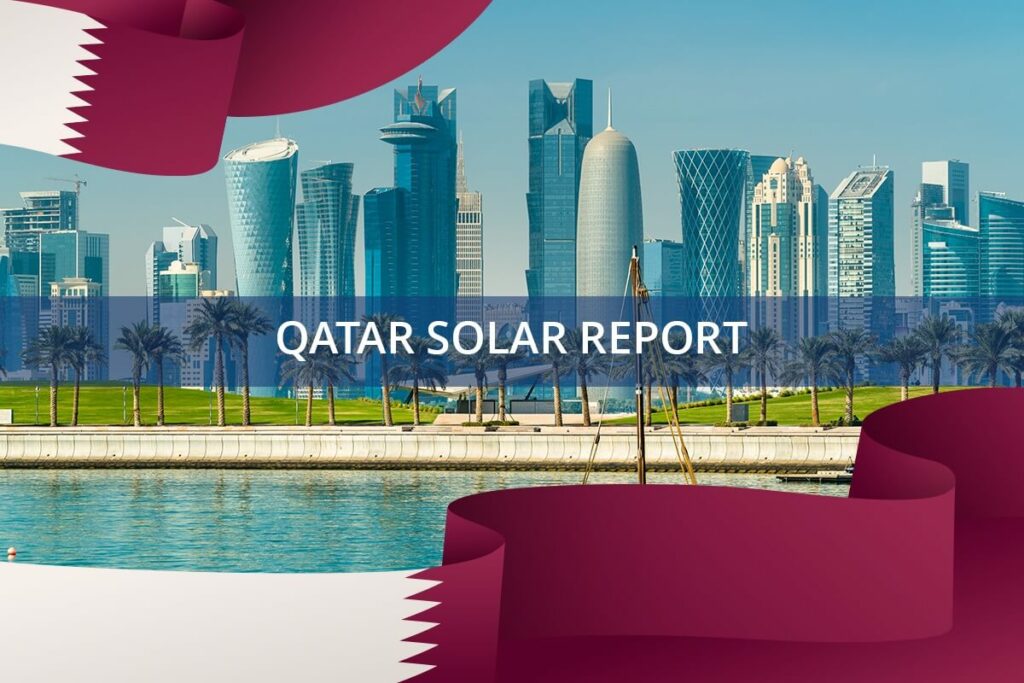
Qatar has officially launched a comprehensive national strategy aimed at transforming its energy landscape, with a bold target to increase its share of renewable energy to 18% by 2030. This represents a significant acceleration from the current level of approximately 5%, underpinning the nation’s commitment to a sustainable and diversified energy future.
A Strategy for Renewable Energy in Qatar to Reach 18% by 2030
The new goals are central to Qatar’s Third National Development Strategy (2024-2030), which seeks to build a more resilient and competitive energy sector. Abdulrahman Ibrahim Al-Baker, Director of Planning and Production Development at the Qatar General Electricity and Water Corporation, known as Kahramaa, outlined the specific capacity targets. The plan calls for the development of 4 gigawatts (GW) from centralized renewable projects and an additional 200 megawatts (MW) from distributed solar generation by the end of the decade. This strategy combines high-efficiency natural gas generation with a growing portfolio of renewables to enhance grid reliability and reduce carbon emissions.
Economic and Solar Potential
A key driver behind this energy transition is the increasingly favorable economics of solar power. Al-Baker noted the dramatic decline in the levelized cost of electricity (LCOE) for PV solar technology, which plummeted from 4 cents per kilowatt-hour (kWh) in 2017 to just 1.5 cents in 2023. Projections estimate a further drop to 0.9 cents by 2030, making solar an exceptionally competitive energy source. This cost-effectiveness is expected to lower the average cost of electricity generation in Qatar by 15% by 2030. The nation is uniquely positioned to capitalize on this trend, boasting some of the highest levels of global horizontal solar radiation in the world, providing an abundant and reliable resource for clean energy production.
Projects and Investment
Qatar has already made significant strides with projects like the 800 MW Siraj 1 solar plant in Al Kharsaah, a landmark facility in the region. However, thermal generation still dominates the country’s 12 GW capacity. To achieve the 2030 targets, substantial investment is required, estimated at around $7.6 billion. A major focus of the national strategy is to overcome challenges such as the limited capacity of the local private sector for large-scale projects.
Building a Sustainable Future
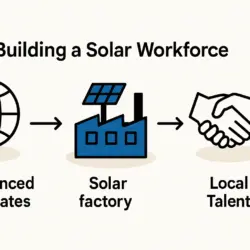
To address these hurdles, the government is focused on attracting foreign investment and nurturing domestic companies in the renewable energy manufacturing and development sectors. The strategy also includes developing local expertise through robust education and training programs to create a skilled workforce. By pursuing this ambitious path, Qatar aims not only to enhance its energy security and diversify its economy but also to set a new standard for sustainable development in the region, creating green jobs and fostering a new era of clean energy innovation.
Sources
- Ambition Gap – Qatar – Climate Analytics
- Qatar Launches National Renewable Energy Strategy to Drive …
- Qatar launches national renewable energy strategy, focusing on …
- [PDF] Qatar plans to raise renewable energy share to 18% by 2030
- Qatar eyes 18% renewable energy by 2030
- Qatar National Renewable Energy Strategy (QNRES)