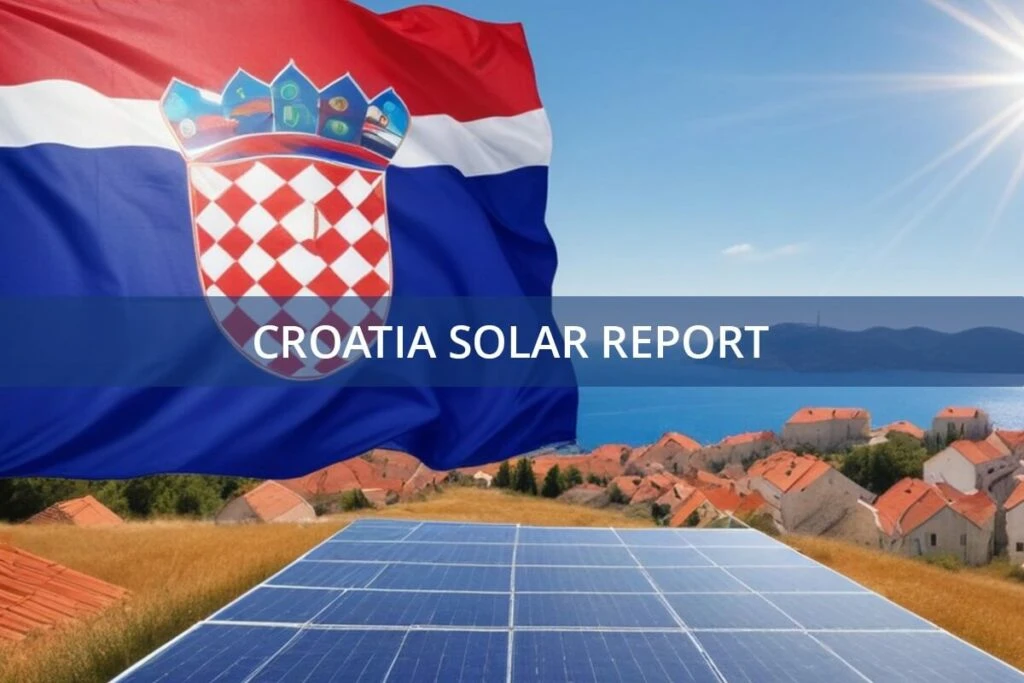
Croatia is expected to surpass 1 GW of solar power by 2025, driven by a significant increase in installations and supportive policies. The expansion is part of the country’s broader commitment to renewable energy and aligns with EU targets to boost the share of renewables in electricity generation.
Croatia solar power capacity: current status and growth trends
According to PV Magazine, solar installations in Croatia are on track to surpass 1,000 megawatts (MW) by the end of this year—a significant milestone in the country’s renewable energy journey. The report also projects that total capacity could reach 1.5 GW by 2025 and 2.5 GW by 2030.
Data from the Croatian Energy Regulatory Agency (HERA) confirms this trend, with installed capacity reaching 902 MW by the end of September 2024. This marks a substantial increase from the previous year, as 243 MW of new capacity was added in 2024 alone.
This rapid growth is a clear indicator of Croatia’s commitment to renewable energy. The government has actively promoted solar as part of its transition to a more sustainable energy future, and its policies and initiatives have been crucial in reaching these milestones.
Croatia solar power target of 2.5 GW by 2030
The Croatian government has set an ambitious target to reach 2.5 GW of installed solar capacity by 2030, a goal that would significantly contribute to the country’s renewable energy mix. This target also aligns with the European Union’s broader objective of increasing the share of renewables in electricity generation.
Achieving this target involves several key strategies, starting with improvements to the permitting process for new solar installations. The government aims to streamline administrative procedures and reduce the bureaucratic hurdles that have historically slowed the development of renewable energy projects.
Croatia is also working to better integrate solar power into the national grid. Enhancing grid infrastructure and adopting advanced technologies will be key to ensuring the growing solar capacity can be efficiently distributed and utilized across the country.
Investments and support driving Croatia solar power development
Both domestic investment and international funding are supporting Croatia’s solar power expansion. A surge in investment activity shows that financial institutions and investors increasingly recognize the country’s potential, and Croatia also has access to various European Union funds that support renewable energy projects.
A key factor driving this growth is the government’s commitment to a favorable investment climate, offering incentives like feed-in tariffs, tax breaks, and subsidies designed to attract more investors and developers to the Croatian solar market.
The government is also promoting public awareness campaigns to encourage households and businesses to adopt solar energy. By educating the public on its benefits, Croatia aims to increase small-scale installations nationwide.
The role of Croatia solar power in national energy transition
Solar power is poised to play a central role in Croatia’s energy transition. As the country seeks to reduce its reliance on fossil fuels, solar energy offers a clean and sustainable alternative. The expansion of solar capacity will not only contribute to Croatia’s environmental goals but also enhance energy security by diversifying the energy mix.
The growth of solar power in Croatia is also set to create new economic opportunities. The renewable energy sector can generate jobs in manufacturing, installation, and maintenance of solar power systems, while increased use of solar power can lead to cost savings for consumers and businesses by reducing electricity bills.
As Croatia continues to invest in solar power, the country is positioning itself as a regional leader in renewable energy. A successful expansion of its solar capacity will serve as a model for other countries seeking to transition to cleaner energy sources. For more insights and updates on Croatia’s solar energy development, you can visit PV Knowhow.